If SEO.ai gets articles onto your site but leaves you wondering which keywords to pursue next or whether your brand appears in AI answers, you need a different kind of tool. For a small team seeking an SEO.ai alternative, I would start with RankSpot for planning through publishing. With a writer already on the team, I would look at Surfer or Frase for tighter control over drafts. SE Ranking and Search Atlas handle rankings and broader SEO work.
Choose based on the work you need to stop doing by hand: writing, tracking rankings or watching AI visibility.
SEO.ai alternatives at a glance
Tool | Best fit | Main job | Main tradeoff |
|---|---|---|---|
RankSpot | Founder who needs a publishing system | Research, plan, write and publish | Less suitable for teams seeking deep technical audits |
Surfer SEO | Editor improving existing pages | Content optimization | You still need a publishing process |
Frase | Writer building briefs and drafts | Research and content workflow | Not a full technical SEO suite |
Scalenut | Team planning topic clusters | Content planning and production | Broad workflow takes setup and oversight |
Search Atlas | SEO team that wants execution tools | Research, audits and automation | More platform than a casual blogger needs |
SE Ranking | Team measuring search performance | Rank tracking and research | Content production needs its own workflow |
Writesonic | Team combining content and AI search | Writing and AI visibility | Wide feature set may be excessive for a simple blog |
NeuronWriter | Writer optimizing articles | SERP-informed editing | Does not replace an end-to-end publishing operation |
Koala Writer | Solo operator producing drafts | Fast article creation | Research and measurement are separate jobs |
Jasper | Marketing team managing brand voice | General marketing copy | Search measurement needs other software |
Why switch from SEO.ai?
SEO.ai plans, generates and publishes search content. If writing takes up most of your week, that helps. Once an article goes live, you still need to know whether its topic attracts buyers, where the page ranks and whether an AI assistant recommends your business.
Before switching, map the work your team does. If your site already ranks for useful queries, improve the content quality on those pages before commissioning more AI content. On a newer site, use content gaps and competitor analysis to find customer questions you can answer from direct experience. If important pages are not indexed, start with a site audit.
I separate the decision into three questions:
What should we publish? Look for keyword discovery, competitor research and a usable content plan.
Who turns the plan into live pages? Decide whether you want an editor, an AI draft or automated CMS publishing.
How will we measure it? Google rank tracking and AI-answer visibility are different from writing optimized text.
Do not assume “optimized for AI search” means the product monitors your brand in ChatGPT. GEO content creation and GEO visibility tracking are separate capabilities. Likewise, a content score is not a ranking report.
"The best practices for SEO remain relevant for AI features in Google Search." - Google Search Central
The 10 best SEO.ai alternatives for different teams
1. RankSpot: best for founders who want the whole content pipeline handled
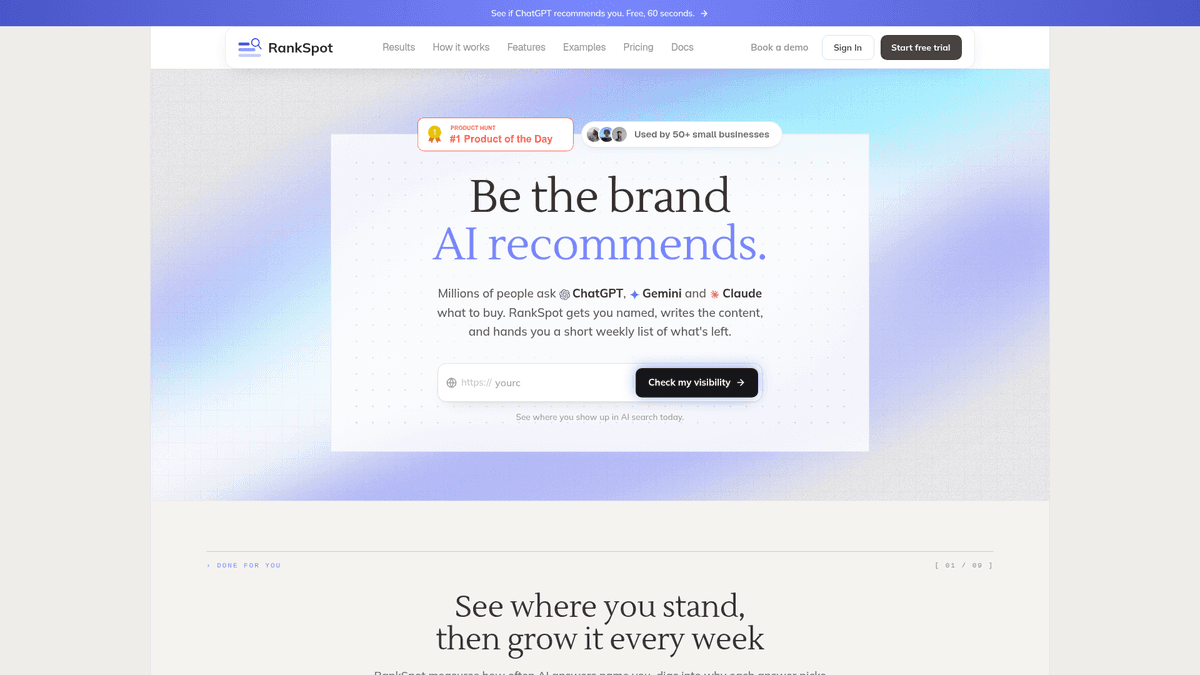
RankSpot suits a founder who needs help finding a worthwhile topic and getting it published. It learns a business from its website, builds a 30-day plan, researches high-intent and competitor keywords, writes long-form posts with images and internal links, then publishes through CMS integrations including WordPress, Webflow, Wix, Shopify, Framer and Ghost. It also surfaces relevant Reddit and forum conversations.
If your content process involves a spreadsheet, a writing tool and a weekly reminder to publish, the handoffs eat up time. RankSpot handles those steps in a repeatable routine, including daily articles formatted for Google and AI answer engines. For a founder replacing an agency to keep the blog active, it takes on much of the work an operator would do.
You will still need a dedicated tool for deep rank tracking or technical crawling. Formatting articles for AI answers does not mean the product monitors citations or compares visibility by prompt. Start with its first three free articles and judge the topics, accuracy and published pages on your own site.
2. Surfer SEO: best for content optimization
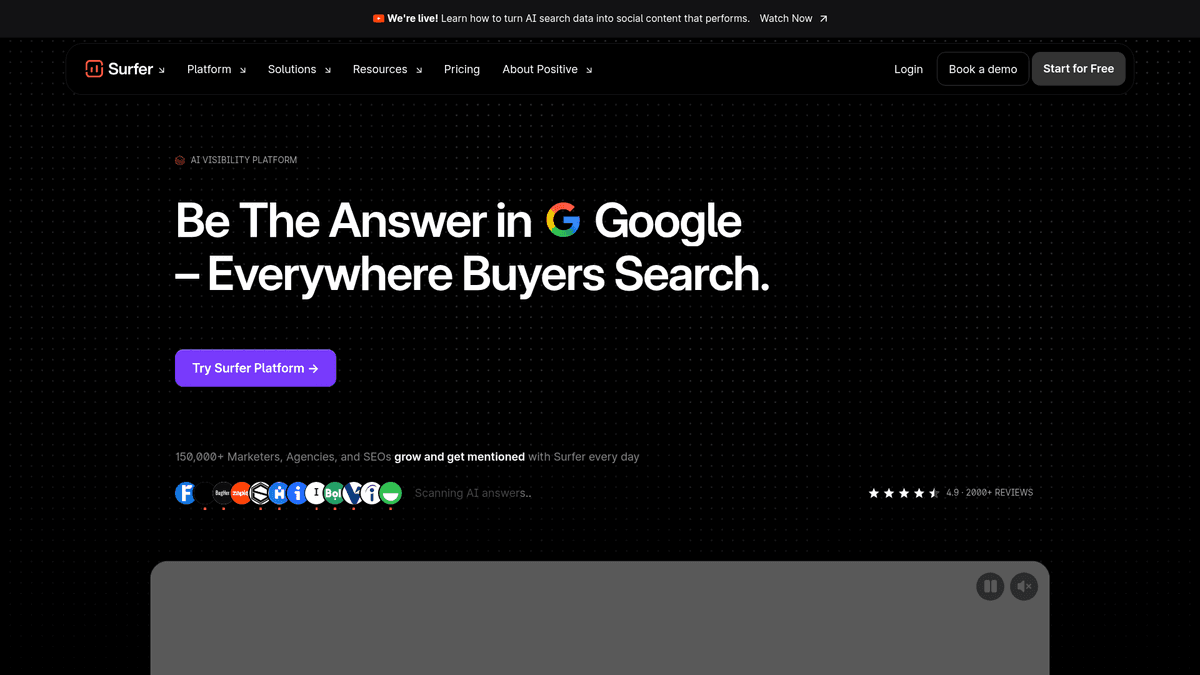
Surfer gives writers a content editor, briefs and on-page suggestions informed by search results. Open a draft, see which subtopics need attention and revise the page. It also offers AI-search features. I would use it to improve a page I already plan to publish, with a person still managing the calendar.
Pick it when someone on your team writes and edits. You will still need someone to choose commercial topics and keep the publishing schedule moving. If you use WordPress, compare it with our Surfer SEO alternatives before adding another editor.
3. Frase: best for research briefs and writer-led content
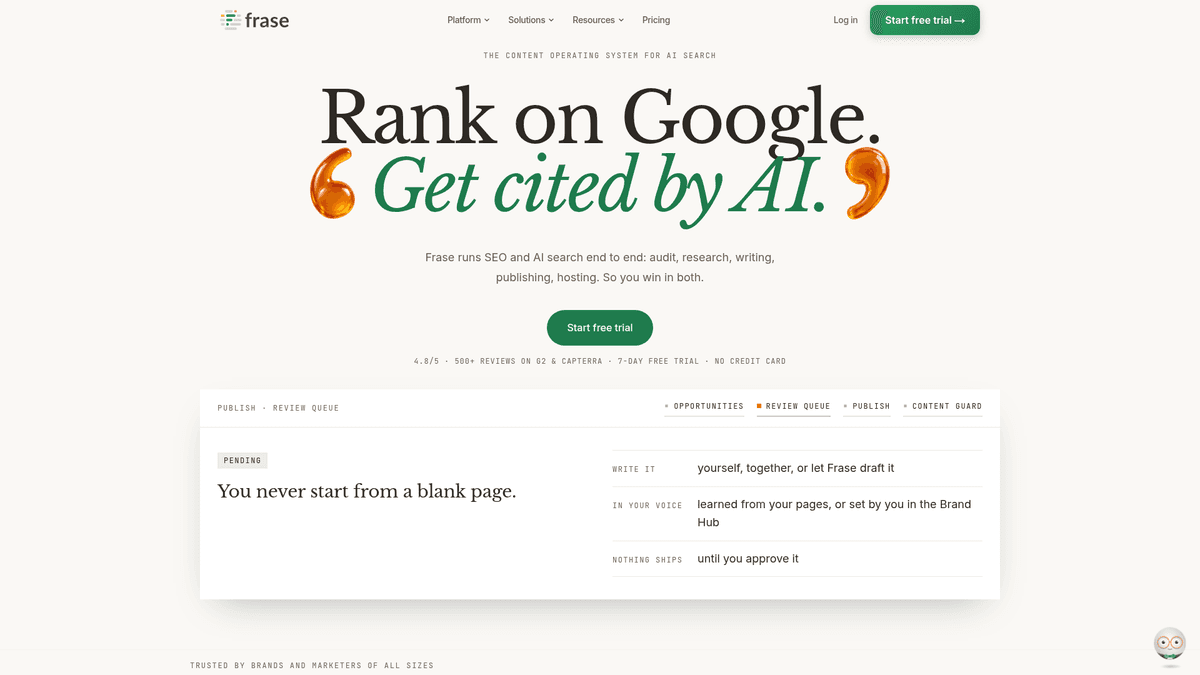
With Frase, a writer can assemble a brief, outline a query and improve a draft without researching every detail from scratch. It suits a small editorial team that wants a person to own the argument and examples.
I would choose it to speed up a writer's preparation. A founder who needs to hand off the full publishing operation should look elsewhere. Frase also has a narrower research and writing workflow than platforms built for technical audits and rankings. Our Frase alternatives cover other approaches to that editorial step.
4. Scalenut: best for topic planning and content operations

Scalenut brings planning, research and content creation into one workflow. If your team builds topic clusters, connected pages can answer related buying questions more thoroughly than isolated one-prompt drafts.
Someone still needs to direct the plan and review published work. I would consider Scalenut for a team that wants hands-on oversight; it is a weaker fit if the founder wants publication to run with little intervention. See our Scalenut alternatives for other setups.
5. Search Atlas: best for an SEO team that also wants automation
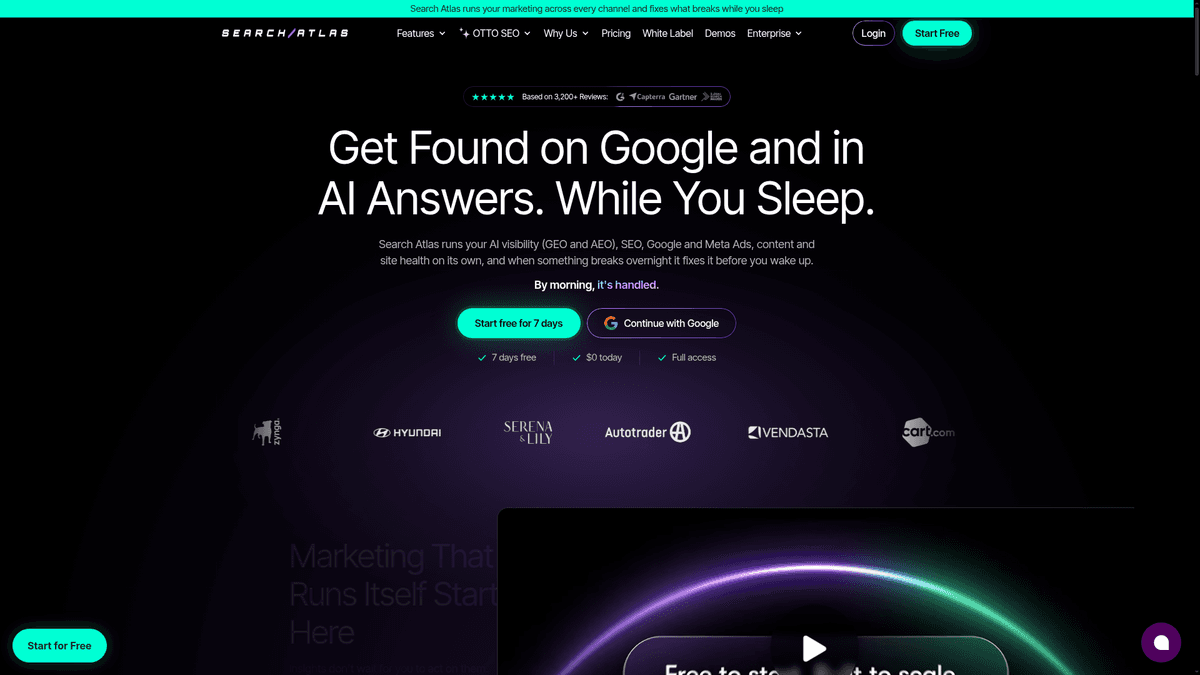
Search Atlas covers keyword research, audits, optimization, tracking and automation. That range matters if your site has technical issues alongside a content backlog. More posts will not fix pages that cannot be indexed or a site structure that buries important pages.
You will spend more time operating it than a dedicated writer. Its range may be excessive if you only need a weekly article. For teams managing several SEO workstreams, our Search Atlas alternatives offers more comparisons.
6. SE Ranking: best for rank tracking and competitor research
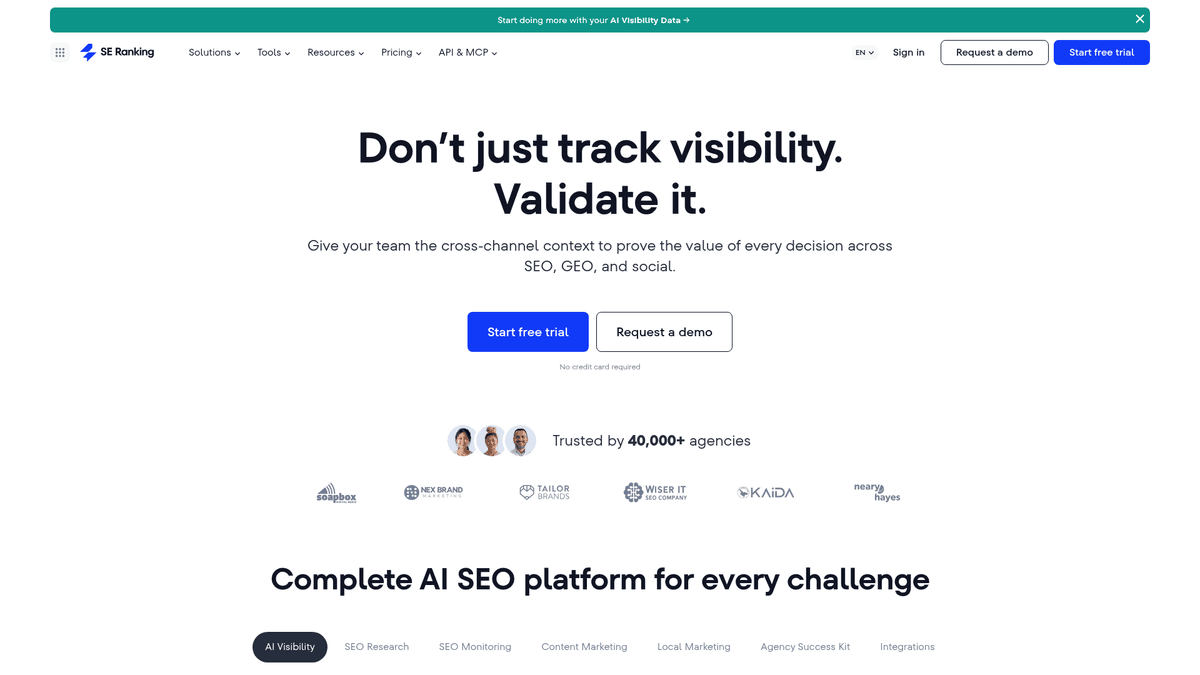
SE Ranking is where I would look to find out whether published pages gained ground. It monitors rankings and lets you research keywords and competitors and assess site health. You can follow a page after publication instead of losing sight of it once it goes live.
You still need someone to brief, write, review and publish. A lean team can pair SE Ranking with a publishing system, though maintaining both takes time. Our SE Ranking alternatives covers other tracking-led options.
7. Writesonic: best for a combined content and AI-search workspace
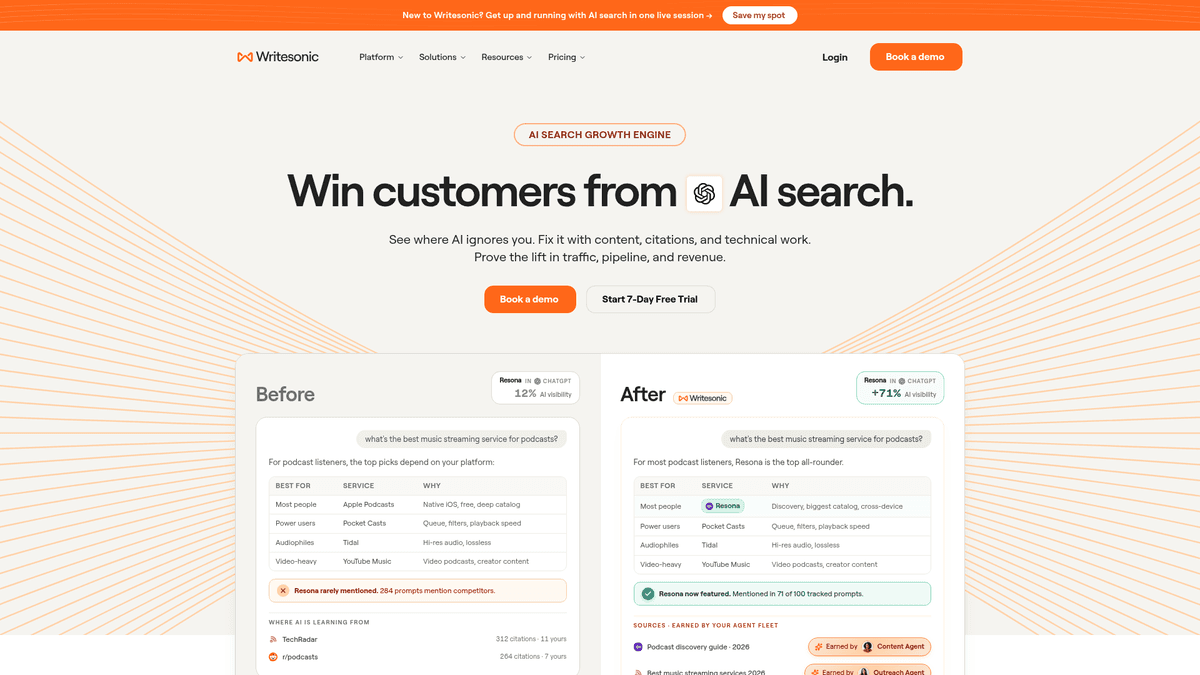
Writesonic is worth considering if you need to create content and see how your brand appears in AI search. It covers a wider SEO and GEO workflow than a text generator. Decide whether you need its writing assistance, AI-answer monitoring or both.
The workspace may take more attention than a founder needs for a single blog pipeline. If mentions and prompts matter most, compare it with dedicated AI-visibility tools and our Writesonic alternatives.
8. NeuronWriter: best for hands-on article optimization
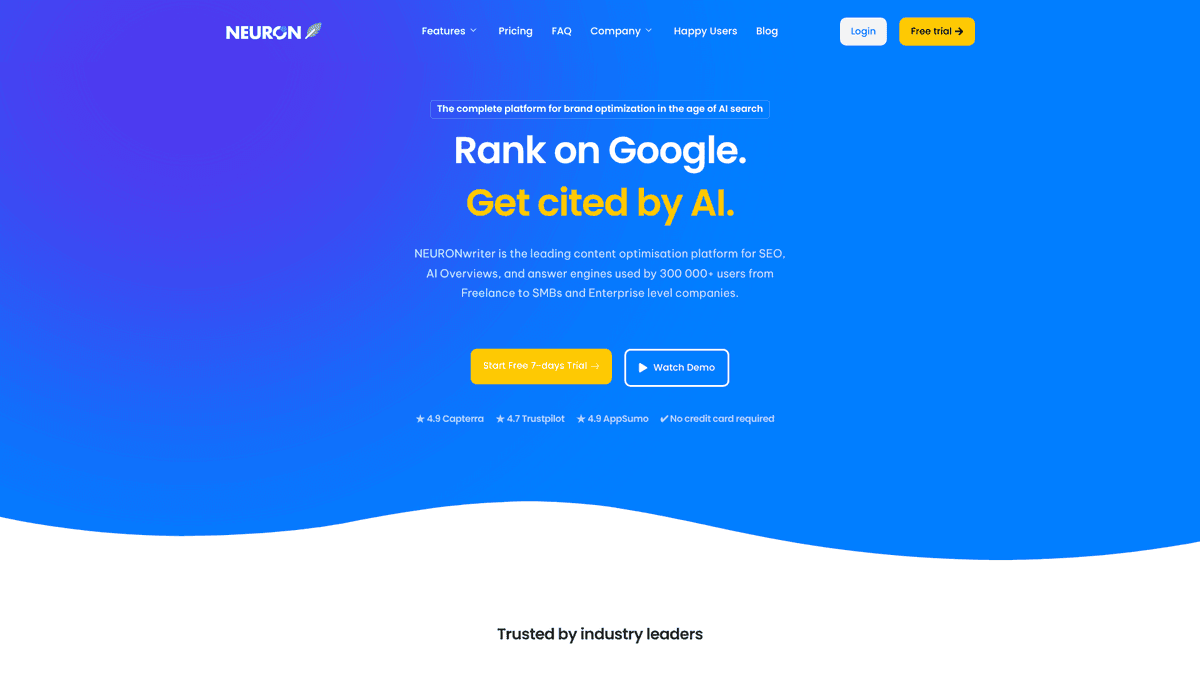
NeuronWriter helps a writer compare a draft with topics in search results and refine it in an editor. It also offers AI writing assistance. I would use this setup when an editor wants to own the final page but spend less time building outlines.
An optimized draft still needs a publishing program behind it. If rankings reports or a repeatable CMS handoff matter to you, account for those steps separately. An optimization score will not show you the result.
9. Koala Writer: best for quick first drafts
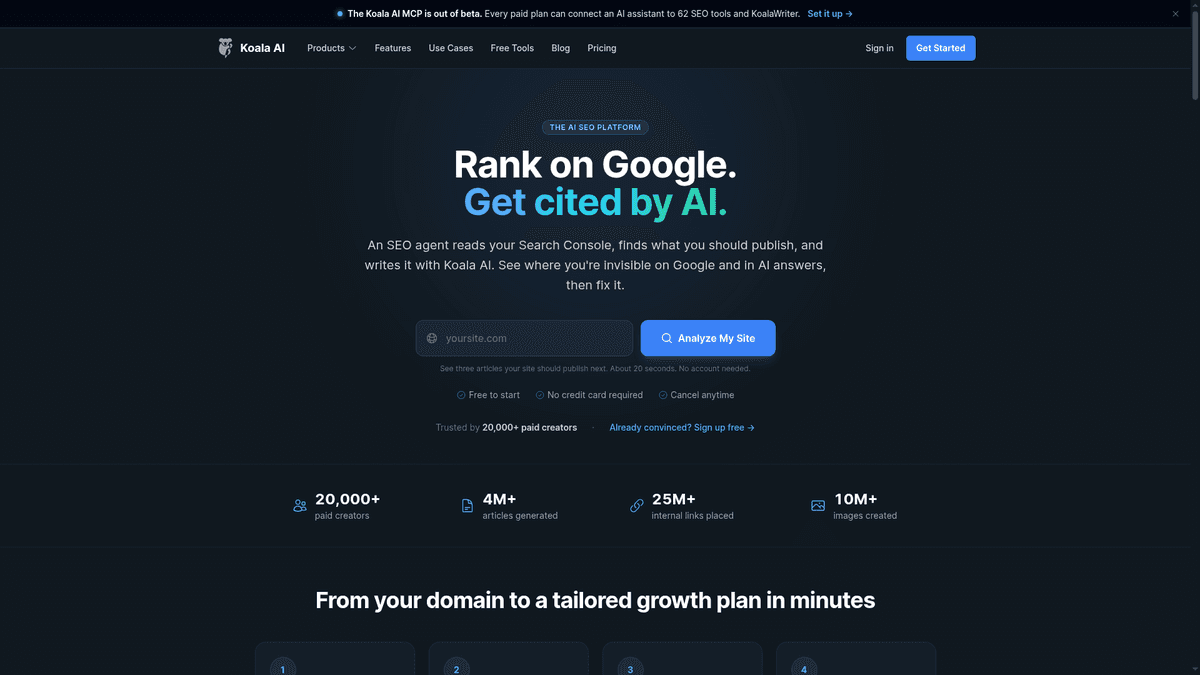
Koala Writer suits a solo operator who needs a first draft without starting from a blank document. You can turn a topic into a structured article quickly, then spend your own time checking claims, adding product experience and editing for the reader.
I would use separate tools for competitor keyword opportunities, tracked search positions and AI-answer citations. For other writing-focused options, see our Koala Writer alternatives.
10. Jasper: best for a marketing team that writes more than blog posts
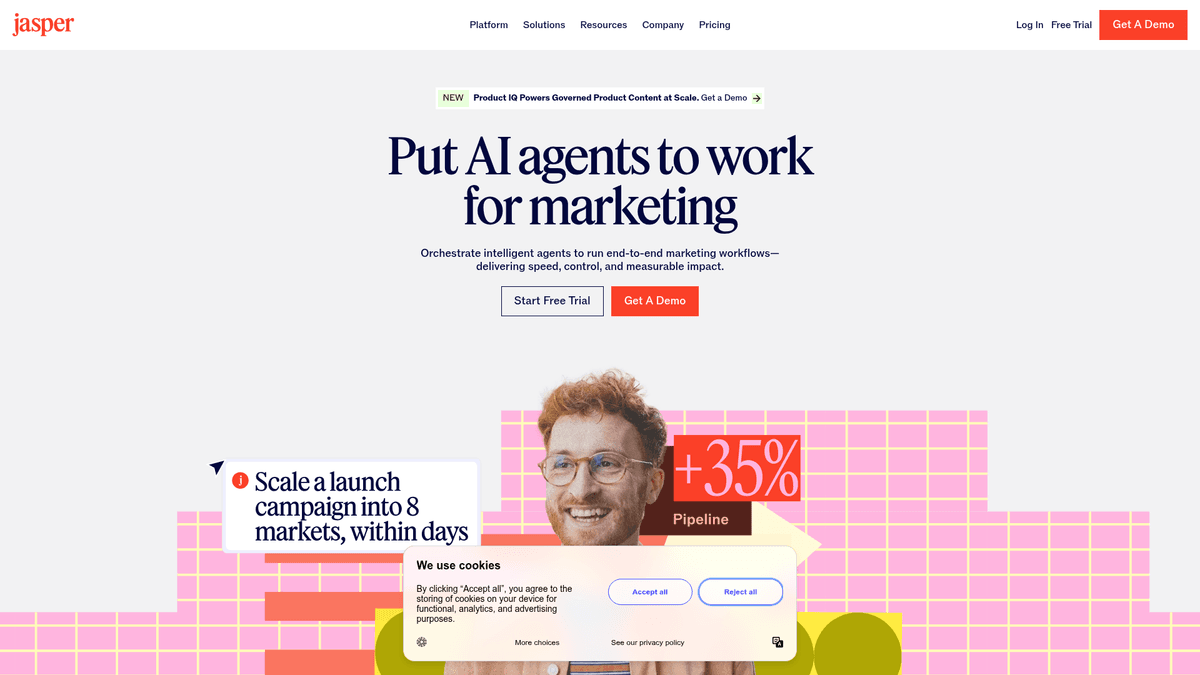
Jasper fits a team producing campaigns, landing pages and articles in a consistent brand voice. You can use the same writing workspace across channels. You will need another process to identify search opportunities and measure the results.
Jasper makes more sense if blogging is one part of your creative workload. Its broad scope is a limitation when SEO is the entire brief. Our Jasper alternatives cover other writing-focused choices.
Which SEO.ai alternative should you choose?
Your bottleneck | Shortlist | What to ask before committing |
|---|---|---|
Nobody has time to run the blog | RankSpot, Scalenut | Can it move from a sensible plan to a live CMS post with acceptable editorial review? |
Writers need stronger pages | Surfer, Frase, NeuronWriter | Does the editor help explain the topic, or just raise a score? |
You need rankings, audits and competitor data | SE Ranking, Search Atlas | Will someone act on the reports every week? |
You need AI-answer visibility | Writesonic, a GEO tracker | Does it measure actual brand mentions and citations, not just write AI-friendly content? |
You need broad marketing copy | Jasper, Koala Writer | Are you buying a writer when you actually need a content system? |
For a small business, I would start with three high-intent questions customers ask. Publish a useful answer to each and record how long it takes to get from idea to live page. Watch impressions and queries in Search Console or a rank tracker; measure AI mentions separately if they matter to you. A content score or finished draft tells you the work is done, not whether it brought in customers.
If your content already ranks but leads do not follow, inspect the page's intent and content structure before publishing a similar page. A comparison that answers buyers' objections has a different job from a definition page. On a larger site, site audits and backlink research may reveal more urgent problems than slow writing. A wider suite such as Semrush One can help with analysis through its SEO tools and AI Visibility Toolkit, though your team still has to execute the content strategy.
GEO bonus: AthenaHQ, Otterly AI and Profound
If you need visibility in AI answers, consider a measurement tool before buying another writer. AthenaHQ, Otterly AI and Profound focus on where your brand is mentioned or cited in AI-generated responses. They address the measurement side of the job.
Peec AI is another simple AI visibility tracker if citation monitoring is your priority. Alongside your content workflow, track the questions buyers ask before purchasing, including prompts in ChatGPT and Google AI Overviews where supported. Look for recommendations as well as citations: a reference to an unrelated informational page answers a different question. Our AI visibility tools overview covers that category.
My verdict
For a founder with no dedicated SEO team, I would try RankSpot first. It takes a topic through research, planning, writing and publication, leaving fewer handoffs for you to manage. Use the three free articles to see how its topics and finished pages fit your business. If you already have writers, Surfer or Frase can help with editing; add SE Ranking when you need to follow your Google positions.
FAQ
Is there an equivalent of SEO for AI?
Generative engine optimization, or GEO, focuses on being useful and citable in AI-generated answers. It overlaps with SEO, but measuring brand mentions and citations in AI answers is different from checking Google positions. A content tool may help you publish pages for both without providing AI visibility tracking.
Which AI is better for SEO?
It depends on the job. RankSpot is a fit when you want a plan turned into published articles, Surfer and Frase suit hands-on editors, and SE Ranking suits teams that need search-performance data. Choose the bottleneck you need to remove first.
Is SEO still worth it with AI?
Yes, if your customers still search for problems your business solves. Useful pages can serve search visitors and give AI systems something to reference, but publication alone does not guarantee rankings or citations. Measure search performance and AI visibility as separate outcomes.
What is the best free AI for SEO?
There is no universal best free tool: a writing assistant can draft, while a search-performance tool measures different outcomes. RankSpot offers the first three articles free, which is a practical way to judge an automated publishing workflow before buying. Review the output for accuracy and fit before publishing.