The best Emplibot alternatives solve the part of your blog workflow that Emplibot leaves you doing yourself. That might be keyword research, publishing to your CMS, or seeing whether your content gets discovered. First decide which job is taking up your time.
If I ran a small team and wanted the whole job handled, I would start with RankSpot: research, a plan, articles and CMS publishing. Autoblogging.ai and SEOWriting.ai make more sense when I already have the topics and need bulk drafts. For AI search, I would ask to see both the writing workflow and the citation report. One does not guarantee the other.
If getting posts into Webflow is your sticking point, this walkthrough shows how an automated SEO blog publishing flow works:
Emplibot alternatives at a glance
Tool | Best fit | What to weigh before switching |
|---|---|---|
RankSpot | Founders seeking a planned, automated SEO and GEO content pipeline | Less suitable if you want only a standalone text editor |
Autoblogging.ai | Teams producing batches of search-focused drafts | Make time for editorial checks before scaling publication |
Koala Writer | Bloggers who want a focused article-writing workflow | Planning and reporting may need other tools |
RightBlogger | Solo bloggers who want writing helpers and blog automation | Its breadth still calls for editorial judgment |
Outrank.so | Teams prioritizing automated blog publishing | Check how its workflow fits your own review requirements |
SEOWriting.ai | Publishers who want repeatable, bulk SEO article generation | High-volume output needs a strong quality gate |
Byword | Teams creating many pages from a structured topic set | Template-like pages need original detail to earn their place |
Writesonic | Marketing teams needing broader AI writing and AI-search work | Its breadth may be more than a blog-only operator needs |
Why look beyond Emplibot?
Emplibot focuses on automated blog content and WordPress or LinkedIn publishing. If your topics are settled and those channels fit, it may do the job. A site on another CMS, an approval requirement, or a need for rank and AI visibility data changes the choice.
Separate the buying decision into four jobs:
Find the right topics. Can the system identify commercial intent and useful competitor-related searches, or must you supply every keyword? Start with finding high-intent keywords if you need to build the list yourself.
Make publishable articles. Do drafts include helpful structure, appropriate internal links, sources and images? Who catches errors?
Get them live. Does it connect to your CMS, and can your team control the moment a post goes out?
Learn what worked. Can you monitor search performance and AI mentions, or will you need another platform?
An article allowance tells you little about the work left afterward. If fixing each draft takes an hour, put that hour into your cost calculation.
"Generating many pages without adding value for users may violate our spam policy on scaled content abuse." - Google Search Central
What content automation should actually cover
AI writing tools make drafts. Content automation can also handle keyword research, content briefs, scheduling and page optimization. If you need the whole routine covered, ask a vendor to show one topic moving from idea to live URL. Watch who can edit the brief and approve the final draft.
Editorial judgment stays with you. Define your brand voice, add firsthand examples and use human review for product claims. Quality controls matter when you publish AI-generated content across multiple sites. Good workflow automation cuts manual handoffs while giving you a way to hold a weak draft.
Scheduling, distribution and CMS integrations
Scheduling sets the publish date. Distribution determines where the post goes. Emplibot's WordPress and LinkedIn path may work for you; a Webflow or Shopify site needs another connection. Short-form social posts also serve a different purpose from a full blog article. List the channels you use before an impressive integration count sways you.
Run one post from brief to live page. Inspect its slug, headings, links and image in your CMS. If an editor must sign off, try stopping a scheduled post before it goes out. That will tell you more about the workflow than a polished draft in a demo.
The 8 best Emplibot alternatives for AI blog automation
1. RankSpot: for a planned, end-to-end SEO and GEO workflow
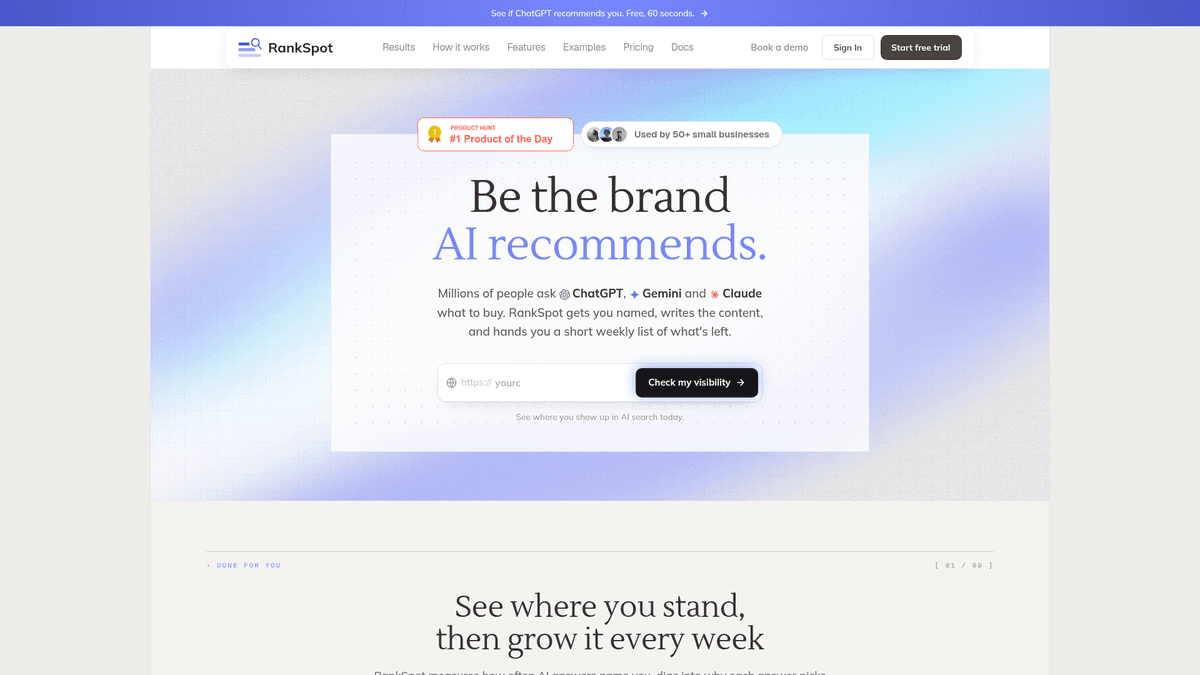
RankSpot starts with your website to learn your niche and competing businesses. It builds a 30-day content plan, finds high-intent and competitor keyword opportunities, then drafts long-form posts with on-page formatting, internal links, tables and on-brand images. It publishes to WordPress, Webflow, Wix, Shopify, Framer and Ghost. That saves a founder from copying finished posts between tools.
I would put it first for a lean team struggling to keep a useful blog active. Its workflow supports daily publishing and optimization for search results and AI answer engines. It also surfaces Reddit and forum conversations where potential buyers ask questions outside search.
RankSpot makes sense if you want the full pipeline. For occasional edits to one article, a focused writer is easier to justify. RankSpot includes tracked AI prompts; a specialized visibility platform may suit a team that needs deeper reporting. You can start with the first three articles free without a credit card.
2. Autoblogging.ai: for bulk article generation
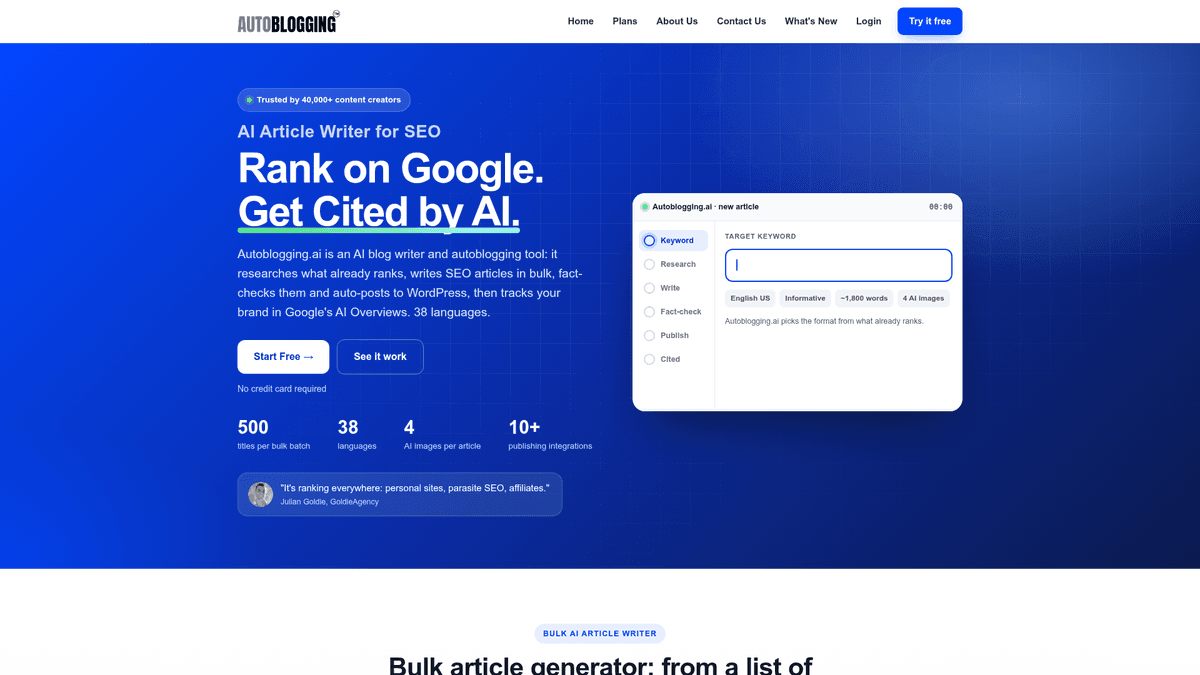
Autoblogging.ai suits a publisher with a topic map and a queue of keywords to turn into articles. Bulk generation lets you prepare multiple drafts in one pass instead of opening a blank document for each.
I would feed it a batch of related informational topics, then read the drafts side by side. Do two pages answer the same question? Can I support the claims? If you need the software to set a business-specific plan and show performance after publishing, bulk drafting leaves work on your desk. Count your editing time in the cost.
3. Koala Writer: for a straightforward blog-writing workflow
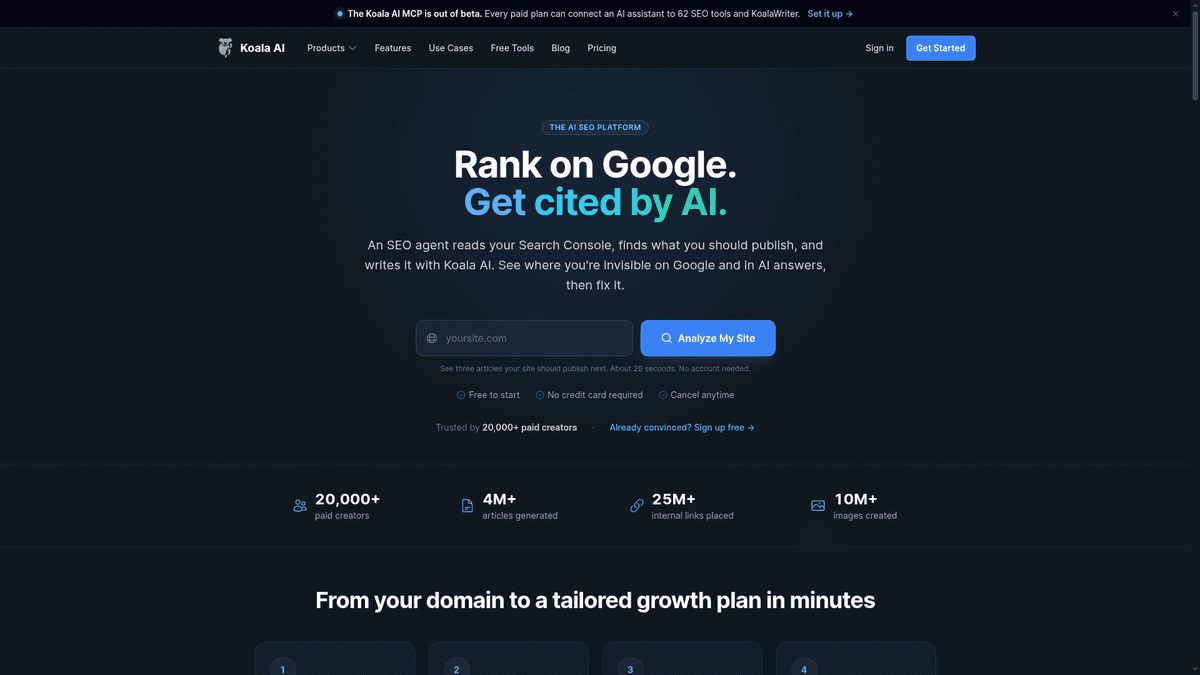
Koala Writer fits a blogger who knows the next topic and wants help drafting a search-focused post. Give it the topic, work through the article, then move it into your publishing workflow.
If Emplibot's drafts need more hands-on shaping, Koala Writer's narrower focus may appeal. You would still need a process for prioritizing keywords, monitoring rankings and measuring AI citations. That is fine if you already run those parts yourself.
4. RightBlogger: for a solo blogger who wants multiple writing helpers

RightBlogger suits someone who writes regularly and wants both creation tools and blog automation. It makes sense when you want to remain involved as an editor: decide the topic yourself, make the draft useful, and adapt the output to your audience.
The distinction from Emplibot is how much of the operation you want to own. Writing and publishing tools can shorten individual tasks, but they do not remove the need to decide which posts matter, inspect quality and track outcomes. If you already have a content calendar and enjoy editing, that may be the better trade.
5. Outrank.so: for automated publishing

Outrank.so is worth considering if your posting calendar keeps slipping. Its automated content and publishing workflow is closer to Emplibot's job than a general-purpose copy assistant's.
I would pay close attention to the handoff from draft to live post. A sensitive topic may need an expert to sign off on every claim. For a team with a clear topic list and a way to review exceptions, automation can take formatting and scheduling off the calendar.
6. SEOWriting.ai: for repeatable SEO content batches
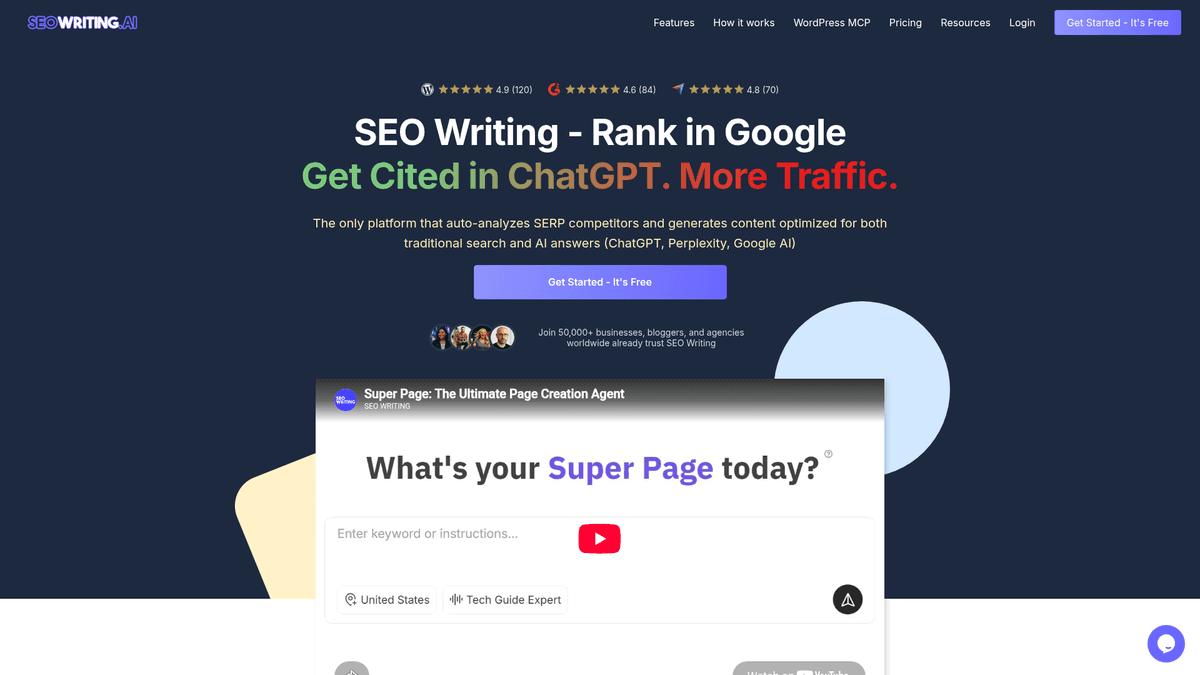
SEOWriting.ai fits operators producing batches of search-focused articles from a known keyword list. A publisher with a defined niche can work through a backlog without drafting every post by hand.
The risk is that volume can hide duplication. Before you queue a large batch, decide which queries merit separate pages, where your own expertise belongs, and which claims need sources. If your problem is deciding what to write rather than producing the words, prioritize a planning-led option instead.
7. Byword: for scaled pages with a clear topic map
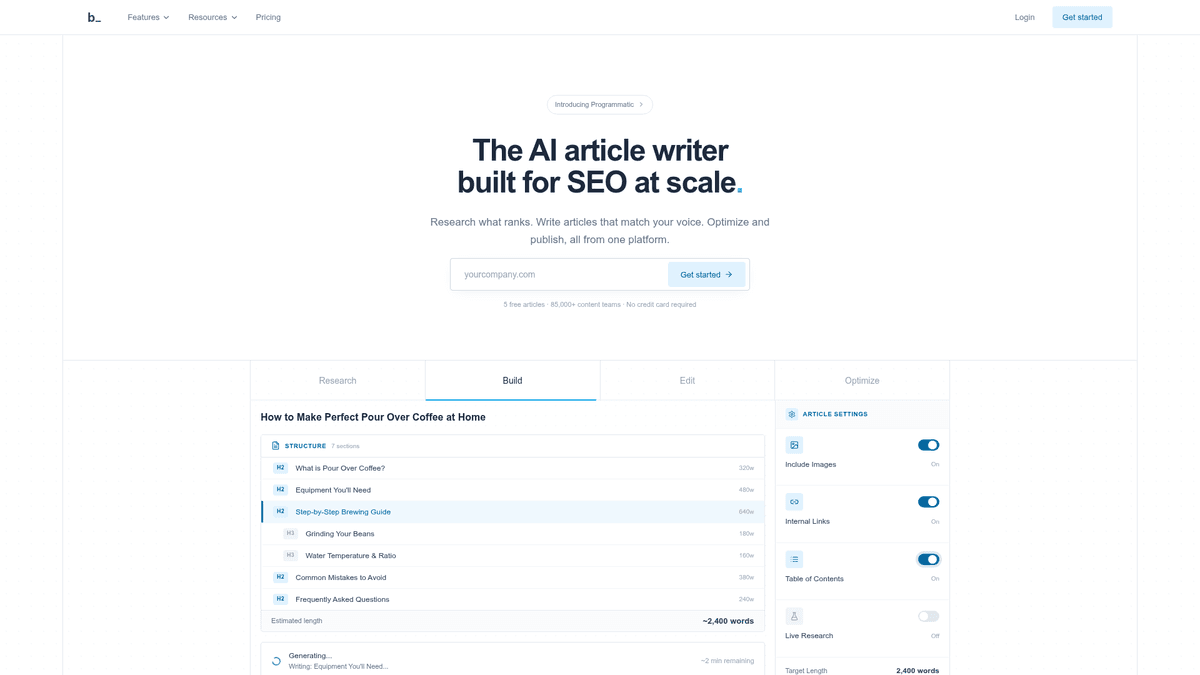
Byword suits a publisher with a structured topic list and many distinct questions to answer. A team with a clear editorial taxonomy can use it to turn that list into pages.
Give each page a distinct question to answer. Put examples, product knowledge and accurate details into the brief. If the resulting pages sound interchangeable, fix your topic map before generating another batch. Founders who need help choosing priorities may prefer a tool that plans the work too.
8. Writesonic: for broader marketing and AI-search work
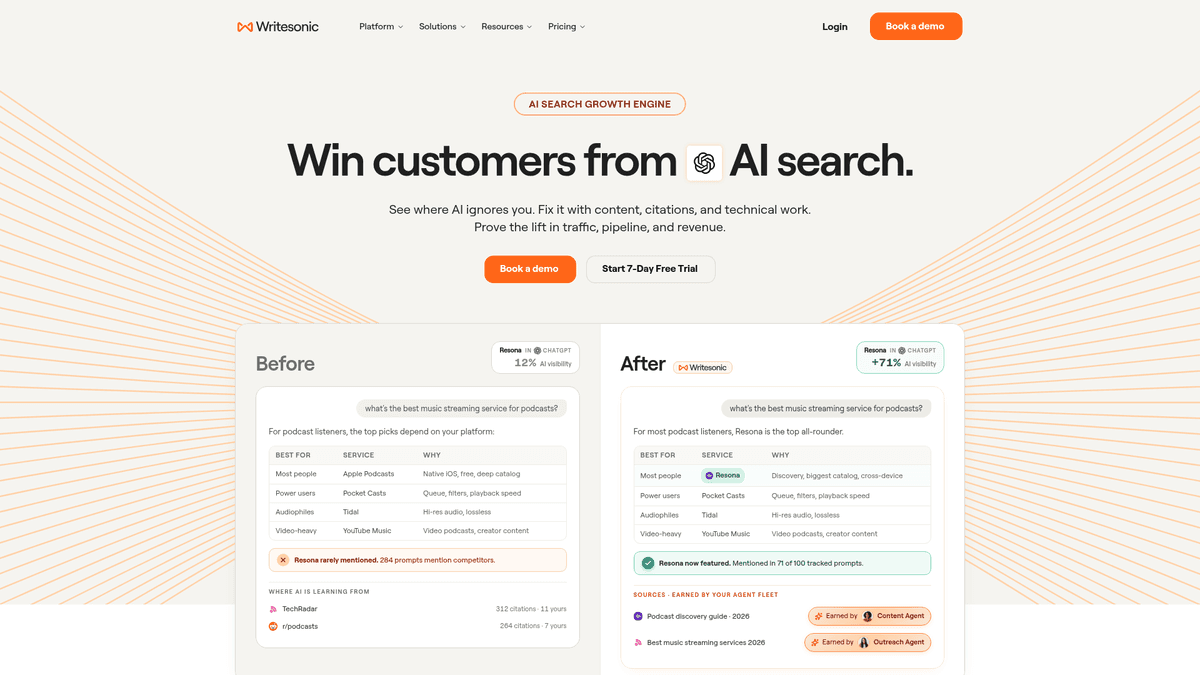
Writesonic covers a broader marketing workflow. If blog posts are one part of your work, its content creation and AI-search tools may fit. A team managing several channels has more use for that breadth than a blogger focused on one site.
Ask which job is driving the purchase. If it is simply daily blog production, a focused publishing system is easier to evaluate. If AI visibility and a wider marketing workflow are important, compare the measurement features you need separately from article generation. A strong draft is not a citation report.
If GEO measurement is the missing piece
Generative engine optimization (GEO) includes preparing pages for answer engines and measuring whether those engines mention or cite you. A claim that content is AI-ready tells you nothing about whether an assistant picked it up.
If measurement is the deciding factor, add AthenaHQ, Otterly AI or Profound to your shortlist as dedicated AI-visibility tools. These are complements to a publishing system rather than direct substitutes for a blog writer. Compare the prompts you can monitor, the answer engines covered and whether the reports distinguish a brand mention from a cited URL. For more on that distinction, see AI visibility tools. Then use what you learn to refresh pages that answer real buyer questions.
"Users clicked a link in an AI summary on just 1% of visits to search pages with a summary." - Pew Research Center
How I would choose a replacement
I would test each candidate with a question a prospective customer asks before buying. Take that question through the whole workflow, from topic choice to published post, rather than judging a draft made from a broad phrase.
Look at the plan: Does the tool tell you why this topic matters and where it sits among your other pages?
Read the draft: Is the answer specific to your product and audience? Are factual claims supported, and are internal links helpful?
Inspect the publishing step: Does the article arrive in your CMS with the formatting you expect? Is the review control right for your risk level?
Set a success measure: Use search performance for organic discovery and track citations or mentions if AI visibility matters. Compare SEO automation tools if you need a broader picture of the workflow.
For a founder who wants to stop juggling research, writing, images and publishing, RankSpot is the strongest fit here because it joins those jobs in one planned workflow. Try the first three articles, inspect the quality for your niche, and keep editorial oversight on claims that only your business can verify.