If you’re looking for a better fit than Writesonic, you’re probably hitting one of three walls:
the writing is fine, but the SEO depth is thin
the workflow still needs too many extra tools
the output doesn’t help enough with AI answers, Google AI Overviews, or competitor-driven content strategy
Some tools are still mostly AI writers. Some are SEO optimization layers. A few are moving toward full content operations platforms that can handle research, planning, writing, publishing, and GEO-ready formatting in one system.
If you’re a founder, a small marketing team, or store owner, that distinction matters a lot. You do not need “more features.” You need fewer manual steps and step-by-step guide on how to succeed in SEO.
This guide compares the top options side by side, then breaks down who each tool is actually best for.
"Google's AI Overviews now result in a 58% lower average CTR for top-ranking pages." - Ahrefs / Business Wire
That’s why this conversation is no longer just about writing faster. It’s about publishing content that can still win clicks, and increasingly, get cited in AI answers.
Quick comparison table
Tool | Best for | Starting price* |
|---|---|---|
RankSpot | Founders and small teams that want end-to-end SEO + GEO automation | from ~$39/month |
Surfer SEO | Real-time on-page optimization and content scoring | ~$79/month |
Scalenut | Faster SEO article production with clustering | ~$49/month |
Frase | SERP research, briefs, and drafting in one place | ~$45/month |
Jasper | Brand-controlled multi-format content teams | ~$49/month |
Copy.ai | GTM and sales workflow automation | ~$49/month |
Rytr | Budget AI writing for freelancers | ~$9/month |
Clearscope | Premium content grading for serious editorial SEO | Custom / premium pricing |
NeuronWriter | Budget semantic optimization and multilingual SEO | ~$23/month |
Anyword | Conversion-focused copy with performance angles | ~$39/month |
How to choose the right Writesonic alternative
Before the list, here’s the fastest way to narrow your choice.
If your bottleneck is:
publishing consistently, you want to spend little time, and your SEO knowledge is basic, choose an automation-first platform because it handles production and workflow for you.
weak rankings, you can invest some time, and you already know the basics of SEO, choose an SEO optimizer because it helps improve structure, targeting, and on-page relevance.
brand-safe copy across many channels, you have moderate time, and your content process is already fairly defined, choose a writing suite because it keeps tone, consistency, and team output aligned.
low-cost content fast, you want minimal setup, and you do not need advanced SEO features, choose a lightweight writer because it is the simplest way to generate volume quickly.
want visibility in AI answers, you can dedicate extra time, and your team is comfortable with content optimization, choose a platform with GEO-aware structure or pair your writer with visibility monitoring because discoverability now depends on more than classic rankings.
If you’re still doing SEO manually, it helps to understand how modern SEO automation tools reduce the work between idea and published article.
1. RankSpot - Best all-in-one alternative for founders and small teams
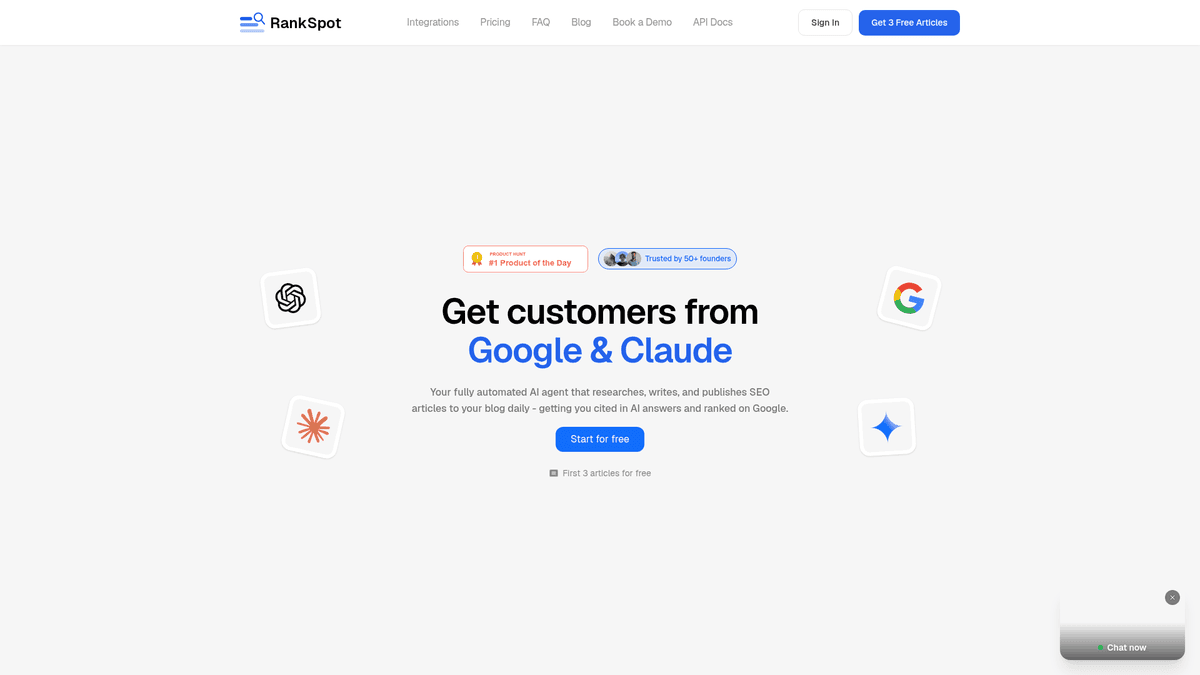
RankSpot is the best choice if your problem is not “I need another writing app,” but “I need SEO content to get done without hiring a bigger team.”
That’s the real difference.
Writesonic is still useful as a writing assistant. But RankSpot is built more like a personal AI SEO operator. It handles the full pipeline: learns your site, studies your niche, tracks competitors, prioritizes keyword opportunities, writes long-form content, generates visuals, formats the post, adds internal links, and publishes directly to your CMS.
For founders, that matters more than having 100 templates.
Why RankSpot stands out
Most alternatives on this list improve one part of the workflow. RankSpot compresses the whole workflow.
You give it your site. It builds a 30-day plan. It finds high-intent opportunities and competitor gaps. It can publish daily. It also optimizes for both traditional rankings and AI-answer visibility, which is increasingly important if you want to show up in ChatGPT, Claude, Gemini, and AI Overview-style discovery paths.
That makes it especially strong for lean teams trying to compete above their weight.
Best features
End-to-end SEO content pipeline: research → plan → write → publish
Competitor keyword tracking and “copy what works” targeting
Opportunity-based keyword prioritization, not just raw volume chasing
Long-form article generation with on-page SEO structure built in
GEO-aware formatting for AI answer engines
Unique, on-brand image generation for each article
Direct CMS integrations with WordPress, Webflow, Wix, Shopify, Framer, Ghost, and more
Reddit and forum conversation discovery for demand mining
Support for 100+ languages
First 3 articles free, no credit card
Where it beats Writesonic
Better for traffic systems, not just draft generation
Better for founders who don’t want separate tools for keyword research, writing, design, and publishing
Better for daily publishing consistency
Better for competitor-led content strategy
Better for AI-answer optimization
Where Writesonic may still fit better
If all you want is ad copy, a one-off landing page, or quick social drafts, a pure writing tool can still feel lighter. RankSpot is strongest when you want repeatable organic growth, not just content generation in isolation.
Best for
SaaS founders
eCommerce brands building content moats
agencies serving small businesses
lean content teams replacing manual SEO ops
2. Surfer SEO - Best for real-time optimization against the live SERP

Surfer SEO is probably the most-cited Writesonic alternative for one reason: it gives writers immediate feedback based on what’s ranking now.
If your team already has a content process but needs stronger on-page performance, Surfer is a very solid fit.
Why people choose Surfer
Surfer’s core strength is the content editor. It compares your draft against ranking pages and suggests terms, headings, structure, and depth improvements. It helps answer the tactical SEO question founders ask all the time: “What exactly is this article missing?”
That makes it stronger than Writesonic when rankings matter more than writing speed.
Best features
Real-time content scoring
SERP-driven recommendations
Audit tools for existing pages
Content editor for writers and SEOs
Keyword clustering and topical planning
Internal linking assistance
Tradeoffs
Surfer is more of an optimization layer than a true end-to-end publishing engine. You’ll still likely use other tools for planning, drafting, visuals, and CMS execution.
That’s where RankSpot has the edge for smaller teams. Surfer helps optimize. RankSpot helps ship.
Best for
in-house SEO teams
editors improving existing drafts
teams refreshing older content at scale
3. Scalenut - Best for automated draft creation plus topic clusters

Scalenut can be a workable middle-ground for teams that want AI drafting with some SEO support in the same workflow.
Its main feature is Cruise Mode, which is built to move long-form content from keyword to draft more quickly, though it still requires hands-on input and is not especially differentiated from other tools in this category.
Why Scalenut works
It sits in the middle of the market well. More SEO-aware than a simple writing tool. Less editorially strict than a premium optimizer like Clearscope.
It also leans into topic clustering, which is useful if you’re building authority across a niche instead of publishing random standalone posts.
Best features
Cruise Mode for long-form drafts
topic cluster planning
content optimizer
keyword support
more SEO structure than basic AI writers
Tradeoffs
Scalenut helps you move faster, but you still need judgment. Like most AI drafting tools, the output can get repetitive if you rely on it too heavily without a strategy layer.
If you’re figuring out how to build a stronger targeting system, this guide on keyword research is a good companion to tools like Scalenut.
Best for
content marketers who want fast first drafts
small SEO teams building topic clusters
users moving up from pure AI copy tools
4. Frase - Best for SERP research, content briefs, and AI drafting
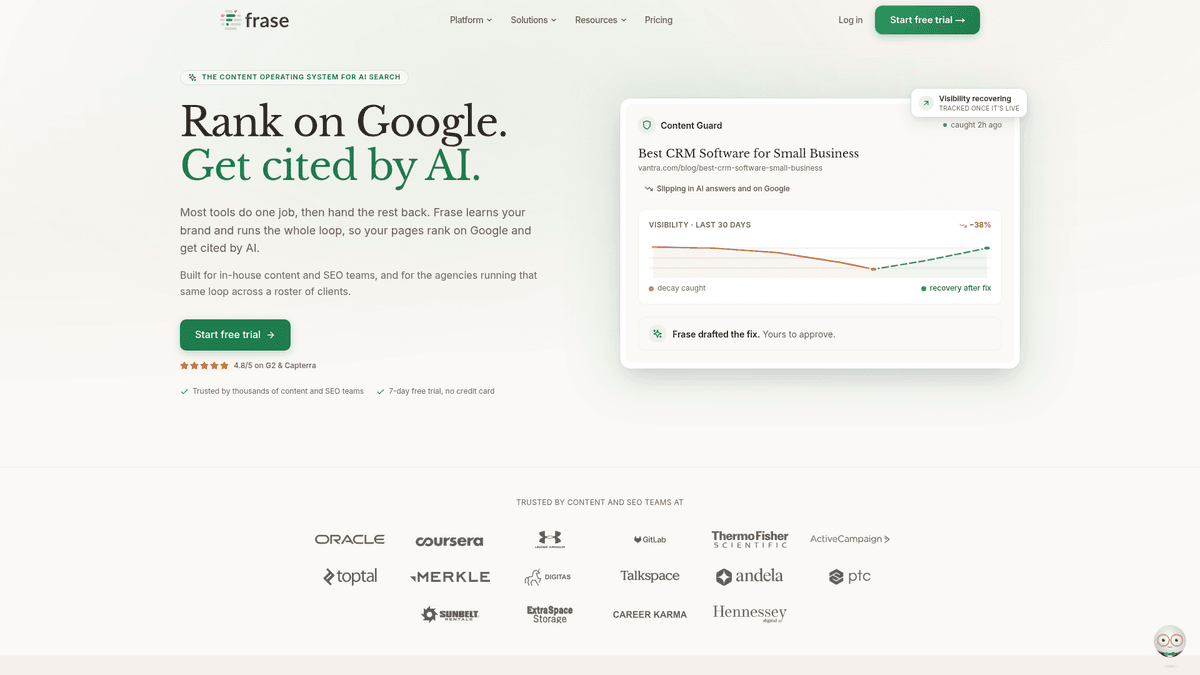
Frase is one of the most practical tools for teams that care about research quality before they start writing.
Instead of beginning with a blank page, Frase lets you pull headings, questions, themes, and common subtopics from ranking pages and use that to shape the brief.
Why Frase is popular
It reduces the prep work. That matters if your writing process currently looks like this:
search keyword manually
review top 10 results
note common headings
build outline
start drafting
Frase compresses those steps nicely.
Best features
SERP-based brief building
question extraction
AI-assisted outlines and drafts
content scoring
helpful research workflow for blog posts
Tradeoffs
Frase is strong in the pre-writing and writing phases, but not as strong as a true automated platform for end-to-end publishing. It’s also not the deepest standalone SEO suite.
Best for
teams producing educational blog content
marketers who want better outlines
agencies creating briefs for writers
5. Jasper - Best for brand voice and multi-format marketing content

Jasper has stayed relevant by moving beyond “AI blog writer” into a broader content platform for marketing teams.
If your company cares a lot about tone consistency across blog posts, landing pages, ads, emails, and sales assets, Jasper is still one of the better picks.
Why Jasper wins certain teams
Brand voice controls are its big strength. For teams with multiple contributors, that matters. Founders often start by writing everything themselves. Then growth creates a mess. Different people write differently. Messaging drifts. Jasper helps control that.
Best features
brand voice controls
templates across many formats
collaborative workspace features
marketing use cases beyond SEO blog posts
good fit for content operations across teams
Tradeoffs
Jasper is not the strongest tool here for SEO depth. It’s better thought of as a sophisticated writing platform than an SEO execution engine.
If your primary goal is organic traffic growth, you may still need another layer for keyword opportunity discovery, competitor targeting, and structured publishing.
Best for
multi-person marketing teams
brands with strict voice standards
content production across channels, not just blog SEO
6. Copy.ai - Best for GTM and sales workflow automation
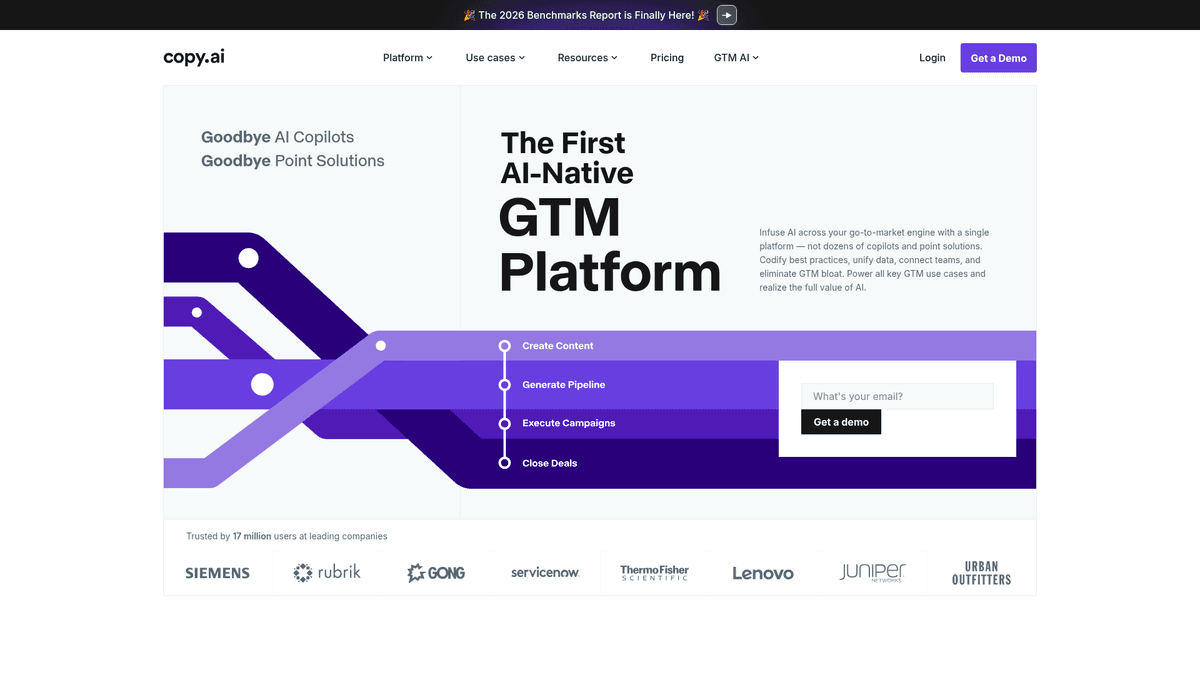
Copy.ai is less about classic SEO blogging and more about helping go-to-market teams automate repetitive content tasks.
Think outreach sequences, sales messaging, campaign workflows, and cross-functional content tasks.
Why Copy.ai is different
It’s useful if your content problem is bigger than articles. Some businesses need copy for sales enablement, outbound, lifecycle messaging, and internal workflows more than they need top-of-funnel blog production.
That’s where Copy.ai can outperform Writesonic.
Best features
workflow automation
GTM-focused use cases
multi-step content systems
broader sales and marketing utility
useful for operations-minded teams
Tradeoffs
If blog SEO is your main growth channel, Copy.ai may feel too broad and not deep enough. It’s a stronger fit for revenue teams than for founder-led SEO machines.
Best for
revenue teams
sales and marketing alignment
companies automating messaging workflows
7. Rytr - Best budget pick for freelancers and solo users
Rytr wins on affordability and simplicity.
If you just want a low-cost AI writer that helps you draft faster, it does the job.
Why Rytr still has a place
Not everyone needs a full SEO operating system. Some solo users just need cheap drafting help for product descriptions, email copy, social posts, and rough article starts.
Rytr is one of the lowest-friction ways to get that.
Best features
simple interface
fast short-form drafting
useful for freelancers and side projects
Tradeoffs
This is not the tool to pick if you want serious SEO depth. It lacks the planning, competitor research, content scoring, and publishing stack that stronger organic growth systems need.
Best for
freelancers
solo creators
side projects
low-budget experimentation
8. Clearscope - Best premium content grading tool
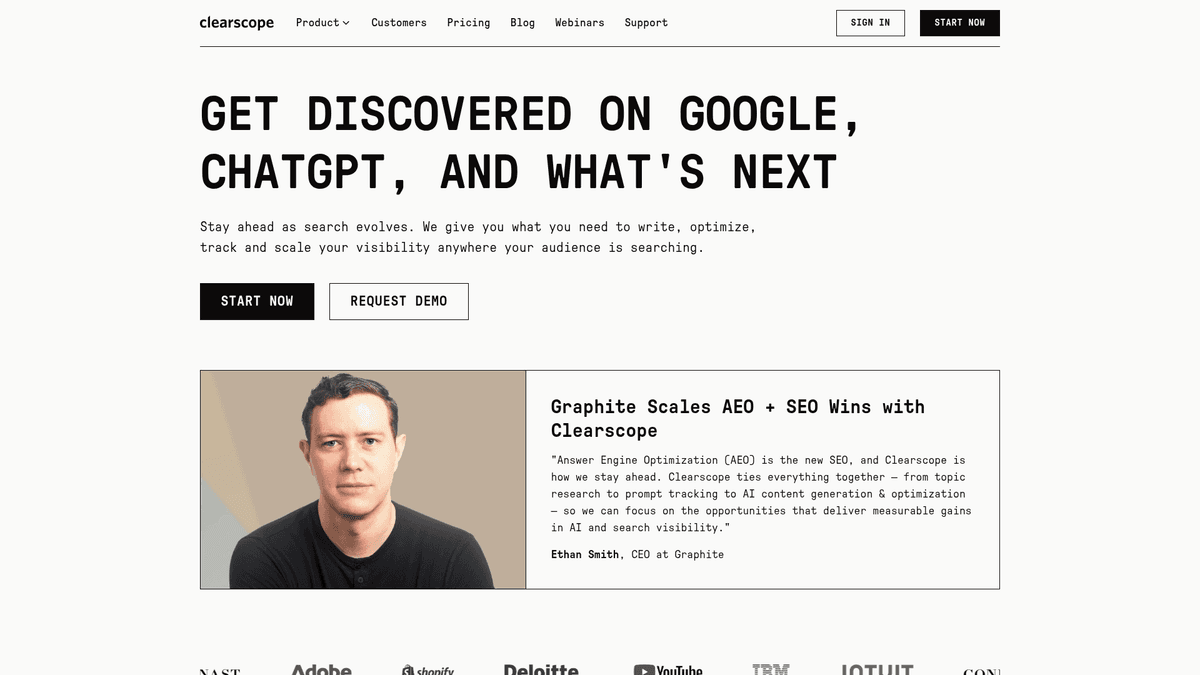
Clearscope is a premium pick for teams that want a clean, trusted optimization workflow around content quality.
Its hallmark is the A-to-F grading model, which makes it easy for writers and editors to understand whether a piece is well covered.
Why Clearscope is respected
It’s simple in the right way. You bring the draft in, and Clearscope helps improve topical coverage and relevance without burying you in complexity.
For established content teams, that clarity is valuable.
Best features
A - F content grading
topical relevance guidance
clean editorial interface
strong reputation with SEO teams
useful Google Docs style workflow
Tradeoffs
It is not an AI-first content machine. It is not a cheap tool. And it still assumes you already have a drafting and publishing process elsewhere.
Best for
established editorial teams
premium SEO workflows
businesses focused on content quality control
9. NeuronWriter - Best budget semantic optimizer with multilingual support
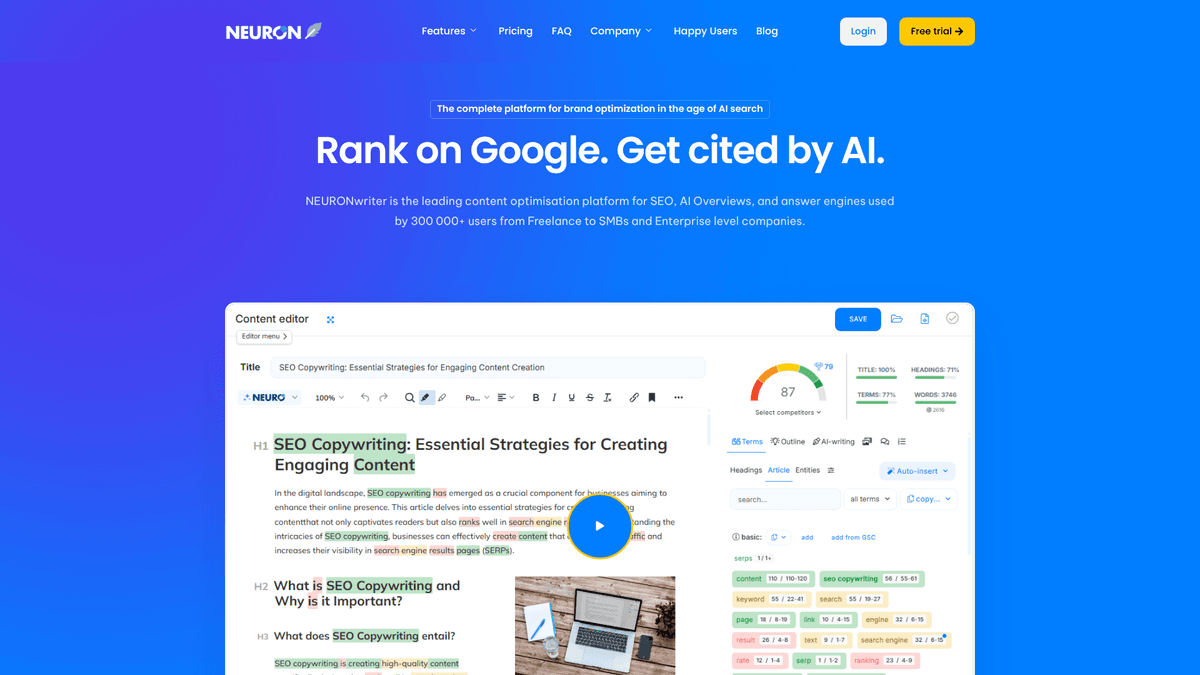
NeuronWriter is a good value pick if you want semantic SEO help without paying premium-suite prices.
It focuses on analyzing ranking content and suggesting terms, entities, and topic improvements to strengthen your page.
Why it’s a smart budget option
A lot of teams don’t need the glossy interface. They need useful optimization data at a sane price. NeuronWriter delivers that.
It’s also a reasonable fit for multilingual publishing, which matters for global brands or operators targeting multiple regions.
Best features
affordable semantic optimization
SERP-based term suggestions
multilingual support
useful for improving topical coverage
practical for small agencies
Tradeoffs
The UI is less polished than premium tools, and its writing features are not the main reason to buy it. Think of it more as a budget optimization assistant than a full-stack platform.
Best for
budget-conscious SEO teams
multilingual sites
agencies optimizing content at lower cost
10. Anyword - Best for data-driven conversion copy
Anyword is the most conversion-focused option on this list.
It’s built around the idea that copy should not just sound good. It should predict and improve performance.
Why marketers choose Anyword
If your job is writing ads, landing page copy, emails, or performance-driven messaging, Anyword’s positioning is compelling. It leans into performance scoring and message variation more than classic SEO article production.
Best features
conversion-oriented copy generation
predictive performance angles
audience-aware messaging support
good fit for campaign teams
Tradeoffs
This is not the best fit if your main objective is publishing SEO articles every day or building a content moat around competitor keyword gaps.
Best for
paid acquisition teams
lifecycle marketers
copywriters optimizing conversion messaging
Category breakdown: which type of tool are you really buying?
Before you compare features or prices, identify the job you need the tool to do. Most options fall into one of three categories:
Category | What it helps with | Best examples |
|---|---|---|
AI writing tools | Faster draft creation across formats | Jasper, Rytr, Anyword |
SEO optimization tools | Better ranking through scoring, briefs, and SERP analysis | Surfer SEO, Frase, Clearscope, NeuronWriter |
End-to-end content systems | Research, planning, writing, formatting, and publishing | RankSpot, Scalenut to a degree |
That distinction matters because the right purchase depends on where your bottleneck is. If your team can draft quickly but struggles to rank, an optimization tool is usually the better investment. If you need a repeatable content engine, a full system may be worth the higher cost.
For founders, the best starting point is to pinpoint the highest-leverage gap in your process: ideas, optimization, or publishing execution. If you’re not sure, start with finding competitor keywords. That will usually show whether you need better topic selection, stronger SEO guidance, or a more complete content workflow.
What most tools still miss in 2026
Even strong alternatives often stop short in four areas.
1. Competitor-led prioritization
A tool can generate articles all day and still miss the best opportunities.
The smarter approach is to prioritize based on:
what competitors already rank for
where your site has topical gaps
where intent is high enough to matter
where a realistic win is possible
That’s a big part of why all-in-one systems are gaining ground. They reduce wasted publishing.
2. Consistent publishing without content ops overhead
Most founders don’t fail at SEO because they lack ideas. They fail because publishing slips.
One week you write two posts. Then product work takes over. Then content dies for a month.
"Companies that publish 16 or more blog posts per month experience 3.5 times more traffic and 4.5 times more leads compared to those publishing 0-4 posts monthly." - HubSpot
That stat is extreme, but the principle is right: consistency compounds.
This is exactly why RankSpot’s daily publishing workflow is useful. It removes the human bottleneck from the highest-friction part of SEO execution.
3. GEO readiness
Ranking in Google is no longer the whole game.
You also want content structured well enough to be:
summarized
cited
quoted
recommended in AI assistants
That means clearer structure, sharper entity coverage, cleaner answers, stronger internal logic, and broader topic completeness.
For teams following this trend closely, our GEO and AI search visibility article break down how content needs to evolve beyond classic SEO.
4. Direct publishing
This gets ignored too often.
If your workflow ends with “copy from tool → paste into CMS → fix formatting → add image → add links → publish,” you still have an operations problem.
Direct CMS integration is not a nice-to-have. For small teams, it’s a time multiplier.
Final verdict: the best Writesonic alternative depends on what you actually need
Here’s the short version.
Choose RankSpot if you want the strongest all-in-one path from idea to published SEO article, especially if you’re a founder or small team that wants to save 40+ hours a month and stop juggling research, writing, image creation, and CMS publishing manually.
Choose Surfer SEO if you already have content production handled and want better on-page optimization.
Choose Scalenut if you want faster long-form drafting with useful SEO support.
Choose Frase if you care most about SERP research and brief-building.
Choose Jasper if brand voice across many content formats is the priority.
Choose Copy.ai if your workflow is more GTM and sales automation than blog SEO.
Choose Rytr if your budget is tiny.
Choose Clearscope if you want premium editorial optimization.
Choose NeuronWriter if you want affordable semantic SEO help.
Choose Anyword if conversion copy matters more than search traffic.
But if your goal is simple - publish consistently, target the right keywords, learn from competitors, and build content that can win both in Google and AI answers - RankSpot is the strongest fit on this list.
It does what most founders actually need: not more dashboards, but less work and better output.
If that’s your situation, try RankSpot’s low-friction setup and get your first 3 articles free. No credit card. Just a faster path from “we should do SEO” to “we’re publishing and growing.”