If you're looking for search atlas alternatives, you're probably dealing with one of three problems.
First, the platform feels bigger than what you actually need. Second, pricing and feature packaging make it hard to know what you're really paying for. Third, you may like the idea of all-in-one SEO automation, but your real bottleneck is narrower: content production, backlink research, rank tracking, or publishing consistency.
That is why the right search atlas alternative depends less on feature count and more on workflow fit.
For founders, lean SaaS teams, and small ecommerce operators, the goal is rarely “buy the tool with the most dashboards.” The goal is simpler: find keywords worth targeting, publish useful content consistently, show up in both Google and AI answers, and do it without burning 10 hours a week.
RankSpot is built for that exact job. It automates the full pipeline from research to publishing, keeps the dashboard focused, and helps small teams compete with bigger SEO operations without stitching together five separate tools.
In this guide, we’ll compare 10 solid options by actual use case: content automation, technical SEO, backlinks, rank tracking, and budget. Then we’ll close with a simple decision framework so you can pick the tool that fits your bottleneck instead of buying another bloated suite.
Quick comparison table
Tool | Best for | Starting price | Biggest strength | Best fit |
|---|---|---|---|---|
RankSpot | Founders and lean teams that want end-to-end SEO content automation | Free trial available | Fully automated research → write → publish workflow | Small teams that want consistent growth without manual content ops |
Surfer SEO | On-page content optimization | Custom / varies by plan | Real-time content scoring | Writers and editors improving individual pages |
Scalenut | AI-assisted SEO content production | Custom / varies by plan | Cruise Mode + clustering | Teams needing faster draft creation |
Ahrefs | Backlink and competitor research | Lite plan available | Best-in-class link data | SEO specialists and agencies |
Semrush | Broad all-in-one digital marketing suite | Starter plans available | SEO + PPC + competitive data | Mature in-house marketing teams |
SE Ranking | Value-focused all-in-one SEO | Lower-cost suite plans | Solid breadth at a friendlier price | Agencies and SMBs |
Frase | Research briefs and SEO drafting | Entry plans available | SERP research to article brief flow | Content teams with strong editorial process |
Nightwatch | Clean rank tracking and visibility monitoring | Varies by usage | Accurate tracking and reporting | Teams obsessed with ranking movement |
RankYak | Hands-off autopilot blogging | Subscription plans | Simple “done for you” publishing | Solos wanting minimal setup |
Ubersuggest | Budget-conscious beginners | Low-cost plans | Accessible SEO basics | Solo founders and early projects |
How to choose the right alternative
Before you compare tools, answer one question:
What job are you actually replacing?
Most buyers say they want an SEO platform. In reality, they usually want one of these:
A system that publishes content consistently
Better content optimization for pages already ranking
Backlink and competitor intelligence
Simpler reporting and rank tracking
A cheaper all-in-one suite
Better AI answer visibility
That framing matters. If your problem is content velocity, Ahrefs is probably not your answer. If your problem is link intelligence, a writing-first platform will not solve it. If your team is overwhelmed by dashboards, switching to an even larger suite only makes things worse.
A better approach is to match the tool to the bottleneck.
If your bottleneck is publishing, look for automation. If your bottleneck is page quality, look for optimization. If your bottleneck is strategy, look for research depth.
For teams thinking about AI search as well as traditional SEO, it also helps to understand the newer category of AI visibility tools, which sit alongside classic SEO suites rather than replacing all of them.
Why many teams start looking beyond Search Atlas
Search Atlas appeals to teams that want one system for SEO research, content support, automation, and reporting. That sounds great on paper. But for many founders and lean operators, a few issues show up fast:
1. The product surface can feel too wide
A 40+ tool environment can be powerful for specialists. It can also slow down smaller teams that just want clear next steps.
2. Pricing can be hard to map to actual usage
If you only use content features, or mainly care about AI visibility, paying for the full stack can feel heavy.
3. Automation is only useful if your team trusts it
Technical deployment tools are impressive. But if you still need to review everything manually, the time savings may be smaller than expected.
4. All-in-one does not always mean simple
The more a tool tries to do, the more setup, governance, and training it usually requires.
That is why many teams move toward one of two paths:
a simpler specialist stack, or
a focused platform that automates the highest-value workflow end to end
For founders, the second option is often the most practical.
The 10 best Search Atlas alternatives in 2026
1. RankSpot – Best overall for founders and lean teams
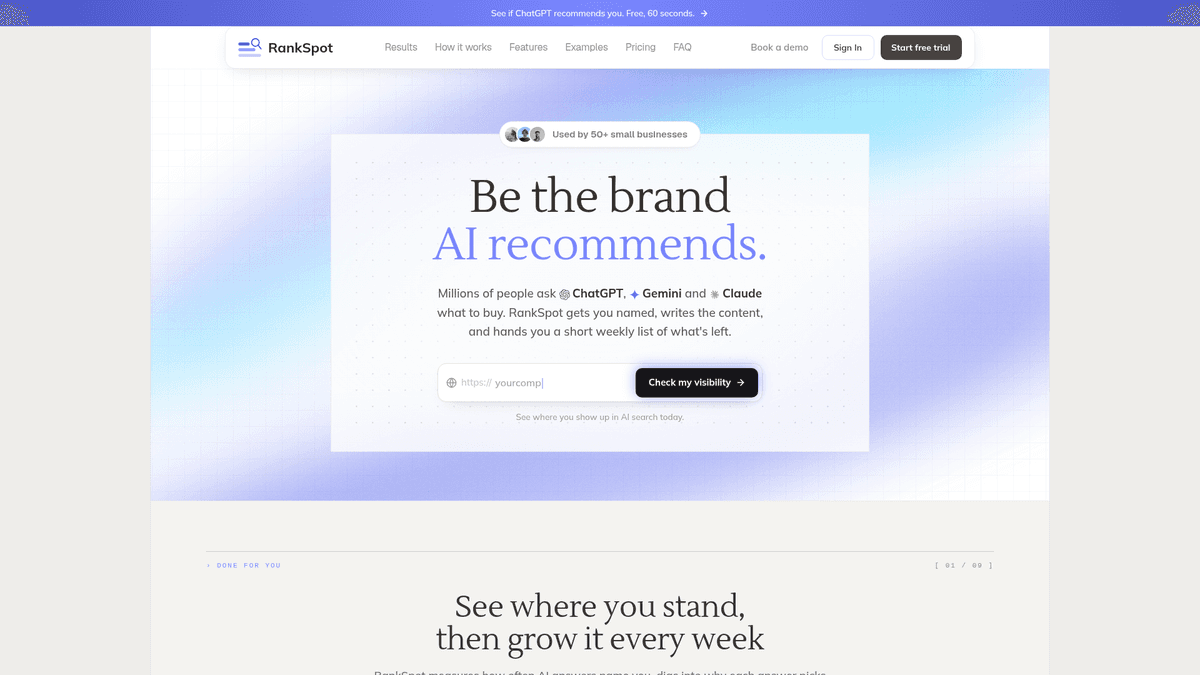
RankSpot is the best pick if your real goal is not “more SEO features,” but “more qualified traffic from content without building a whole SEO department.”
Instead of giving you dozens of disconnected tools, RankSpot acts like an SEO content operator. You give it your site, niche, and competitors. It learns the space, builds a 30-day plan, finds high-intent opportunities, writes long-form articles optimized for both search engines and AI answers, generates images, formats the post, and publishes it directly to your CMS.
That makes it especially strong for founders, indie hackers, SaaS startups, and lean ecommerce teams.
Why RankSpot stands out
The big difference is workflow compression. RankSpot does not stop at keyword ideas or content outlines. It handles the actual execution.
That includes:
keyword research and opportunity prioritization
competitor keyword tracking
AI-ready article generation for Google, ChatGPT, Claude, and Gemini visibility
built-in formatting, internal linking, tables, and structure
direct publishing to WordPress, Webflow, Wix, Shopify, Framer, Ghost, and more
unique on-brand image generation
Reddit and forum conversation discovery for off-Google demand capture
support for 100+ languages
For a small team, this can replace a whole stack of point solutions and save 40+ hours per month.
Where RankSpot is a better fit than Search Atlas
Choose RankSpot if:
your main bottleneck is publishing consistently
you want fewer tools and more output
you need an end-to-end system, not a dashboard
you care about showing up in AI answers, not just blue links
you want to test with low friction using the first 3 articles free and no credit card
Where Search Atlas still has an edge
To be fair, Search Atlas can be stronger if your top priority is deeper technical SEO deployment workflows and OTTO-style site changes. If your organization needs more technical automation across many pages and has reviewers in place, that can matter.
But for most founders, publishing velocity and topic prioritization drive results sooner. That is where RankSpot wins.
If you want a broader look at adjacent categories, our guides on SEO automation tools and AI tools for SEO are useful next reads.
2. Surfer SEO – Best for real-time content scoring
Surfer SEO is a strong option if your team already has a writing workflow and just needs better optimization inside the editor.
Its main strength is real-time SERP-based scoring. As you write, Surfer gives you live recommendations on term usage, structure, headings, and coverage. That makes it popular with content marketers, agencies, and editors focused on improving page-level relevance.
Best for
Existing content teams
Editors optimizing drafts
Agencies managing article quality across clients
Pros
Very strong editor experience
Clear scoring system
Helpful for refreshing underperforming pages
Cons
Not built as a full end-to-end publishing machine
Less useful if your problem is content production capacity, not optimization
Can encourage over-optimization if used too mechanically
If you already publish regularly and want better page tuning, Surfer makes sense. If you struggle to create and ship content at all, RankSpot or RankYak may be better fits.
3. Scalenut – Best for AI draft generation plus clustering
Scalenut sits between an optimization tool and a content production tool. Its best-known feature is Cruise Mode, which walks users from keyword to draft faster than traditional editorial workflows.
It also offers keyword clustering and content planning support, which helps teams move from ideas to draft production quickly.
Best for
Teams creating SEO articles at medium volume
Operators who want more help than Surfer but less full automation than RankSpot
Content marketers managing topic clusters
Pros
Faster drafting than manual workflows
Useful keyword grouping
Good middle ground between planning and production
Cons
Still requires more hands-on management than true autopilot systems
Publishing and end-to-end workflow depth may be lighter than dedicated automation platforms
Less differentiated for backlink or technical SEO use cases
Scalenut is a good choice if you want AI-assisted content output while keeping a human in the driver’s seat.
4. Ahrefs – Best for backlink and competitor research
Ahrefs remains one of the strongest tools in SEO for backlink intelligence, competitor analysis, and keyword research depth.
If your workflow starts with questions like:
Who links to our competitors?
Which pages drive the most traffic in the category?
What link gaps are we ignoring?
Which keywords are already proven by competitors?
Ahrefs is still hard to beat.
Best for
SEO specialists
Agencies doing research-heavy work
Founders in competitive niches who want real market intelligence
Pros
Excellent backlink index
Deep competitor visibility
Strong keyword exploration tools
Cons
Not a true content automation system
Publishing and article creation require other tools
Can be expensive relative to how much a lean team actually uses
Ahrefs is a fantastic intelligence tool. But it is still mostly a “decide what to do next” platform, not a “do it for me” platform.
That is why many founders either pair Ahrefs with a content engine or switch to something more operational once research is no longer the bottleneck.
5. Semrush – Best all-in-one for broader marketing teams
Semrush is probably the most recognizable all-in-one alternative in this category. It covers SEO, PPC, content, competitor analysis, and social tools.
For a mature in-house marketing team that wants one platform across several channels, that breadth can be useful.
Best for
Broader marketing departments
Teams running both SEO and paid acquisition
Agencies with multiple service lines
Pros
Huge feature breadth
Mature ecosystem
Strong PPC and SEO data combination
Cons
Can feel heavy for small teams
Cost climbs fast as usage expands
Still more dashboard than execution engine
If you want a suite, Semrush is one of the safest picks. If you want simplicity and output, it may still feel too large.
6. SE Ranking – Best value all-in-one suite
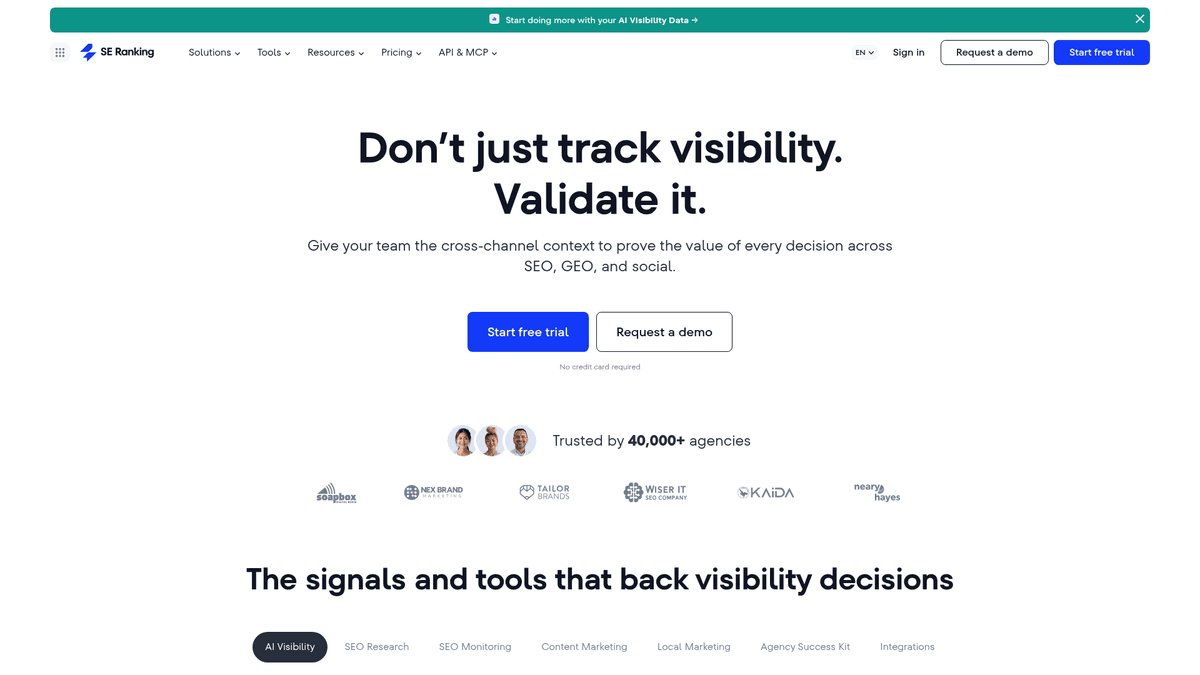
SE Ranking is often the best-value pick for teams that want a classic SEO suite without paying Semrush-level prices.
It includes rank tracking, site audits, keyword research, competitor analysis, and reporting. For agencies and SMBs, that combination hits a useful middle ground.
Best for
Agencies watching margins
SMBs that want an all-in-one suite
Teams replacing pricier legacy SEO subscriptions
Pros
Good price-to-feature ratio
Easier to adopt than some enterprise-style platforms
Solid coverage across core SEO jobs
Cons
Less depth than Ahrefs in backlinks
Less execution depth than RankSpot for content automation
AI visibility and GEO capabilities may not be the core differentiator
For teams comparing traditional suites, SE Ranking deserves serious consideration. It is especially good when budget matters more than having the absolute deepest data.
7. Frase – Best for SERP research and content briefs
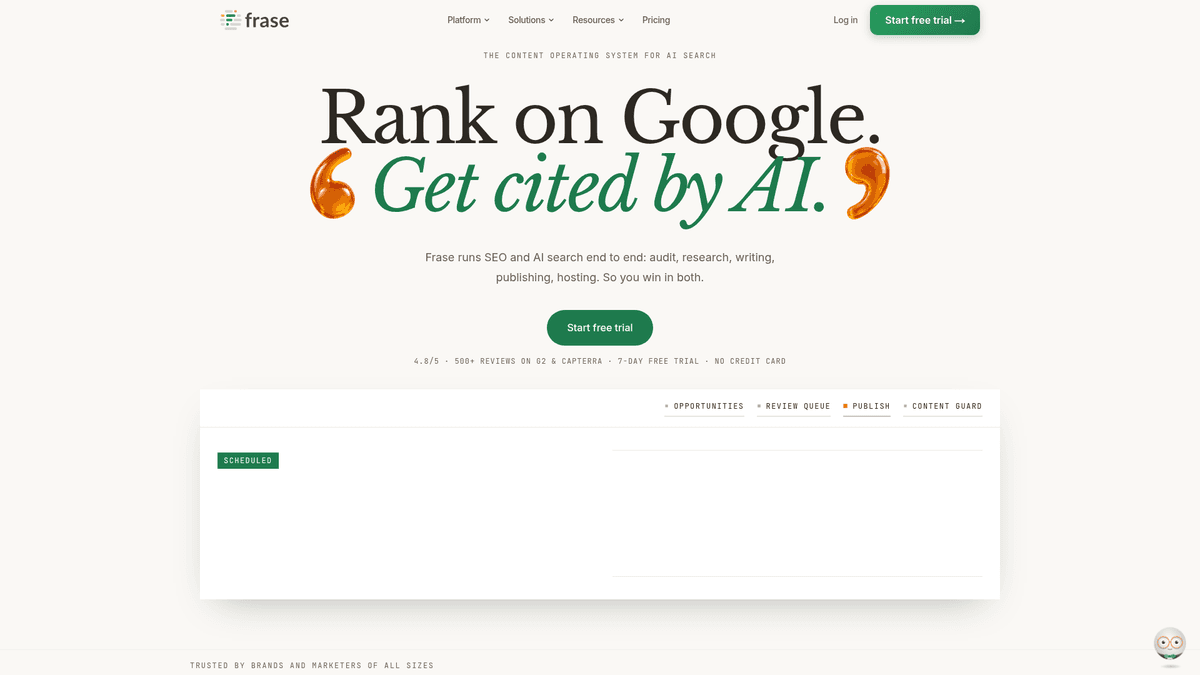
Frase is strongest when the bottleneck is research and briefing.
It helps teams analyze SERPs, extract common themes, build briefs, and move into drafting with AI support. That makes it useful for content teams that already have a strong editor or freelance network but want to tighten the planning process.
Best for
SEO strategists and content managers
Teams briefing freelancers or internal writers
Research-heavy content workflows
Pros
Strong SERP analysis workflow
Good brief creation
Faster move from keyword to draft outline
Cons
Less end-to-end automation than RankSpot
Not a backlink research leader
Publishing stack may still require extra tools
Frase is excellent if you want strategy and structure. It is less compelling if your real need is fully automated daily output.
8. Nightwatch – Best for rank tracking and visibility monitoring
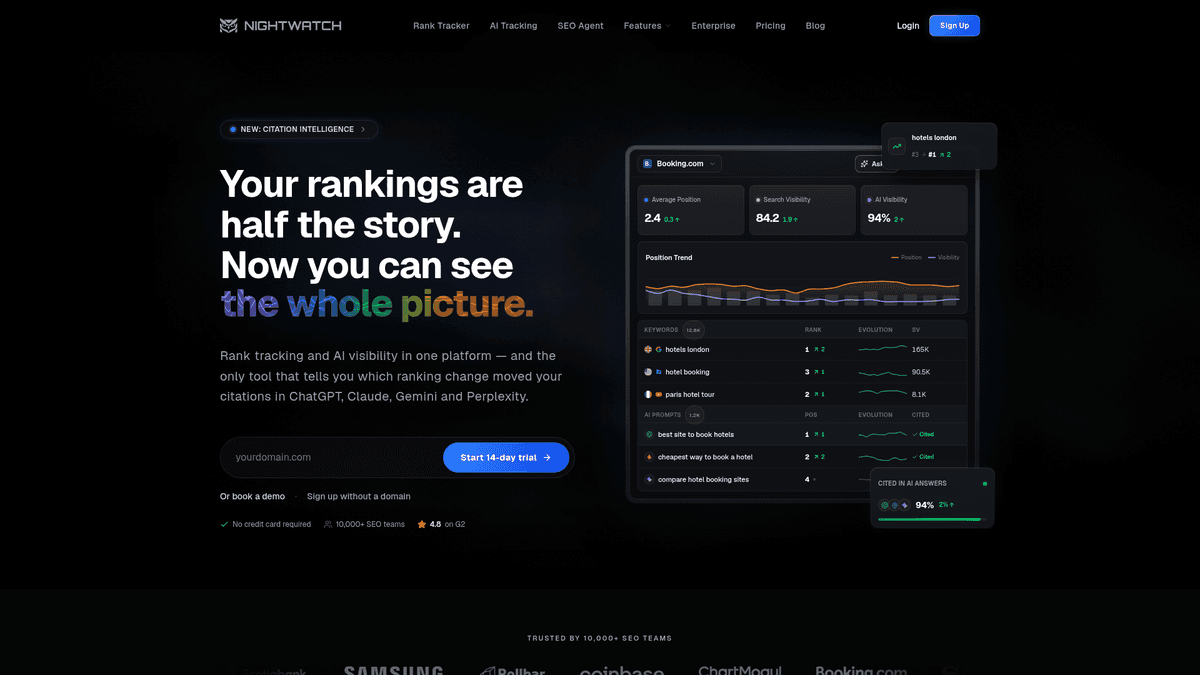
Nightwatch is a more focused tool. It does not try to be your entire SEO stack. Instead, it gives you clean rank tracking, reporting, and visibility insights with less clutter than full-suite platforms.
That alone makes it attractive for teams frustrated by overloaded interfaces.
Best for
Teams that already have separate research and content tools
Agencies needing reliable tracking
Operators who value clarity over breadth
Pros
Clean UI
Strong tracking and reporting
Useful if rankings are your main KPI
Cons
Not a content production platform
Limited if you need research, writing, and publishing in one place
Often best used as part of a stack, not as a standalone growth engine
Nightwatch is a smart alternative when you want to simplify reporting without rebuilding everything else.
9. RankYak – Best for simple autopilot content
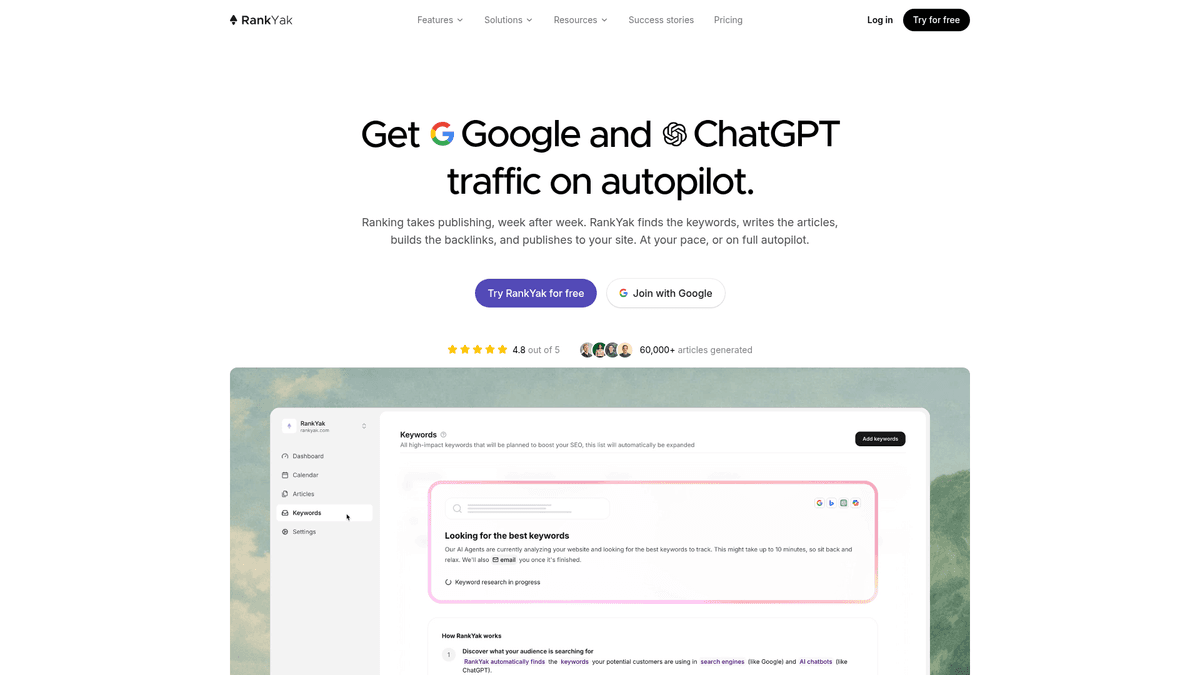
RankYak is built around a simple promise: set it up, then let it publish content regularly with minimal involvement.
That makes it appealing to solo founders who know they need content but do not want to manage a full editorial process.
Best for
Solopreneurs
Very small SaaS projects
Founders who want “set and forget” blogging
Pros
Extremely simple concept
Lower operational burden
Good for maintaining publishing consistency
Cons
Less control and strategic flexibility
Lighter research depth than larger platforms
Less robust than RankSpot for competitor tracking, CMS depth, and AI-answer optimization
RankYak is useful when simplicity is the top priority. RankSpot is better when you still want automation, but with stronger strategic targeting and more control over outcomes.
10. Ubersuggest – Best budget option for solo operators
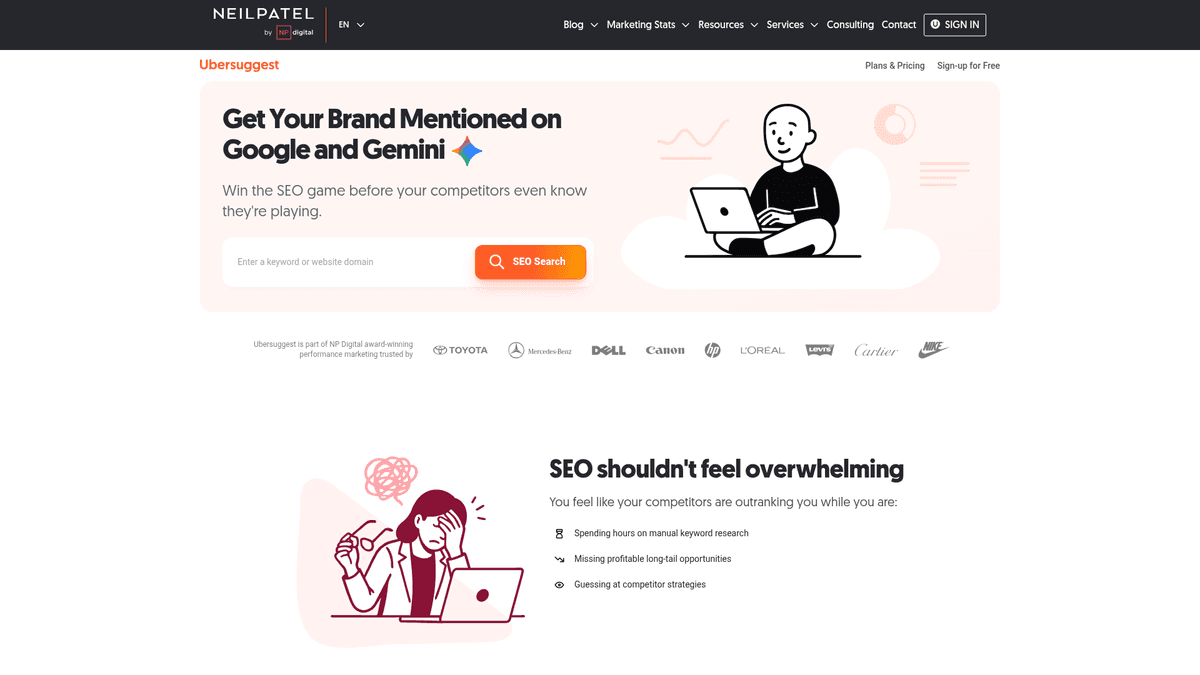
Ubersuggest is often the first SEO tool founders try because it is approachable and comparatively affordable.
It covers basic keyword research, site audits, and some competitor insights without the learning curve of deeper enterprise-style tools.
Best for
Beginners
Budget-conscious solo founders
Early-stage sites learning SEO fundamentals
Pros
Easy to understand
Lower-cost entry point
Enough features for small projects
Cons
Shallower data than Ahrefs or Semrush
Less automation than RankSpot
Can be outgrown quickly as SEO maturity increases
Ubersuggest is a reasonable starting point. It is just not usually the long-term answer for teams serious about scaling content and organic growth.
Side-by-side by workflow bottleneck
Here is the fastest way to choose:
If your bottleneck is... | Best choice | Why |
|---|---|---|
Publishing SEO content consistently | RankSpot | Automates the full pipeline and publishes directly |
Improving on-page article quality | Surfer SEO | Best real-time optimization editor |
Drafting articles faster with AI help | Scalenut | Strong guided drafting flow |
Backlink and competitor intelligence | Ahrefs | Best research depth |
Broad marketing suite coverage | Semrush | SEO + PPC + competitive ecosystem |
Affordable all-in-one SEO | SE Ranking | Strong value for money |
Research briefs and SERP synthesis | Frase | Great for editorial planning |
Clean rank tracking | Nightwatch | Focused tracking and reporting |
Fully hands-off content posting | RankYak | Minimal setup publishing |
Basic SEO on a tight budget | Ubersuggest | Accessible starter option |
What the best founders do differently
The strongest operators do not ask, “Which tool has the most features?”
They ask:
Which tool removes the most repeated work?
Which tool gets content live faster?
Which tool helps us learn what competitors already proved?
Which tool helps us show up where buyers actually discover products now?
That last point matters more than ever.
Google still matters. But AI answer engines now influence discovery too. Buyers ask ChatGPT, Claude, Gemini, and Perplexity for recommendations before they ever click a blog post. That means your content needs to be structured and written for both search rankings and answer extraction.
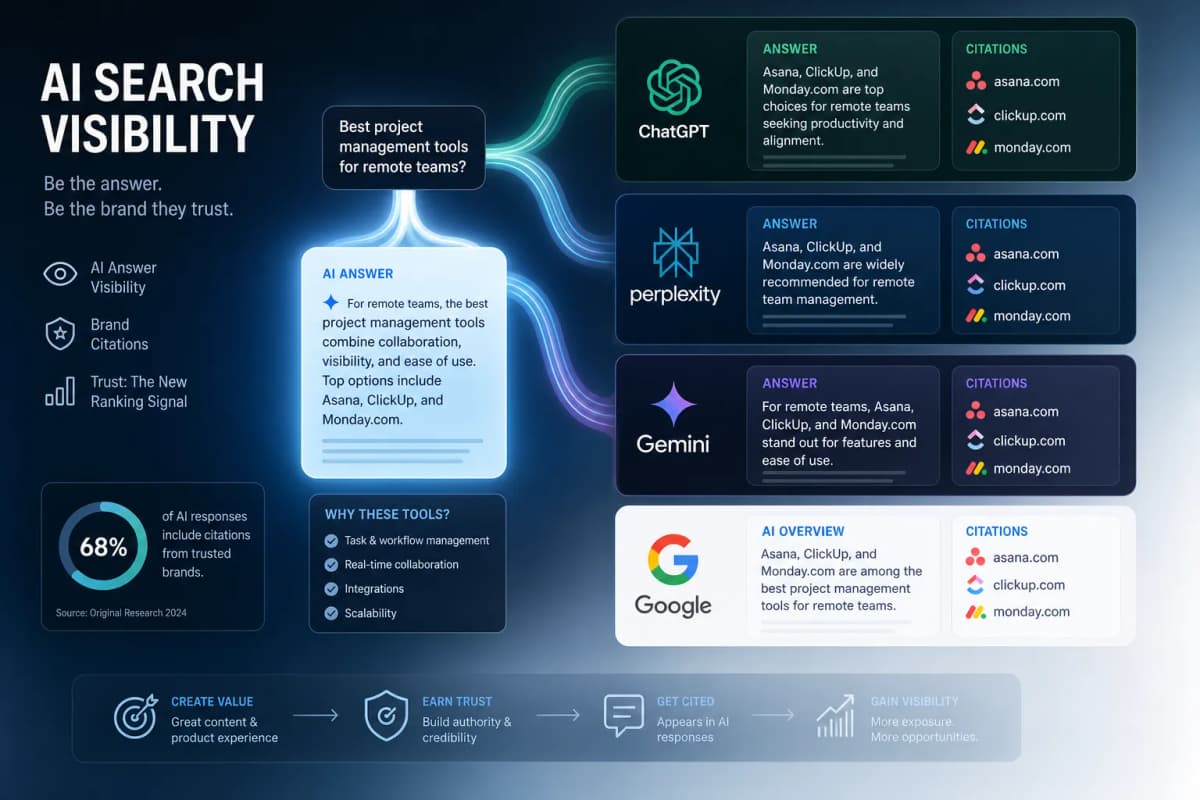
That is one reason RankSpot focuses on GEO as well as classic SEO. Articles are created not just to rank, but to be citable and recommendable in AI answers.
If you're actively researching how to uncover better opportunities before publishing, this guide to competitor keyword research methods is a practical next step.
A practical buying framework
Use this 5-step filter before you commit to any tool.
1. Identify the real constraint
Is it strategy, writing, optimization, technical deployment, reporting, or backlinks?
2. Calculate labor saved, not just subscription cost
A cheaper tool that still requires 15 hours a month may cost more than a pricier one that runs itself.
3. Look at output, not dashboards
Reports do not create traffic. Published, useful, well-targeted pages do.
4. Think about stack complexity
Every extra tool means another workflow, login, integration, and training burden.
5. Make sure it fits 2026 search behavior
Your content should be structured for Google and AI answer engines alike.
Bonus: GEO and AI search visibility tools
Traditional SEO tools still matter. But a separate category is growing fast: platforms that track how your brand appears inside AI-generated answers.
These tools do not replace your main SEO system. They answer a different question:
Are ChatGPT, Perplexity, Gemini, and similar engines citing or recommending us?
Examples include:
AthenaHQ for monitoring brand visibility and citations across answer engines
Otterly AI for tracking AI mentions and prompt-level performance
Profound for enterprise-grade AI search visibility and brand monitoring
If your pipeline already works and you now want better measurement of AI discovery, these tools are worth evaluating. For many teams, they sit beside the main content engine rather than replacing it.
That said, smaller teams often do better starting with content systems that are already optimized for AI answer visibility. RankSpot is strong here because it bakes GEO-friendly structure directly into article creation instead of forcing you to bolt on a separate workflow later.
Final verdict
If you want the broadest specialist research stack, Ahrefs and Semrush are still top-tier options.
If you want page-level optimization, Surfer and Frase are smart picks.
If you want a cost-effective suite, SE Ranking deserves attention.
If you want something hands-off and simple, RankYak and Ubersuggest can work for smaller use cases.
But if you are a founder or lean marketing team trying to turn SEO into a repeatable growth channel without hiring a full content operation, RankSpot is the best overall alternative.
It is purpose-built for the problem most small teams actually have:
not enough time to research
not enough bandwidth to write
not enough consistency to publish
not enough structure to win AI citations
not enough simplicity in the tools they try
RankSpot fixes that with a focused dashboard, high-intent keyword discovery, competitor-based targeting, automated long-form writing, built-in images and formatting, direct CMS publishing, and GEO optimization for modern discovery.
You can start with your first 3 articles free, no credit card required. That makes it one of the lowest-friction ways to see whether automated SEO content can finally become a real growth engine for your business.
FAQ
What are some good alternatives to Search Atlas?
Good alternatives depend on your workflow. RankSpot is the strongest option for founders who want end-to-end SEO content automation, while Ahrefs is best for backlinks, Surfer SEO for content optimization, and SE Ranking for budget-friendly all-in-one SEO.