SE Ranking is still a solid all-in-one SEO platform. It gives you rank tracking, audits, competitor research, and content features in one dashboard. But for many founders and lean teams, the real issue is not whether SE Ranking is good. It is whether it matches the way you actually work.
If you are comparing SE Ranking alternatives, you are probably in one of these camps:
You want deeper content strategy and AI writing support
You want better backlink and keyword intelligence
You need a simpler workflow that helps you publish consistently
You are tired of stitching together five different tools just to get one article live
You want to show up not only in Google, but also in ChatGPT, Claude, and Gemini
That is where the market has changed fast.
Today, the best alternative is often not just another rank tracker. It is a platform that helps you go from keyword research to published content with less manual work. If you are a founder, solo marketer, or small team, that matters more than having the deepest agency reporting suite.
"Google holds an 89.3% share across all devices in 2026, despite slight erosion from AI-powered search alternatives." - Digital Applied
That is why this guide covers both sides of the decision:
full SEO suites
content and AI-optimization tools
It also keeps pure rank trackers brief. Tools like Nightwatch, AccuRanker, STAT, and AWR are great if your main job is managing rankings across many client accounts. But for most people searching for a se ranking alternative, they are not the real answer.
If your real pain is time, content velocity, and finding better opportunities, keep reading.
Quick comparison table
Tool | Best for | Starting price | Best if you need |
|---|---|---|---|
RankSpot | Founders and small teams who want end-to-end SEO content automation | Free trial, then ~$39/mo | Research, planning, writing, images, and direct publishing in one workflow |
Ahrefs | Advanced SEO teams focused on backlinks and keyword intelligence | ~$129/mo | Deep backlink analysis and enterprise-grade research |
Semrush One | Teams wanting SEO + AI visibility in one suite | ~$199/mo | Broad marketing features plus AI search visibility |
Surfer SEO | Writers who want real-time content scoring | ~$99/mo | In-editor optimization while writing |
Frase | Research-heavy content workflows | ~$45–$50/mo | SERP-based briefs and content outlines |
Search Atlas | AI-assisted SEO automation and competitor research | ~$99/mo | Automated suggestions, OTTO, and content workflows |
Writesonic | AI-first drafting with SEO support | ~$49/mo | Fast content generation and SEO checks |
NeuronWriter | Budget semantic optimization | ~€19/mo | Low-cost NLP-style content optimization |
Clearscope | Editorial teams needing premium content grading | Custom / premium | Consistent content briefs and grade-based optimization |
Ubersuggest | Budget-conscious small businesses | ~$29/mo | Simple keyword research and basic competitor tracking |
How to choose the right SE Ranking alternative
Before you switch, be clear about what you are replacing.
SE Ranking usually gets replaced for one of four reasons:
1. You want better research depth
This usually means Ahrefs or Semrush. These are stronger if your SEO process depends on backlink analysis, competitive gap work, and large databases.
2. You want better content optimization
This points more toward Surfer, Frase, NeuronWriter, or Clearscope. These tools are built around improving page quality and matching search intent.
3. You want AI-first content production
This is where Writesonic and Search Atlas come in. They try to shorten the path from idea to draft to optimization.
4. You want SEO without hiring a full team
This is the real opening for RankSpot. Instead of giving you raw data and asking you to build the whole workflow yourself, it automates the pipeline: research, planning, writing, formatting, images, internal links, and publishing.
That is a different value proposition than SE Ranking. SE Ranking is still stronger if you are an agency that lives inside rank tracking and client dashboards. But if you are a founder who needs results without adding another person to payroll, automation matters more.
Why automation matters more in 2026
Most small teams do not fail at SEO because they lack ideas. They fail because execution is slow.
They research keywords one week. Write next week. Edit later. Add images after that. Format in WordPress on Friday. Then publish one post every few weeks and wonder why traffic never compounds.
"The average content marketing program returns $7.65 for every $1 spent." - TechRadiant
The best modern SEO stacks reduce that drag.
That is also why interest has grown in tools like SEO automation platforms and AI-assisted publishing systems. The winning setup is no longer just “find a keyword.” It is “find the right keyword, create something better, and publish consistently.”
1. RankSpot - Best overall for founders and small teams
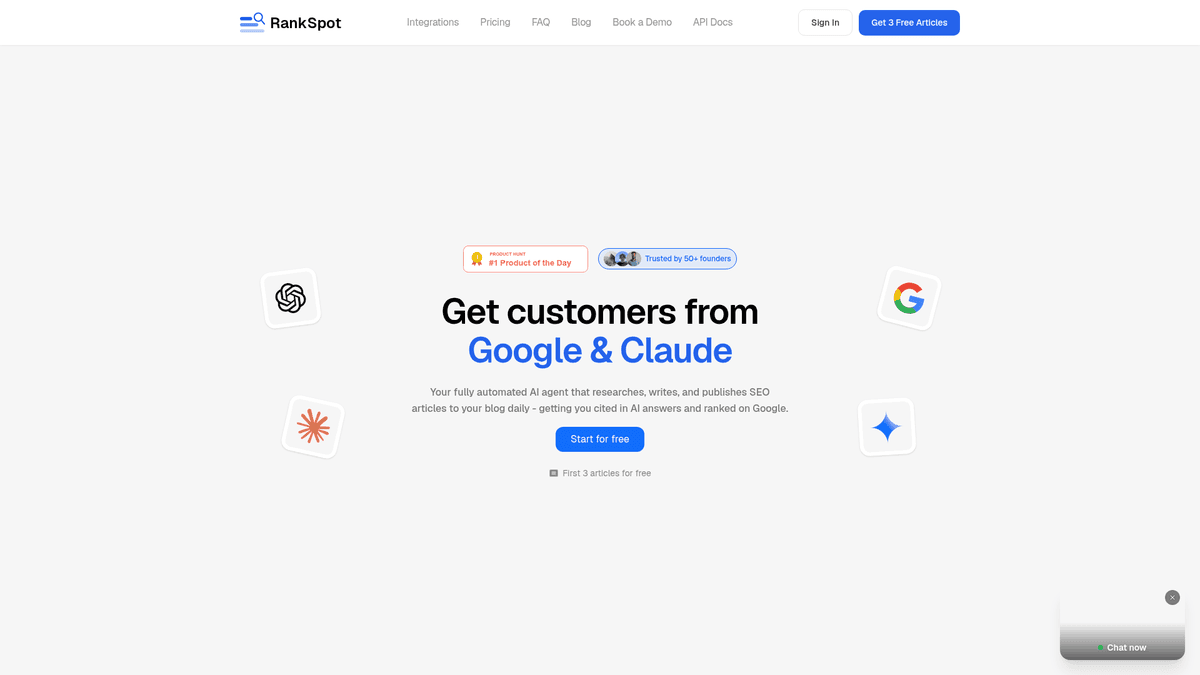
If you are looking for a practical se ranking alternative and your bottleneck is content execution, RankSpot is the strongest fit.
SE Ranking is useful when you want a broad SEO suite. RankSpot is better when you want output.
Instead of giving you a collection of tools and expecting you to manage the workflow, RankSpot handles the entire pipeline:
learns your niche from your site URL
studies your competitors
builds a 30-day content plan
finds high-intent keywords and opportunity gaps
writes long-form SEO articles
optimizes them for Google and AI answers
generates unique on-brand images
formats posts with headings, tables, quotes, and internal links
publishes directly to WordPress, Webflow, Wix, Shopify, Framer, Ghost, and more
That changes the math for a lean team.
Why RankSpot stands out
Most alternatives solve one piece of the problem:
Ahrefs helps you research
Surfer helps you optimize
Writesonic helps you draft
Canva helps with visuals
Grammarly helps with cleanup
WordPress handles publishing
RankSpot collapses those jobs into one platform.
That means less tab-switching, less handoff friction, and fewer places where the process stalls.
For founders, this is the bigger win: you can save 40+ hours a month and still publish consistently. And because consistency is usually what drives compounding traffic, that can be more valuable than having the deepest rank tracking dashboard.
Where RankSpot beats SE Ranking
Better for teams that need content shipped, not just analyzed
Better for AI-answer optimization and GEO visibility
Better for direct CMS publishing
Better for small teams replacing multiple subscriptions with one tool
Better for daily publishing and compounding growth
Where SE Ranking still wins
SE Ranking still has an edge for agencies managing many client sites that care deeply about classic rank tracking, reporting, and broader campaign monitoring.
If that is your core use case, SE Ranking may still fit better.
But if your real question is “How do we publish more high-quality content without hiring more people?” then RankSpot is the better choice.
A nice side benefit is that RankSpot also helps with competitor keyword research, so you can target what is already working in your market instead of guessing.
2. Ahrefs - Best for backlink and keyword research depth
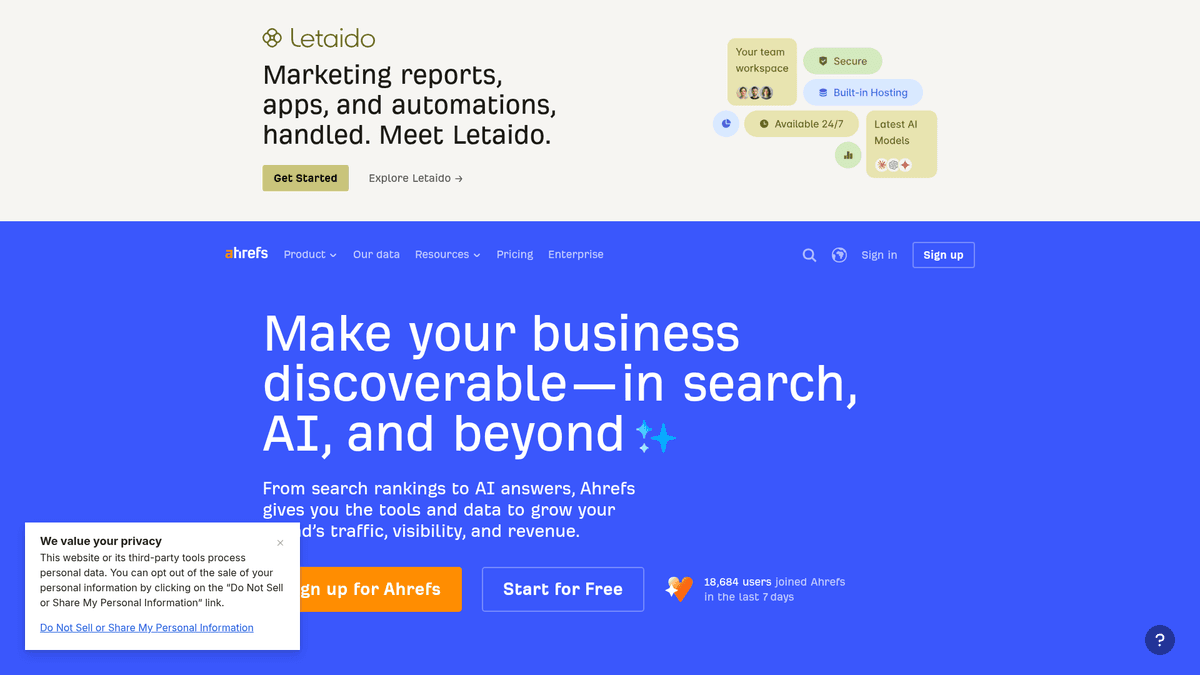
Ahrefs is the heavyweight choice for serious SEO research. If your main frustration with SE Ranking is data depth, Ahrefs is one of the clearest upgrades.
It is especially strong for:
backlink analysis
competitor domain research
keyword difficulty and opportunity analysis
content gap discovery
tracking link growth over time
Best for
in-house SEO teams
agencies doing technical and off-page work
SaaS companies with competitive search markets
Ahrefs vs SE Ranking
Ahrefs generally gives you deeper research and stronger backlink intelligence. SE Ranking is more affordable and easier for smaller teams to adopt.
If you need detailed SEO investigations, Ahrefs is better. If you need a lighter, broader suite, SE Ranking stays more accessible.
Main drawback
Ahrefs is powerful, but it does not solve content production end-to-end. You still need a system for planning, writing, polishing, and publishing. That is why many teams pair Ahrefs-style research with an automation layer like RankSpot.
3. Semrush One - Best all-in-one SEO plus AI visibility suite
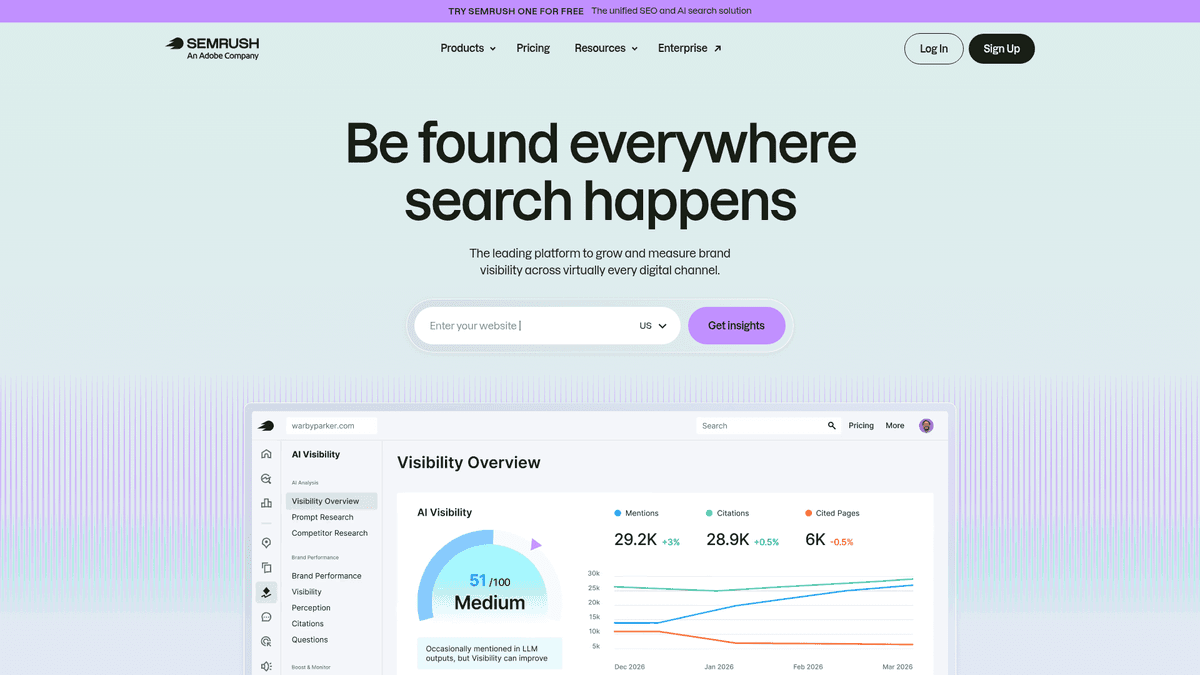
Semrush One is a broader marketing platform than most SE Ranking alternatives. It combines classic SEO tooling with newer AI-search visibility features.
That makes it attractive if you want:
keyword research
site audits
content tools
competitor analysis
paid search data
AI visibility tracking
Best for
marketing teams that need more than SEO
brands investing in both search and AI answer discovery
teams that want one large platform
Semrush One vs SE Ranking
SE Ranking is usually cheaper and simpler. Semrush is broader and more mature in many areas.
If SE Ranking feels like a good value but a little shallow for your needs, Semrush is a logical next step.
Main drawback
Semrush can get expensive fast. And like Ahrefs, it still does not remove the production bottleneck for small teams. It helps you decide what to do. It does not automatically ship the work for you.
4. Surfer SEO - Best for real-time content optimization
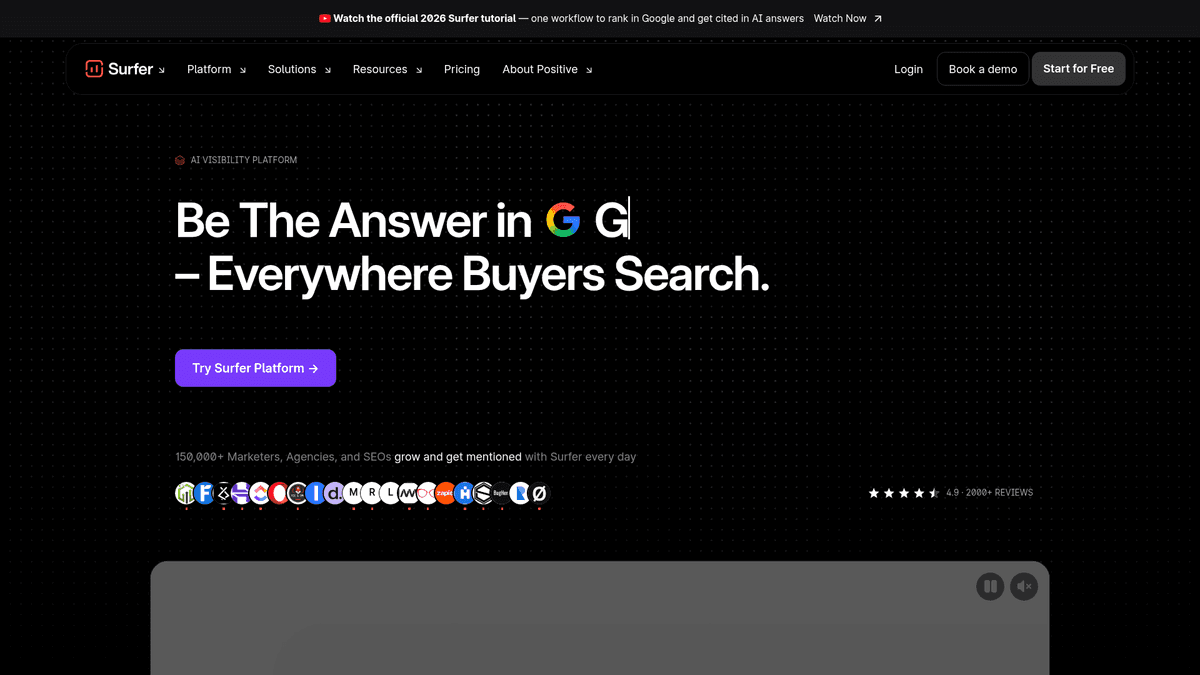
Surfer is one of the best-known content optimization tools on the market. It is designed around a simple promise: give writers live feedback while they write.
That is useful when you want:
a real-time content score
suggested terms and structure
quick editing feedback
easier adoption for freelance writers and content teams
Best for
teams publishing a lot of blog content
writers who want instant optimization cues
SEO managers standardizing drafts across contributors
Surfer vs SE Ranking
SE Ranking has content features inside a broader platform. Surfer is more focused and usually better for the actual writing workflow.
If content optimization is the daily job, Surfer is often the better pick.
Main drawback
Surfer is not a full SEO operating system. It does not replace research depth, publishing workflows, or competitor intelligence by itself.
If you like Surfer’s optimization model, you may also want to compare it with tools in this guide and other Surfer SEO alternatives.
5. Frase - Best for briefs and SERP-based research
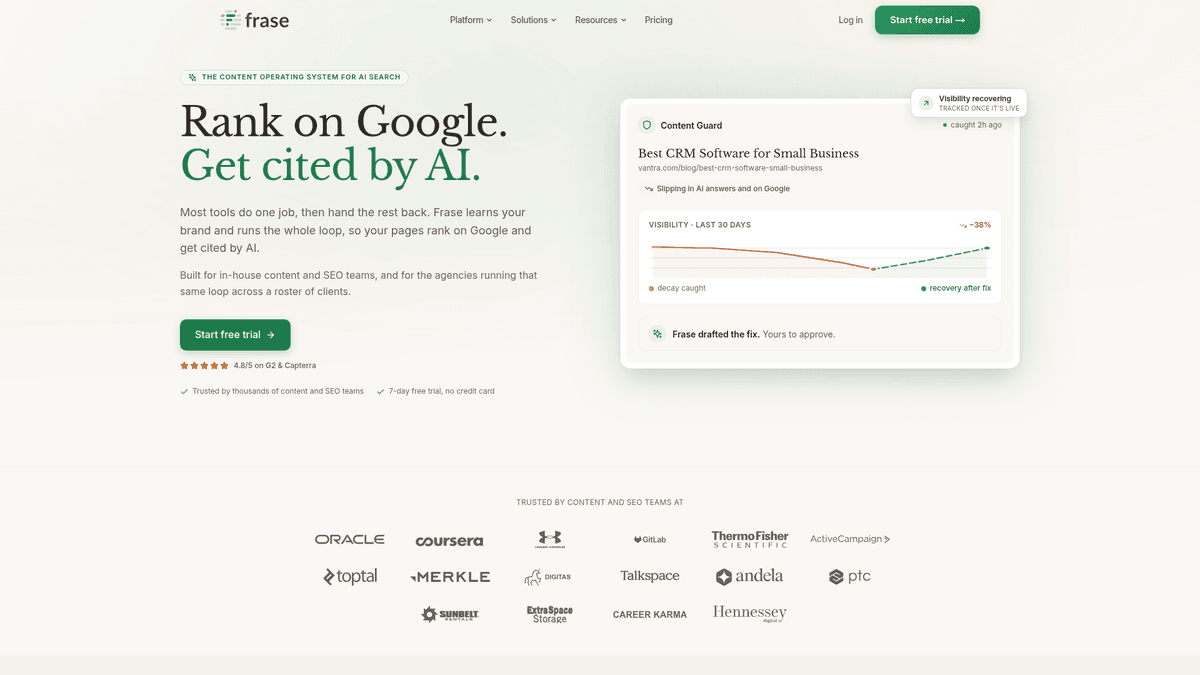
Frase sits in the middle between research and content creation. It is especially good at turning SERP data into practical content briefs.
That makes it strong for:
content outlines
FAQ extraction
search-intent mapping
faster briefing for writers
Best for
small content teams
agencies creating briefs for writers
businesses that want structured research without a huge suite
Frase vs SE Ranking
SE Ranking is the broader SEO platform. Frase is more focused on research-to-brief workflows.
If your biggest problem is turning keyword ideas into usable content plans, Frase can feel more efficient.
Main drawback
Frase still requires more manual assembly than a true automation platform. You may get a faster brief, but you are still managing drafting, formatting, visuals, and publishing elsewhere.
6. Search Atlas - Best for AI-assisted SEO automation
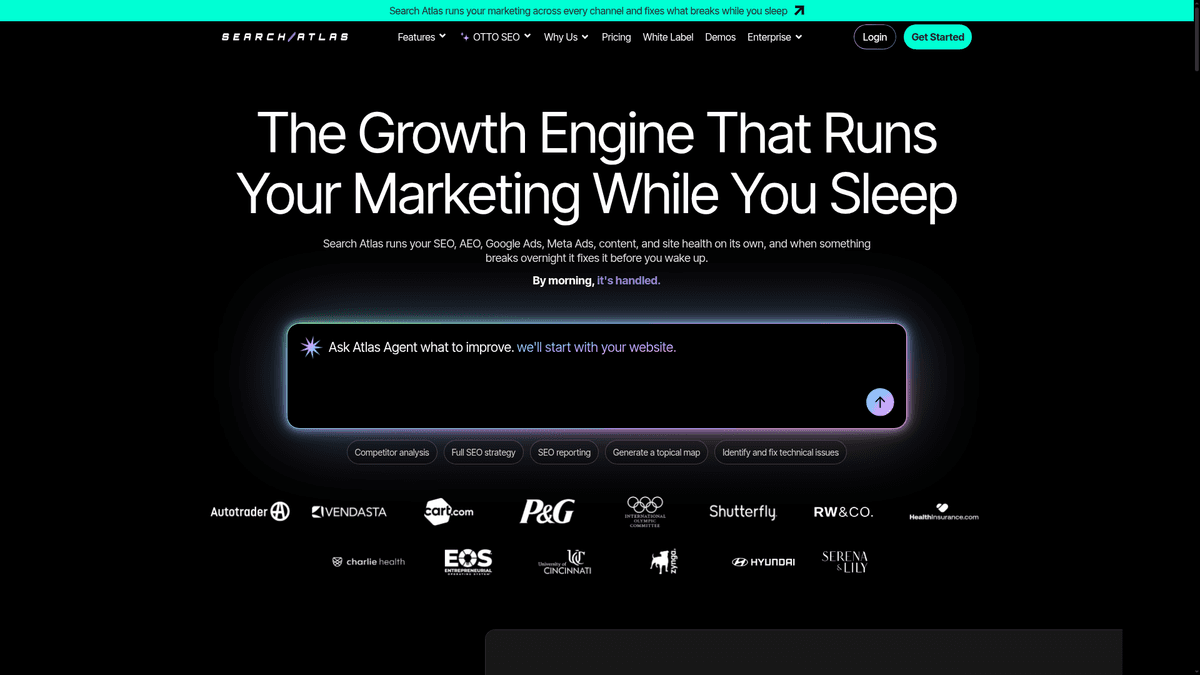
Search Atlas has gained attention by combining SEO tooling with AI-driven automation features, especially its OTTO assistant.
It is built to help with:
on-page recommendations
competitor analysis
content assistance
workflow automation
technical suggestions
Best for
teams wanting AI suggestions inside a broad SEO suite
users comparing newer all-in-one SEO platforms
agencies and in-house teams testing automation
Search Atlas vs SE Ranking
Search Atlas feels more AI-forward. SE Ranking feels more established as a traditional SEO platform.
If your priority is exploring automated recommendations and modern AI-assisted workflows, Search Atlas is worth a look.
Main drawback
Like many newer platforms, consistency of data and workflow fit can vary by use case. It is promising, but you should test whether the output quality and UX match your process.
7. Writesonic - Best for AI-first content generation
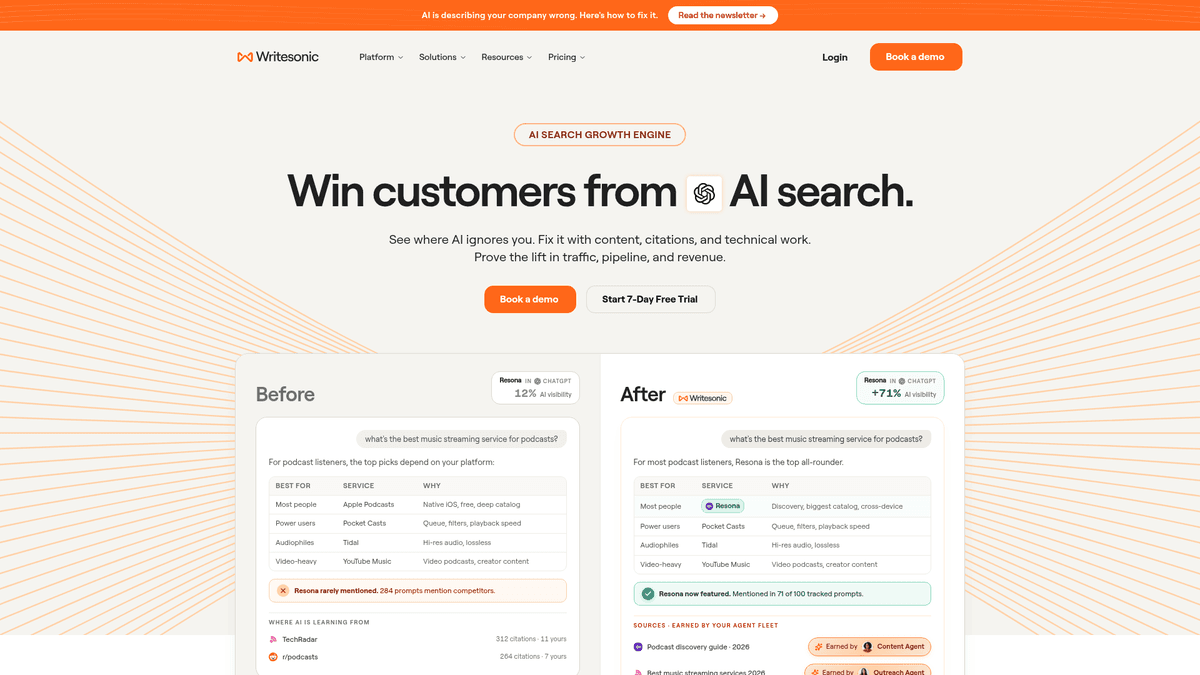
Writesonic is more generation-first than SE Ranking. It starts with drafting speed and adds SEO support around that.
You can use it for:
long-form AI article drafting
SEO checking
rewriting and repurposing
AI-search oriented workflows
Best for
content marketers who need speed
teams publishing many drafts each month
businesses that want AI generation before deep SEO tooling
Writesonic vs SE Ranking
SE Ranking is still the broader SEO platform. Writesonic is better when rapid content creation is the main goal.
If your workflow is bottlenecked by blank pages, Writesonic can help.
Main drawback
It is less ideal for advanced competitor analysis or backlink-heavy SEO work. It is a content engine first.
If this direction appeals to you, it is worth also exploring comparable Writesonic alternatives.
8. NeuronWriter - Best low-cost semantic optimizer
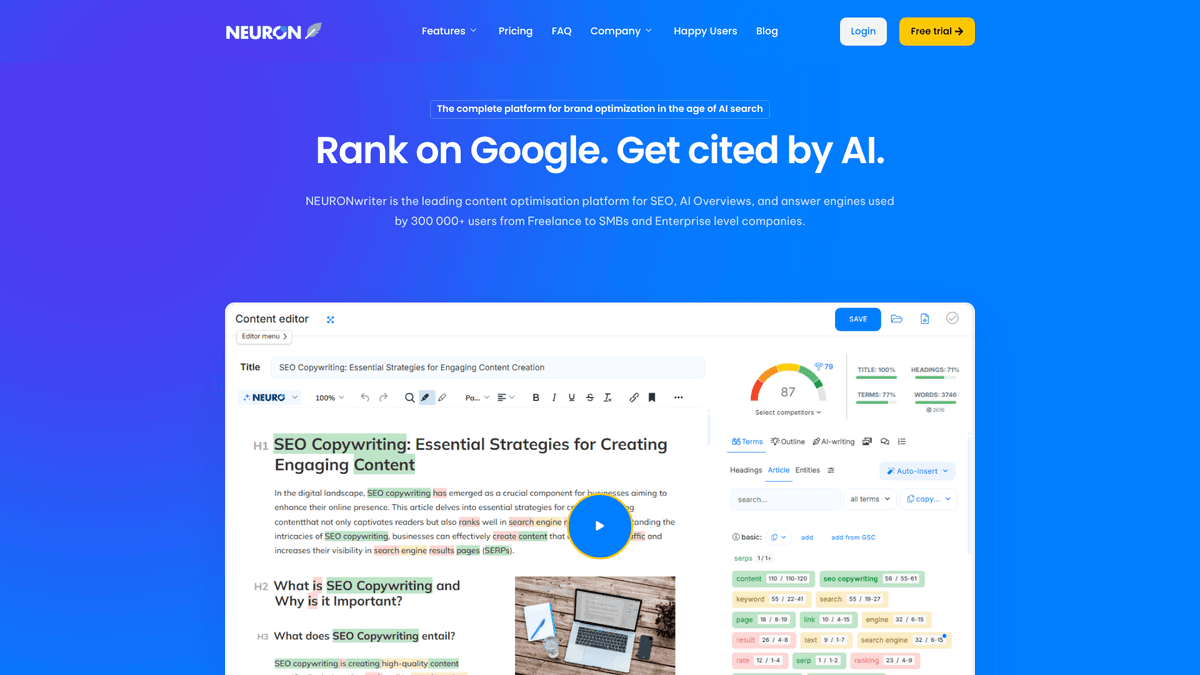
NeuronWriter has built a loyal following because it gives you useful content optimization features at a lower price point than premium tools.
It is mainly used for:
term coverage
on-page scoring
semantic suggestions
affordable content optimization
Best for
freelancers
budget-conscious site owners
smaller content teams
NeuronWriter vs SE Ranking
NeuronWriter is much narrower. SE Ranking is broader and more feature-rich overall.
If you just want affordable content optimization, NeuronWriter is a great option. If you need research, tracking, and broader SEO workflows, SE Ranking is still more complete.
Main drawback
It is not an all-in-one platform. You will still need other tools for research, publishing, and strategy.
9. Clearscope - Best for premium editorial content grading
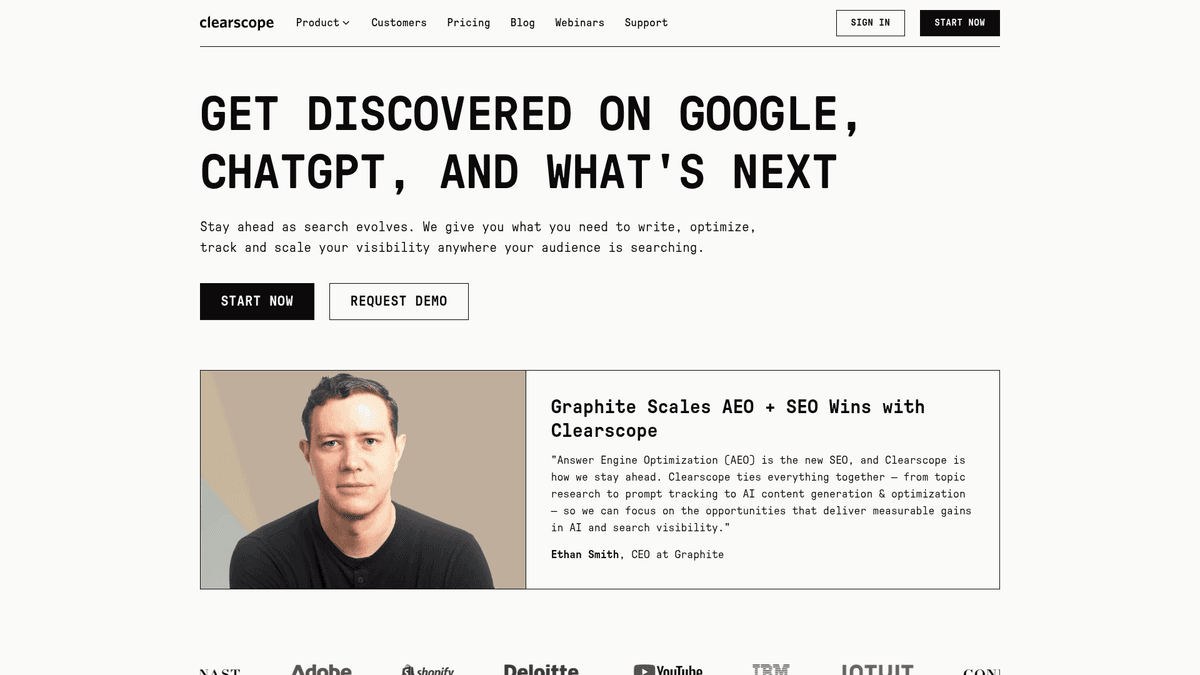
Clearscope is one of the most respected premium content optimization tools, especially in editorial environments.
Its strength is not just scoring. It is consistency.
Best for
editorial teams
larger content operations
brands with strict quality standards
Clearscope vs SE Ranking
SE Ranking is better value for a broader set of SEO jobs. Clearscope is better if your priority is polished content standards across many writers.
Main drawback
It is usually a premium investment. For a founder or small team, it can be hard to justify unless content quality control is your top priority.
10. Ubersuggest - Best budget-friendly starter option
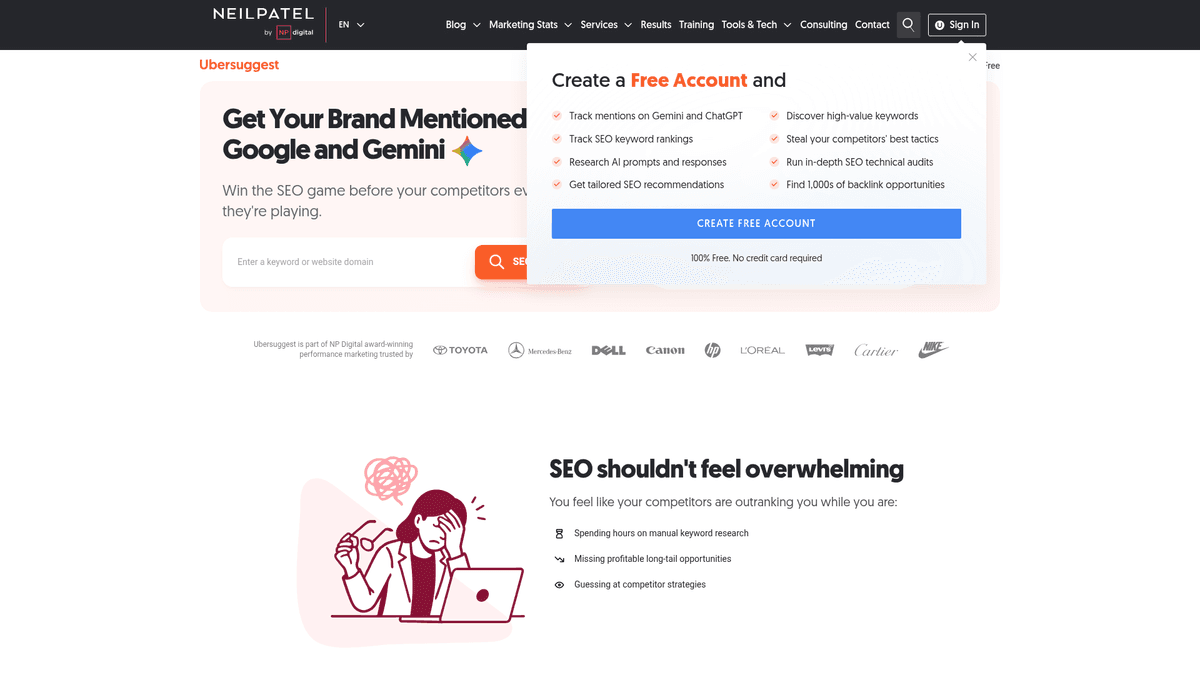
Ubersuggest remains popular because it is simple, affordable, and approachable.
It covers the basics:
keyword research
domain analysis
content ideas
basic competitor tracking
some AI visibility features
Best for
startups
small businesses
founders learning SEO without a big budget
Ubersuggest vs SE Ranking
SE Ranking is generally more robust and better for growing teams. Ubersuggest is easier on the budget and easier to learn.
Main drawback
You will outgrow it if your SEO program becomes more sophisticated. It is a good starting point, but not always the best long-term operating system.
What about pure rank trackers?
If you mainly want multi-client rank tracking, white-label dashboards, or enterprise-scale reporting, look at:
Nightwatch
AccuRanker
STAT
Advanced Web Ranking
These are strong products. They are just a different category.
For most people searching for se ranking alternatives, the real need is not “track more rankings.” It is “get better research, content, and growth workflows.”
Which tool is best for which team?
Choose RankSpot if…
you are a founder or small team
you want to publish more without hiring more
you want one platform instead of five tools
you care about both Google rankings and AI-answer visibility
you want direct publishing into your CMS
you need high-intent keyword discovery, competitor targeting, and content creation in one place
Choose Ahrefs if…
backlinks and keyword intelligence are central to your strategy
you run a more advanced SEO program
you have the resources to manage production separately
Choose Semrush One if…
you want a broad marketing suite
you need SEO plus AI visibility plus other channels
budget is less of a concern
Choose Surfer, Frase, NeuronWriter, or Clearscope if…
your main problem is content optimization
you already have research tools
you want to improve what writers produce
Choose Search Atlas or Writesonic if…
you want AI-forward workflows
you care about drafting speed or automation
you are comfortable testing newer operating models
Choose Ubersuggest if…
price is your main filter
you need a simple tool to get started
your SEO operation is still early-stage
Final verdict
There is no single best tool for everyone. There is only the best fit for the job you actually need done.
If your job is deep research and backlink analysis, Ahrefs is hard to beat.
If your job is broad SEO plus AI visibility, Semrush One makes sense.
If your job is editor-side optimization, Surfer or Clearscope may be the better move.
But if you are a founder or lean team trying to turn SEO into a repeatable growth channel without spending half your month in research docs, content briefs, and CMS formatting, RankSpot is the strongest option on this list.
That is because it does not just analyze opportunities. It helps you act on them.
Instead of paying for one tool to find keywords, another to write, another to design images, another to edit, and another to publish, RankSpot gives you an automated end-to-end system built for consistent growth.
You get:
high-intent keyword discovery
competitor keyword targeting
AI-answer optimization for ChatGPT, Claude, and Gemini
on-brand images for every article
built-in formatting and internal linking
direct CMS publishing
support for 100+ languages
Reddit and forum opportunity discovery
first 3 articles free with no credit card
If that sounds closer to the business problem you are actually trying to solve, RankSpot is the place to start.
FAQ
Is SEO dead or evolving in 2026?
SEO is evolving, not dying. In 2026, winning means optimizing for both traditional search engines and AI answer engines like ChatGPT, Claude, and Gemini. Teams that publish consistently and target real demand still have a major advantage.
What is the No. 1 search engine?
Google is still the No. 1 search engine by a wide margin in 2026. But AI-driven discovery is growing, so brands should now optimize for both Google rankings and AI citations.
How to boost ranking in 2026?
Focus on high-intent keyword targeting, better content quality, internal linking, topical coverage, and consistent publishing. It also helps to optimize content so AI systems can easily cite and summarize your pages.
What are the top 5 SEO strategies?
The top strategies are keyword opportunity research, competitor-based targeting, strong on-page optimization, consistent content publishing, and earning authority through links and citations. In 2026, AI-answer optimization also belongs in the core playbook.
What will replace SEO?
Nothing fully replaces SEO, but it is expanding into search visibility across Google, AI assistants, forums, and recommendation engines. The discipline is getting broader, not disappearing.
What is the biggest threat to SEO in 2026?
The biggest threat is slow execution. Many teams know what to do but cannot publish enough quality content fast enough, while AI-powered competitors move quicker and capture both search traffic and AI citations.