If you’re searching for a Frase alternative, you’re usually not looking for a slightly different content brief tool. You’re looking for less manual work, better automation, stronger keyword discovery, and a clearer path from SEO research to published output.
In other words, you need more than research and optimization. You need a workflow that helps you find opportunities, build content faster, and turn that work into something live.
That’s where the strongest Frase alternatives stand out.
Frase still works well for teams that want a focused simple workflow. But founders, small SaaS teams, ecommerce operators, and agencies often outgrow it when they need the whole pipeline covered:
Keyword discovery and topical planning
Competitor analysis and content gaps
Drafting and optimization with less manual effort
Formatting and publishing support
A system that helps SEO turn into shipped content
We’ll compare 10 real alternatives, where each one fits, where it falls short, and which one makes the most sense if your goal is not just “better content,” but consistent traffic growth and more visibility in both Google and AI answer engines.
"94% of B2B buyers used AI during their most recent purchase process." - Forrester
"Blog posts were among the top five highest-ROI content formats, with 22.26% of marketers reporting them as such." - HubSpot
What the best Frase alternatives do better
If you’re comparing Frase alternatives as a founder or lean operator, the real question is simple: which tool helps you move from research to published content with the least friction?
Frase is centered around content research, optimization, and briefs. That works well for a focused editorial workflow. But many teams need a platform that does more of the heavy lifting across the full SEO process.
1. More automation
The best tools don’t just help you write an article. They help you move from keyword discovery to a published post without extra handoffs, document cleanup, formatting work, or CMS friction.
2. Better strategic keyword discovery
A strong platform should do more than optimize an existing page. It should help you find high-intent topics, competitor gaps, and opportunity clusters worth publishing in the first place.
If keyword discovery is your bottleneck, it helps to understand a practical SEO keyword research framework before you compare software.
3. Better fit for small teams
Many founder-led businesses don’t need a heavy editorial system. They need a tool that saves time, keeps publishing consistent, and reduces operational drag.
4. Better alignment with AI search
Classic SEO still matters, but buyer discovery is expanding into AI answer engines and community-driven channels. The strongest platforms now help you think about both Google visibility and AI search visibility.
The buying criteria that matter now
The market has shifted. Buyers are no longer evaluating tools only on how well they optimize a page. They’re looking for systems that support the full path from topic discovery to publishing and distribution.
That usually means weighing a few practical criteria:
how much automation the platform offers
whether it can surface high-value keywords and content opportunities
how well it supports publishing speed and workflow simplicity
whether it helps content perform in Google and in AI search environments
how easily it replaces multiple disconnected tools
That’s why the category is moving from standalone optimization tools toward broader SEO operating systems.
For founders and small teams, the best choice is usually the platform that creates the most leverage with the least manual work.
Quick comparison table
Tool | Best For | Starting Price | What Stands Out |
|---|---|---|---|
RankSpot | Founders and small teams wanting full automation | Free trial available | End-to-end SEO/GEO pipeline with direct publishing |
Surfer SEO | Marketers focused on live optimization scores | ~$99/month | Strong content editor and optimization workflow |
Scalenut | Teams wanting draft automation + clustering | ~$49/month | Cruise Mode and broader SEO workflow |
Clearscope | Editorial teams with bigger budgets | Custom / premium | Clean A-F content grading and writer-friendly UX |
MarketMuse | Strategy-heavy teams building topical authority | Custom / premium | Content gaps, authority planning, topic depth |
Content Harmony | Research and briefing workflows | Custom | Brief quality, workflow clarity, unlimited seat appeal |
Keyword Insights | Agencies and topic-clustering workflows | Varies by usage | Keyword clustering and search intent mapping |
Machined | Programmatic content at scale | Varies by plan | Cluster-to-article automation and auto-publish |
Semrush SEO Writing Assistant | Existing Semrush users | Included / add-on depending on plan | Fits inside a larger SEO suite |
NeuronWriter | Budget-conscious marketers | Low-cost tiers | Affordable semantic optimization |
1. RankSpot
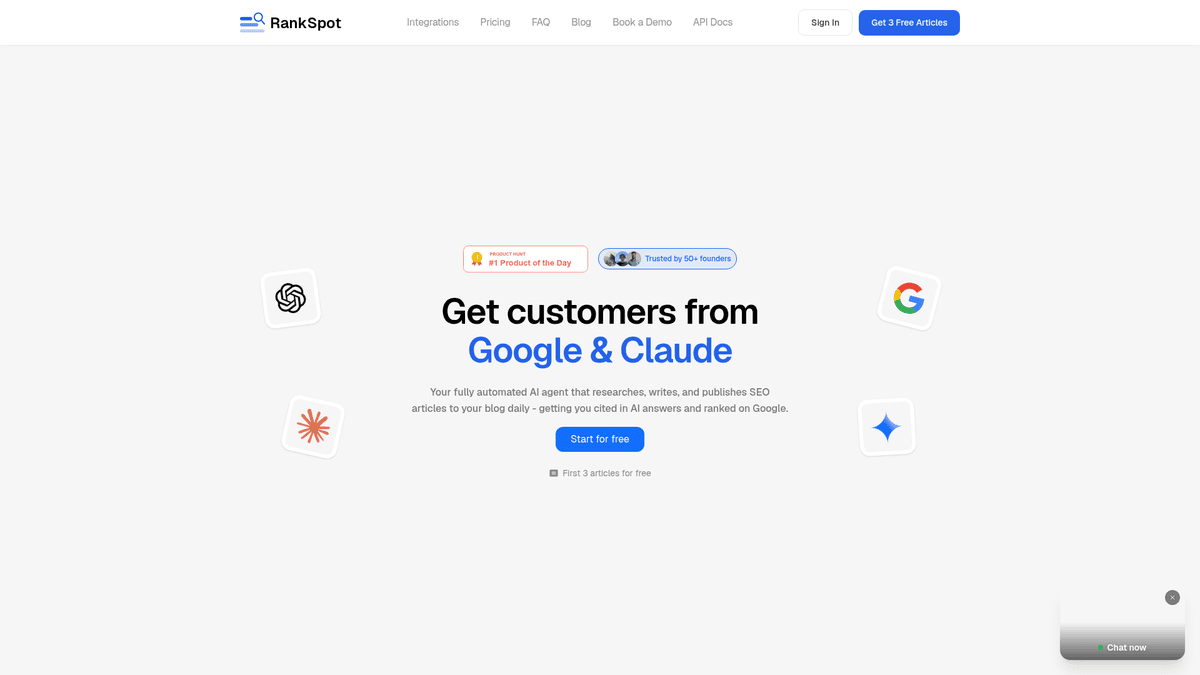
Best for: founders, indie hackers, ecommerce brands, and lean marketing teams that want the whole SEO engine handled in one place.
If you want the shortest version: RankSpot is the best Frase alternative when your issue is not “how do I optimize this paragraph,” but “how do I publish winning SEO content consistently without building a mini content department.”
It’s built for teams that want more than content briefs and optimization. It’s for teams that want a system.
Why RankSpot leads this list
RankSpot handles the full SEO/GEO workflow:
learns your business from your website
identifies high-intent and competitor keywords
builds a content plan
writes long-form articles
generates on-brand visuals
formats posts with SEO best practices
inserts structure like tables, quotes, and internal links
publishes directly to CMS platforms like WordPress, Webflow, Wix, Shopify, Framer, and Ghost
That’s a very different promise than “content brief and optimization.”
It’s also built for modern search behavior. That means content is optimized not only for Google, but for AI answer engines where citations and brand mentions increasingly matter.
Where it wins over Frase
Frase is simpler if you want a lightweight editor-focused experience.
RankSpot wins if you want:
daily SEO-optimized publishing
competitor keyword tracking
opportunity-based prioritization
direct publishing
built-in image generation
support for 100+ languages
Reddit and forum demand discovery
one platform instead of stitching together Ahrefs, Canva, Grammarly, docs, and CMS workflows
If you’re also comparing broader workflow tools, our roundup of SEO automation platforms for 2026 gives useful context on where automated systems outperform editor-first tools.
Where Frase still has an edge
To be fair, Frase can still feel simpler for teams that want a focused research-and-optimize experience without a larger automation layer.
If your workflow is very hands-on and writer-led, that simplicity can be appealing.
Best fit summary
Pick RankSpot if you want traffic growth without manual content ops.
It’s especially strong for teams that need:
consistent publishing
lean execution
competitor targeting
AI-search visibility
lower operational drag
And the low-friction trial helps: your first 3 articles are free, with no credit card required.
2. Surfer SEO
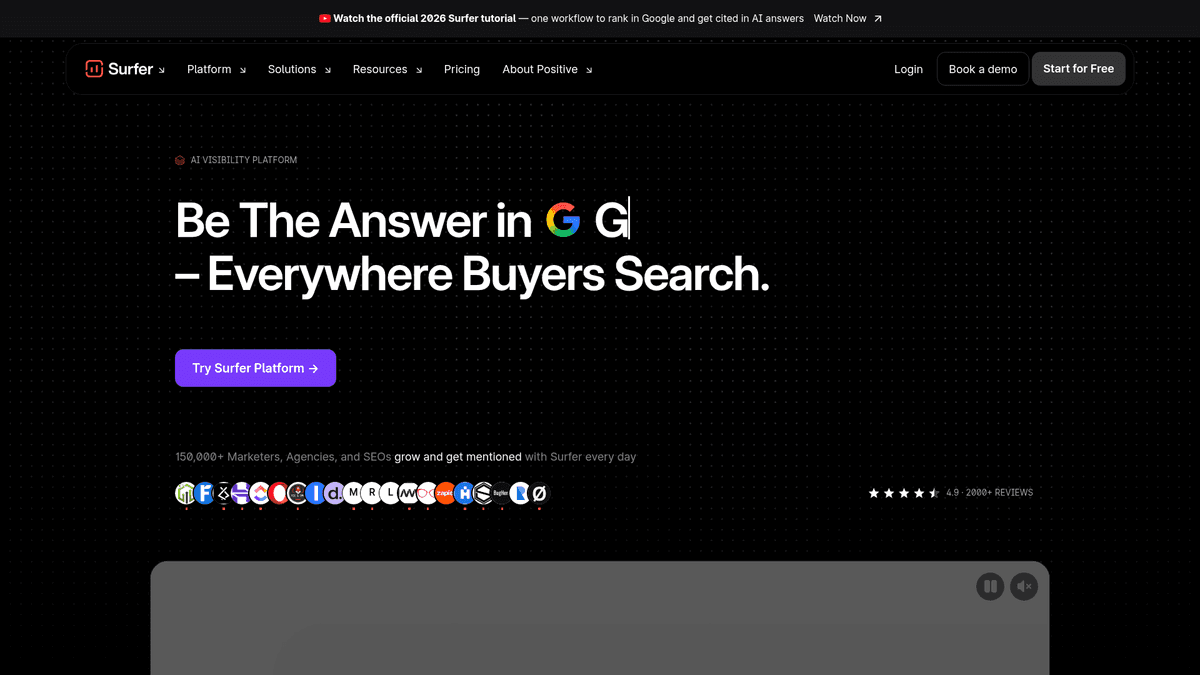
Best for: SEO teams that want live content scoring and a popular optimization workflow.
Writers can see a live score, content recommendations, suggested terms, structure guidance, and topical coverage in real time.
Strengths
Strong content editor
Well-known workflow across agencies and in-house SEO teams
Good optimization feedback during drafting
Helpful for updating old pages as well as creating new ones
Weaknesses
It still requires more manual workflow than founder-led teams often want
Keyword discovery and content operations may still require other tools
Costs can add up as your workflow scales
Best fit summary
Surfer is a strong pick if your bottleneck is on-page optimization quality, not publishing velocity.
If you already have strategy, writers, and a publishing process, Surfer makes sense. If you want the process itself automated, it’s less complete than newer end-to-end platforms.
3. Scalenut

Best for: teams wanting keyword clustering plus more automated draft creation.
Scalenut has stayed in this conversation because it tries to bridge research, planning, writing, and optimization better than Frase does.
Its Cruise Mode is the main attraction. That feature is designed to move users from keyword to draft faster, with less setup friction.
Strengths
Useful for producing SEO drafts quickly
Clustering and planning features are broader than a basic content editor
Can suit small teams trying to do more with fewer people
Weaknesses
Output quality can still vary depending on topic and prompt quality
Some users outgrow it when they need stronger strategic prioritization or cleaner workflow automation
You may still need extra tools for publishing, visuals, or broader competitive analysis
Best fit summary
Scalenut is a solid middle ground. More automated than Frase in some respects, but not as complete as a true full-pipeline platform.
4. Clearscope
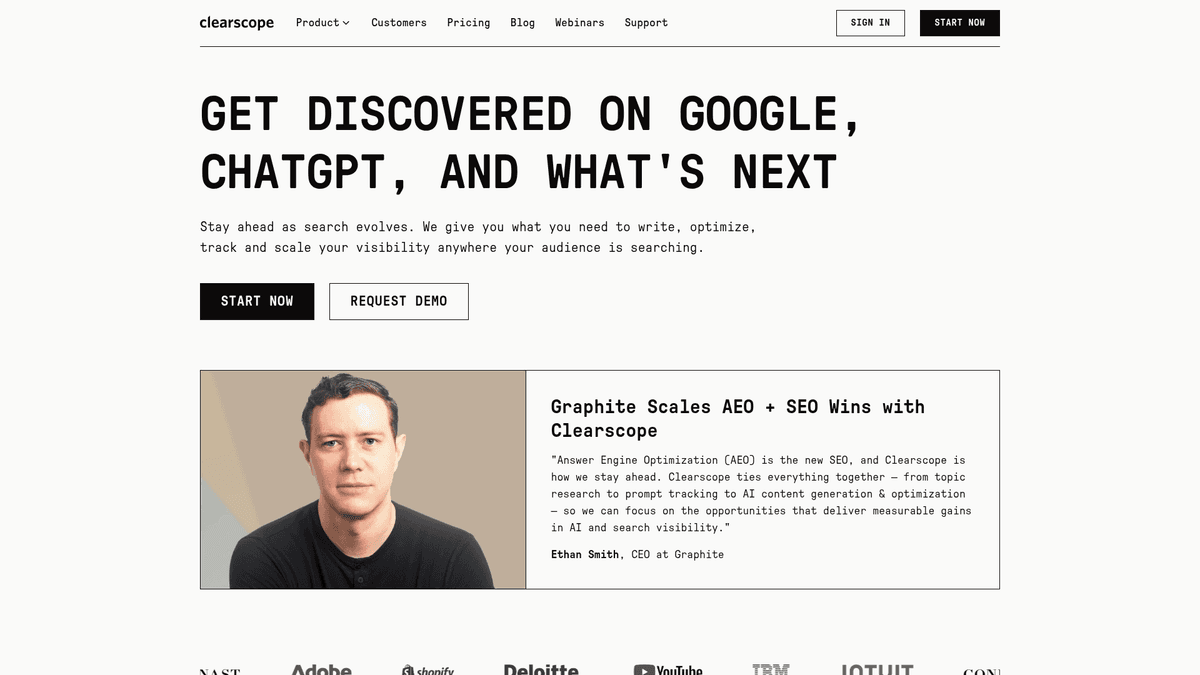
Best for: editorial teams, publishers, and content orgs that want a premium, writer-friendly optimization tool.
Its A-F style grading model is simple to understand, which makes it popular with editors managing many writers. The UX is clean. The recommendations are usually easy to act on. And the platform avoids some of the clutter found in more complex tools.
Strengths
Excellent interface
Easy for writers to adopt
Strong content grading model
Reliable for editorial process consistency
Weaknesses
Premium pricing
Less compelling if you want heavy automation
Not built to replace your whole SEO stack
Best fit summary
Clearscope is a better fit for mature editorial teams than founder-led operators. Great tool. Expensive lane.
5. MarketMuse
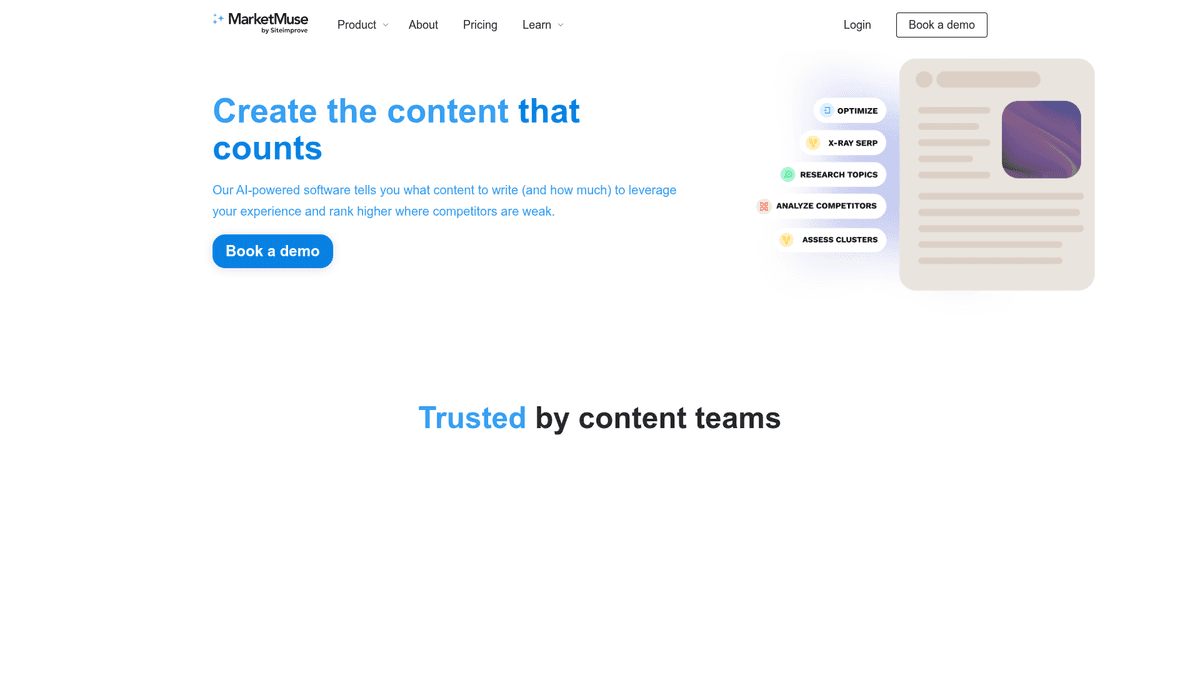
Best for: teams focused on topical authority, content gaps, and long-term strategy.
MarketMuse has always leaned more strategic than many other frase alternatives.
It’s not just trying to help you improve a page. It wants to help you understand what your site is missing at the topic level.
Strengths
Strong for content gap analysis
Good for authority-building strategies
Helpful when mapping larger topic ecosystems
Weaknesses
Higher complexity
Higher pricing
Often more tool than a small team really needs
Best fit summary
MarketMuse shines when you have a serious content strategy team and a long time horizon. It’s less attractive if you need fast execution with low overhead.
6. Content Harmony
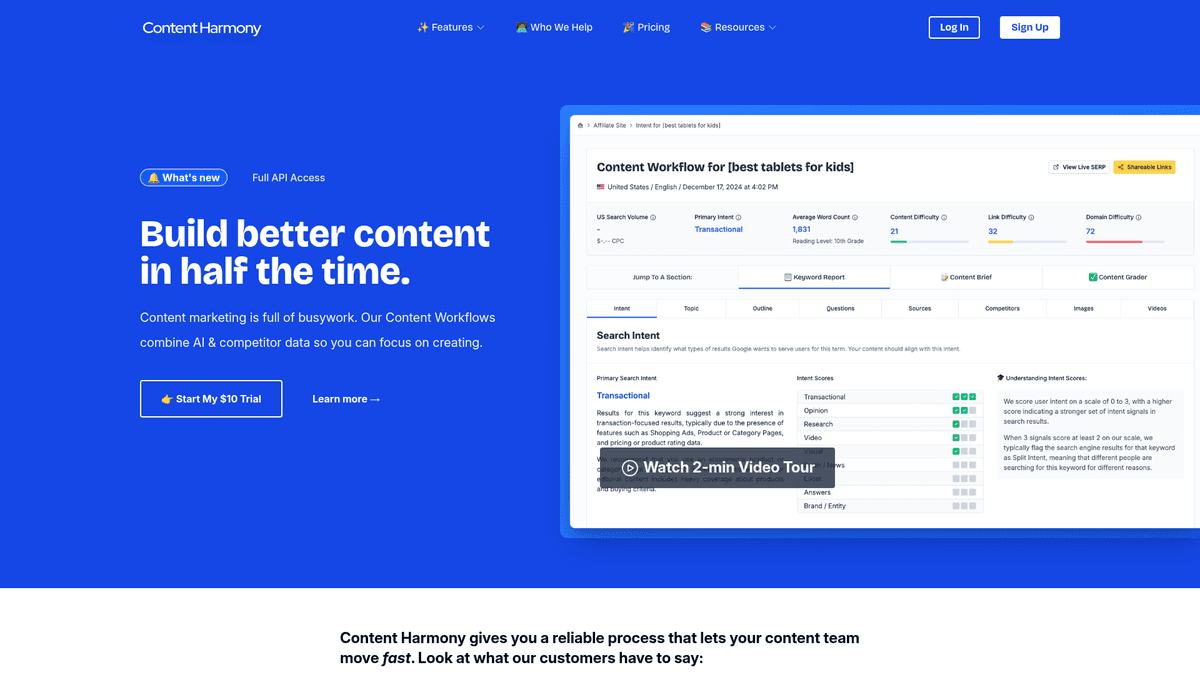
Best for: teams that care deeply about research and content briefs.
Its main value is turning messy SERP research into clear content plans that writers can actually execute.
Strengths
Strong research-to-brief workflow
Helpful for agencies coordinating multiple writers
Often attractive for teams that dislike per-seat friction elsewhere
Clear structure for search intent and content angle decisions
Weaknesses
Less of an all-in-one content engine
You may still need separate tools for drafting, visuals, and publishing
Better for process-heavy teams than fast-moving solo operators
Best fit summary
If Frase feels a bit limited but you still love a research-led workflow, Content Harmony is worth serious consideration.
7. Keyword Insights
Best for: agencies and SEO strategists focused on clustering, search intent, and topical authority.
Keyword Insights is less famous outside SEO circles, but it’s a strong option if your real need is better planning before content gets written.
It’s especially good for clustering keywords into logical groups and identifying which pages should exist together instead of producing isolated articles.
Strengths
Strong clustering engine
Useful for topical map planning
Good for agencies building scalable content architecture
Helpful for search intent grouping
Weaknesses
Less appealing if you want a smooth end-to-end publishing workflow
Not the most writer-centric tool in the list
Works best when paired with operational processes or other systems
Best fit summary
Keyword Insights is a planning weapon. If your content strategy is messy, it can help. If your issue is execution, you may need more than it offers.
8. Machined
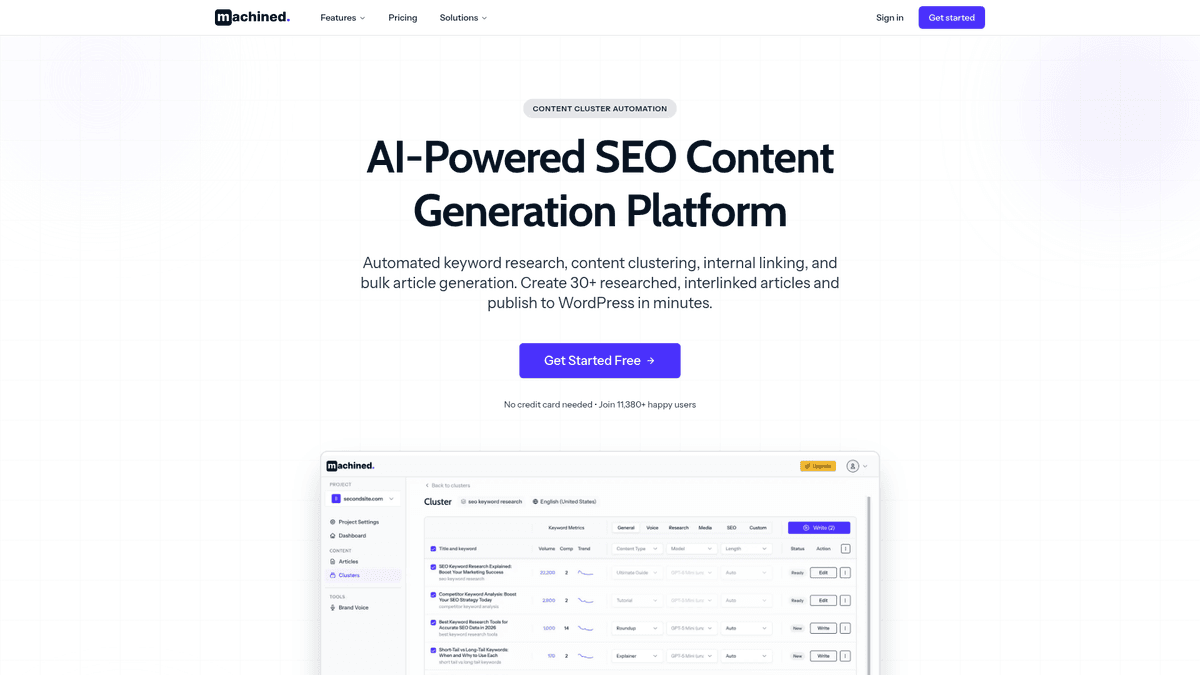
Best for: teams pursuing programmatic SEO and high-volume automated publishing.
Machined is one of the newer alternatives worth watching because it pushes harder toward automation and scaled article generation.
That makes it relevant for people leaving Frase behind for a more programmatic workflow.
Strengths
Built for scale
Useful for moving from keyword clusters to published articles more quickly
Auto-publishing workflow is appealing for high-volume use cases
Weaknesses
Not every brand should publish at programmatic speed without guardrails
Can require stronger editorial oversight than teams expect
Better fit for scale-heavy operators than brand-sensitive editorial teams
Best fit summary
Machined is compelling if your content model depends on volume. Just make sure volume is paired with strategy, quality control, and real differentiation.
9. Semrush SEO Writing Assistant
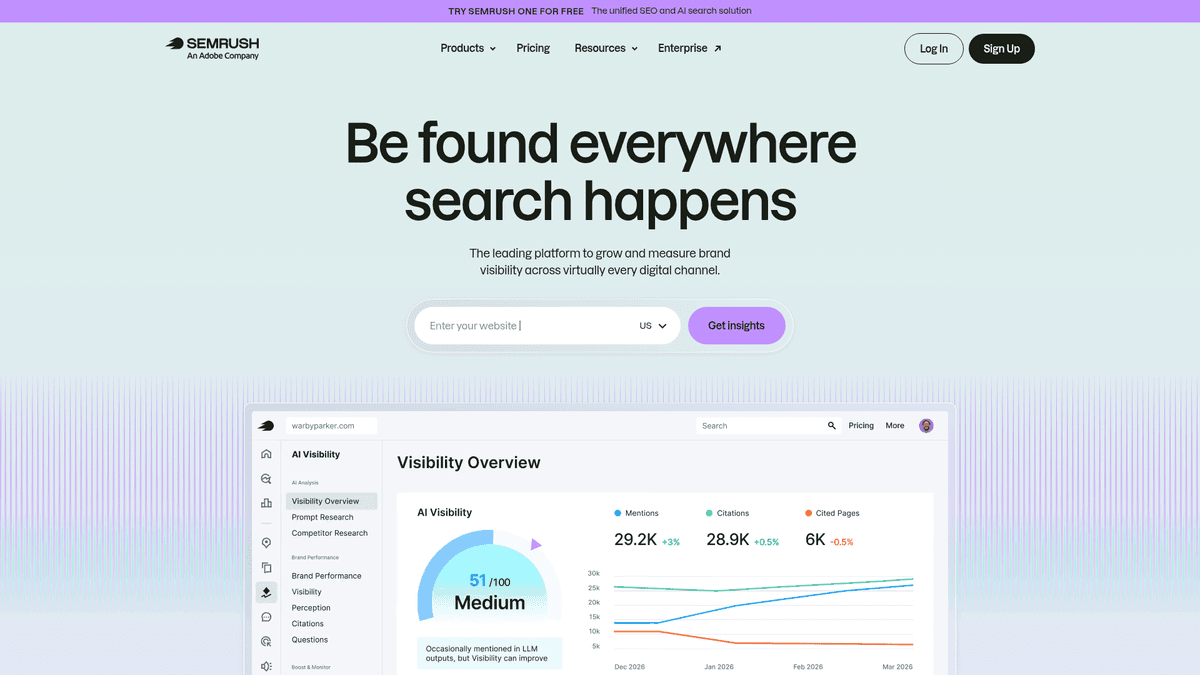
Best for: teams already committed to the Semrush ecosystem.
Semrush SEO Writing Assistant is not always the first name that comes up in Frase comparison posts, but it matters because many businesses are already paying for Semrush.
That changes the equation.
If keyword research, rank tracking, competitor research, and site audits already happen in Semrush, using its writing assistant can reduce tool sprawl.
Strengths
Convenient for existing Semrush users
Integrates with a larger SEO toolset
Good for organizations that want fewer disconnected workflows
Weaknesses
Not as specialized as some pure-play content tools
Experience depends on how deep you already are in the Semrush ecosystem
Can feel like an extension of a suite rather than the core engine
Best fit summary
This is the practical choice for Semrush-heavy teams. Not the most innovative option here, but often the most convenient.
10. NeuronWriter
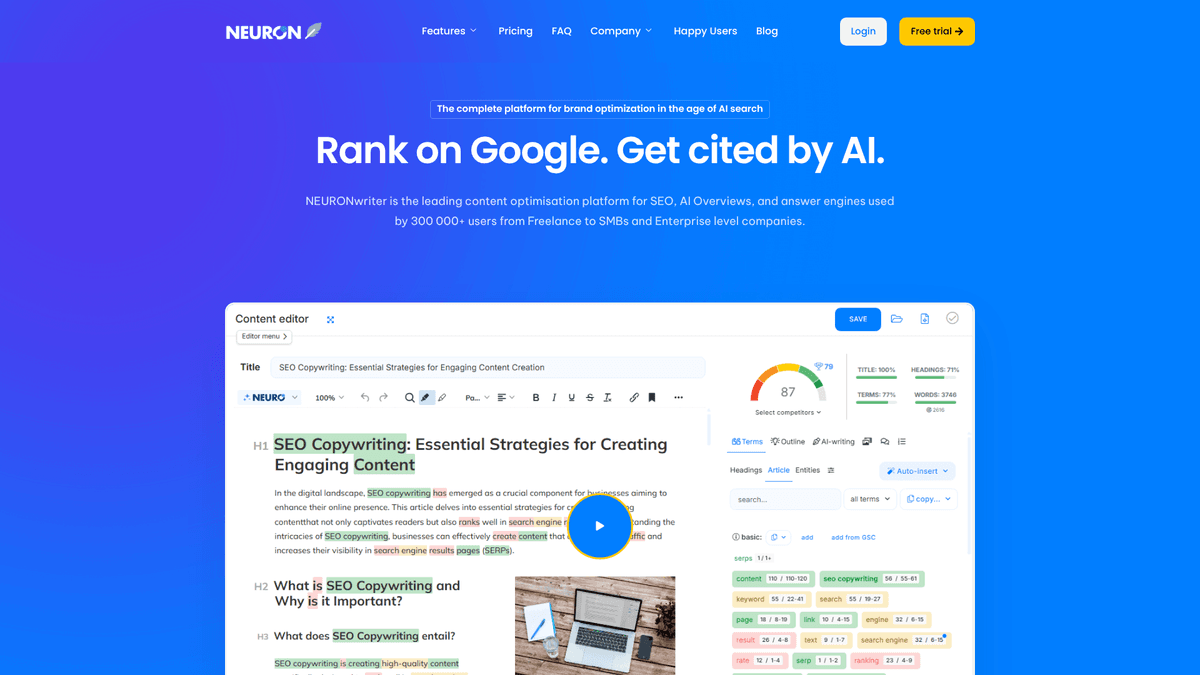
Best for: budget-conscious marketers who still want semantic optimization.
NeuronWriter keeps showing up because it offers more value than its price point suggests.
For freelancers, small agencies, and early-stage operators, that matters.
Strengths
Affordable
Useful semantic optimization features
Attractive for small teams that can’t justify premium tools
Weaknesses
Less polished than higher-end options
Team workflows are more limited
Doesn’t replace a full SEO system
Best fit summary
If price sensitivity is your main filter, NeuronWriter is easy to shortlist.
Side-by-side: how these tools really differ
Here’s the simpler buying lens most comparison posts skip.
Tool | Research Depth | Drafting Help | Optimization | Automation | Direct Publishing | Best Team Type |
|---|---|---|---|---|---|---|
RankSpot | High | High | High | Very High | Yes | Founders, lean teams, growth-focused SMBs |
Surfer SEO | Medium | Medium | Very High | Low | Limited | SEO teams and agencies |
Scalenut | Medium | High | Medium | Medium | Limited | Small marketing teams |
Clearscope | Medium | Low | High | Low | No | Editorial teams |
MarketMuse | Very High | Low | Medium | Low | No | Strategy-heavy teams |
Content Harmony | Very High | Low | Medium | Low | No | Agencies and briefing-heavy teams |
Keyword Insights | High | Low | Low | Medium | No | Agencies and SEO planners |
Machined | Medium | High | Medium | High | Yes | Programmatic SEO operators |
Semrush SWA | Medium | Medium | Medium | Low | Limited | Existing Semrush users |
NeuronWriter | Medium | Medium | Medium | Low | No | Budget buyers |
How to choose the right tool
Most buyers don’t need the “best tool.” They need the right category.
Choose RankSpot if:
You want the entire SEO content machine handled for you. Research, planning, writing, visuals, structure, publishing, and AI-search optimization in one workflow.
This is especially true if you’re trying to compete with bigger brands without building a bigger team.
Choose Surfer SEO if:
You already have a strong process and just want better live optimization during writing.
Choose Scalenut if:
You want more automation than Frase but still like being close to the draft creation process.
Choose Clearscope if:
You run an editorial team and want a premium grading tool writers can adopt quickly.
Choose MarketMuse if:
You’re thinking in topic authority, gaps, and long-term strategy rather than weekly publishing velocity.
Choose Content Harmony if:
Your workflow revolves around excellent briefs and better research handoff to writers.
Choose Keyword Insights if:
Your problem is messy planning, keyword clustering, and unclear page architecture.
For that use case, our guide to finding competitor keywords pairs well with tools built around opportunity discovery.
Choose Machined if:
You want a more programmatic, scale-first content engine.
Choose Semrush SEO Writing Assistant if:
You’re already deep in Semrush and want to stay inside one ecosystem.
Choose NeuronWriter if:
You need a low-cost optimizer that still gives you semantic guidance.
That matters because the capabilities buyers care about have expanded:
automatically identifying opportunity-rich keywords
tracking competitor rankings and topic coverage
publishing consistently without bottlenecks
creating content that can rank in Google and be surfaced by AI assistants
consolidating research, drafting, and publishing in one system
That’s why the strongest options are moving from standalone content tools toward SEO operating systems.
For most buyers, the best choice is the platform that matches their speed, team size, and publishing goals.
Final verdict
Frase still has a place. If you want a focused tool for research and content optimization, it remains useful.
But if you’re actively searching for frase alternatives, chances are you already feel the ceiling:
too much manual work
not enough automation
limited publishing support
fragmented SEO workflow
weak leverage for a lean team
That’s why RankSpot is our top pick.
It’s built for founders and small teams that need real output, not just recommendations. It replaces the scattered stack. It saves 40+ hours a month. It finds high-intent opportunities, drafts and formats long-form content, generates unique images, publishes directly to your CMS, and helps your brand show up not only in search results but in AI answers too.
If that sounds closer to what you actually need, try RankSpot’s low-friction trial and get your first 3 articles free.
That’s the simplest way to see the difference between a content tool and a growth engine.