If you're looking for a Scalenut alternative, you probably already know the trade-off.
Scalenut is useful when you want fast drafts and basic optimization in one place. But once you're running a real content engine, the cracks show up fast. Drafts still need cleanup. Optimization can feel lighter than dedicated tools. Ongoing refreshes and performance workflows are limited. And for lean teams, the interface can start to feel busy instead of helpful.
That matters even more in 2026.
Founders and small marketing teams are no longer just writing for Google. They also want to show up in AI answers across ChatGPT, Claude, Gemini, and Google AI Overviews. That means you need more than an AI writer. You need a workflow that can research opportunities, prioritize topics, create publishable content, and keep compounding over time.
If that is your goal, this guide will help you pick the right tool.
Who this guide is for
This comparison is built for:
founders doing SEO without an in-house specialist
SaaS teams trying to publish consistently without hiring an agency
ecommerce and content teams that want better automation
operators moving off expensive, manual SEO workflows
teams evaluating scalenut alternatives with stronger optimization, AI visibility, or workflow automation
If you just need occasional AI blog drafts, Scalenut may still be enough.
If you want an end-to-end system that can handle research, writing, formatting, publishing, and ongoing improvement, keep reading.
Quick comparison table
Tool | Best for | Starting price | Main strength |
|---|---|---|---|
RankSpot | Founders and lean teams that want full automation | Free trial available | End-to-end SEO and GEO content pipeline |
Surfer SEO | Writers who want deeper on-page optimization | From about $49/mo | Real-time SERP-based scoring |
Frase | Teams that want SERP briefs plus drafting | From about $49/mo | Fast research-to-draft workflow |
Content Harmony | Editorial workflows and content briefs | Custom / premium | Strong briefing and workflow management |
Clearscope | Editorial teams with strict quality control | From about $129/mo | Premium content grading |
MarketMuse | Larger teams building topical authority | Premium | Content planning and authority mapping |
Orchly.ai | Teams focused on SEO + GEO workflows | Varies | AI visibility and agent-driven execution |
Search Atlas | Agencies and advanced SEO teams | Varies | Broad SEO operating system |
Jasper | Brand voice and multi-format marketing copy | From about $59/seat/mo | Strong brand voice controls |
Semrush Writing Assistant | Teams already using Semrush | Semrush plan required | Writing support inside a broader SEO suite |
How to choose the right replacement for Scalenut
Before we get into the list, here is the simple way to think about it.
Choose by workflow, not by feature count
Most teams buy the wrong tool because they compare checklists.
That is a mistake.
The better question is: where is your workflow actually breaking?
If you have writers but weak optimization, use an optimization-first tool.
If you have research but no execution, use an automation-first tool.
If you need brand consistency across many formats, use a writing platform.
If you need deep SEO data, use a research suite.
That is the lens used throughout this comparison.
The four common reasons people switch
Most teams leave Scalenut for one of these reasons:
They want better optimization depth.
They want less manual editing after drafts are generated.
They need ongoing refreshes and performance visibility.
They want to optimize for AI answers, not just blue links.
That last one is becoming a much bigger deal.
As AI answer engines become a real acquisition channel, teams are starting to care about AI visibility tools and citation tracking almost as much as classic rank tracking. If that is on your roadmap, it is worth understanding the difference between SEO content automation and pure monitoring software. We cover that in the bonus section, and you can also explore this broader guide to AI visibility tools.
1. RankSpot - best for founders and lean teams that want the whole workflow automated
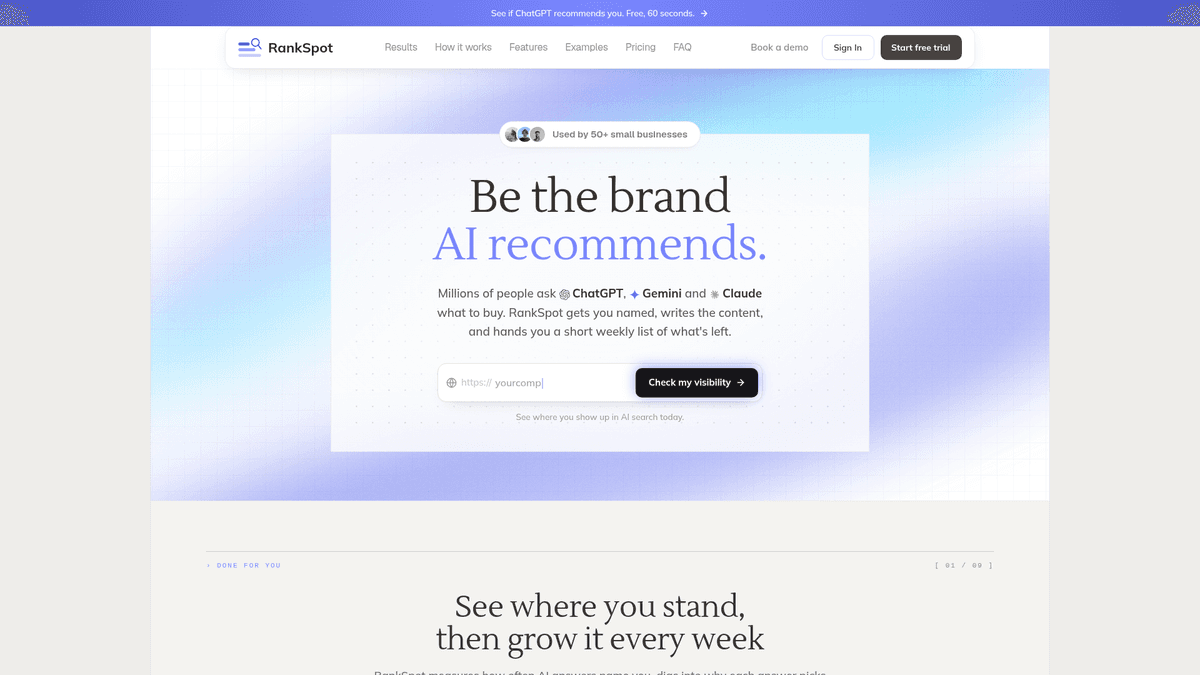
If you're moving away from Scalenut because you want less manual work, RankSpot is the strongest fit.
Instead of giving you another drafting interface, RankSpot handles the full content pipeline: research, prioritization, writing, formatting, image generation, internal links, and direct publishing. It is built for founders and small teams who know content matters but do not want SEO to become a second full-time job.
Why RankSpot stands out
RankSpot is not just an AI writer. It acts more like a personal SEO content agent.
You give it your site. It learns your niche, analyzes competitors, finds high-intent keywords, builds a 30-day plan, writes long-form articles, generates on-brand visuals, and publishes directly to your CMS.
That makes it very different from tools that stop at “here is your draft.”
Best features
full automation from keyword research to publishing
daily SEO-optimized article publishing for compounding growth
optimization for AI answer engines like ChatGPT, Claude, and Gemini
competitor keyword tracking and opportunity-based topic prioritization
direct CMS integrations for WordPress, Webflow, Wix, Shopify, Framer, Ghost, and more
built-in formatting, tables, quotes, structure, and internal linking
unique image generation per article
Reddit and forum opportunity discovery
support for 100+ languages
saves 40+ hours per month for lean teams
Where it beats Scalenut
Scalenut helps you draft faster.
RankSpot helps you ship consistently without doing the work manually.
For early-stage teams, that is usually the bigger bottleneck. Research, planning, formatting, and publishing are what slow content down. RankSpot removes those steps.
Honest downside
If you specifically love Scalenut’s Cruise Mode style of hands-on guided drafting, RankSpot is a different model. It is more automated and more system-driven. Teams that want to personally shape every paragraph before publish may prefer a tool with a more writer-centric interface.
Best for
SaaS founders
indie hackers
lean growth teams
stores and startups replacing agency work
teams that want one platform instead of stitching together Ahrefs, writing tools, design tools, and CMS workflows
If your current process still depends on multiple tabs, spreadsheets, and rewrites, you may also want to look at broader SEO automation tools to understand where the category is going. RankSpot sits at the most automated end of that spectrum.
2. Surfer SEO - best for deeper on-page optimization
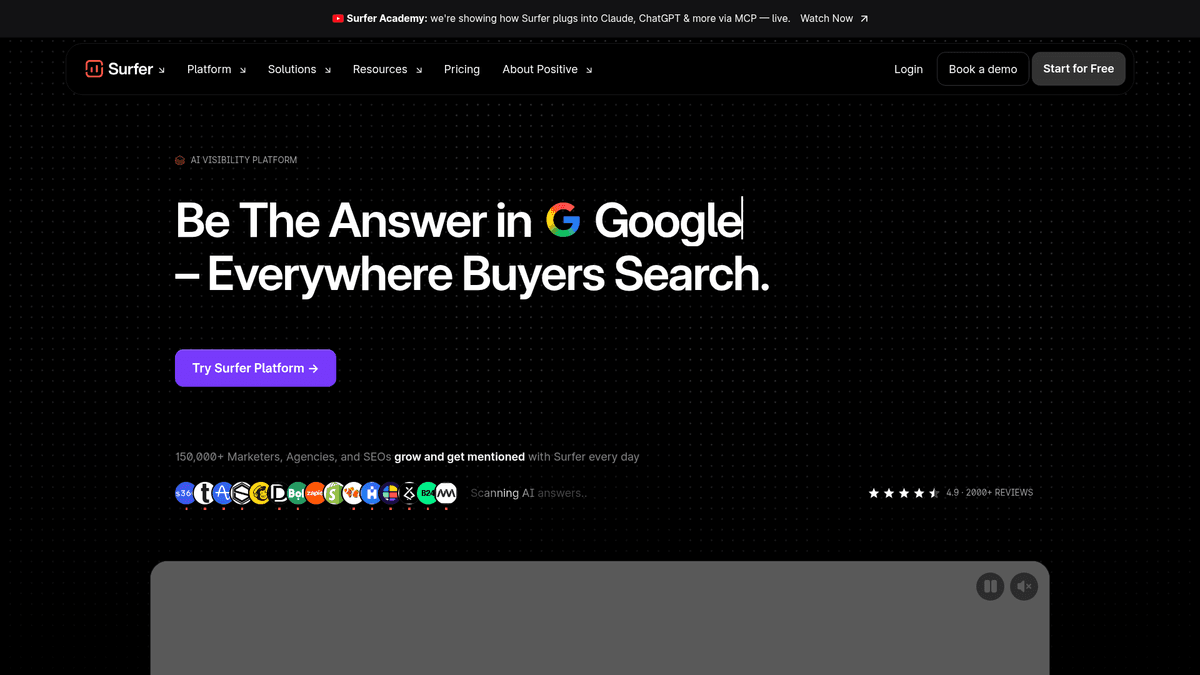
Surfer is one of the most widely used Scalenut alternatives for a reason.
It is great at turning SERP patterns into practical writing guidance. Writers get a live score, term suggestions, and structural feedback while drafting. If your issue with Scalenut is that you want tighter optimization and more control, Surfer is a strong step up.
Best features
real-time content scoring while writing
SERP-based term and structure recommendations
NLP-driven optimization guidance
useful workflows for content updates and cannibalization checks
familiar writer-friendly interface
Where it fits best
Surfer is ideal when:
you already have writers
you want stronger on-page SEO discipline
your content quality is inconsistent
you need an optimizer more than a content engine
Trade-offs
Surfer is not a full publishing system. It helps writers optimize, but your team still needs to handle topic selection, briefing, article writing, editing, images, and publishing.
That is why some teams start with Surfer, then later move to more automated systems.
Best for
in-house content teams
SEO managers
agencies
founders with a writer already in place
3. Frase.io - best for SERP research and content briefs
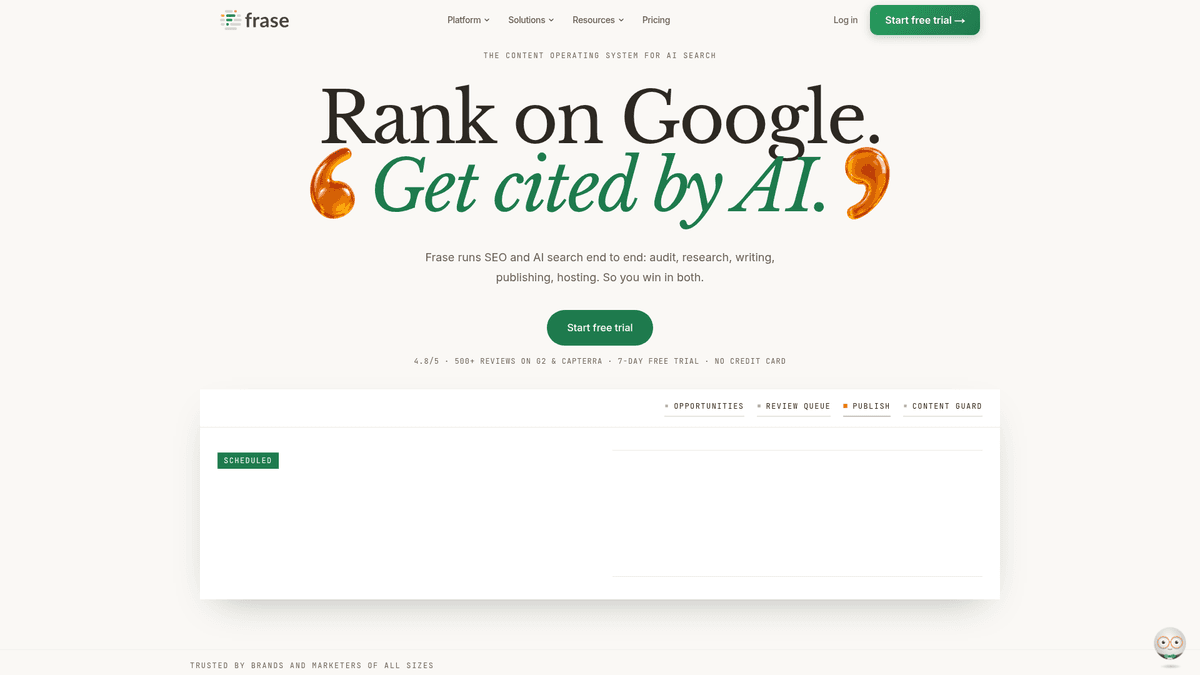
Frase is a very good choice when your main problem is moving from keyword to brief to first draft faster.
It pulls questions, headings, and topic patterns from the SERP, then helps turn that into an article outline and draft. It is especially useful for teams that want better prep work before writing begins.
Best features
fast SERP-based content brief generation
question research and topical coverage suggestions
built-in AI drafting
useful workflow for writers and editors
lighter learning curve than big SEO suites
Where it fits best
Frase works well when:
writers need help with outlining
your team publishes educational content regularly
you want SERP-informed briefs without deep technical SEO tooling
Trade-offs
Frase improves speed, but not necessarily originality. You still need a human point of view, a strong angle, and editing for quality. It is more workflow-friendly than many AI writers, but it is not a replacement for a full automated content operation.
Best for
content marketers
writer-led teams
startups producing comparison, glossary, and educational content
4. Content Harmony - best for structured content operations
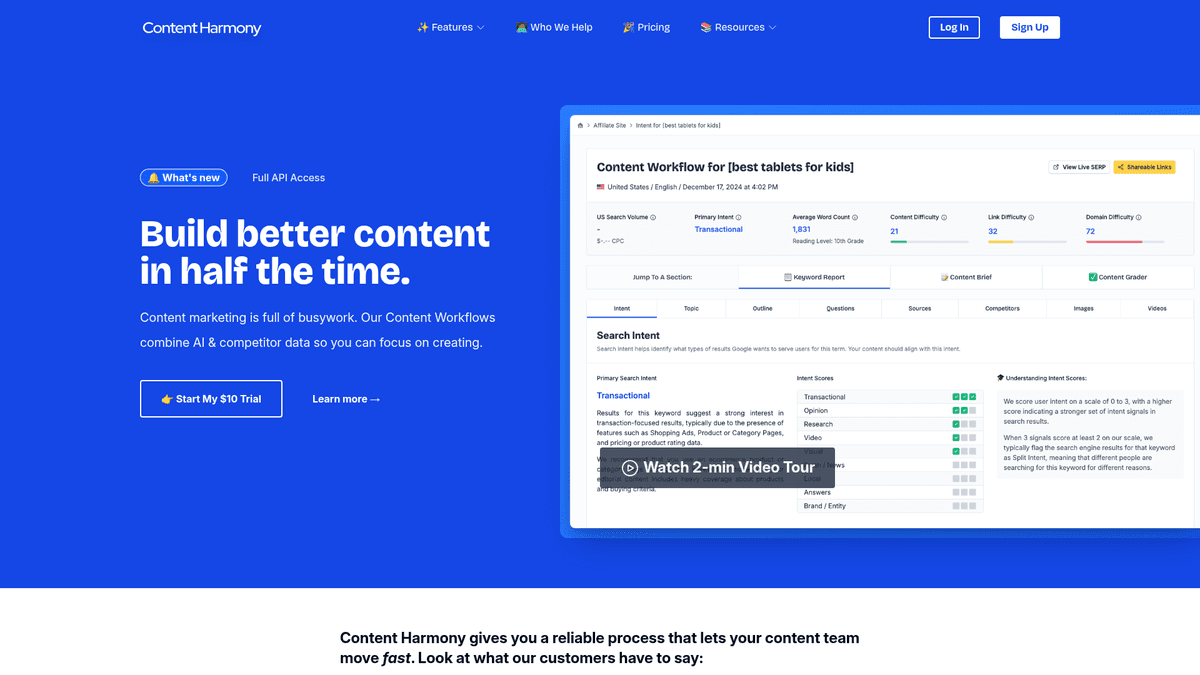
Content Harmony is less about instant AI generation and more about running a clean editorial workflow.
It is strong on briefs, topic planning, grading, and collaboration. Teams that care about content production process and approvals often like it because it is operationally clear.
Best features
detailed SEO content briefs
workflow management for teams
content grading and optimization feedback
collaboration features with less seat friction
strong fit for repeatable editorial systems
Where it fits best
Content Harmony is best when:
multiple people touch each piece of content
briefs are the bottleneck
you care about process and documentation
you want a workflow platform more than a writing bot
Trade-offs
It does not offer the same “set it up and let it publish daily” experience as RankSpot. It is better for teams that already have people in the loop.
Best for
editorial teams
agencies
SEO teams with clear production workflows
5. Clearscope - best for editorial quality control
Clearscope has been the premium content optimization pick for years.
Its core strength is simple: it helps editorial teams hold a consistent quality bar. Writers get term guidance and a grading framework, often directly inside familiar tools like Google Docs.
Best features
premium content grading
clean optimization recommendations
strong editorial usability
good integrations for existing writing workflows
widely trusted by larger teams
Where it fits best
Clearscope is best for:
content teams with multiple writers
brands with strict editorial standards
companies willing to pay more for smoother optimization workflows
Trade-offs
It is expensive for smaller teams. It also does not solve research, publishing, or automation at the level most founders need. Great optimizer. Not a full content engine.
Best for
established content teams
editorial managers
companies focused on consistency over automation
6. MarketMuse - best for topical authority planning
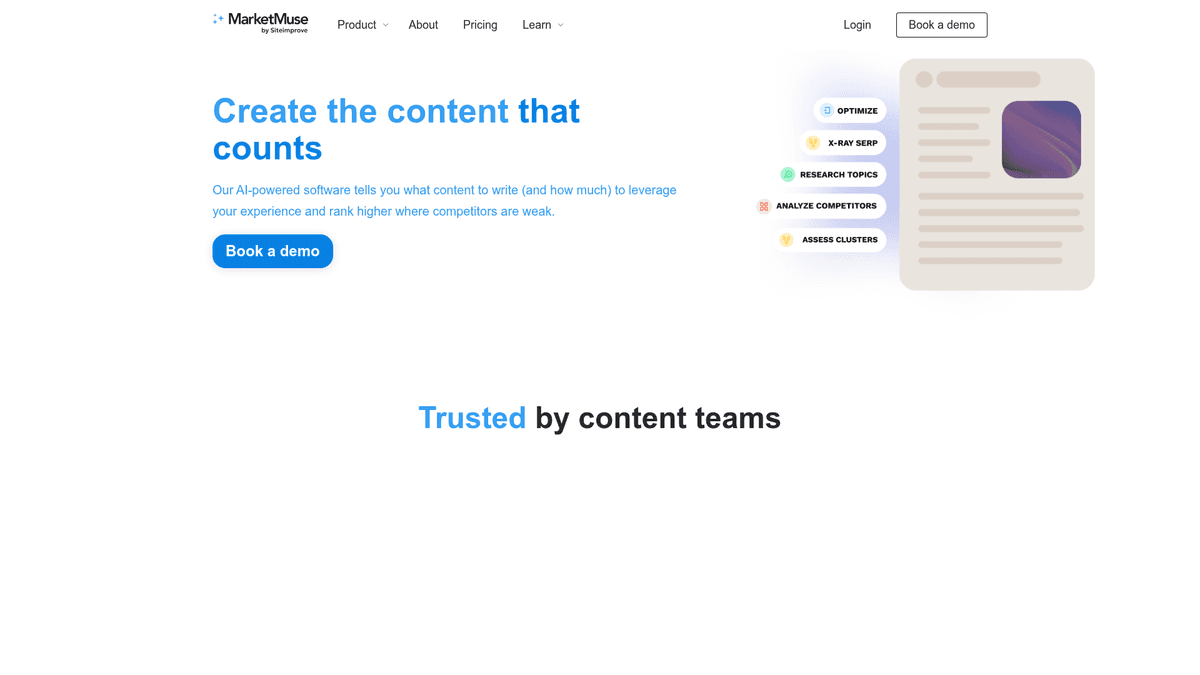
MarketMuse is built for a more strategic SEO job.
Instead of mainly helping with paragraph-level optimization, it focuses on topical authority, planning, and identifying where your site needs more depth. It is useful when you are trying to build a content moat in a category.
Best features
topical authority modeling
advanced content planning
inventory-level insight across your site
prioritization support for larger content programs
good strategic fit for mature SEO teams
Where it fits best
MarketMuse makes sense when:
you manage a large content library
you want to map topic authority, not just optimize single posts
SEO planning is a bigger need than drafting speed
Trade-offs
This is usually too heavy and too expensive for most early-stage teams. If you are just trying to publish consistently, MarketMuse is probably more platform than you need.
Best for
larger SaaS companies
enterprise content teams
strategy-heavy SEO programs
7. Orchly.ai - best for teams that care about SEO plus GEO execution

Orchly.ai sits closer to the new SEO + GEO category.
It is designed around workflow automation and AI search visibility, not just classic article drafting. For teams thinking ahead about AI answers and agent-driven content operations, it is an interesting option.
Best features
SEO plus GEO workflow positioning
agent-style execution model
AI visibility focus
broader automation than classic writing assistants
useful for teams experimenting with AI-first search strategy
Where it fits best
Orchly fits when:
AI answer engine visibility is a priority
you want more automation than a standard optimizer
your team wants a newer workflow model beyond classic SEO writing tools
Trade-offs
As with many newer platforms, teams should validate real workflow depth, publishing reliability, and output quality in practice. It is promising, but still a category that needs hands-on testing.
Best for
forward-looking SEO teams
startups focused on AI discovery
operators wanting GEO in the workflow itself
8. Search Atlas - best for agencies and all-in-one SEO operations
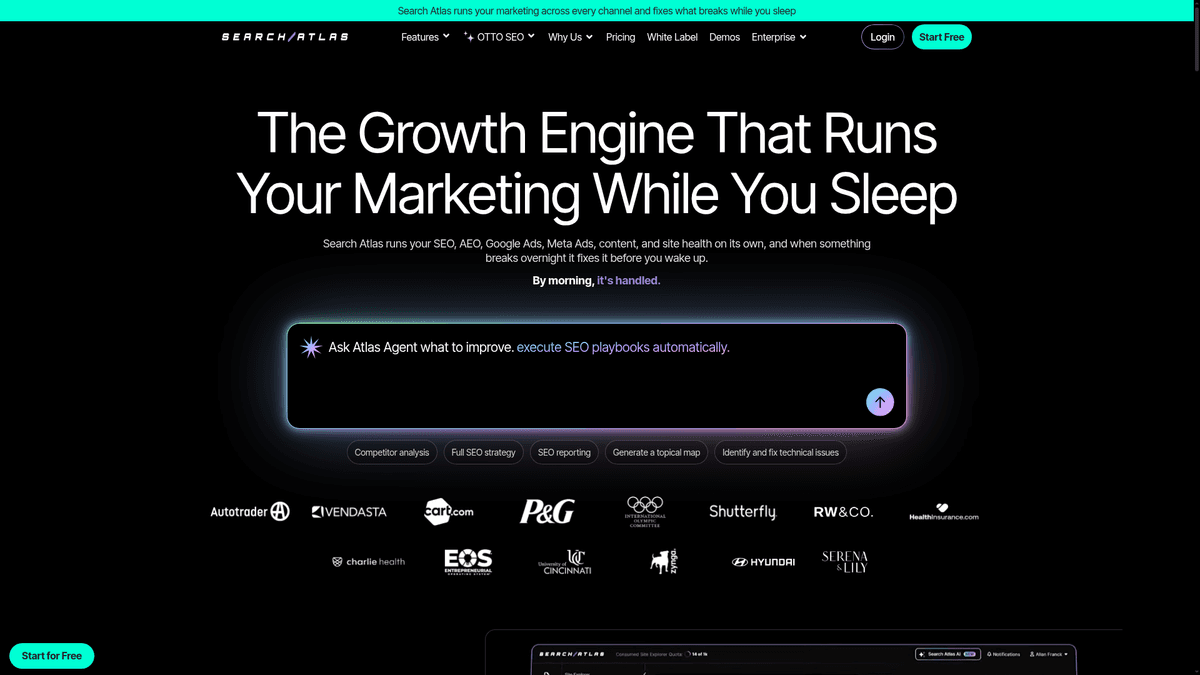
Search Atlas aims to be an SEO operating system.
It covers a lot: keyword research, site audits, automation, content workflows, and agency-style operations. That makes it broader than Scalenut and often more capable for advanced teams.
Best features
broad SEO toolkit
automation workflows including OTTO
site-level research and tracking
better fit for agencies than lightweight writers
supports larger-scale SEO operations
Where it fits best
Search Atlas works best when:
you manage many sites or clients
you need one broader SEO platform
content is only one part of the job
Trade-offs
Like most all-in-one SEO suites, the bigger feature set comes with more complexity. Lean founders often do not need that much software. If your real goal is “publish high-quality content consistently,” a more focused automation platform may be easier to use.
Best for
agencies
advanced operators
teams needing a wider SEO stack
9. Jasper - best for brand voice and multi-format content
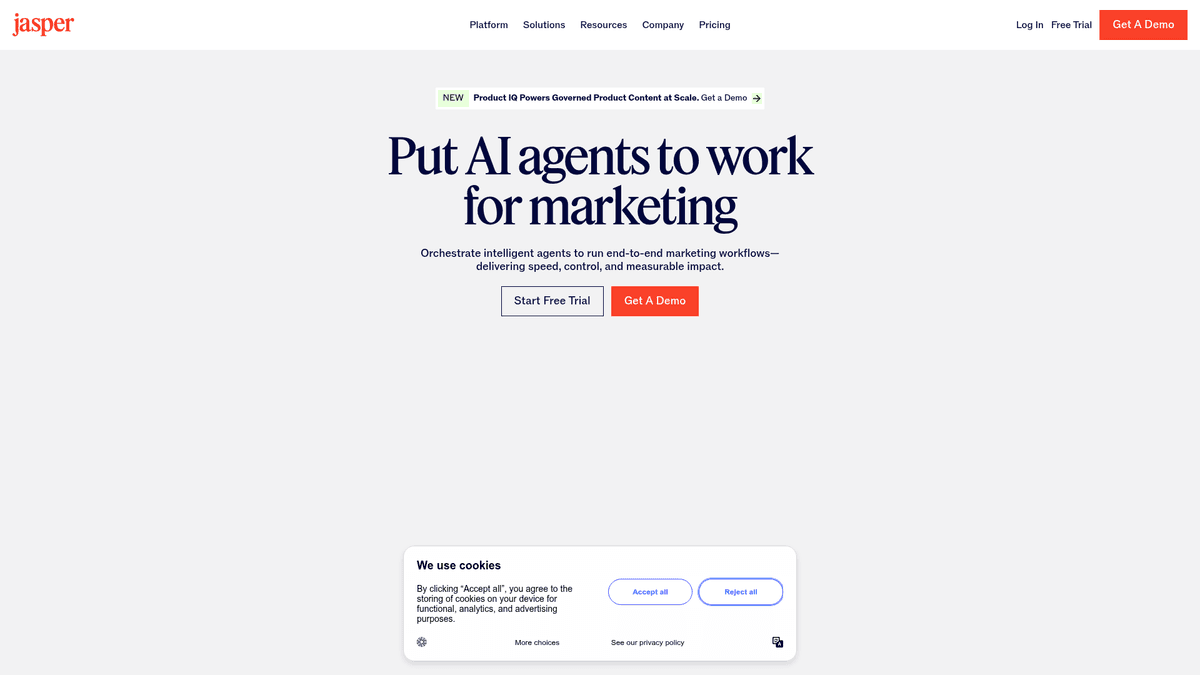
Jasper is a marketing writing platform first, not an SEO platform first.
It shines when you need strong brand voice controls across blogs, ads, landing pages, sales collateral, and emails. If your frustration with Scalenut is that the writing feels generic, Jasper can help on the voice side.
Best features
strong brand voice controls
multi-format content support
collaboration features for teams
better fit for marketing ops than pure SEO
familiar AI writing environment
Where it fits best
Jasper is a good fit when:
brand consistency matters a lot
you write across many channels
SEO research is handled elsewhere
Trade-offs
Jasper is not the best tool if search content production is the main job. You will still need keyword research, topic selection, optimization, and likely another tool for publishing workflow.
Best for
brand and content marketing teams
companies creating content beyond blog SEO
teams prioritizing voice over SERP depth
10. Semrush Writing Assistant - best for teams already in the Semrush ecosystem
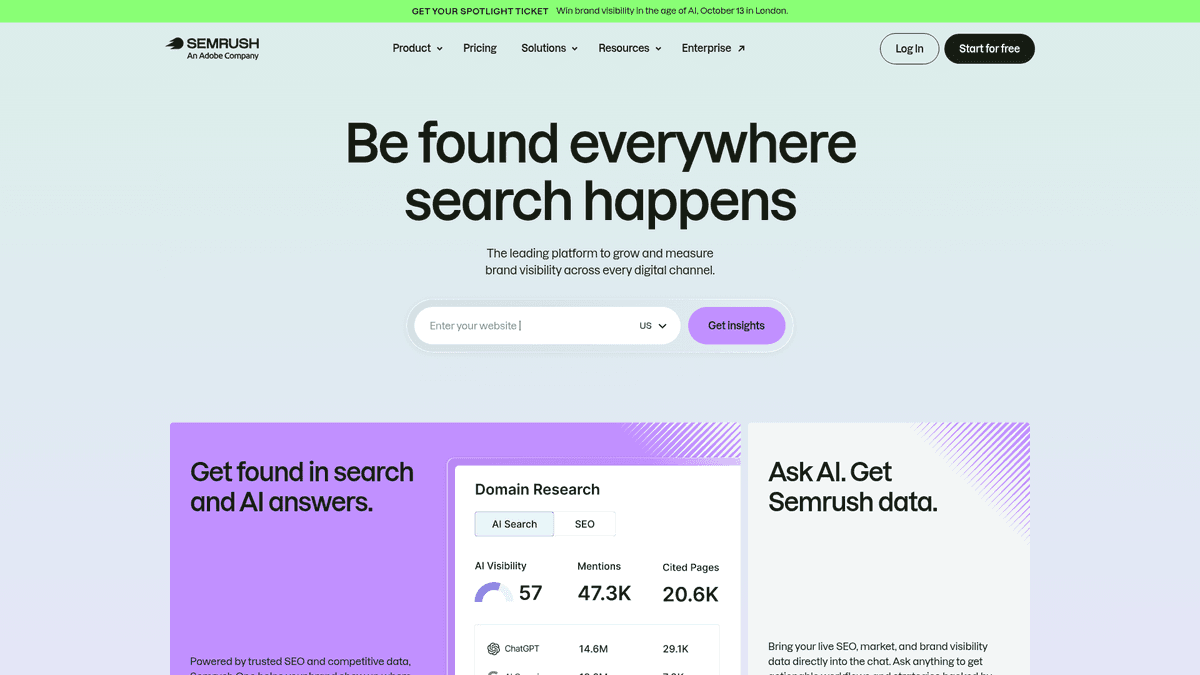
If your company already runs on Semrush, using its writing assistant can be a sensible move.
The big advantage is convenience. Research, keyword data, and writing support can sit inside the same ecosystem instead of being split across tools.
Best features
native fit inside Semrush workflows
solid support for keyword-informed writing
helpful for teams already doing Semrush research
better operational fit than buying an entirely separate stack
broad SEO data available around the writing process
Where it fits best
This is best when:
Semrush is already your main SEO platform
you want writing support without changing ecosystems
your team values centralization more than specialized drafting tools
Trade-offs
As a standalone replacement for Scalenut, it is not always the best value. It makes the most sense when you are already paying for Semrush and want to extend it, not when you are shopping from scratch.
Best for
Semrush users
in-house SEO teams
companies that want one research-centered ecosystem
Comparison by use case
Here is the simpler decision guide.
If you need... | Best choice |
|---|---|
Full automation from research to publish | RankSpot |
The best on-page optimization feedback | Surfer SEO |
Faster content briefs and outlines | Frase |
Editorial workflow and briefing discipline | Content Harmony |
Premium editorial scoring | Clearscope |
Topical authority planning | MarketMuse |
SEO + GEO execution focus | Orchly.ai |
Agency-scale all-in-one SEO ops | Search Atlas |
Strong brand voice across formats | Jasper |
Writing support inside an SEO suite | Semrush Writing Assistant |
What matters most in 2026: publishing consistency
One thing founders consistently underestimate is how hard consistency is.
Writing one good post is possible. Publishing every week is hard. Publishing every day is nearly impossible without automation.
That is where most tools on this list split into two camps:
Camp 1: optimization tools
These help humans write better.
Examples:
Surfer
Clearscope
Frase
Content Harmony
Camp 2: automation platforms
These help teams publish more with less labor.
Examples:
RankSpot
Orchly.ai
parts of Search Atlas
If you are a founder with no SEO hire, the second camp usually creates more business value.
That is also why more teams are rethinking classic manual keyword workflows and looking for systems that can identify topics, prioritize competitor gaps, and ship content automatically. If you want a practical framework for that side of the process, this guide on keyword research strategies for 2026 is a useful companion.
Two realities buyers should keep in mind
1. SEO content is no longer just about Google
AI assistants are becoming discovery layers.
People ask ChatGPT for software recommendations. They ask Perplexity to compare tools. They ask Gemini for summaries and vendor shortlists.
Your content now needs to be structured to earn citations and mentions, not just clicks from a search results page.
2. Tool sprawl is a real cost
A lot of teams think they are saving money with a cheaper writer plus a separate optimizer plus a design tool plus a research platform.
Usually they are not.
They are paying in time, handoffs, editing, and inconsistency.
That is the core appeal of workflow-first platforms like RankSpot. One system can replace much of the manual stack: keyword discovery, planning, writing, visuals, formatting, publishing, and even forum research.
Bonus: GEO and AI search visibility tools
This is a separate category, but it matters enough to mention.
SEO tools help you create and optimize content.
GEO and AI visibility tools help you understand whether your brand is being cited, recommended, or surfaced inside AI answer engines.
Three names worth watching:
AthenaHQ
AthenaHQ focuses on AI search visibility and tracking how brands show up in AI-generated answers.
Otterly AI
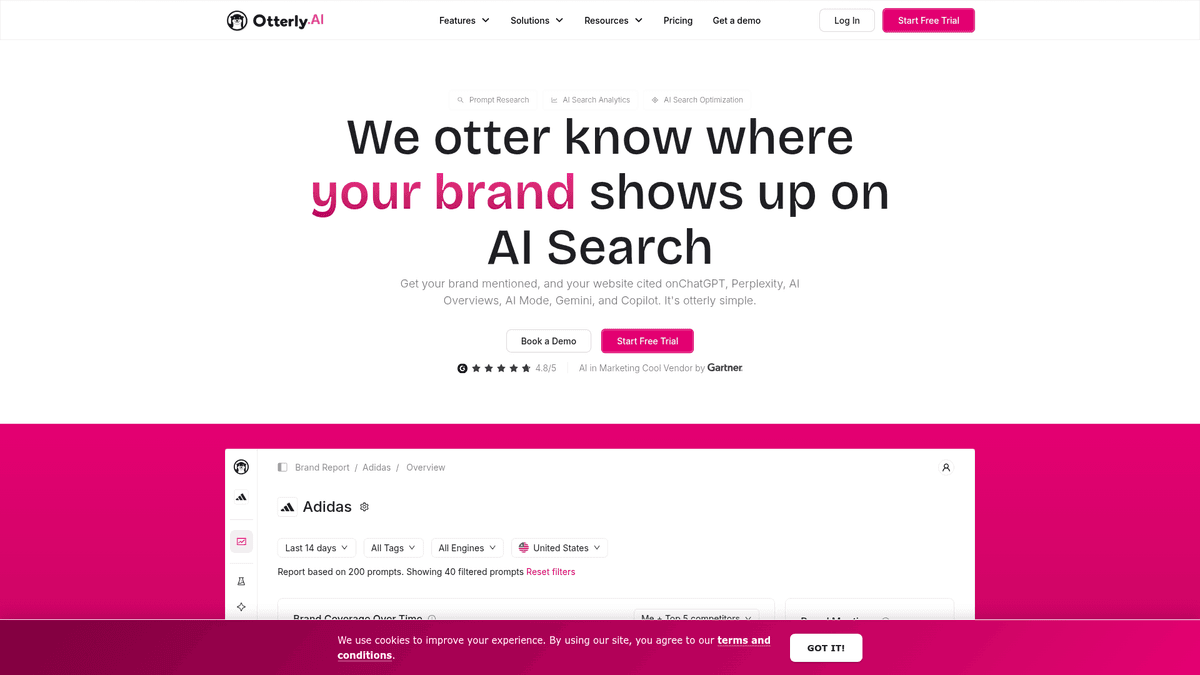
Otterly AI is designed to monitor prompts, answers, and brand presence across AI search environments.
Profound
Profound is another strong entrant in the AI visibility category, focused on how brands appear across LLM-driven discovery. If you want a deeper look at that market, this breakdown of Profound alternatives is a helpful starting point.
The key thing to understand is this: these tools mostly measure visibility. They do not usually create, format, and publish the content needed to improve it.
That is why many teams will eventually need both:
a production system to create optimized content
a visibility system to measure AI answer performance
RankSpot’s angle is different. It helps produce content designed to perform in both search engines and AI answer engines from the start.
Final verdict
There is no single best tool for everyone.
But there is a best tool for your workflow.
Choose Surfer SEO if your writers need stronger optimization guidance.
Choose Frase if you want faster briefs and SERP-informed drafts.
Choose Clearscope if editorial consistency is the top priority.
Choose Search Atlas or Semrush if you need a wider SEO suite.
Choose Jasper if brand voice matters more than search workflow.
Choose RankSpot if you want the most practical replacement for Scalenut as a founder or lean team.
That is because RankSpot does not just help you write. It helps you publish consistently, target higher-intent opportunities, track competitor keywords, generate visuals, format articles properly, and show up in both Google and AI answers without adding more work to your week.
If you want to stop babysitting SEO and start compounding from it, RankSpot is the best place to start.
The setup is low friction, the first 3 articles are free, and you do not need a credit card to test whether the workflow fits your business.