The SEO Agent alternative you choose depends on where work gets stuck. If nobody has time to publish, you'll need more than an editing tool. If posts already go live, you may get more from rank tracking or visibility into AI answers than from another automated writer.
I'd start with RankSpot if the blog needs a hands-off path from topic research to publication. Surfer SEO and Frase give you more say over each draft; Search Atlas suits a team also handling site-wide SEO work. Need to know whether ChatGPT cites your brand? Include citation measurement in the buying decision.
When should you replace The SEO Agent?
The SEO Agent appeals to founders who don't want to manage a writer every week. I would look elsewhere if I needed to approve posts before they went live, choose topics myself, track keyword positions, or see whether AI assistants mentioned the business.
Before switching, write down your bottleneck:
Publishing capacity: You have a backlog of useful topics but nobody to research, draft, format, and publish them.
Editorial control: You sell something technical or regulated and need a person to review claims before a post goes live.
Measurement: You already publish enough; now you want rank tracking, search performance, or evidence of mentions in AI answers. If that is your concern, compare SEO tools for small businesses separately from writing tools.
Channel fit: You need blog content for one CMS, multiple brands, or more than one language.
Find out who can send a post live. Hands-off publishing saves time when you trust the process. If every claim needs your sign-off, you'd be better off reviewing a draft than correcting a published page.
The SEO Agent alternatives at a glance
Alternative | Main job | Your role in the workflow | Best reason to consider it |
|---|---|---|---|
RankSpot | Plan, write, and publish SEO/GEO blog content | Set direction and inspect what gets published | You need ongoing posts with little manual production |
Surfer SEO | Improve content while writing or updating it | Edit and approve the page | You care about on-page content decisions |
Frase | Research, brief, and optimize articles | Shape the brief and final copy | You want faster research without handing over the whole workflow |
Outrank.so | Produce and publish SEO articles | Set topics and review output as needed | You want a content-production workflow |
Search Atlas | Manage a wider range of SEO tasks | Oversee technical and content changes | You need an SEO operations platform |
Koala Writer | Draft SEO-oriented articles | Edit, verify, and publish | You mainly need help getting drafts written |
SEObot | Automate blog content work | Set the blog's direction and check output | You want an agent-style writing workflow |
Autoblogging.ai | Generate articles at volume | Select topics and quality-check output | You need bulk production rather than a hands-on editor |
Writesonic | Create marketing content and work on AI-search visibility | Direct content and evaluate outcomes | You want writing tools alongside broader AI-search work |
The table compares each tool's main job. Tracking, CMS coverage, and approval settings vary. Decide what you want the tool to handle and what you need to sign off yourself.
1. RankSpot: for the founder who needs the blog to keep moving
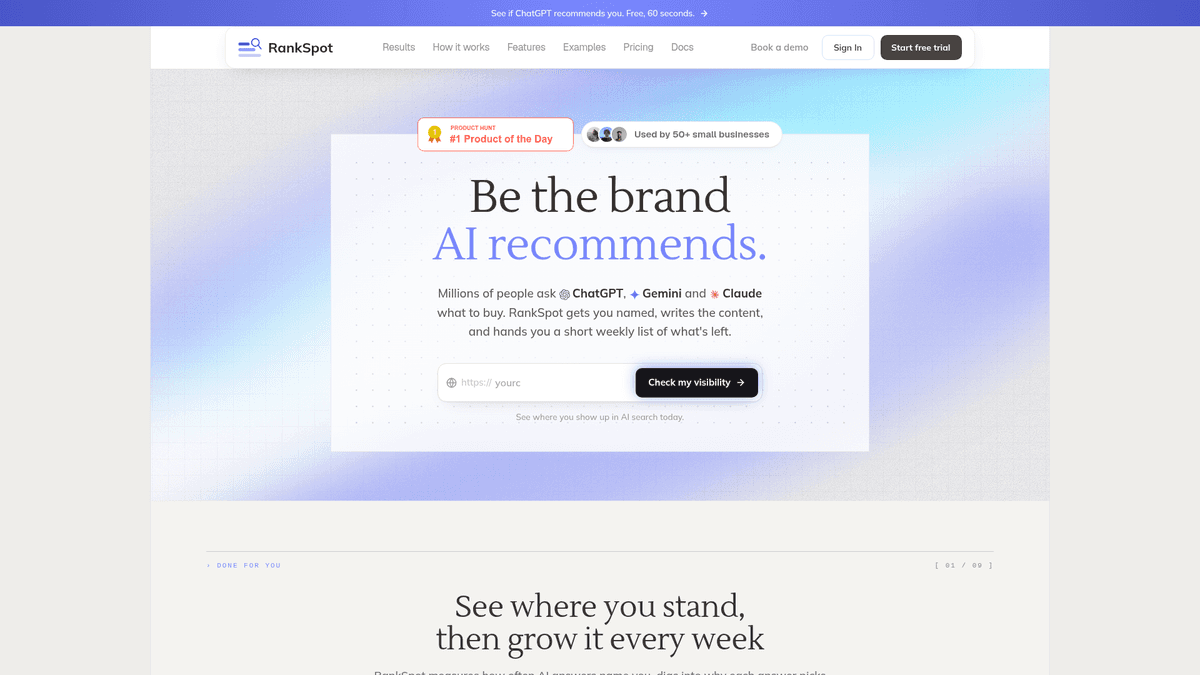
Give RankSpot your site and it builds a content plan around your niche, finds keyword opportunities, makes long-form posts and on-brand images, formats the articles, and publishes them to your connected blog. It prepares content for search engines and AI answer engines.
I'd use it if a blog sat untouched because nobody had time to write. RankSpot also finds competitor-keyword ideas and relevant Reddit or forum conversations. It connects to WordPress, Webflow, Wix, Shopify, Framer, and Ghost, so your team doesn't have to move articles between tools. If picking topics is the hurdle, start with high-intent keyword research.
RankSpot's strength is automated publishing. For sensitive topics, a policy that requires human approval of every claim needs to fit the publishing process. RankSpot prepares content for AI search; you may also need a visibility tool to measure actual citations.
2. Surfer SEO: for hands-on content optimization
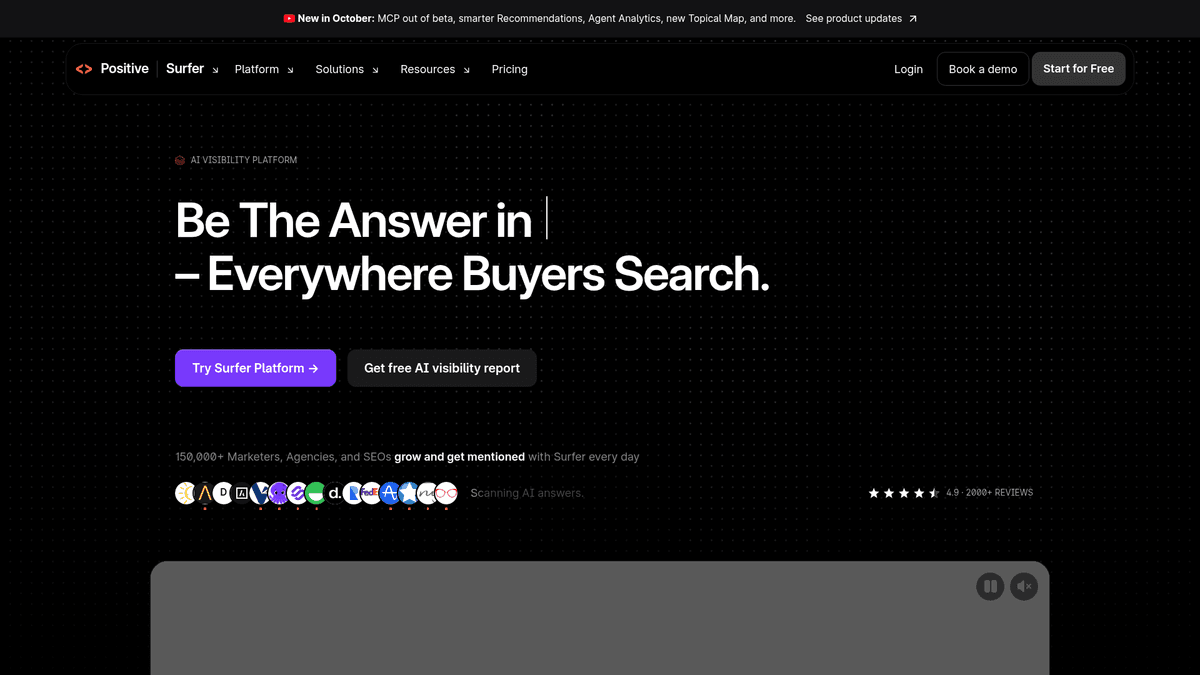
Surfer suits a founder or writer who wants to edit every page. Its content editor suggests changes as you write, and its analysis tools help with new drafts and existing pages. You decide which suggestions belong in the final copy.
If you know the subject well but lack time for on-page analysis, Surfer can speed up editing. You will still choose topics, check claims, publish, and maintain the schedule.
On a drafted page, inspect the coverage, structure, and content score, then add evidence from your product before working through suggested terms. Even a high score won't tell you whether your example answers the buyer who says, “We already do this in a spreadsheet.”
3. Frase: for briefs and research before you write
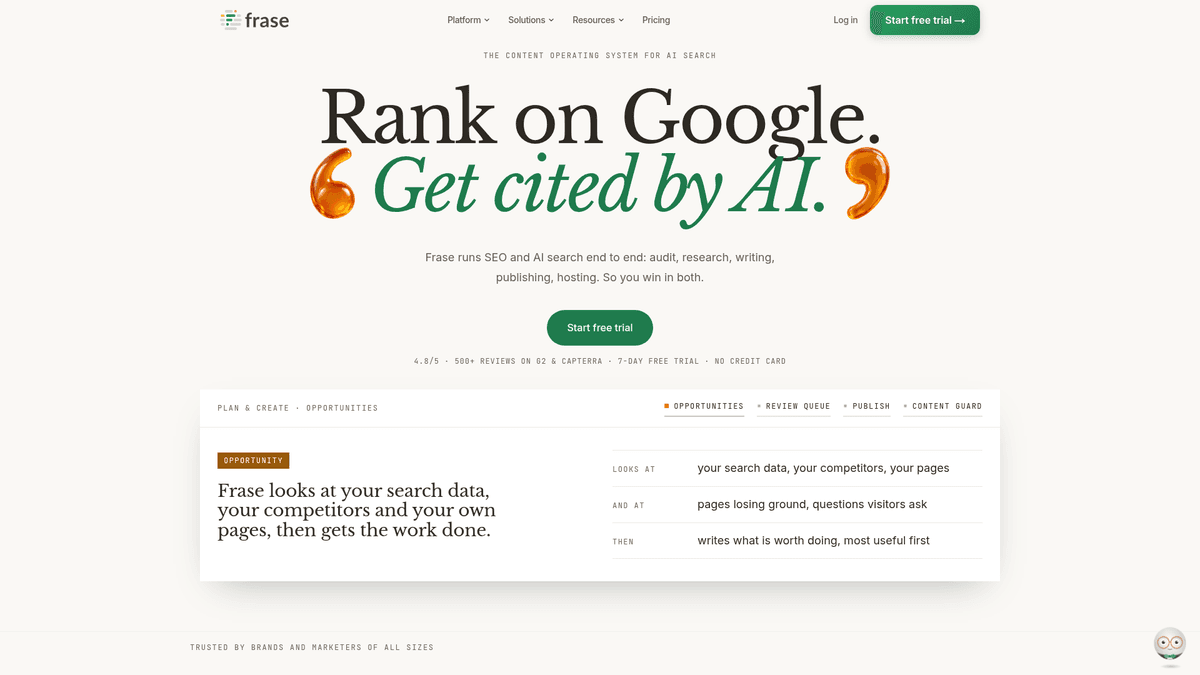
Frase combines search-result research, questions, content briefs, AI writing assistance, and optimization. It helps when you know what customers ask but need a quicker way to build an outline.
Use the generated brief as a starting point. Add firsthand details and edit the draft until it sounds like your business. Frase handles SEO and GEO optimization, though its content score does not prove that an assistant cited your page. You retain more editorial control than you would with an autopublisher.
If customers compare your product with a spreadsheet, a Frase brief can organize their questions. You can then add the setup steps, a limitation, and the decision criteria your team knows firsthand. AI-assisted content planning helps you assemble that material; it can't supply your product history.
4. Outrank.so: for regular SEO article production
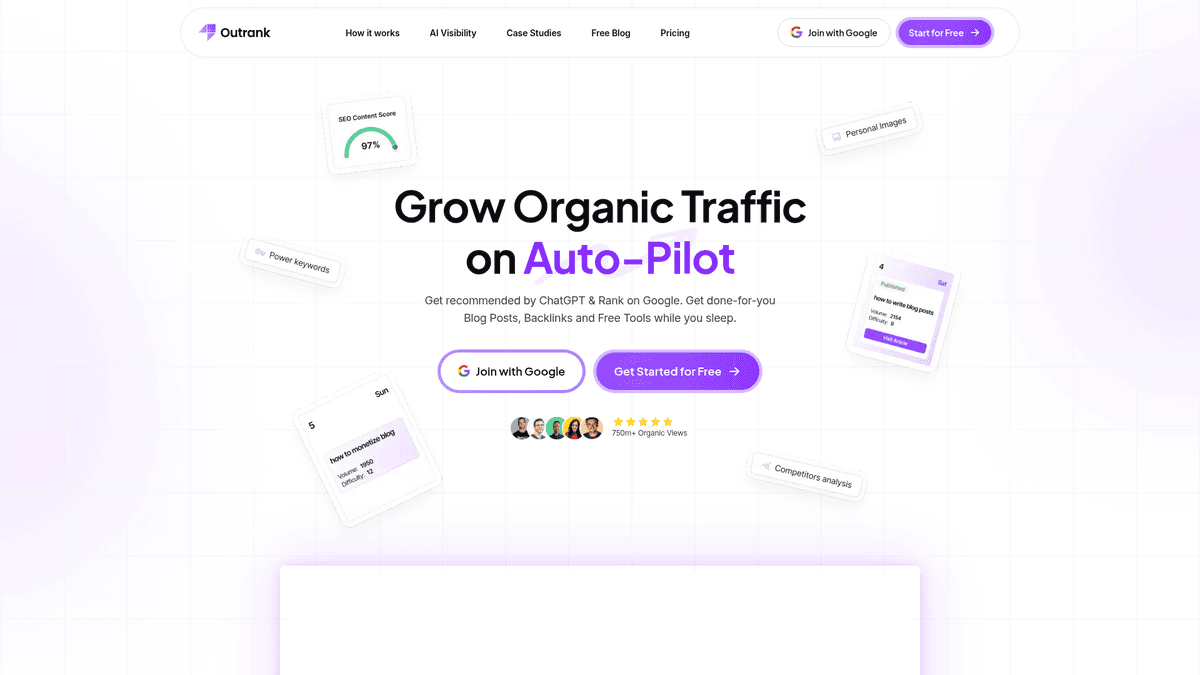
Outrank.so targets the gap between choosing a topic and having a publishable article. It's a production tool rather than a specialist rank tracker. If you know your audience and want to publish more often, that may help more than another research dashboard.
With production-first tools, it's easy to let output volume dictate your topics. Start with product questions you can answer, proof you can provide, and pages you can maintain. If you need detailed editorial review, put that ahead of article volume.
5. Search Atlas: for SEO operations beyond the blog
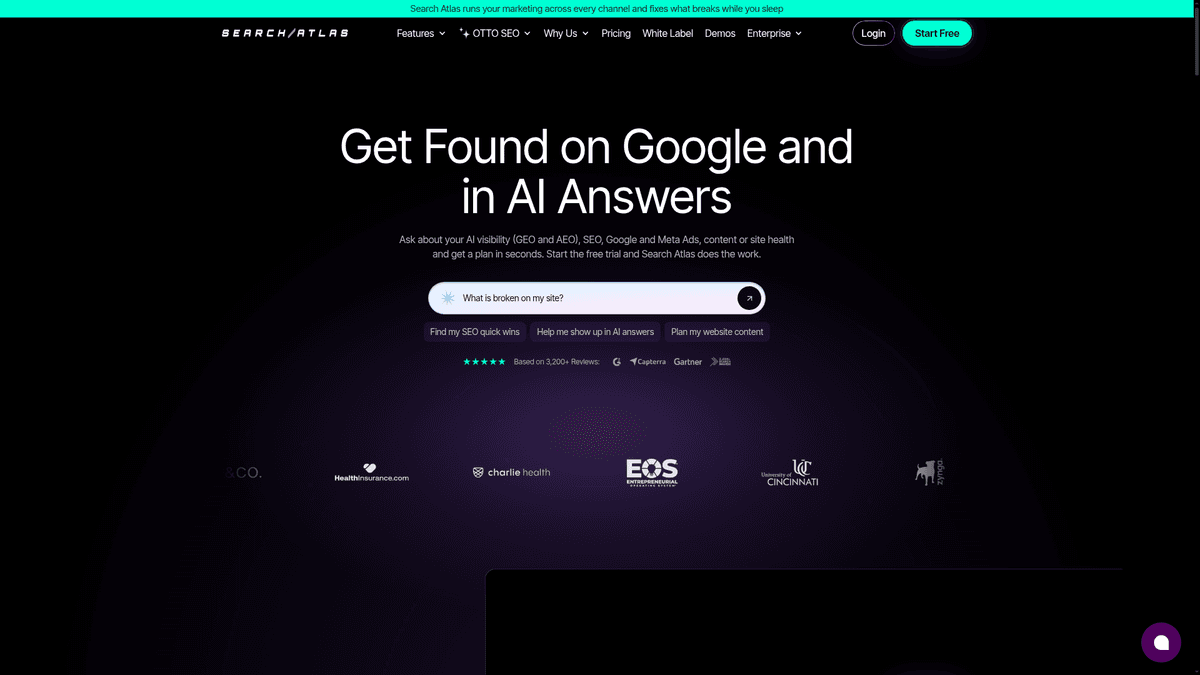
Search Atlas covers more SEO operations than most tools here. OTTO can execute SEO tasks, which is useful if you manage site fixes alongside articles.
If you need a steady stream of blog posts, you may not need such a broad platform. If you're coordinating audits, content changes, and monitoring across a site, consider it. For site-wide automation, decide who can authorize changes and how your team would undo an incorrect one.
6. Koala Writer: for getting a draft onto the page
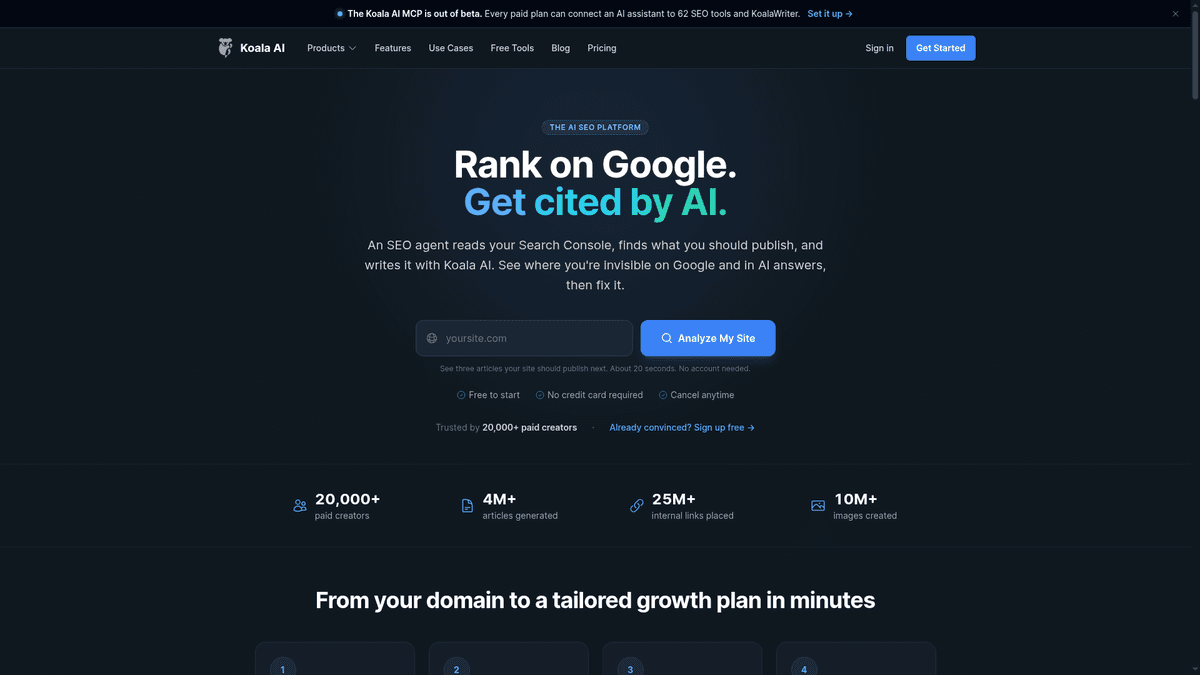
Koala Writer turns your topic list into initial articles. It has a narrower role than an end-to-end SEO program, leaving you to add customer examples, product screenshots, and claims your team can verify.
If choosing topics, assessing business intent, or understanding which posts led to demand takes most of your time, you need more than a draft generator. Koala Writer can handle the writing step while you manage the rest.
7. SEObot: for an agent-style blog workflow
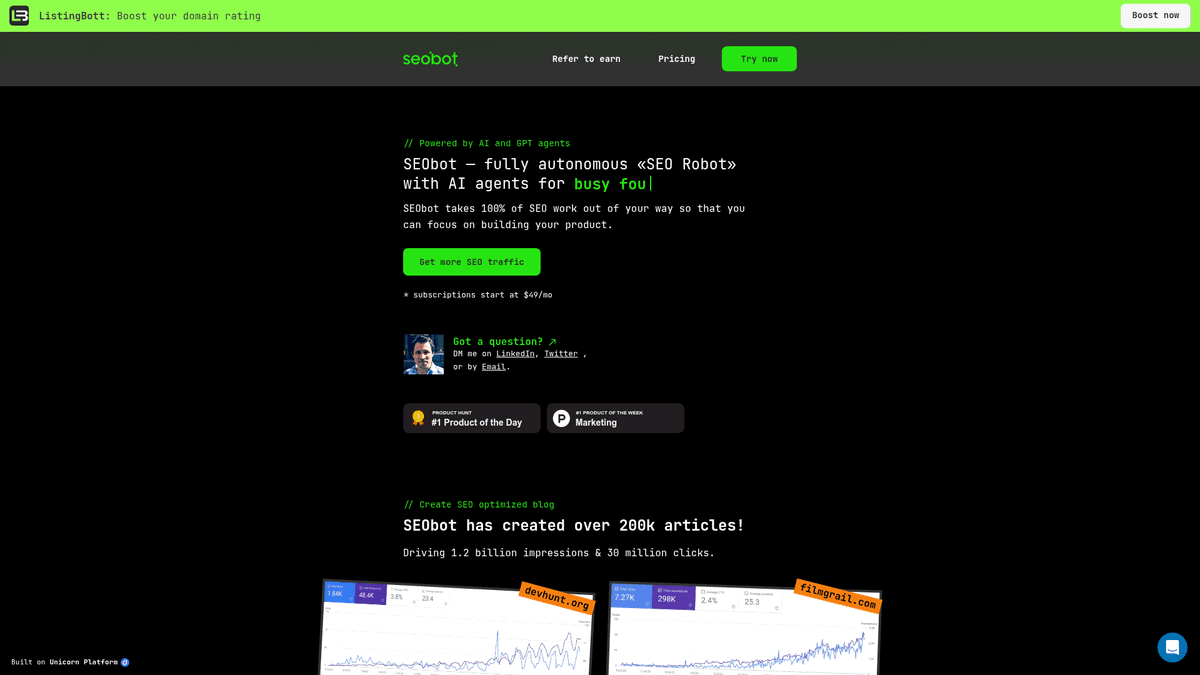
SEObot helps delegate repeatable blogging work, so you don't have to prompt a blank editor for each post. Set the audience, product vocabulary, and topic boundaries. Review the first outputs as you would review a new hire's work.
An “agent” label won't tell you whether the tool makes decisions your customers would recognize. If you require approval before publication, make that your deciding question. Agent tools don't all handle it the same way.
8. Autoblogging.ai: for bulk content production
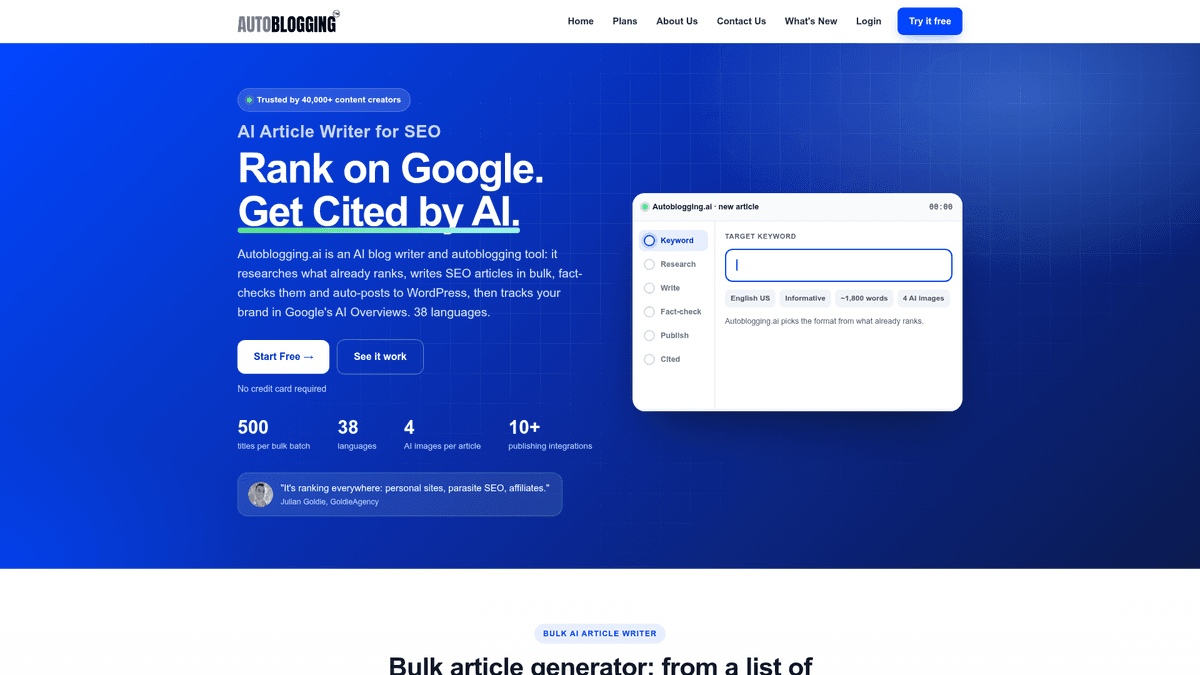
Autoblogging.ai helps produce many initial drafts from a defined set of topics. Bulk publishing also magnifies errors: a batch of near-duplicate pages can eat up the time you meant to save.
Start with a small batch. Check that posts answer different questions, support their claims, and each have a reason to exist. Google's scaled content abuse policy applies to pages made primarily to manipulate rankings rather than help users, however they're produced. For a careful thought-leadership blog, an editor-first tool may suit you better. If you need bulk output, explore this Autoblogging.ai alternatives comparison.
9. Writesonic: for content creation plus AI-search work
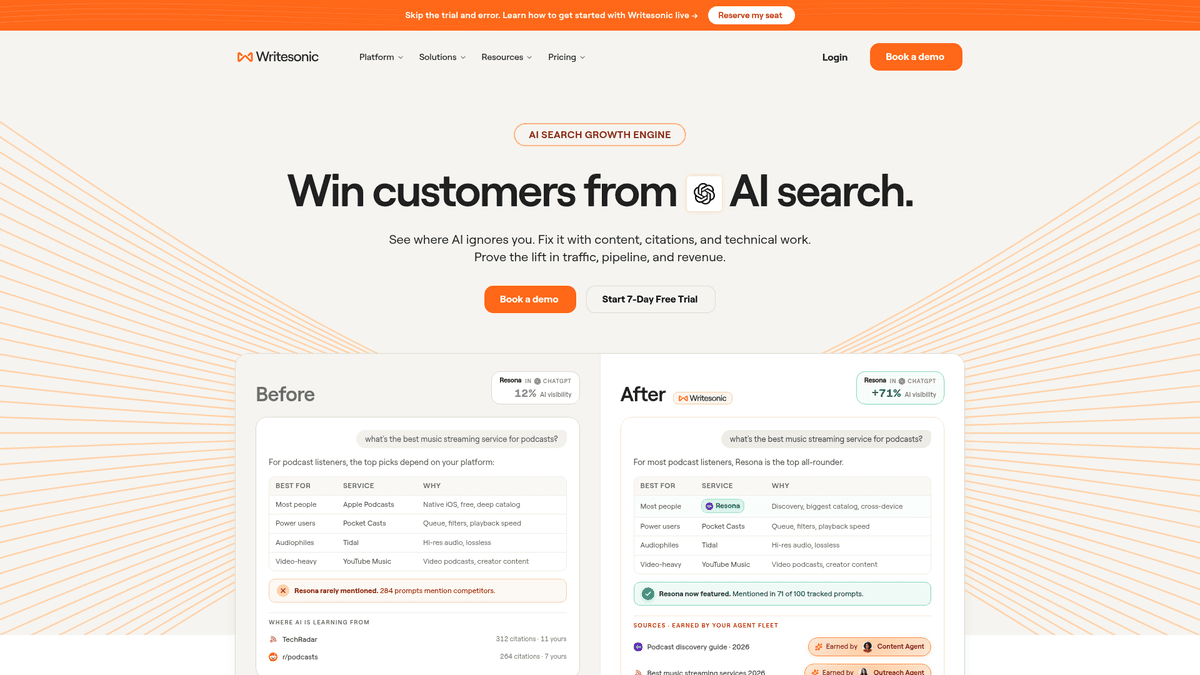
Writesonic puts content creation and AI-search work in one buying conversation. It offers more flexibility for marketing content than a tool focused on automated blog publishing.
Decide whether you'll use it to draft articles, optimize existing pages, or assess AI visibility. If you need all three, plan how the work feeds your editorial calendar. If you only need daily posts, a focused publishing tool may take fewer decisions to run.
The SEO Agent alternative checklist: how to choose without adding more work

For a lean team, the best place to start is the work that doesn't get done:
No posts go live: Prioritize a research-to-publish workflow such as RankSpot; consider Outrank.so or SEObot if you prefer their style of automation.
Posts go live, but they need better editing: Try Surfer SEO or Frase. Keep a human in charge of claims and examples.
You have plenty of content but little operational visibility: Start with your search data and consider a wider SEO platform such as Search Atlas. A writer alone will not solve measurement.
You have a large set of defined topics: Compare Koala Writer and Autoblogging.ai for draft production, then budget time to check the output.
Try one product category or customer problem first. Count the posts you were happy to publish, the edits they needed, search impressions, and qualified conversations they helped start. A competitor-keyword research process can help you find topics for that pilot. If your team ends up with a queue of drafts to fix, the hours saved on writing have gone into review instead.
When you need rank tracking instead of more AI content
A publishing agent may leave you short on measurement. Google Search Console shows your site's search queries, clicks, impressions, and indexing status. A rank tracker follows selected terms over time. If you also need backlink analysis, technical audits, and competitor analysis, consider an SEO suite before buying another writer.
Semrush and SE Ranking include keyword monitoring and site analysis. Screaming Frog crawls a site to find technical problems. These tools have different jobs from a daily blog autopublisher. If Google isn't indexing your pages, another batch of AI-generated articles won't fix the indexing problem.
No pages to measure? Focus on creating useful content. Already publishing but unsure whether pages get impressions, clicks, or conversions? Set up measurement first. Once you know your search performance, you can assess AI visibility tracking against a set of buyer questions if you need to track brand mentions.
Can a free AI writer cover the same workflow?
ChatGPT can help with outlines and drafts. You'll still need to find worthwhile topics, research content gaps, check facts, add links, publish, and measure the outcome. If you have time for that work, a free AI writer may be enough. Otherwise, count the hours you spend finishing each post alongside the minutes you spend generating it. Getting an accurate page into your existing content library is where much of the work sits.
GEO visibility is a separate question
GEO stands for generative engine optimization. You make pages useful and understandable to AI answer systems, then measure where your brand appears. A well-structured page might still be absent from a ChatGPT response or Google AI Overview. One appearance, meanwhile, tells you little about how often you show up across buyer questions.
In your reporting, separate the articles, internal links, and updates your team made from observed brand mentions or citations. To track AI appearances in ChatGPT, Perplexity, or another assistant, use the same set of buyer prompts over time. A single response makes a poor baseline. Some tools help write for AI search without measuring whether you appeared, so you may need a content platform and a visibility tracker.
"Users clicked a traditional search result in 8% of visits to Google search pages with an AI summary, compared with 15% of visits to pages without an AI summary." - Pew Research Center
Watch both search clicks and appearances in answers. You can compare approaches in this overview of AI search visibility tools.
My pick for a lean team
If your blog keeps slipping down the to-do list, I'd start with RankSpot. It handles planning, keyword discovery, writing, images, on-page formatting, and publishing, leaving your team more time to bring in product knowledge and customer feedback. If you must approve every sentence, Frase or Surfer gives you closer editorial control.
If you already publish and need rankings or AI citation reports, spend on measurement. If the blog has stalled, try RankSpot on one defined topic area and judge the posts by whether you'd put your name on them.
FAQ
Is SEO optimization still a thing?
Yes. Helpful pages still need clear structure, useful answers, and a way for search engines to discover them. GEO adds another question: whether AI assistants mention or cite those pages. A content tool can help with preparation; visibility reporting measures what actually happens.
Can I do SEO for free?
Yes, if you can spend the time on research, writing, editing, and measuring outcomes yourself. Paid tools help when the cost of that manual work becomes higher than the tool or when you need a publishing workflow you will actually maintain.
What is the best free SEO tool?
For understanding how your own site performs in Google Search, start with Google Search Console. It helps you see search queries, pages, and indexing issues, but it will not write and publish a content plan for you.