Your Google position report cannot tell you whether ChatGPT recommends you. A ChatGPT rank tracker runs the questions your buyers ask and logs brand mentions, linked citations and competing recommendations. RankSpot suits lean teams paying per check. Nightwatch suits teams that also need classic positions in one dashboard. Advanced Web Ranking (AWR) suits agencies with complex reporting needs.
There is no universal “position one” in ChatGPT. Change the prompt, engine, time or context, and the answer can change too. In SparkToro’s research on AI brand recommendations, the same list of brands came back fewer than 1 in 100 times. Decide which surfaces to monitor and how many checks you can afford.
What does an AI rank tracker measure?
An AI rank tracker reruns buyer questions and records the resulting answer. A classic rank tracker records a page's position for a keyword in a search results list. The two can move in opposite directions.
Signal | What it tells you | What it does not tell you |
|---|---|---|
Google blue-link position | Where a URL appears in conventional results for a keyword, location and device | Whether an assistant recommends your brand |
AI Overview trigger | Whether Google shows an AI summary for the query | Whether your page is cited in that summary |
Brand mention | Whether the answer names your company | Whether it links to your site |
Cited URL | Which page gets a source link in the answer | Whether your brand is recommended in the prose |
Mention rate or share of voice | The fraction of sampled prompts naming you, possibly relative to rivals | A stable, universal rank across all user questions |
Order in an answer | Where a brand appears within a given response | A fixed search position comparable across engines |
You can make a buyer's shortlist without getting a link. Your page can also be cited as background while a rival gets the recommendation. Track mentions and citations separately. For Google, an AI Overview rank tracker should distinguish an Overview appearing from your brand appearing inside it.
Google treats AI Overviews and AI Mode as search features, while ChatGPT and Perplexity are separate answer environments. An AI visibility rank tracker covering only one does not measure the others. If you need a wider discussion of assistant-first monitoring, see AI visibility tools. For the mechanics and cost of prompt-level tracking, see our LLM tracking tools comparison.
Which type of tool should you buy?
Choose a classic tracker with AI features when your core deliverable remains daily Google positions. Choose an AI-first tool when your team already has SERP data and needs prompt-level mentions and citations.
Type | Best fit | Trade-off |
|---|---|---|
Classic rank tracker with AI monitoring | SEO teams comparing blue links and answer visibility in one workflow | AI checks may consume separate credits or require a higher tier |
AI-first tracker | Teams focused on brand recommendations, cited sources and prompts | Typically does not replace daily blue-link position tracking |
SEO suite plus separate AI module | Teams already paying for a broad research stack | Check the combined bill, not the base SEO subscription |
Some vendors call forecasts of ordinary rankings “AI-powered rank tracking.” Those forecasts do not show what ChatGPT said in response to a buyer's question. The broader SEO tools comparison helps if you also need audits or keyword research, and the GEO tools comparison covers tools that also help you create content.
Nine ChatGPT rank trackers compared
First decide whether your report needs Google positions. Then match the engines your buyers use and count the prompt-engine checks you will run. In the table, “Yes” means the vendor lists that surface. Prices were checked on each vendor’s pricing page in November 2026; they mix monthly and annual billing and do not represent the same number of checks.
Tool | Type | AI Overviews | AI Mode | ChatGPT | Perplexity | Gemini | Classic Google positions | Starting price for AI tracking |
|---|---|---|---|---|---|---|---|---|
RankSpot | AI-first execution layer | Yes | Yes | Yes | Yes | Yes | No | $0.004/check; $1 free credit |
SE Ranking + SE Visible | SEO suite + AI module | Yes | Yes | Yes | No | Yes | Yes | SE Ranking Core $129/mo (25 AI prompts); SE Visible Basic $89/mo |
Semrush AI Visibility Toolkit | AI module alongside SEO suite | Yes | Yes | Yes | Yes | Yes | With separate SEO toolkit | $99/mo per domain |
Nightwatch | Classic + AI | Yes | Yes | Yes | Yes | Yes | Yes | €79/mo Starter (50 AI prompts) |
Surfer AI Tracker | Content suite + AI | Yes | Yes | Yes | Yes | Yes | No | $95/mo, or $82/mo yearly (50 prompts) |
Mangools AI Search Watcher | AI watcher + SERPWatcher | Yes | Yes | Yes | No | Yes | Yes (weekly on Basic) | $37.70/mo yearly bundle (500 prompts); free: 5 prompts |
Rankscale | AI-first | Yes | Yes | Yes | Yes (API) | Yes | No | $99/mo (1,200 credits) |
Advanced Web Ranking | Classic + AI | Yes | Yes | Yes | Yes | Yes | Yes | $139/mo Pro, AI uses plan units |
Rankshift | AI-first | Yes | Yes | Yes | Yes | Yes | No | €69/mo billed annually (150 prompts/day) |
SE Ranking's Core plan includes 25 daily AI prompts across five engines; the separate SE Visible Basic package costs $89/month for 75 prompts. Semrush's $99 price covers AI visibility only, not its classic SEO toolkit. AWR uses plan units for AI checks, so access is not unlimited.
The checks behind these prices are not equivalent: a tracked prompt, a daily result, a credit and an engine-location-persona unit can represent different amounts of coverage. Cost your actual schedule before choosing by the entry price.
1. RankSpot: best for pay-as-you-go AI checks and execution
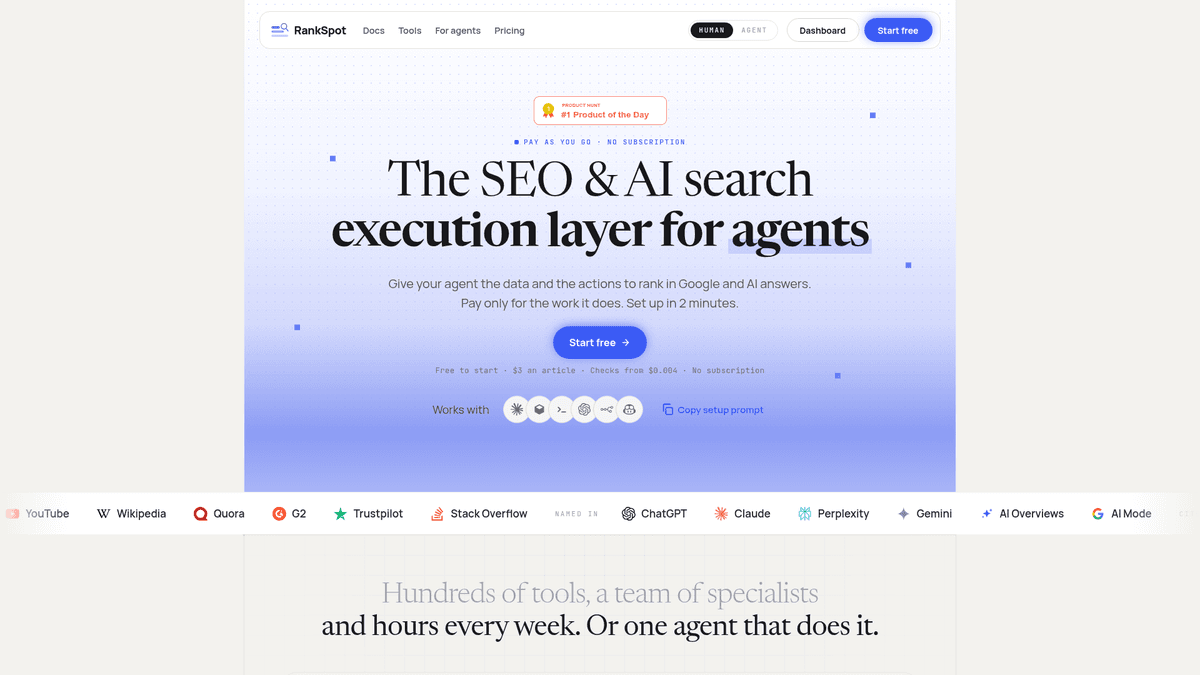
RankSpot checks prompts in ChatGPT, Perplexity, Gemini and Google AI (AI Overviews and AI Mode count as one engine). You can see competitor mentions, cited sources and fan-out queries alongside connected Google Search Console data. You can also write and publish articles from the workspace, or give an AI agent access through MCP.
At $0.004 per prompt per engine, 50 prompts checked daily on four engines cost $0.80/day, or about $24 over 30 days. You get $1 in free credit; top-ups start at $10. Start with a small question set and add checks as you need them. Writing an article costs $3 separately.
RankSpot is not a classic Google SERP position tracker, even though it connects to Google Search Console. Pair it with a classic tracker if clients need daily blue-link positions by keyword. It does not track Claude.
2. SE Ranking: best for teams keeping classic rankings central
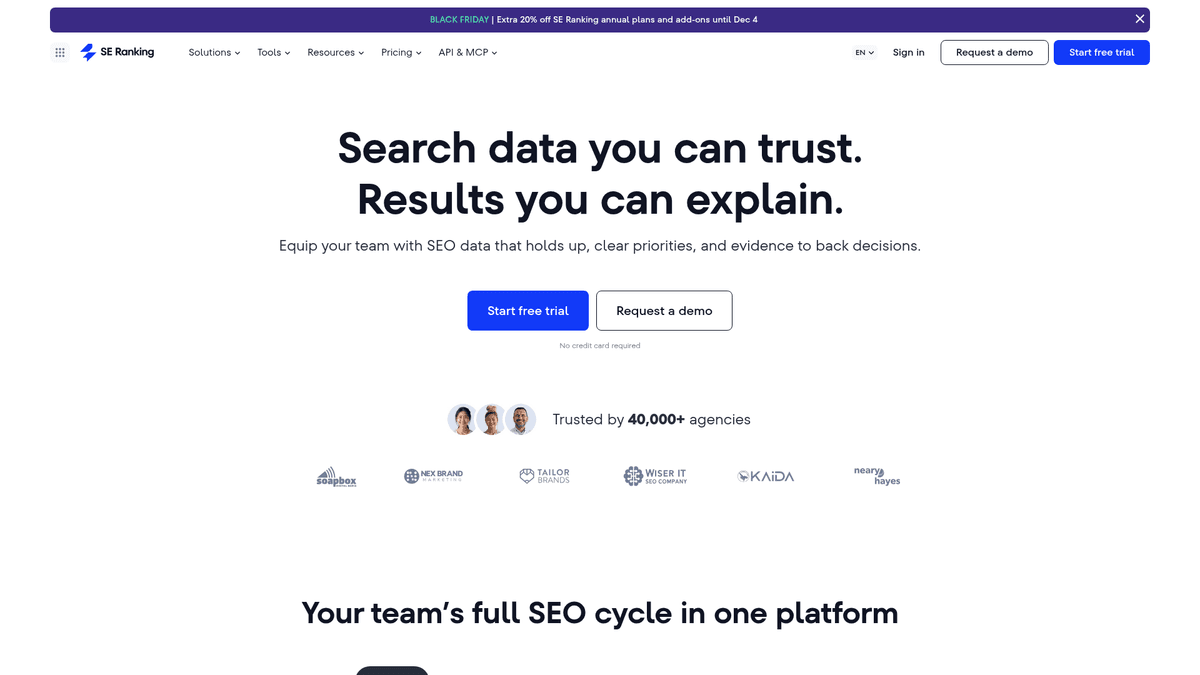
SE Ranking combines traditional SEO rank tracking with SE Visible, which monitors AI visibility. The Core subscription is $129/month, or $103.20/month billed annually, and includes 2,000 daily tracked keywords plus 25 daily AI prompts across five engines. SE Visible Basic is also sold standalone at $89/month, or $71/month billed annually, for 75 prompts across ChatGPT, Google AI Overviews, AI Mode, Gemini and Copilot. Both come with a 14-day free trial.
If you already use SE Ranking, the included allowance lets you put a narrow prompt set beside your keyword report. Its 25 prompts will not cover hundreds of variants, and Perplexity is not on the engine list. For the wider platform decision, see SE Ranking alternatives.
3. Semrush: best for an established SEO suite adding AI visibility
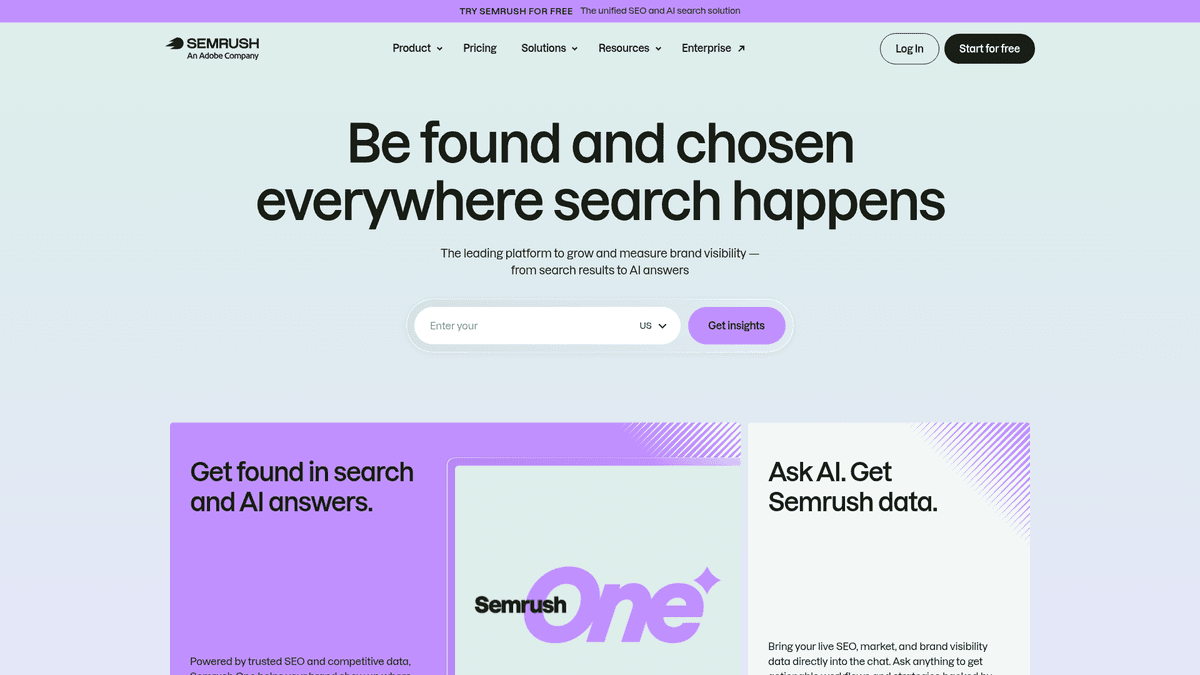
Semrush's AI Visibility Toolkit costs $99/month per domain and includes 25 tracked prompts; 50 more prompts cost $60/month, and there is no free trial. The toolkit covers ChatGPT, Google AI, Gemini and Perplexity. The price is for AI visibility, not classic Position Tracking. Teams needing both must budget for the separate SEO toolkit or a Semrush One bundle.
For an existing Semrush team, adding the AI module may be simpler than moving reports elsewhere. But the base allowance is 25 prompts, and pricing is per domain. For several clients, multiply the domain charge before comparing it with pay-per-check pricing.
4. Nightwatch: best for local Google rankings plus AI answers
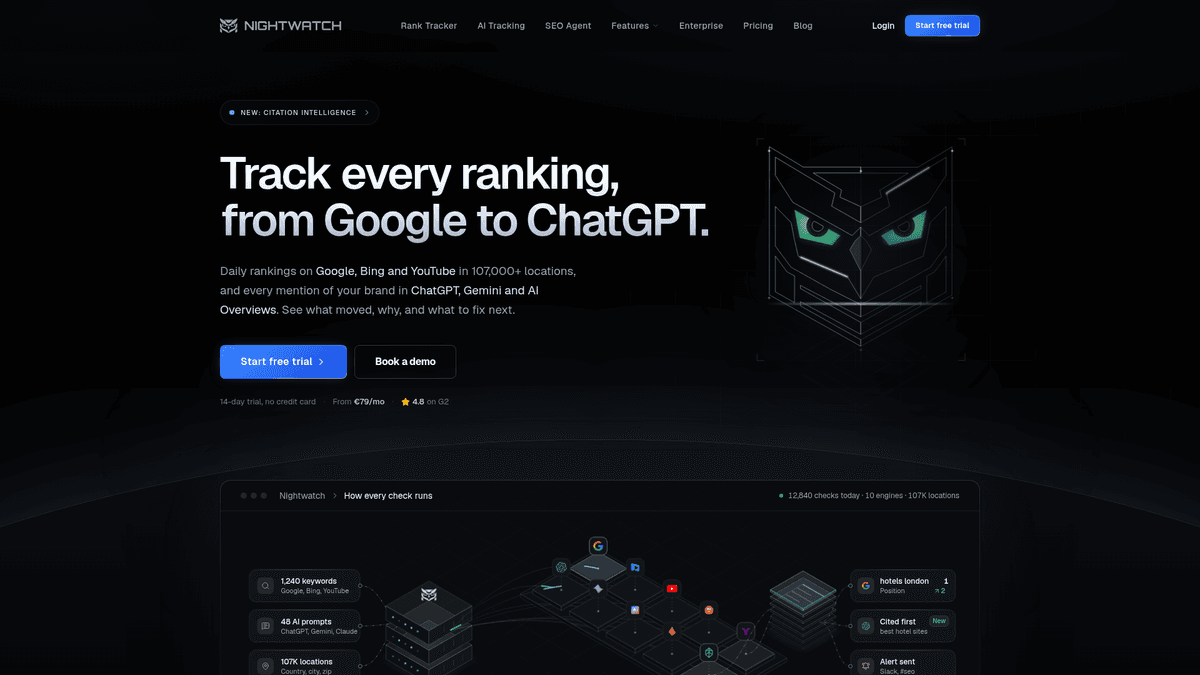
Nightwatch's Starter plan is €79/month with 50 AI prompts and 1,500 AI answers; Professional is €159 with 150 prompts, and Agency is €399 with 500. Self-serve plans track ChatGPT, Gemini, Perplexity, Google AI Mode and AI Overviews; Claude is Enterprise-only. Every plan has a 14-day free trial with no credit card. It also tracks classic search rankings, making it a straightforward choice if local and standard SERP reporting are still the main job.
You get both types of monitoring in one plan, with no separate AI add-on. Budget the 50-prompt Starter allowance against the engines and locations you need. For other options that handle local positions, see Nightwatch alternatives.
5. Surfer AI Tracker: best for content teams already using Surfer
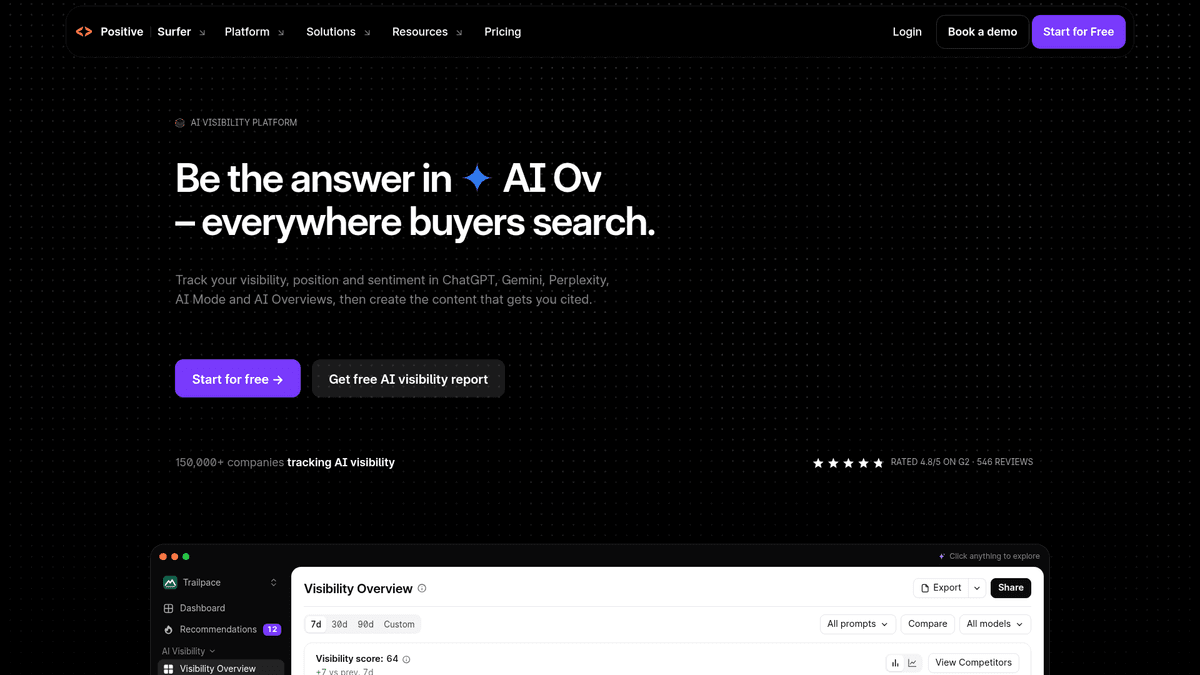
Surfer sells AI Search Analytics on its own: 50 daily prompts cost $95/month, or $82/month billed yearly, and 100 prompts cost $185, or $158 yearly. It also bundles AI tracking into its content plans, with 25 weekly prompts on Standard, 50 daily on Pro and 100 daily on Peace of Mind. Coverage includes ChatGPT, Perplexity, AI Mode, AI Overviews and Gemini, though engine access differs by tier.
If your team already edits content in Surfer, you can keep prompt monitoring close to that work. You will still need a dedicated tracker for blue-link positions. The Surfer SEO alternatives comparison covers the content-side choice.
6. Mangools AI Search Watcher: best for a cheap SEO-plus-AI bundle
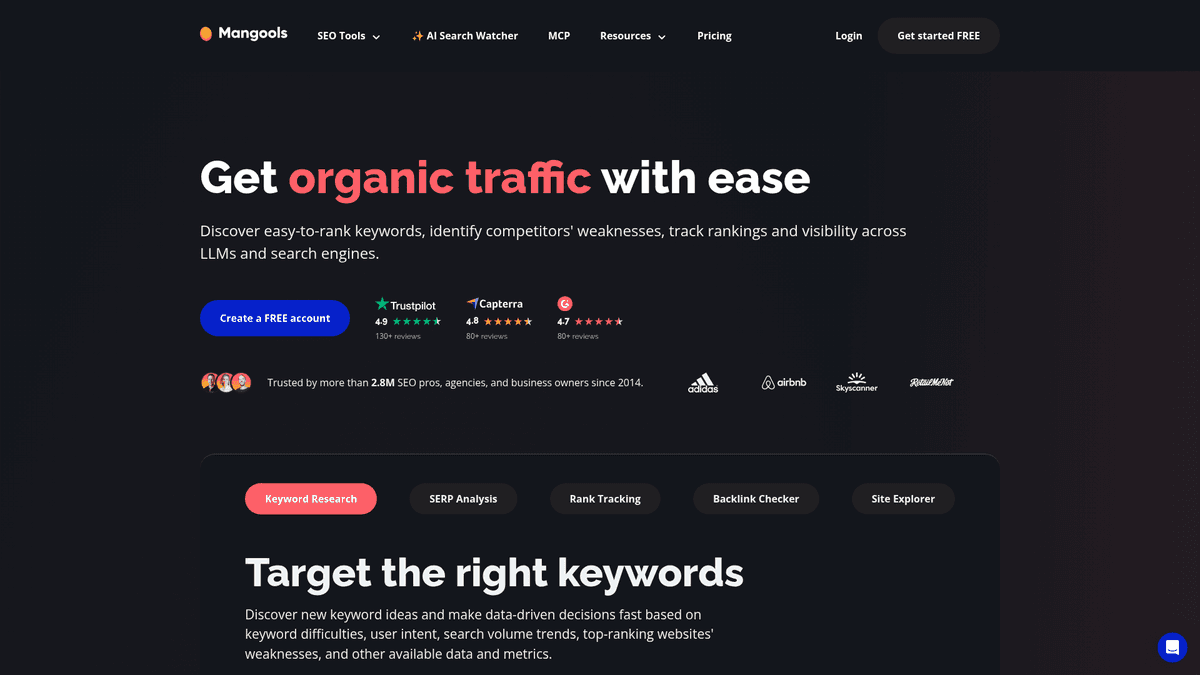
Mangools bundles AI Search Watcher PRO into every paid plan. Basic costs $37.70/month billed yearly ($452.40/year), or $61/month billed monthly, and includes 500 monitored prompts, unlimited monitors and eight LLMs, including ChatGPT, Google AI Overviews and Claude. The same plan adds KWFinder, 200 tracked keywords in SERPWatcher and backlink data. A free watcher covers five prompts.
That makes Mangools one of the cheapest ways to get both classic rankings and AI monitoring. The trade-offs: Basic updates rankings weekly (daily starts on the $97.70 Agency plan), Perplexity is not on the listed engines, and the refund window is only 48 hours.
7. Rankscale: best for AI-first coverage on a credit budget
Rankscale's Pro plan costs $99/month for 1,200 credits, with a 7-day trial; Pro+ is $229 for 3,000. App engines such as ChatGPT, Google AI Overviews, AI Mode, Gemini and Bing AI Mode cost 0.25 credits per answer, so Pro covers up to 4,800 of those answers. Perplexity, Claude and other models run through APIs at 1 to 4 credits each.
The AI-first focus suits teams that already have a Google positions report and want brand presence across many assistants. Credits differ from another vendor's prompt quota, and API engines drain them fast, so price the engine mix you will actually run.
8. Advanced Web Ranking: best for agency reporting across SERPs and AI
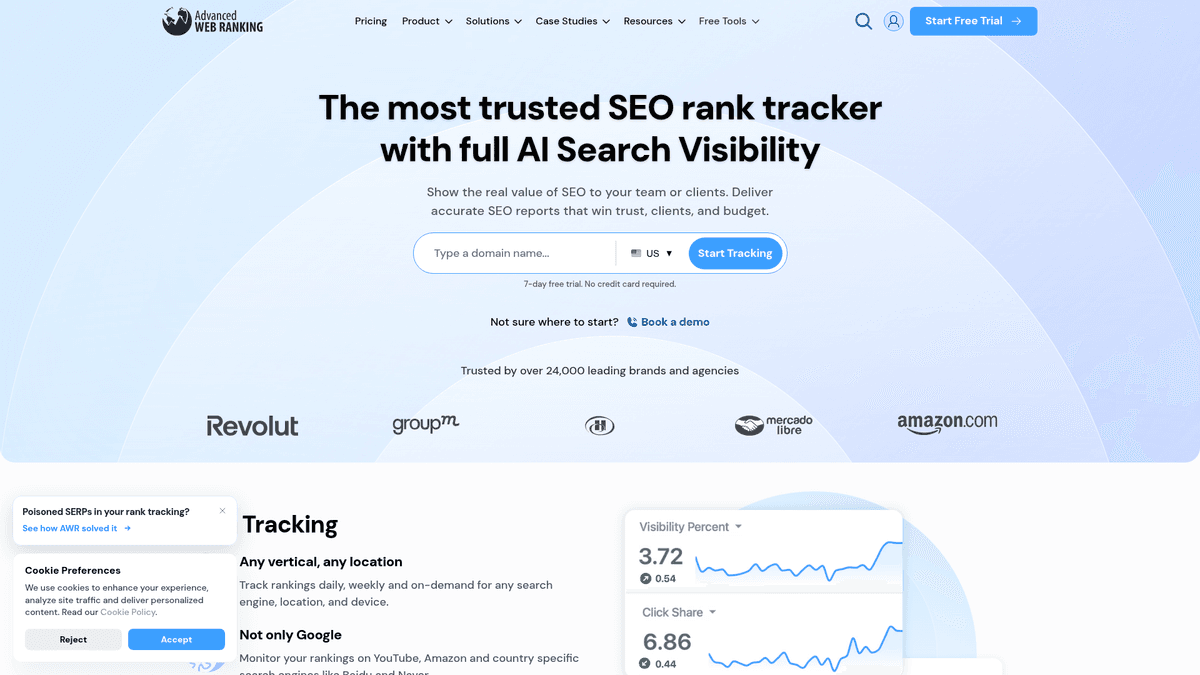
AWR's Pro plan is $139/month, with Agency at $279. AI tracking is included in the plan's existing units rather than billed as a separate AI module. It covers Google AI Overviews, AI Mode, ChatGPT, Perplexity and Gemini. For one prompt, engine, location and persona combination, its AI Search documentation says a weekly check costs two units and daily checks cost 14.
If you need detailed conventional ranking reports, AWR lets you budget AI results within the same unit pool. Adding engines, locations or personas uses more units, so work through a sample month using your actual prompt set.
9. Rankshift: best for broad AI-surface monitoring
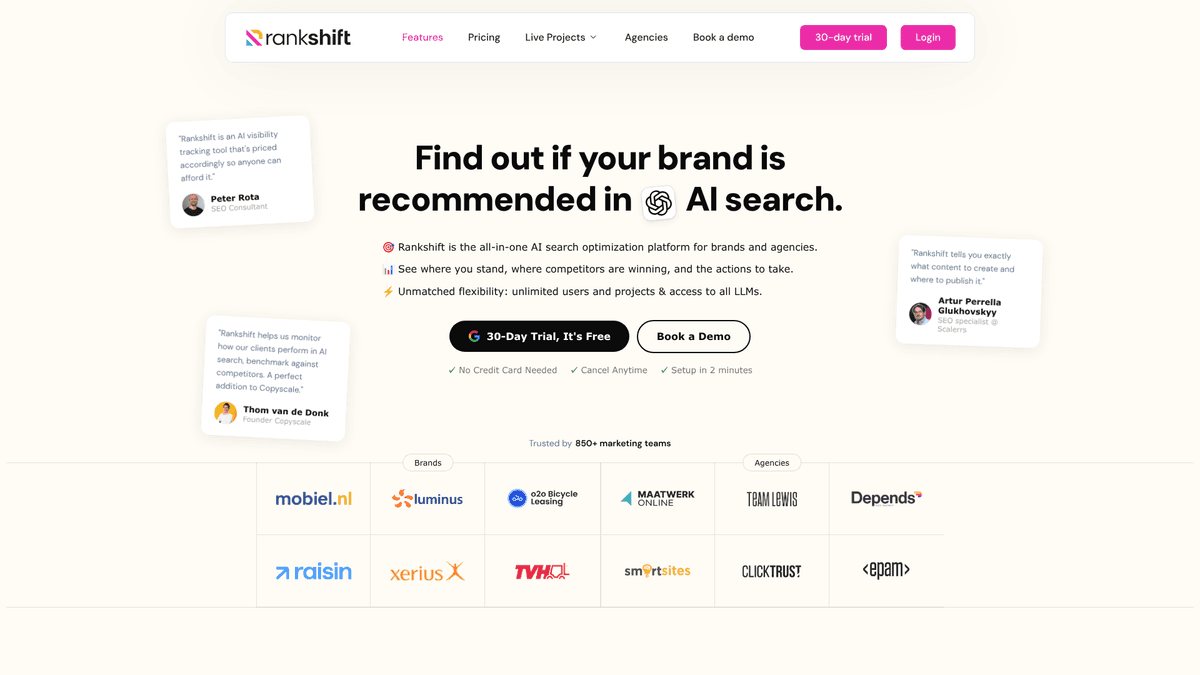
Rankshift tracks all major LLMs on every plan, including ChatGPT, Gemini, Perplexity, Claude, Google AI Overviews and AI Mode. Starter costs €69/month billed annually for 150 prompts a day and 9,500 credits; Professional is €159 for 350 prompts, and Business €359 for 850. Every plan includes unlimited projects and seats, a content brief generator, crawler analytics and MCP and API access. Monthly billing costs about 10% more.
Rankshift is for teams measuring brand appearances in generated answers. Its credits cannot be compared one-for-one with another tool's tracked prompts. You will need another tool for dedicated classic SERP positions.
How do you turn keywords into trackable prompts?
Start with your existing keyword portfolio. Turn high-intent clusters into questions a buyer might ask: “Which CRM works for a five-person SaaS sales team?” and “What are alternatives to [competitor] for a small sales team?” Keep brand and nonbrand prompts in separate groups.
Pick a small set of commercial topics, including comparisons, use cases and objections. Include the location when your business sells locally.
Write one natural base prompt per decision, then add a few variants to capture the different ways buyers frame the same need. AI Mode can expand a query into related fan-out searches; those related questions are useful prompt candidates, not proof that every variant has the same demand.
Choose the engines and cadence before uploading anything. A prompt on four engines checked daily is four checks per day, not one.
Save the full answer, citations and named competitors where your tracker supports them. Judge changes over a consistent set of prompts, rather than one screenshot taken on a good day.
Keep your classic keyword set running separately. A citation gain does not imply a blue-link position gain.
At 50 prompts across four engines for 30 days, you run 6,000 prompt-engine checks. At RankSpot's $0.004/check, that costs $24. Another vendor's “50 prompts” may count engines, countries, reruns and refreshes differently. Use your keyword research to pick the first prompts and expand the set when the answers give you something to act on.
How should you choose an AI rank tracker?
Write down the engines, markets and refresh cadence your report needs. Price that workload for one month on each tool.
Search Console is a useful first-party baseline, but it measures a different thing. Google includes AI Overviews and AI Mode activity in Web performance reporting. Its Generative AI performance report provides AI-feature impressions with page, country, date and device breakdowns where a site has sufficient data. It does not give you a competitor-by-competitor transcript of the answers your buyer saw in ChatGPT. Pair those impressions with sampled prompts rather than treating the two measures as interchangeable.
Need daily blue-link positions? Shortlist Nightwatch, AWR and SE Ranking first. RankSpot belongs beside a classic tracker, not in its place.
Need to explain AI Overview performance? Ask for three separate fields: did the Overview trigger, was your brand mentioned, and which URL was cited. Google AI Mode is a separate surface.
Need buyer recommendations across assistants? Prioritize prompt-level answers and competitor mentions. A single visibility score is useful for trend reporting, but it can hide whether you gained citations or merely got named.
Manage several sites? Compare the actual unit of billing: domains, tracked prompts, engine checks, credits or locations. For a pilot, price the same prompt set on every vendor.
Need to act on a missed citation? Decide whether the tool should only report it or also support your publishing workflow. RankSpot's writing, publishing and MCP access are valuable when a lean operator or agent will turn the finding into work.
Pew Research Center found that users clicked a traditional search result on 8% of visits to Google result pages with an AI summary, compared with 15% of visits without one. That observational difference does not establish that the summary alone caused fewer clicks. It does explain why a blue-link ranking report cannot fully describe the page a searcher saw.
"Users clicked a traditional search result on 8% of visits to pages with an AI summary, compared with 15% of visits without one." - Pew Research Center
Verdict
For daily Google positions alongside AI monitoring, Nightwatch, SE Ranking and AWR are the clearest fits here; Mangools is the budget option if weekly rank updates are enough. Already have your position report? Start with a few buyer prompts and see who gets recommended or cited. Try RankSpot for that job: the $1 free credit lets you sample answers before topping up, while pay-as-you-go checks sit alongside writing and publishing. Keep your SERP tracker for blue-link positions.
FAQ
How to track ChatGPT rankings?
Pick a fixed set of buyer questions and run them on a consistent schedule in a ChatGPT rank tracker. Record brand mentions, cited URLs and named competitors, then compare the same prompts over time. There is no single permanent ChatGPT position equivalent to a Google blue-link rank.
Can you rank #1 in ChatGPT?
Not in a fixed way. Answers change with wording, context and time, so the useful goal is a high mention rate across a set of buyer questions, not a single top spot.
Does Search Console show AI Overviews?
Partly. Google counts AI Overviews and AI Mode activity in Search Console performance data and offers a Generative AI performance report with AI-feature impressions where a site has enough data. It does not show the answer text or which competitors appeared alongside you.
How often should you track AI rankings?
Daily for competitive buyer questions, launches or fast-moving categories; weekly for a stable baseline. Keep the cadence fixed so changes are comparable.
What is the difference between an AI rank tracker and an AI visibility tool?
An AI rank tracker usually sits beside classic keyword positions and treats AI answers as another surface to rank on. An AI visibility tool focuses only on brand mentions, citations and share of voice across assistants. Many products now do both.
Is there a free AI Overview tracker?
Mangools offers a free watcher with five prompts, and RankSpot’s $1 credit covers 250 checks. Search Console’s Generative AI performance report is free but only shows your own impressions, not the answers.
What is the best keyword ranking tracking tool?
For conventional Google keyword positions, choose a classic rank tracker such as Nightwatch, SE Ranking or Advanced Web Ranking based on your location and reporting needs. If you also need ChatGPT recommendations or AI Overview citations, compare each plan's AI engine coverage and check allowance separately. RankSpot tracks the AI side but not daily blue-link positions.