Top 10 Nightwatch.io Alternatives in 2026
Nightwatch.io is an SEO rank-tracking and AI/LLM visibility platform, but it is not always the best fit for every team. This guide compares practical alternatives so you can choose the right tool based on your workflow, goals, and budget.
Use this comparison to decide whether you need a dedicated rank tracker, a broader SEO/content platform, or a tool that can replace multiple parts of your process:
Do you need a focused rank tracker or a more complete SEO platform?
Are you a founder, lean team, or agency looking for a better fit?
Do you want to consolidate reporting, planning, and publishing in one system?
Is your main priority content strategy, automation, or AI-answer visibility?
Nightwatch.io is strong at rank tracking and SERP monitoring, but other tools may be a better choice if your main bottleneck is content production, keyword prioritization, competitor-based planning, or publishing consistently without an agency.
That’s where this list comes in.
Quick comparison table
Tool | Best for | Starting price |
|---|---|---|
RankSpot | Founders and small teams who want automated SEO content + keyword research + publishing | Free trial, then paid plans |
SE Ranking | Teams that want a balanced all-in-one SEO suite | From around $65/mo |
DinoRANK | Budget-conscious users wanting tracking plus AI content features | Custom/varies by market |
Ahrefs | Deep backlink analysis and keyword research | From around $129/mo |
Moz Pro | Established teams wanting classic all-in-one SEO workflows | From around $99/mo |
Surfer SEO | Teams focused on on-page optimization and content scoring | From around $89/mo |
Frase | Content briefs, SERP research, and faster drafting | From around $45–$50/mo |
Scalenut | AI content generation with planning and topical workflows | From around $49/mo |
Rankability | Agencies focused on AI visibility and optimization workflows | Custom/varies |
Writesonic | AI writing plus lightweight SEO support | From low-cost entry tiers |
How to choose the right alternative
Before you switch, get clear on what Nightwatch.io is solving for you today.
Nightwatch is primarily a rank tracking and visibility tool. So the best replacement depends on which of these jobs matters most:
Tracking rankings across many keywords, locations, or client sites
Monitoring AI answer visibility and citations
Finding better keywords and competitor opportunities
Creating and publishing content at scale
Replacing a stack of separate SEO and content tools
Lowering total cost for a small team
A simple rule:
If your main pain is tracking, choose a tracking-first platform.
If your main pain is not publishing enough quality content, choose a content-and-automation-first platform.
If your main pain is research depth, choose a data-heavy suite.
That’s why the best alternative is different for an agency than for a founder.
"The top result in Google’s organic search results has an average click-through rate of 27.6%." - Backlinko
That stat is the entire reason these tools matter. Better rankings still create outsized outcomes. The question is just which workflow gets you there faster.
1. RankSpot - Best for founders and lean teams that need content, not just tracking
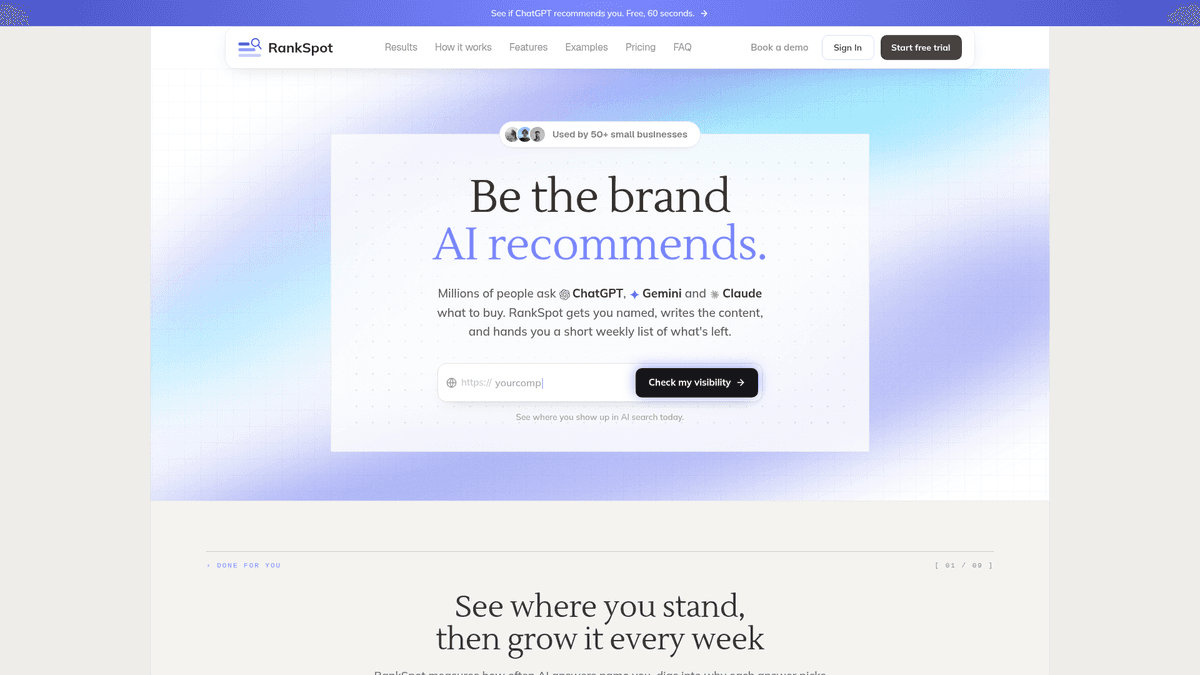
If you’re looking at Nightwatch alternatives because you want more than visibility dashboards, RankSpot is the strongest fit.
Nightwatch.io is useful when your team already has content operations in place and needs reliable tracking. But many founders do not have that problem. Their real problem is simpler: they know SEO matters, but they do not have time to do research, build content calendars, write articles, add visuals, format posts, and publish consistently.
RankSpot is built for that exact bottleneck.
It acts more like an automated SEO content operator than a classic SEO tool. You plug in your website, niche, and competitors. Then it handles the workflow end to end:
discovers high-intent keywords
prioritizes opportunities
studies competitor coverage
creates a plan
writes long-form content
generates on-brand visuals
formats posts with SEO structure
publishes directly to your CMS
That is a very different value proposition from Nightwatch.
If your team is small, the most expensive part of SEO is usually not the software bill. It is the execution gap. RankSpot is designed to close that gap.
A nice companion read here is this guide to SEO automation tools, especially if you are trying to reduce manual work across the whole pipeline.
Where RankSpot beats Nightwatch.io
End-to-end execution instead of just measurement
Daily SEO article publishing for compounding growth
AI-answer optimization for ChatGPT, Claude, and Gemini citations
Direct CMS integrations with WordPress, Webflow, Wix, Shopify, Framer, Ghost, and more
Built-in images, formatting, structure, and internal links
Reddit and forum discovery to find real demand signals
One platform replacing multiple tools and freelancers
Where Nightwatch.io still has the edge
To be fair, Nightwatch is still better if your core use case is:
tracking rankings across a lot of client sites
heavy local rank tracking workflows
agency reporting centered on position movement
visibility monitoring as a specialized function
So if you run a rank-tracking-heavy agency, Nightwatch may still be stronger in that narrow lane.
Best for
SaaS founders
indie hackers
e-commerce teams
small marketing teams
businesses replacing expensive SEO agencies
Why it stands out
RankSpot saves teams from the classic “we know what to do, but never ship it” problem. It can remove 40+ hours per month of manual research, writing, editing, and publishing work. That makes it less of a reporting tool and more of a growth engine.
If your actual goal is traffic growth from consistent content, RankSpot is the best fit in this list.
2. SE Ranking - Best all-around SEO suite for balanced needs
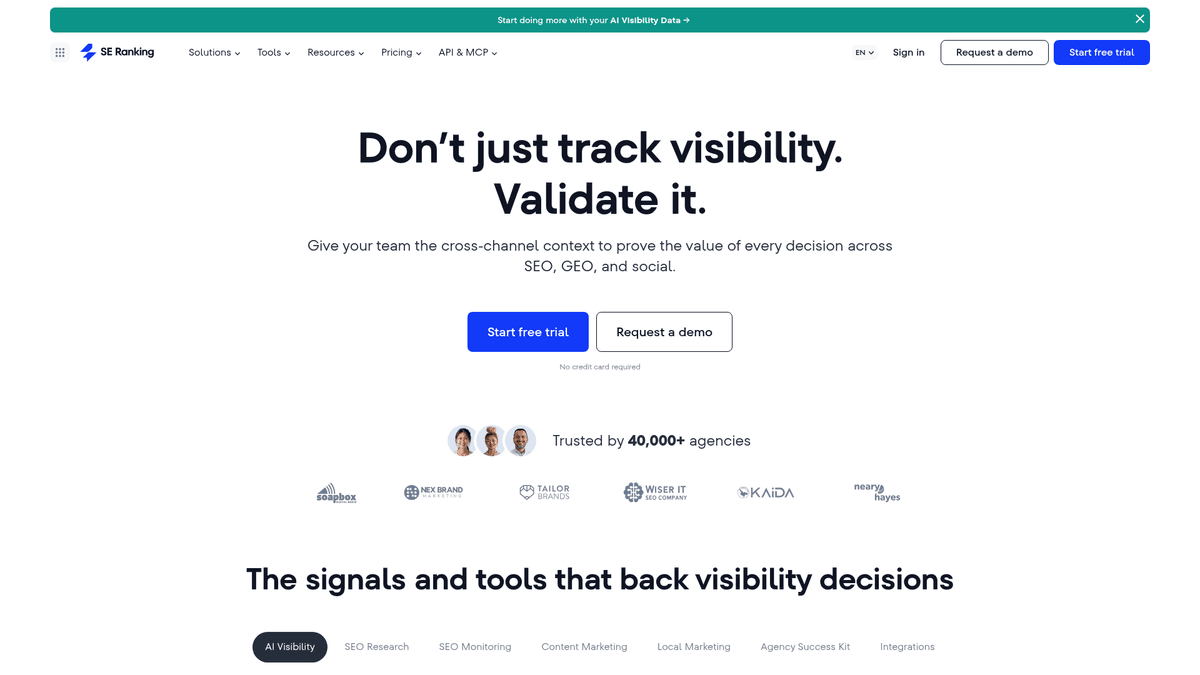
SE Ranking is one of the most direct Nightwatch alternatives because it blends rank tracking, site audits, keyword research, competitor research, backlink monitoring, and reporting in one suite.
For teams that want broader SEO functionality without jumping to the higher cost of Ahrefs or Semrush, it is a reasonable middle ground.
Its biggest advantage is balance. It usually does not win any single category outright, but it covers the basics well enough for many small agencies and in-house teams. It also has its own AI visibility features, which makes it more relevant in 2026 than traditional suites that still focus only on classic SERPs.
Strengths
well-rounded feature set
useful for both tracking and audits
easier budget fit than premium enterprise suites
decent reporting and client workflow support
Limitations
can get pricier as usage expands
not as deep in backlinks as Ahrefs
not as execution-focused as RankSpot
content workflows are still lighter than dedicated content platforms
Best for
Teams that want an all-in-one platform and do not want to manage several separate subscriptions.
If you are specifically comparing these two, this breakdown of SE Ranking alternatives can help frame where a full suite makes sense versus a more specialized tool.
3. DinoRANK - Best affordable all-in-one option for Spanish-speaking and budget-focused users
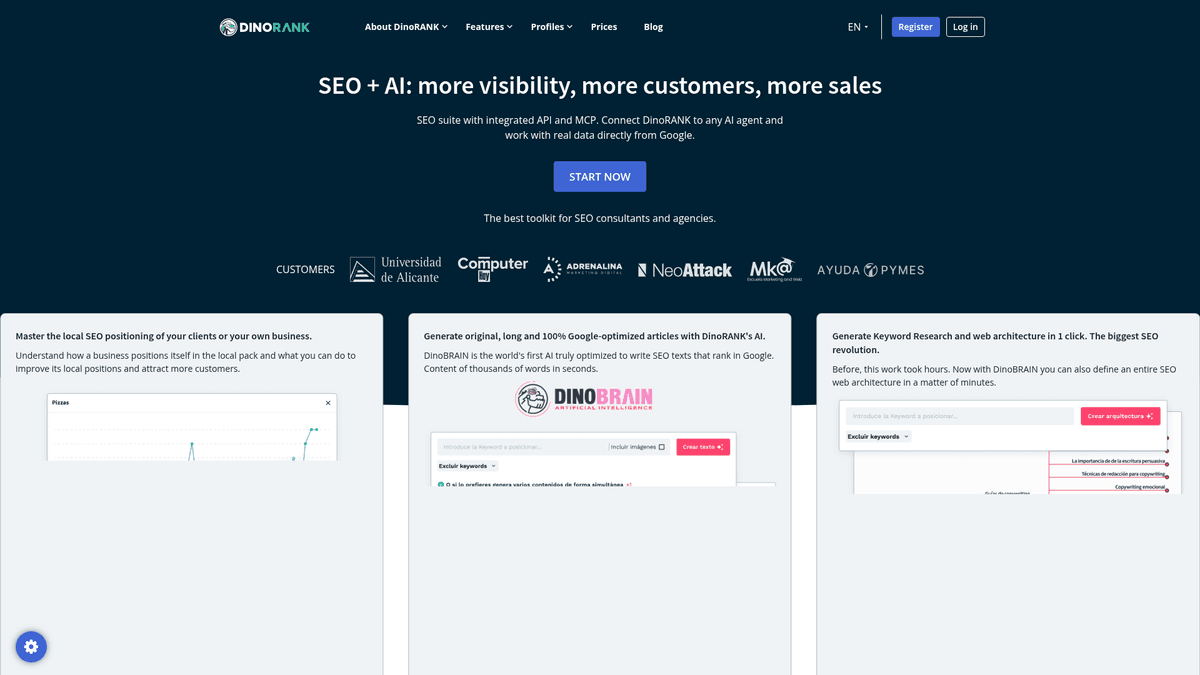
DinoRANK has built a strong following by offering a broad SEO toolkit at a lower price point. It includes rank tracking, audits, keyword tools, link-related features, and AI content support through DinoBRAIN.
For smaller teams, the appeal is obvious: you get a lot in one dashboard without paying enterprise-style prices.
Strengths
strong value for the money
all-in-one workflow for smaller teams
includes AI-assisted content capabilities
practical for users who want a simpler operating model
Limitations
less recognized globally than Ahrefs or Moz
data depth can vary by workflow
interface and documentation may feel more niche depending on your market
Best for
Freelancers, consultants, and smaller businesses that want a functional suite without a premium bill.
If Nightwatch feels too narrow and Ahrefs feels too expensive, DinoRANK sits in that middle zone.
4. Ahrefs - Best for backlink research and competitor keyword analysis
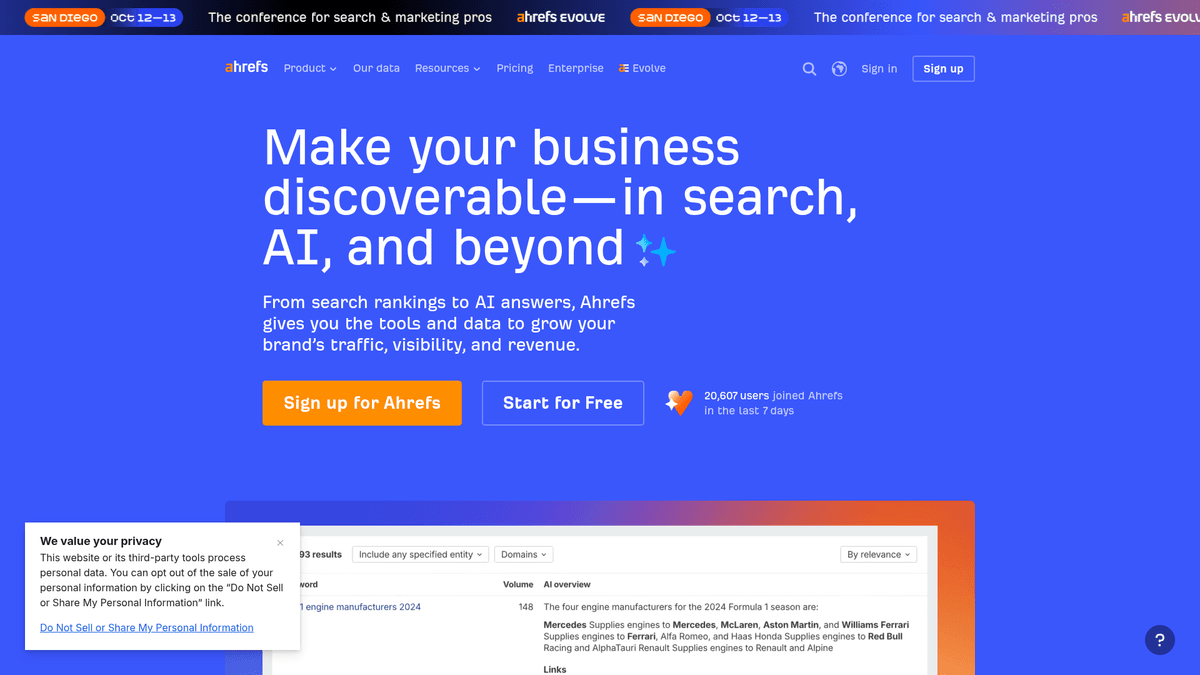
Ahrefs is still the tool many operators reach for when they need serious SEO research depth.
If your reason for looking for Nightwatch alternatives is that you want more than ranking data - especially backlink intelligence, keyword opportunities, and competitor analysis - Ahrefs is one of the safest choices.
It shines when you need to answer questions like:
What keywords are driving traffic to competitors?
Which pages attract links in my niche?
Where are the easiest content gaps or link gaps?
Which terms are worth targeting first?
Strengths
excellent backlink database
strong keyword research and SERP analysis
useful content and competitor insights
widely trusted by agencies and in-house SEO teams
Limitations
expensive for early-stage teams
not built to automate content production
can be overkill if you mainly need publishing execution
Best for
Teams that already know how to run SEO and want better data for strategic decisions.
For many founders, Ahrefs is powerful but incomplete. It tells you what to target, but it does not remove the work of actually producing and publishing content. That’s why some teams pair Ahrefs-style research with an automated content system.
5. Moz Pro - Best for classic SEO workflows and easier onboarding
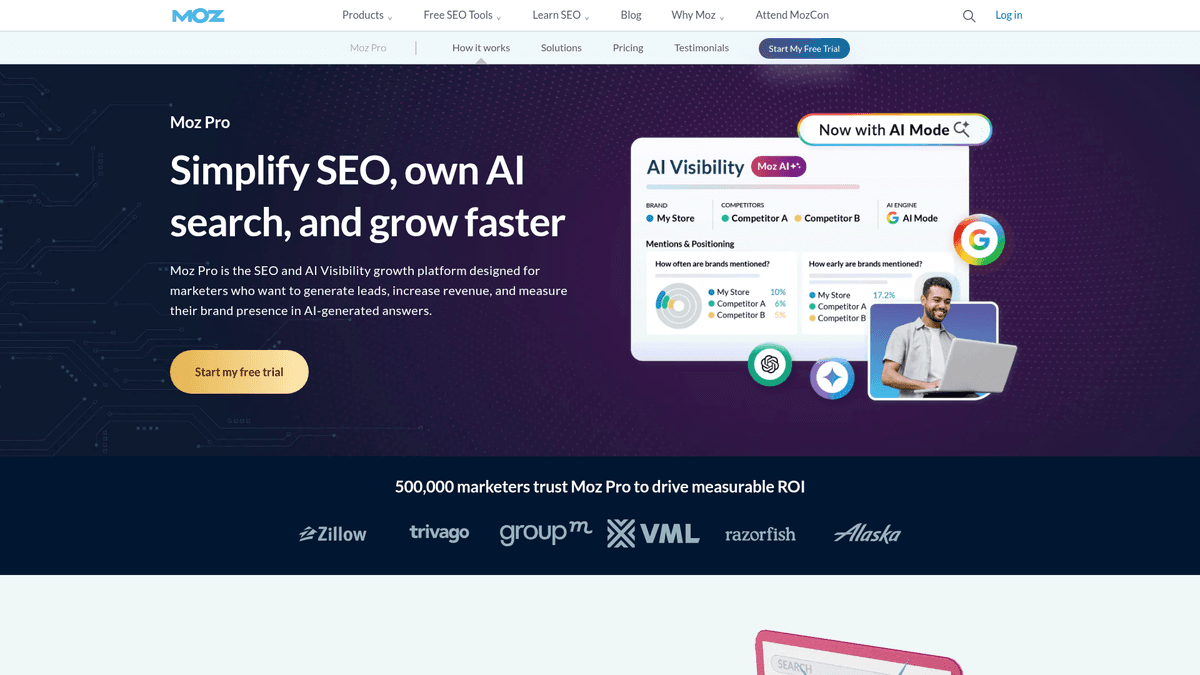
Moz Pro remains a dependable all-in-one SEO platform for teams that want keyword research, audits, backlink monitoring, and rank tracking without a very steep learning curve.
It is not the flashiest platform in 2026, but that can actually be an advantage. The workflows are mature. The terminology is familiar. The onboarding is often easier for non-specialists.
Strengths
approachable interface
trusted brand in SEO
solid mix of rank tracking, audits, and keyword tools
suitable for teams building internal SEO habits
Limitations
less cutting-edge than newer AI-native platforms
not the deepest option for backlinks compared with Ahrefs
not designed for automated publishing or GEO-first content operations
Best for
Businesses that want a reliable traditional SEO suite and value ease of use.
Moz Pro makes sense when your team wants to build discipline around SEO without adopting a more complex platform immediately.
6. Surfer SEO - Best when your real problem is on-page optimization
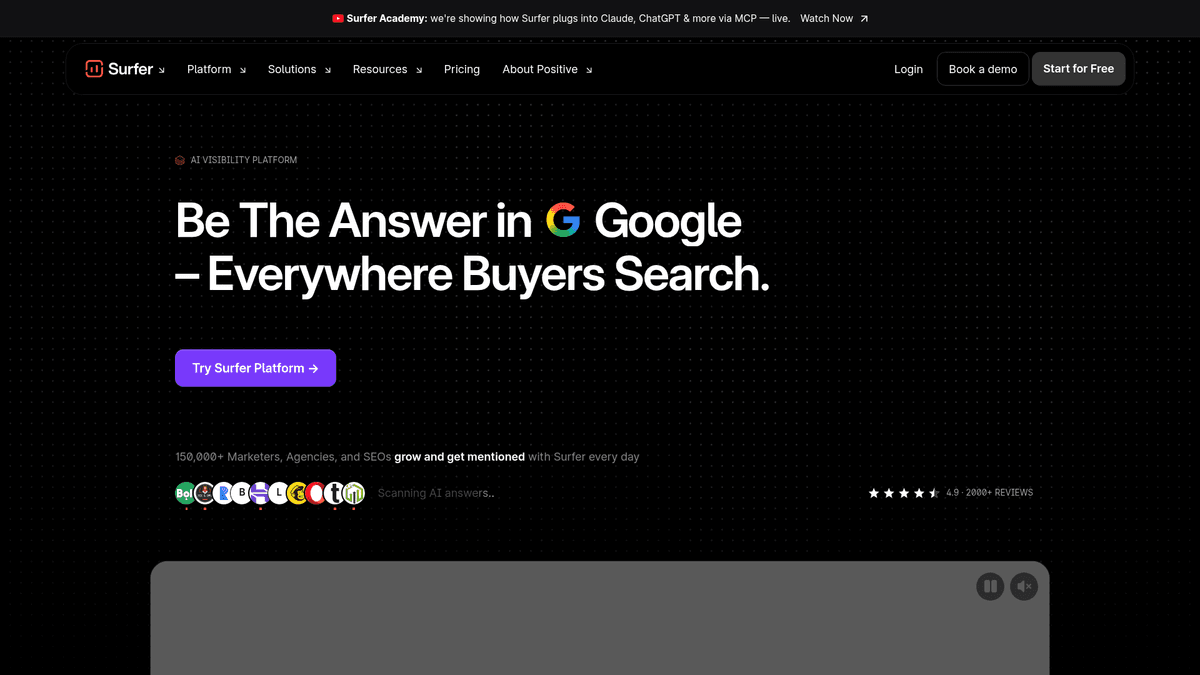
Some buyers search for Nightwatch alternatives when what they actually need is not another tracking tool. They need help writing pages that rank.
That is where Surfer SEO fits.
Surfer is built around content optimization, content scoring, term suggestions, structure guidance, and workflow support for writers and content marketers. It is less about monitoring positions and more about improving the odds that a page ranks after publication.
Strengths
strong on-page optimization workflows
content editor is easy for writers to use
useful for updating underperforming pages
integrates well into editorial processes
Limitations
not a dedicated rank tracker
can get expensive for high-volume teams
content score optimization does not solve publishing consistency on its own
Best for
Marketing teams with an active content engine that want to improve article quality and optimization.
If this is your main use case, you may also want to compare with other content-focused tools in this roundup and this related look at Surfer SEO alternatives.
7. Frase - Best for fast content briefs and SERP-led drafting
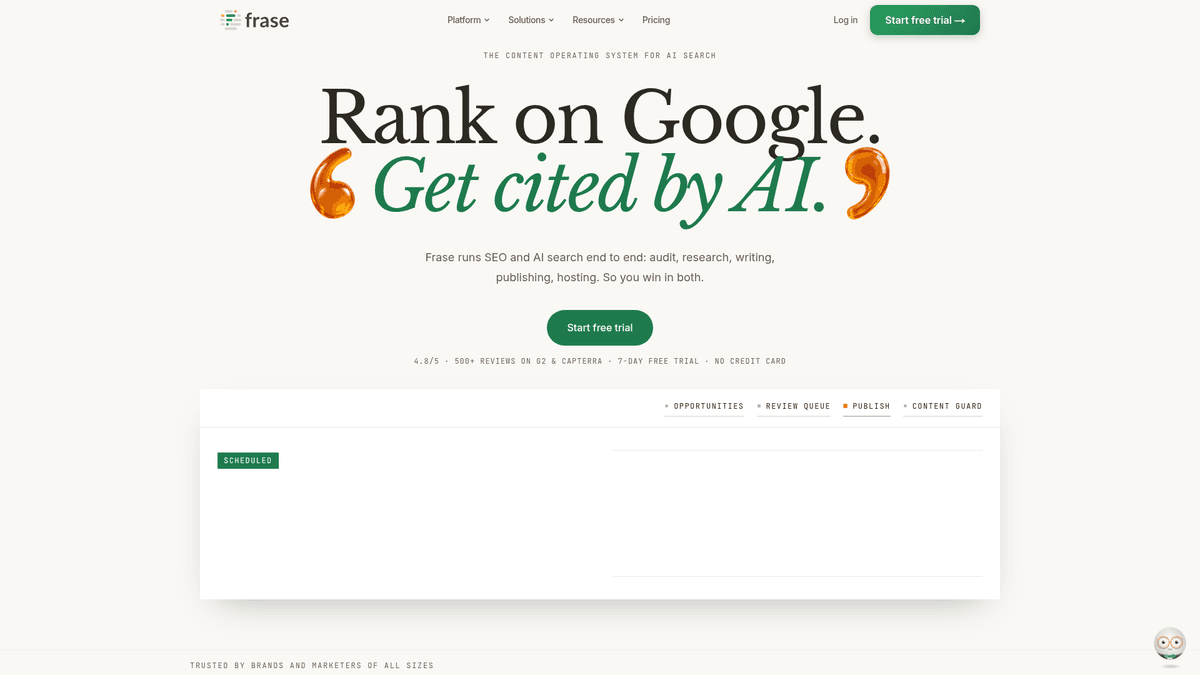
Frase is a practical choice for teams that want to move from keyword to brief to draft faster.
It is especially good at turning SERP data into outlines, topic suggestions, and content briefs that writers can use immediately. That makes it useful for lean teams where one person is juggling strategy and writing.
Strengths
good brief generation
faster pre-writing workflow
useful SERP-based research
lower friction than more enterprise tools
Limitations
not a true Nightwatch replacement for heavy tracking needs
less complete than a full SEO suite
still requires a stronger publishing engine if output volume is the goal
Best for
Teams creating blog content regularly and needing help with research and structure.
Frase is often a better fit than a tracking-first platform when the main bottleneck is “what should we write and how should we structure it?”
8. Scalenut - Best for AI content generation plus planning workflows

Scalenut sits between content strategy and AI-assisted production. It offers tools for planning, clustering, writing, and optimization, making it attractive for teams that want more than a content editor but less than a full end-to-end SEO system.
Strengths
combines research and writing
topic clustering helps build topical coverage
better for scaling content than pure rank trackers
useful for teams building repeatable content pipelines
Limitations
still requires operational oversight
may not replace specialized SEO data tools
tracking is not the main strength
Best for
Teams trying to scale blog output with a more guided content workflow.
Scalenut can be a strong option if you want AI support throughout planning and writing, but do not need Nightwatch’s more specialized visibility monitoring.
9. Rankability - Best for agencies focused on AI visibility and optimization
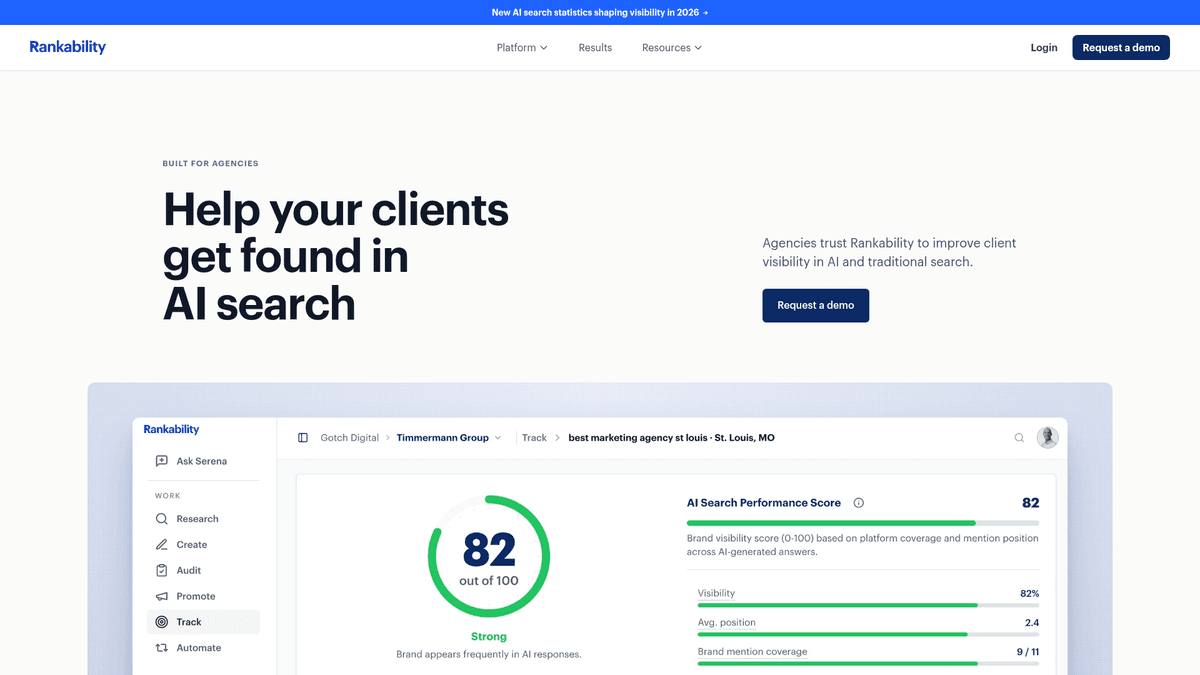
Rankability is one of the more interesting newer options for teams thinking beyond classic ranking reports.
Its positioning leans into AI visibility and content optimization, which makes it relevant for agencies that want to show value in a world where discovery is happening across Google and AI assistants at the same time.
Strengths
more aligned with AI search workflows
useful for content and visibility conversations
good fit for agency presentation and optimization use cases
Limitations
less established than older platforms
may not offer the same comfort level as mature all-in-one suites
depends on whether your workflow is more content-led or tracking-led
Best for
Agencies and consultants that want a more modern visibility narrative around AI answers and content performance.
If AI visibility is your main buying trigger, Rankability is worth shortlisting alongside broader tools.
10. Writesonic - Best for low-friction AI content creation with SEO support
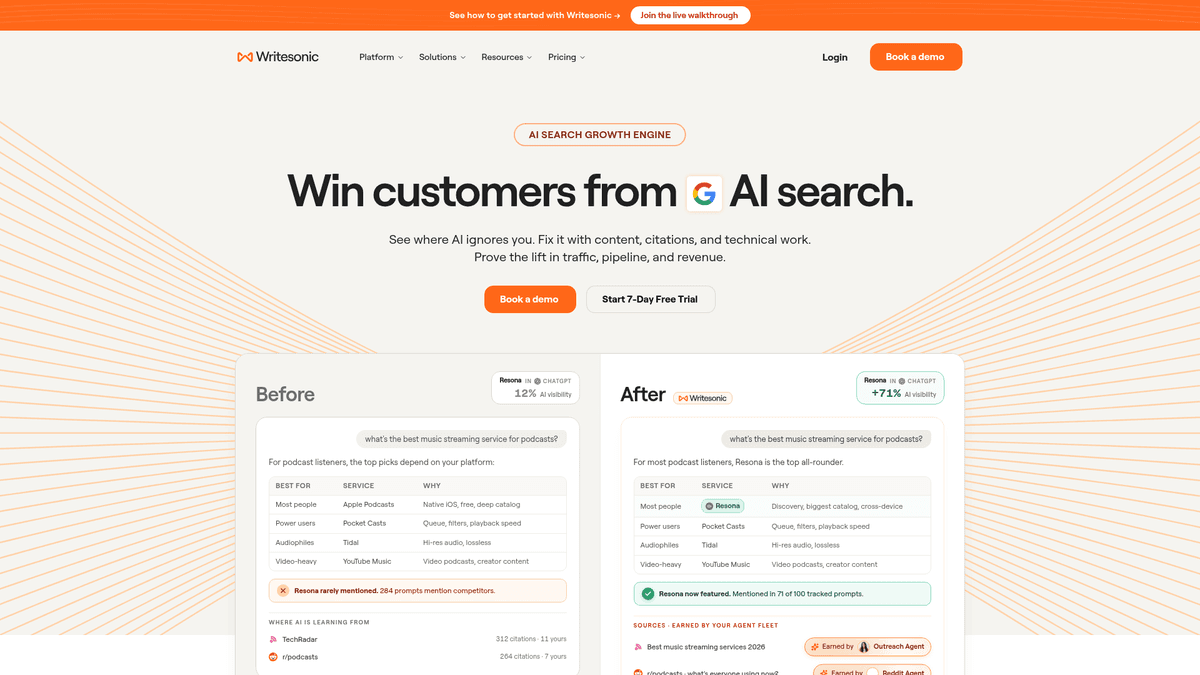
Writesonic is better thought of as an AI content platform with SEO features than as a Nightwatch-style alternative in the narrow sense.
Still, it belongs on this list because many buyers searching for Nightwatch alternatives are actually exploring ways to create more content faster. Writesonic helps with drafting, content generation, and basic optimization checks at a relatively accessible price point.
Strengths
fast AI content generation
easy entry point for small teams
broad writing use cases beyond blog posts
helpful for increasing publishing speed
Limitations
not a serious replacement for dedicated rank tracking
lighter SEO depth than specialist tools
output quality still depends on strong prompts and review
Best for
Startups and solo operators that want affordable AI writing help first and will layer deeper SEO tooling later.
"84% of content marketers and SEOs say AI and automation impacted their SEO strategy in 2023." - HubSpot
That is the broader market shift behind tools like Writesonic, Scalenut, Frase, and RankSpot. Teams are no longer just buying SEO data. They are buying speed.
Feature comparison by job to be done
Tool | Rank tracking | AI visibility / GEO | Keyword research | Content optimization | Automated publishing |
|---|---|---|---|---|---|
RankSpot | Light/moderate | Strong | Strong | Strong | Excellent |
SE Ranking | Good | Good | Good | Moderate | Limited |
DinoRANK | Good | Moderate | Moderate | Moderate | Limited |
Ahrefs | Moderate | Limited | Excellent | Limited | No |
Moz Pro | Moderate | Limited | Good | Limited | No |
Surfer SEO | Limited | Limited | Moderate | Excellent | No |
Frase | Limited | Partial | Moderate | Good | No |
Scalenut | Limited | Partial | Moderate | Good | Limited |
Rankability | Moderate | Strong | Moderate | Good | No |
Writesonic | Limited | Partial | Limited | Moderate | Limited |
What founders should actually optimize for
A lot of founders buy SEO software like they are buying analytics. But if you are early stage, analytics are rarely the constraint.
The real questions are:
Can we identify keywords with buying intent?
Can we publish useful content consistently?
Can we turn competitor insights into pages that attract customers?
Can we show up in both search engines and AI answers?
Can we do all this without building a big internal team?
That is why a tool like RankSpot often beats traditional alternatives for startups. It does not assume you already have strategists, writers, editors, designers, and CMS operators in place.
It gives you one system that can research, plan, write, format, generate images, and publish. It also supports 100+ languages, which matters if you are expanding globally without local content teams.
Decision guide: which Nightwatch alternative is right for you?
Choose RankSpot if:
you are a founder or lean team
you need actual content output, not just reports
you want high-intent keyword discovery and automated publishing
you want to compete through consistency without hiring an agency
Choose SE Ranking if:
you want a balanced SEO suite
you need rank tracking, audits, and keyword tools in one place
you prefer a middle ground between price and breadth
Choose DinoRANK if:
budget matters a lot
you want a wide toolset at lower cost
you do not need enterprise polish
Choose Ahrefs if:
competitor keyword research and backlinks are your main priorities
you already have content execution handled elsewhere
Choose Moz Pro if:
you want a classic, dependable SEO workflow
ease of use matters more than cutting-edge AI functionality
Choose Surfer SEO or Frase if:
your core need is better content briefs and optimization
you already have a publishing engine and mainly want editorial support
Choose Scalenut or Writesonic if:
you want AI writing help first
you are okay supplementing with other SEO tools later
Choose Rankability if:
you run an agency
AI visibility reporting is becoming important to your service offering
Final verdict
For pure rank tracking and visibility monitoring across lots of campaigns, Nightwatch.io still has a clear role in the market.
But if you are searching for nightwatch alternatives because your real challenge is growth through content, then a tracking-first tool is probably not the best answer.
For most founders, small SaaS teams, and lean operators, the best alternative is RankSpot because it solves the bigger business problem:
finding the right topics
creating the content
optimizing for search and AI answers
publishing consistently
doing it without burning team time
That is the difference between buying another dashboard and buying a system that actually ships.
If that sounds closer to what you need, try RankSpot’s low-friction trial. You can get your first 3 articles free with no credit card, see the workflow in action, and decide if an automated SEO/GEO pipeline fits your business better than another reporting stack.