If you’re looking for Rankability alternatives, you’re usually dealing with one of three issues:
You want stronger content production, not just optimization scores.
You want a lower-cost setup that fits one brand, not an agency workflow.
You want a tool that helps you publish consistently and show up in both Google and AI answers.
That’s the big shift in 2026. Teams are no longer buying isolated SEO tools just to get reports. They want output. They want articles published. They want high-intent keywords surfaced automatically. And they want content that has a real chance of being cited by ChatGPT, Claude, Gemini, and Google AI Overviews.
For founders and lean teams, that changes what the best Rankability alternative looks like. A great fit is not always the deepest editor. Sometimes it’s the platform that removes 40+ hours of manual work a month and gets content live every day.
Quick verdict
If you already have writers, editors, and a process, a classic optimization tool like Surfer SEO or Clearscope can make sense.
If you want an all-in-one SEO and GEO operating system that handles research, planning, writing, image generation, formatting, and publishing for you, RankSpot is the stronger fit.
That’s especially true if your team is small, your time is limited, and your goal is simple: publish more high-quality content without building a mini agency in-house.
Who should switch from Rankability?
A Rankability alternative is worth considering if you are:
a founder running SEO yourself between product, sales, and hiring
a startup tired of paying high agency retainers
a small e-commerce or SaaS team that needs consistent publishing
a marketing lead who wants one system instead of five tools stitched together
a team trying to win both Google rankings and AI answer visibility
How to evaluate Rankability alternatives in 2026
Not all alternatives solve the same problem. Some are content graders. Some are full SEO suites. Some are AI writers. Some focus on AI visibility.
The practical way to evaluate them is this:
Tool | Best for | Starting price | Main trade-off |
|---|---|---|---|
RankSpot | Founders and small teams who want full automation | Free trial | Less agency-style white-label depth |
Surfer SEO | Real-time content optimization | $99/mo | Writing and publishing still need extra workflow |
SE Ranking | All-in-one SEO suite with content tools | $65+/mo | Content workflow is not as automated |
Scalenut | AI writing plus workflow support | $49+/mo | Output often needs heavier editing |
Frase | Briefs, research, and drafting | $45+/mo | Publishing stack is lighter |
Clearscope | Enterprise content scoring | $189+/mo | Premium pricing |
MarketMuse | Topic authority and planning | Custom / limited free | Steeper learning curve |
Orchly | AI-led SEO/GEO workflows | Varies | Younger product category |
NeuronWriter | Budget-friendly optimization | $23+/mo | Less polished UX and ecosystem |
Outwrite.ai | AEO-focused workflows and AI content | Varies | Less established than older SEO tools |
1. RankSpot – Best for founders and small teams that want SEO done end to end
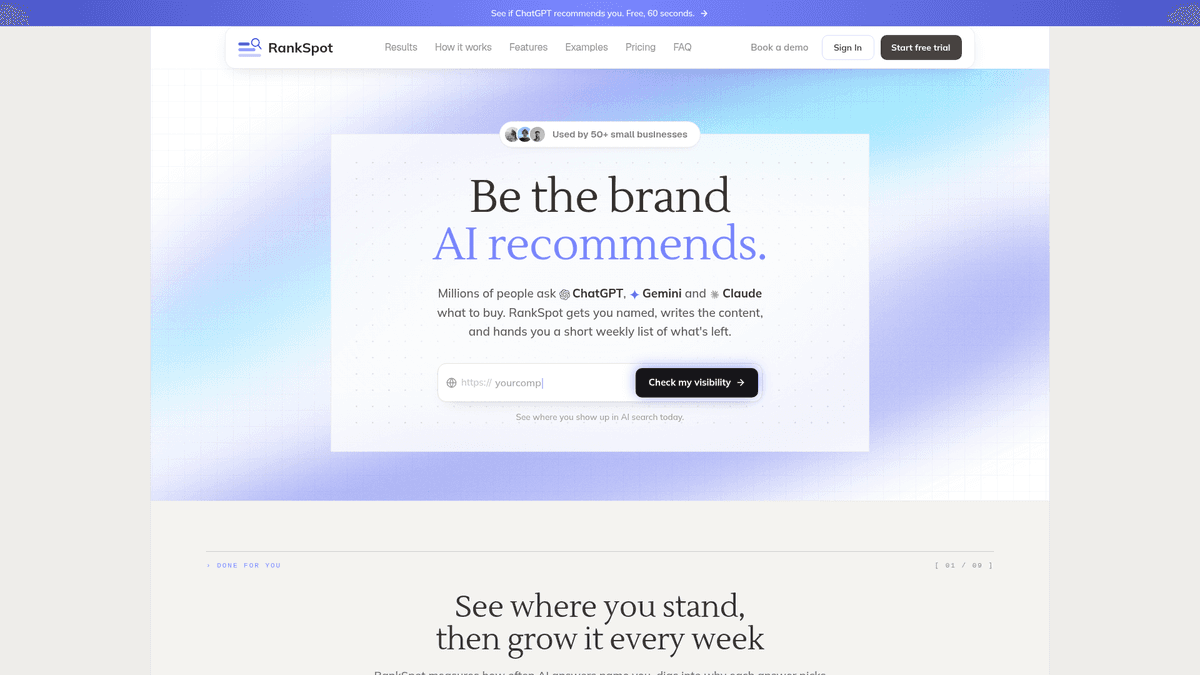
RankSpot is the best Rankability alternative if your real problem is not scoring content. It’s shipping it.
Instead of giving you one more dashboard to manage, RankSpot acts like a personal AI SEO agent. You add your site, it learns your niche and competitors, builds a 30-day plan, finds high-intent and competitor keywords, writes long-form articles, generates custom images, formats them with on-page SEO best practices, and publishes directly to your CMS.
That is a very different workflow from tools built mainly for agencies and multi-client reporting.
Why RankSpot stands out
Fully automated SEO pipeline from research to publish
Daily SEO-optimized article publishing
Built for both classic search and AI answer engines
Direct publishing to WordPress, Webflow, Wix, Shopify, Framer, Ghost, and more
Competitor keyword tracking and “copy what works” targeting
On-brand image generation included
Reddit and forum discovery for demand and outreach ideas
Supports 100+ languages
First 3 articles free with no credit card
For a founder, this matters because the bottleneck is rarely “I need 10% better NLP term suggestions.” It’s usually “I do not have time to research, write, edit, design, and publish every week.”
That’s why RankSpot works well for teams also looking into SEO automation tools rather than just standalone content optimizers.
Where Rankability can still win
Rankability can still be a better fit for agencies that need a more hands-on optimization workflow and client-oriented operations. If you manage many client accounts and want tighter human control over each draft, that shape of product may suit you better.
Best for
founders
indie hackers
early-stage SaaS
e-commerce stores
lean marketing teams
businesses replacing expensive SEO agencies
2. Surfer SEO – Best for real-time content optimization
Surfer SEO remains one of the most widely used content optimization platforms on the market. If your team already has writers and editors, Surfer is a strong rankability alternative because it gives you a clear scoring environment and strong SERP-based guidance.
Its main strength is real-time optimization. Writers can see content scores, term usage, heading balance, and structure suggestions as they draft.
What it does well
Real-time content editor
SERP-based recommendations
Content audits and refresh opportunities
Topical mapping features
Familiar workflow for SEO teams
Trade-offs
Surfer helps you improve content, but it does not replace your full production system. You still need research workflows, editorial judgment, publishing steps, and usually other tools for design, QA, and project management.
For smaller teams, that stack adds up fast.
Best for
in-house content teams
agencies with established writers
marketers who want a dedicated optimization editor
If you’re deciding between multiple optimization-led platforms, our guide to Surfer SEO alternatives can help narrow the field.
3. SE Ranking – Best all-in-one SEO suite with content optimization
SE Ranking is a broader SEO platform. It covers rank tracking, audits, backlink monitoring, competitor research, and content marketing tools in one place.
That makes it appealing for teams that want a traditional SEO suite, not just a writing tool.
What it does well
Rank tracking and site audits
Keyword research and competitor insights
Backlink monitoring
Content optimization workflows
Agency-friendly reporting options
Trade-offs
SE Ranking gives you range, but not the same end-to-end automation as RankSpot. You still do much more of the work manually. It’s better seen as a control center than a done-for-you publishing engine.
Best for
teams that want a broad SEO suite
agencies needing reporting and tracking
marketers balancing content with technical SEO
4. Scalenut – Best for high-volume AI writing with workflow support

Scalenut is built for teams that want AI-assisted content production at scale. It combines planning, writing, and optimization features in one product and is often compared with tools like Rankability when teams want volume.
What it does well
AI-assisted long-form drafting
Content planning workflows
Optimization features inside the editor
Useful for scaling output quickly
Trade-offs
The challenge with Scalenut is that fast output does not always mean publish-ready output. Many teams still need meaningful editing, fact-checking, and cleanup before content goes live.
That’s the difference between AI writing software and a more complete publishing system.
Best for
teams focused on output volume
marketers testing AI-assisted workflows
businesses with editors available to polish drafts
For a broader look at this category, see our breakdown of Scalenut alternatives.
5. Frase – Best for research and brief creation
Frase is still one of the easiest tools for turning a keyword into a content brief. If your biggest pain point is research speed, it’s a strong option.
It pulls together related questions, SERP themes, and structural suggestions so writers can start with context instead of a blank page.
What it does well
Fast brief generation
SERP research support
Question and topic extraction
AI-assisted drafting
Good fit for freelance or lean editorial teams
Trade-offs
Frase is strong in the planning stage, but it’s not a full end-to-end operating system. Most teams still pair it with publishing, design, and analytics tools elsewhere.
Best for
marketers who need better briefs
freelance writers
content teams that want to reduce research time
If you’re comparing research-first tools, this guide on Frase alternatives is worth a look.
6. Clearscope – Best for enterprise content scoring
Clearscope is one of the cleanest content optimization tools available. It is especially popular with larger editorial teams that want a simple scoring model and minimal friction for writers.
What it does well
Clean, writer-friendly interface
Strong content grading
Good collaboration features
Easy adoption across larger teams
Trade-offs
Clearscope is premium software. It does one job well, but it does not try to replace your content operation. If you need keyword discovery, publishing automation, custom images, and AI-answer optimization in one workflow, you’ll need more than Clearscope alone.
Best for
enterprise editorial teams
content managers with multiple writers
brands prioritizing usability and consistency
7. MarketMuse – Best for topical authority and strategic planning
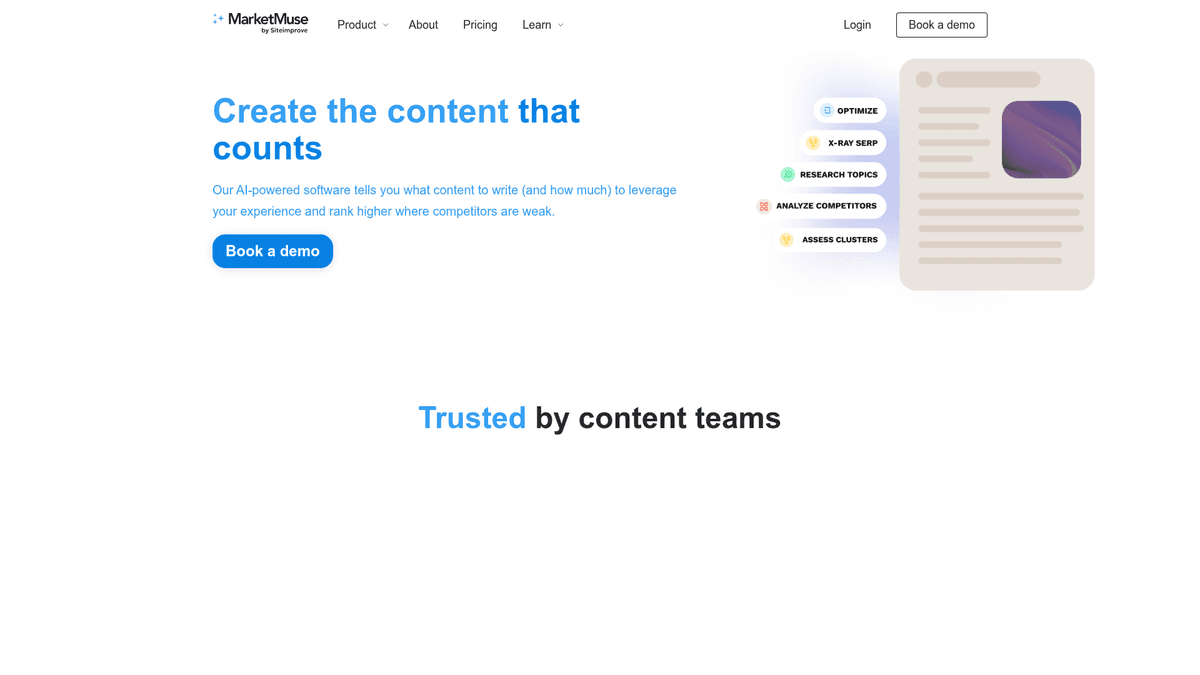
MarketMuse is more strategic than tactical. It’s built for teams that want to map topical authority, identify content gaps across a site, and prioritize what to create next.
What it does well
Topic cluster planning
authority-based prioritization
inventory analysis across content libraries
strategic guidance for larger content programs
Trade-offs
MarketMuse is powerful, but heavier. It fits organizations investing in long-term editorial strategy more than founders who simply need to publish high-quality posts every week.
Best for
large content teams
mature SaaS companies
brands building authority across whole topic clusters
8. Orchly – Best for AI agent workflows for SEO and GEO
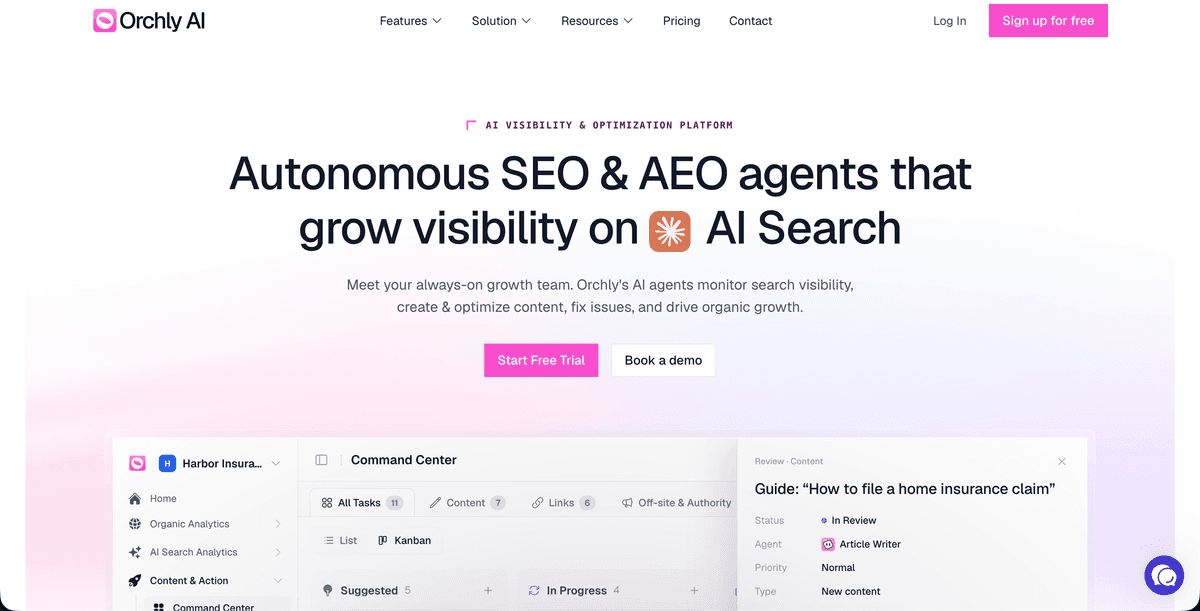
Orchly sits in the newer generation of AI-native SEO platforms. It aims to combine automation, content workflows, and AI-search readiness in a more agent-driven model.
This makes it interesting for teams that want more automation than legacy SEO suites usually offer.
What it does well
AI-led workflow support
focus on SEO plus GEO readiness
automation-oriented positioning
useful for modern AI-first marketing teams
Trade-offs
As with many newer tools, the key question is workflow maturity. Teams should validate how well the product handles consistency, publishing control, and scale in real use.
Best for
early adopters
AI-first teams
businesses exploring automated SEO workflows
9. NeuronWriter – Best budget-friendly optimization option
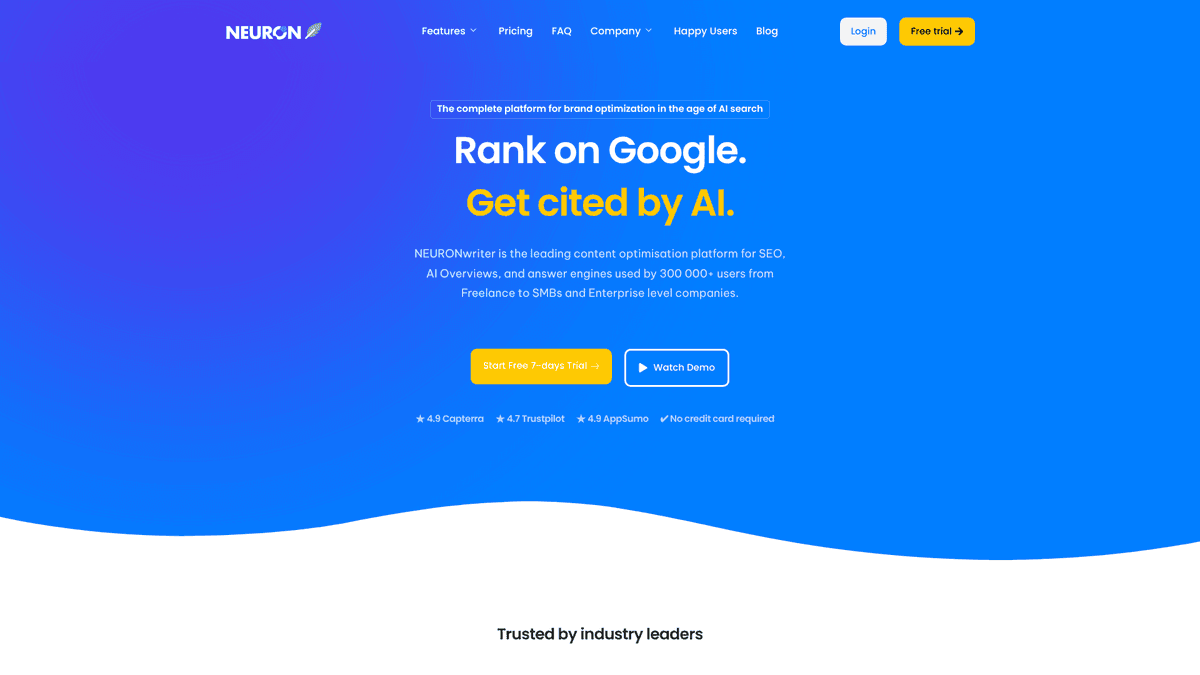
NeuronWriter is popular because it brings SERP-driven optimization to a much lower price point than many better-known tools.
If budget is your main constraint, it is one of the more practical choices.
What it does well
affordable entry pricing
content scoring and optimization
decent keyword and SERP guidance
strong value for solo operators
Trade-offs
The trade-off is polish. The interface and broader ecosystem are not as refined as higher-priced platforms. And like other optimizers, it does not remove the full workload of planning, writing, publishing, and design.
Best for
solo founders
bloggers
freelancers
small teams on tight budgets
10. Outwrite.ai – Best for AEO-focused content and AI citation visibility
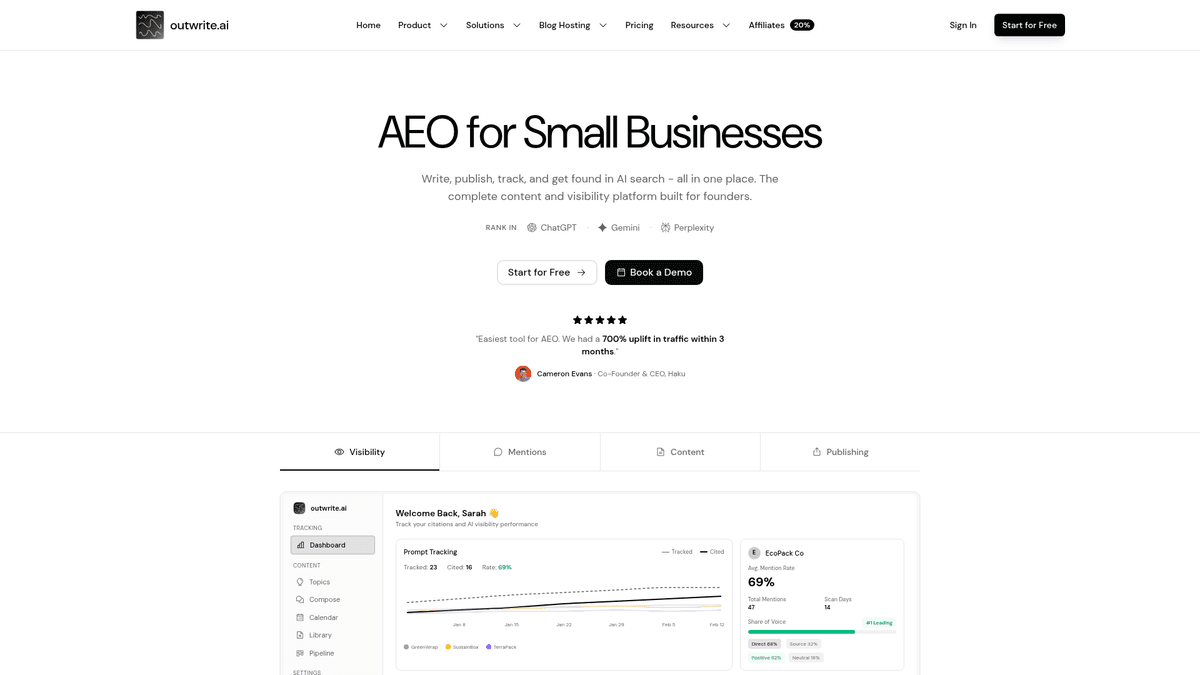
Outwrite.ai is part of the shift from pure SEO tools to answer-engine optimization tools. That means the focus is not just ranking in Google, but becoming cite-worthy in AI-generated responses.
What it does well
AEO-oriented content workflows
topic discovery
AI content generation
visibility into AI-search style opportunities
Trade-offs
Outwrite.ai is part of a fast-changing segment. Teams should test how well its workflow fits their real content process, especially if they need strong CMS automation and mature SEO planning.
Best for
teams focused on AI-answer discoverability
marketers experimenting with AEO and GEO
brands wanting earlier exposure to AI-search workflows
What separates the best option from the rest?
The biggest difference between these tools is not “feature count.” It’s where the work still sits.
Some tools help you score.
Some help you brief.
Some help you draft.
Some help you track.
But very few take you from idea to published article consistently.
That is where RankSpot is strongest.
RankSpot replaces more of the workflow
With RankSpot, you are not just buying keyword data or an editor. You’re replacing:
keyword research tools
content briefing work
first-draft writing time
image creation tools
formatting and on-page cleanup
manual CMS publishing
parts of competitor research
repetitive content ops work
For small teams, that matters more than getting one extra chart.
How founders should choose a Rankability alternative
Here’s the simple framework.
Choose RankSpot if:
you want SEO content published with minimal manual work
you need one tool instead of a stack
you want built-in GEO optimization for ChatGPT, Claude, and Gemini visibility
you care about direct CMS integrations
you want daily publishing and consistent compounding traffic growth
Choose Surfer or Clearscope if:
you already have writers
your team wants hands-on editing and scoring
you do not need full automation
Choose SE Ranking or MarketMuse if:
you need broader SEO management or strategic planning
your team is willing to manage more workflow manually
Choose Scalenut, Frase, Orchly, NeuronWriter, or Outwrite.ai if:
you have a very specific workflow need
budget, briefs, or AI-first experimentation matters more than end-to-end automation
The practical ROI question
The wrong way to compare tools is by subscription price alone.
The right way is to ask:
How many hours will this save?
How many articles will actually get published?
How much extra tooling will I still need?
Will this help me get found in both search engines and AI assistants?
A cheaper tool that still needs a writer, editor, designer, and publisher is often more expensive in real terms than a platform that gets articles live for you.
That is why more teams are moving toward integrated systems and broader AI visibility tools instead of isolated SEO utilities.
Final verdict
The best Rankability alternative depends on what you actually need.
If you want a classic optimization editor, Surfer SEO is a strong choice. If you want enterprise scoring, Clearscope deserves a look. If you want a broader SEO suite, SE Ranking is worth considering.
But if you are a founder or lean team that wants results without building a complex content machine, RankSpot is the best overall choice.
It combines keyword research, competitor targeting, AI content generation, GEO optimization, custom image creation, built-in formatting, and direct publishing in one workflow. That means less time managing tools and more time compounding traffic.
The real win is not just better content. It’s consistency.
And consistency is still what grows organic traffic fastest.
If you want to stop juggling tools and start publishing strategically, try RankSpot’s low-friction trial. Your first 3 articles are free, there’s no credit card required, and you can see how an automated SEO pipeline feels before committing.