The best autoBlogger alternatives take work off your plate beyond drafting. If autoBlogger.ai leaves you rewriting posts or wondering whether AI assistants mention your brand, try RankSpot for hands-off research and publishing, Koala Writer for close editorial control, or SEOWriting.ai for a keyword queue you've already built. I’d pick based on the task that keeps landing back on your desk.
Quick comparison of nine autoBlogger alternatives
Tool | Best fit | Where you stay involved |
|---|---|---|
RankSpot | Founders who want a planned, recurring SEO and GEO publishing workflow | Review brand claims and priorities |
Koala Writer | Affiliate publishers who want detailed article controls | Set direction and edit important claims |
SEOWriting.ai | Teams with a ready keyword queue | Supply topics and review output |
Autoblogging.ai | Operators creating large batches from prepared inputs | Manage inputs and quality control |
RightBlogger | Creators who want writing and promotion tools together | Choose how much of the toolkit to use |
Outrank.so | Small teams that want a scheduled blog workflow | Set strategy and review posts |
Byword | Publishers producing keyword-led articles in batches | Provide the keyword list and edit |
Scalenut | Marketers who want an SEO writing workspace | Research, optimize and manage workflow |
Writesonic | Teams that need AI drafting across content types | Brief and approve copy |
One naming trap: autoBlogger.ai and Autoblogging.ai are different names. Autoblogging.ai appears below as a bulk-writing option, not another spelling of autoBlogger.ai.

What matters before you switch
I start with the finished post. Will it describe your product accurately, link to related pages and include images you can use? Some tools publish to your CMS; others leave the upload to you. If you manage several sites, publishing across CMS platforms matters too. For AI visibility, the page needs a clear answer that readers can trust.
Autopilot still needs posts worth publishing. Google's guidance on AI-generated content says appropriate AI use is not inherently against its Search guidelines, but generating content primarily to manipulate rankings violates its spam policies. Review product claims, examples and facts before a post goes live. If choosing topics takes most of your time, use a high-intent keyword research framework.
1. RankSpot: for founders who want the whole workflow handled
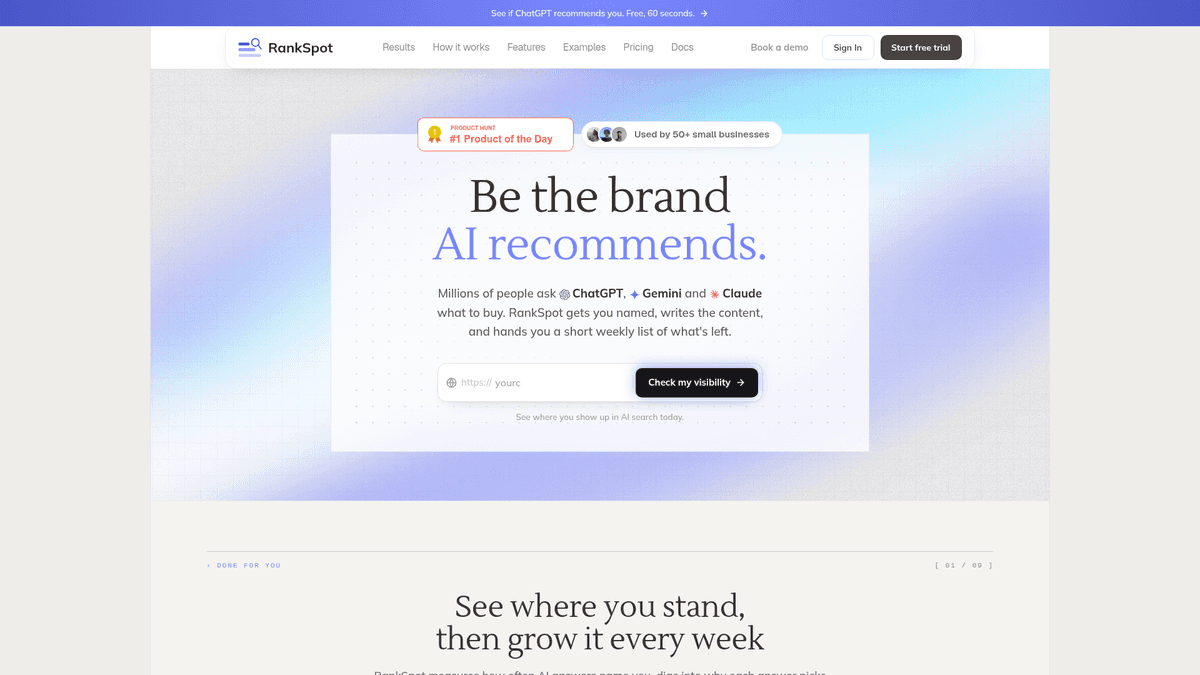
If the blank document is only part of your problem, I'd start with RankSpot. It learns about a business from its site, proposes a 30-day plan, finds high-intent and competitor keyword opportunities, then writes and publishes long-form posts. It creates on-brand images and formats posts with headings, tables and internal links. Its CMS workflow includes WordPress, Webflow, Wix, Shopify, Framer and Ghost.
Running a company leaves little room for choosing a keyword, drafting and uploading a post each morning. RankSpot's publishing calendar handles recurring content production, with posts designed for search engines and AI answer engines. It also finds Reddit and forum conversations where your buyers ask questions.
I'd choose it for a lean team that needs a content plan and ongoing publication. If you want to tune every paragraph before it goes live, an editor-led tool may suit you better. RankSpot's first three free articles let you judge the output on topics you know.
2. Koala Writer: for control over individual SEO articles
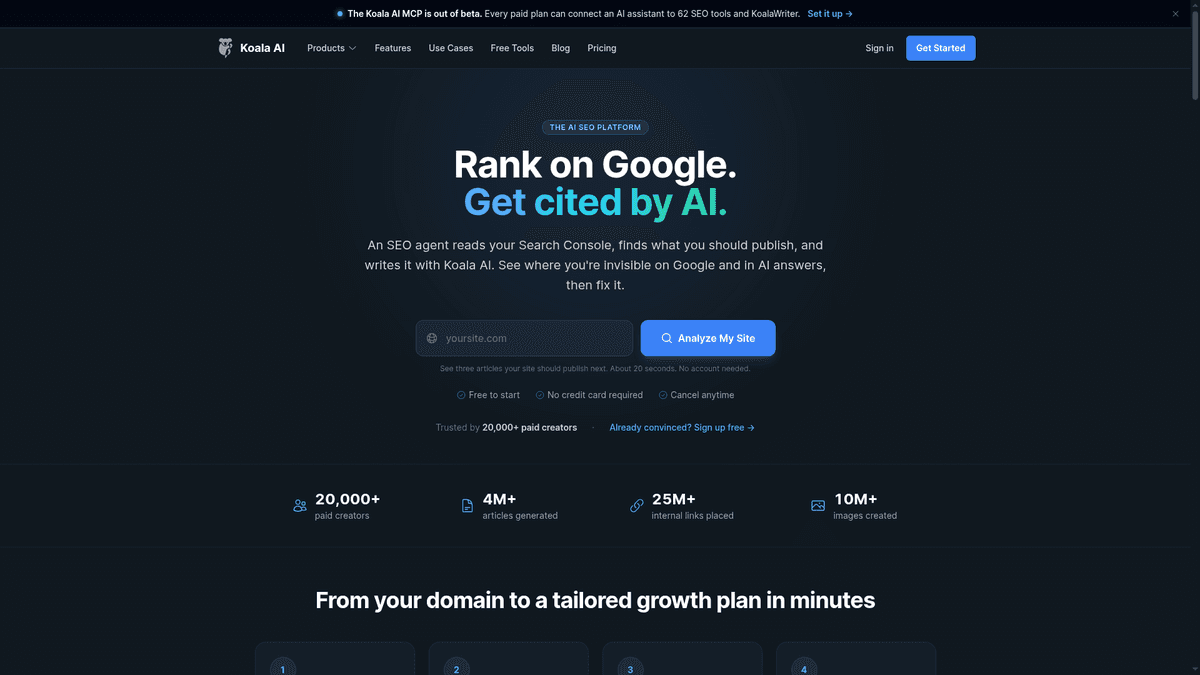
If I already know the topic and want to shape the article myself, Koala Writer is a good fit. Part of Koala AI, it offers live search-result analysis, research controls and formats for affiliate publishers. Those controls are useful when a product comparison needs careful handling.
You can produce and publish articles, though full Content Calendar Autopilot sits at a separate level of the offering. Compare that level with the entry writing plan if daily SEO autopilot is your goal. I'd inspect recommendations and product details before publishing on a review-heavy site. This closer look at Koala Writer alternatives explains the distinction.
3. SEOWriting.ai: for a ready list of keywords
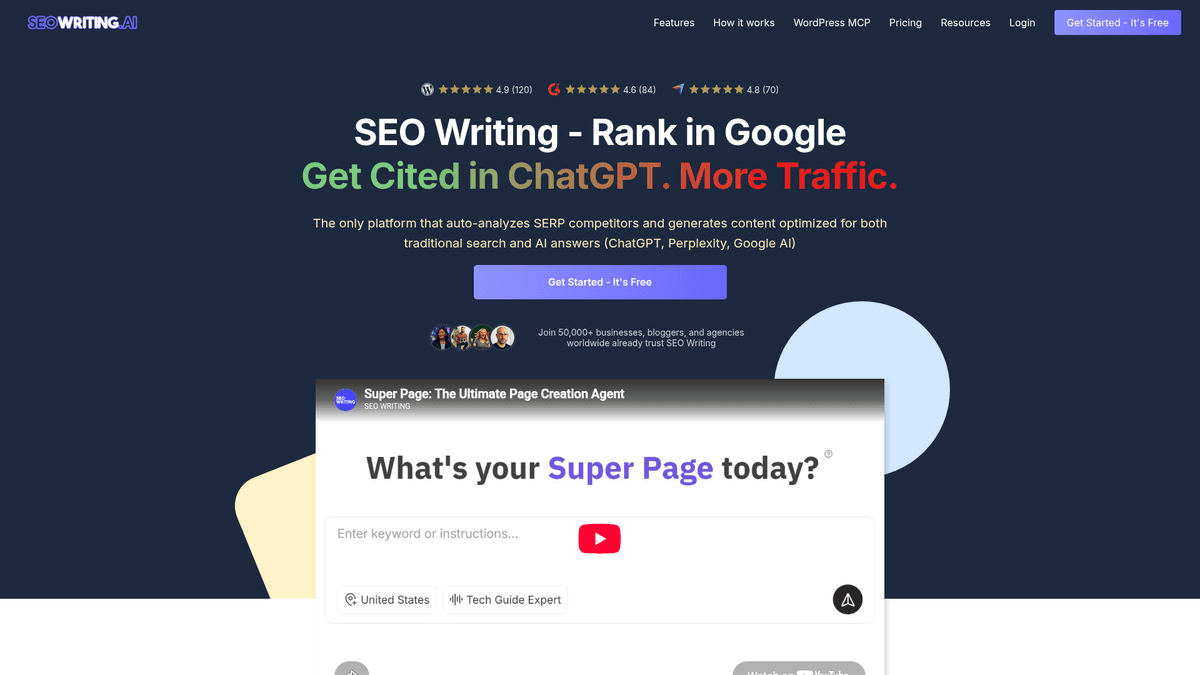
With a topic list in hand, you can feed SEOWriting.ai a keyword or title, generate SEO-focused articles in batches and schedule them to WordPress or Shopify. Its real-time search-informed structure and media options are useful when you have a long queue to work through.
You still supply the topics or keywords. That makes it less useful when deciding what to write takes most of your time. Internal linking depends on plan level, so factor it in before moving a whole site.
4. Autoblogging.ai: for large, prepared batches
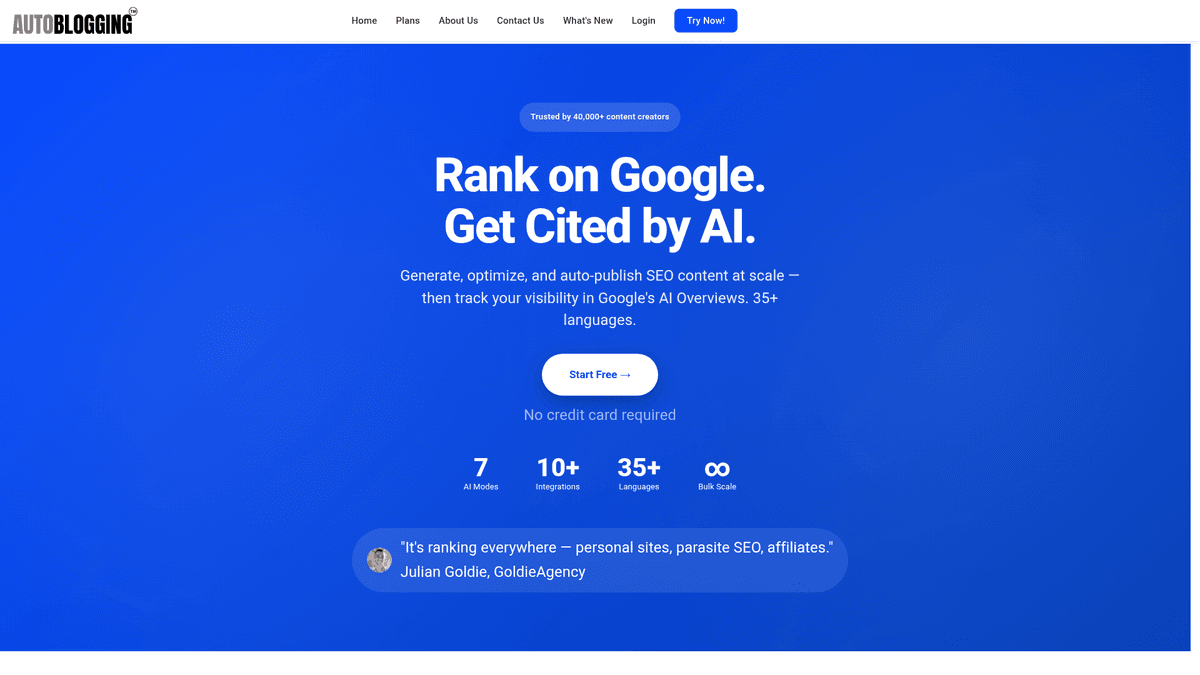
For a prepared list and a high volume of posts, Autoblogging.ai is worth a look. Its bulk workflow accepts CSV inputs and supports specialist modes, including affiliate-style content. It fits an operator with a proven topical map and an editor ready to inspect the output.
Weak inputs become a lot of weak posts in a bulk run. I'd set article briefs and a review gate first. You'll still need to choose opportunities and manage the ongoing strategy.
5. RightBlogger: for creators who want more than posts

RightBlogger combines automated blog production with creator utilities and social promotion. It can select keyword-backed topics on a schedule and produce illustrated posts. There are site-maintenance features too, which may appeal if you manage the blog and its promotion alone.
You get the most from it if you'll use those creator extras. The limits on sites, automations and publishing cadence matter more than the size of the toolkit.
6. Outrank.so: for a scheduled content operation
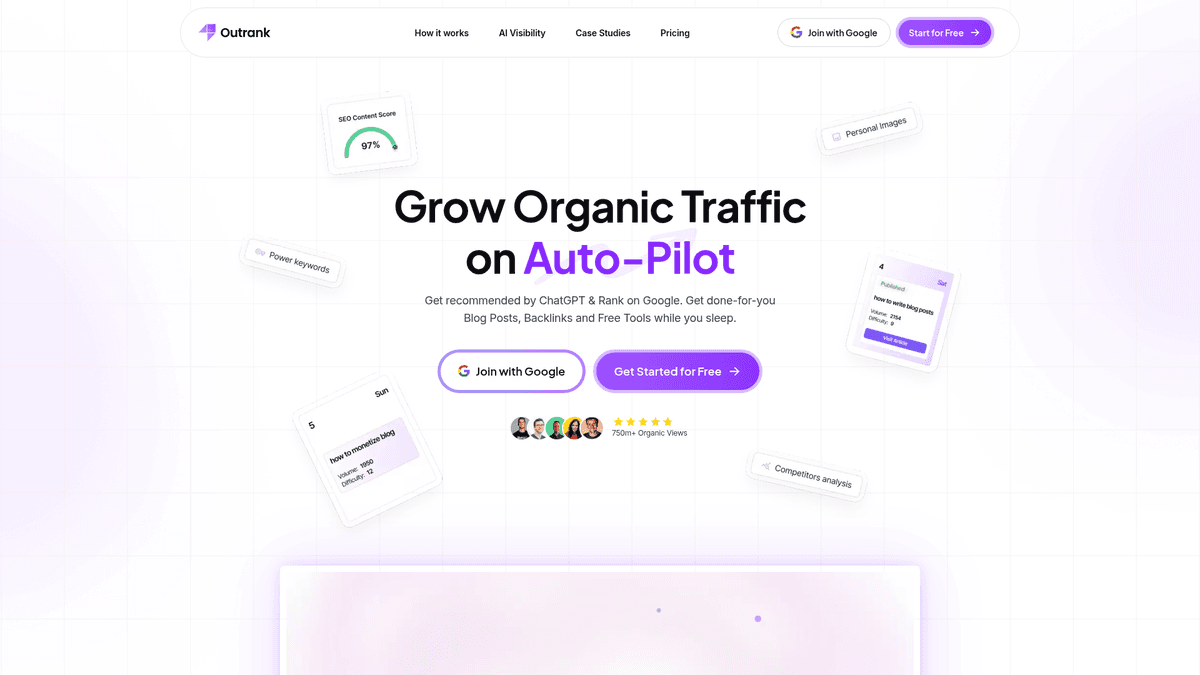
Outrank.so belongs on the shortlist if you want a repeatable publishing schedule. I'd decide upfront which posts need approval before they go live, especially anything that makes a claim about your product.
Begin with a small set of commercially relevant topics. A calendar only helps if the posts describe your product accurately and answer buyer questions. If you enjoy granular edits, you may feel more at home in an editor-first tool.
7. Byword: for keyword-driven batch creation
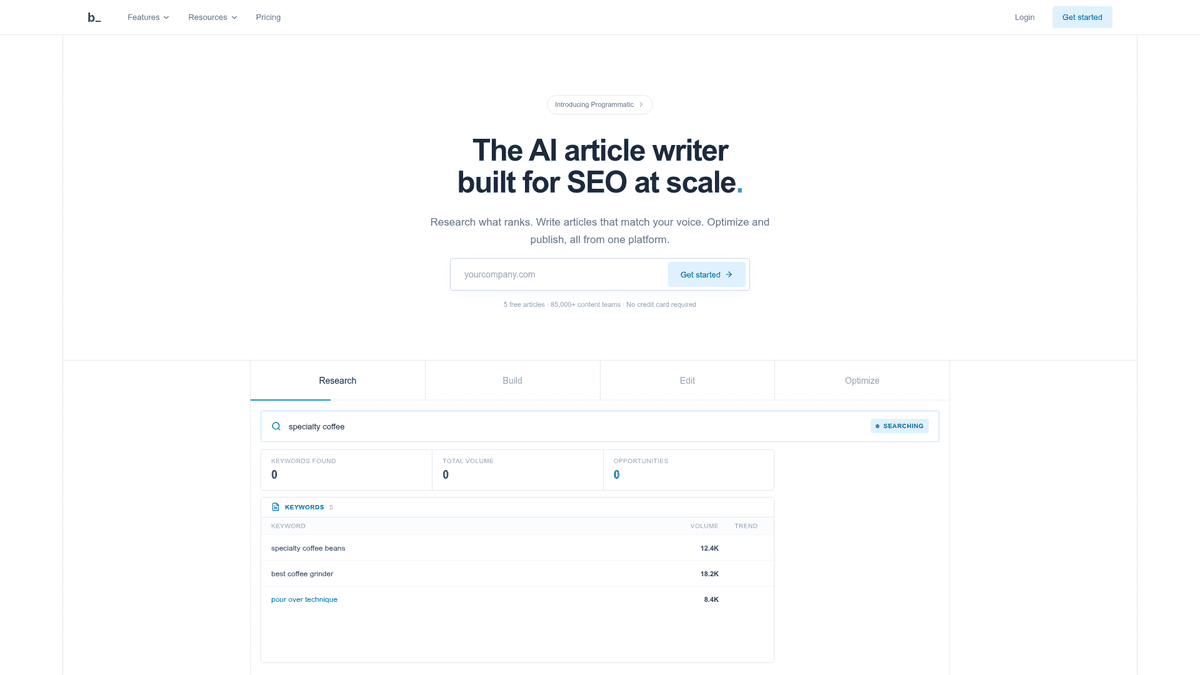
Got a spreadsheet of search topics? Byword can turn those inputs into articles at scale, saving a niche publisher with a clear editorial plan the repetitive drafting.
You still own topic selection, fact checks and links between related pages. Without a clear idea of which queries support your business, batch writing has little to work with.
8. Scalenut: for an SEO-focused writing workspace

Scalenut gives marketers a place to work through SEO content. You can create briefs and improve individual pages yourself, which suits someone who wants a hand in each post.
Those editorial calls take time. If your aim is to get posts live without managing another dashboard, a more automated pipeline may be easier to live with.
9. Writesonic: for teams that also need other marketing copy
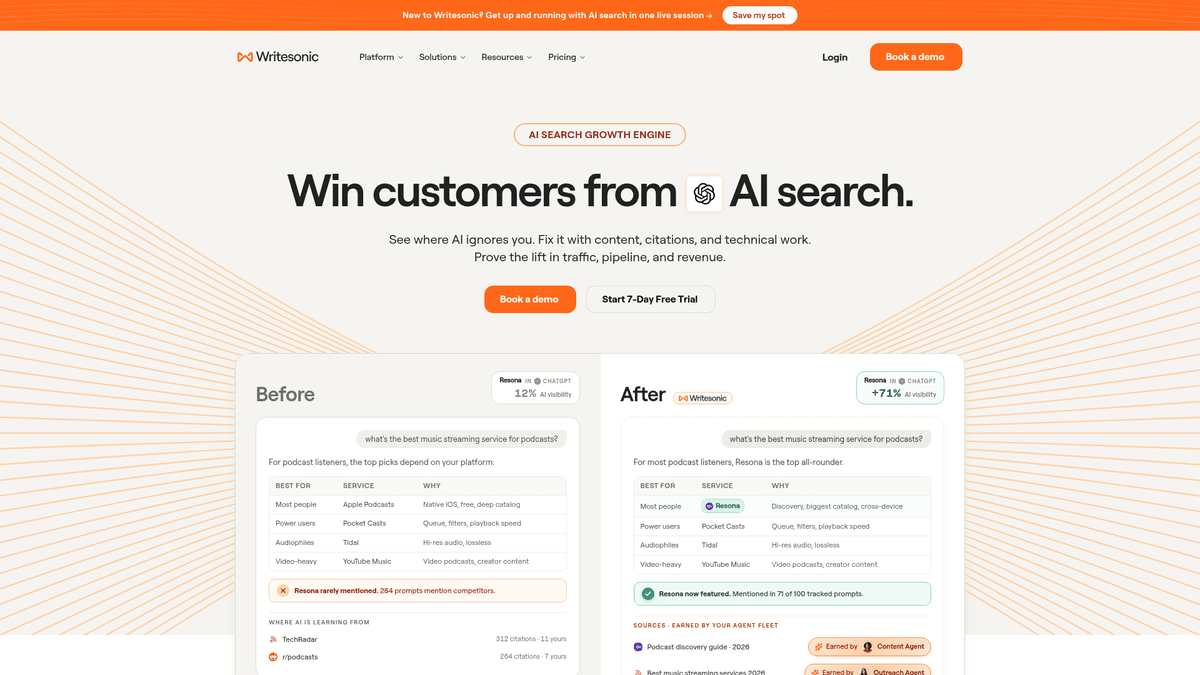
If your team also writes marketing copy, Writesonic lets you handle that work and article drafts in one AI writing environment. That flexibility is more useful when the blog is only one part of your workload.
The team still needs to choose topics, review facts, add internal links and publish each draft. For an SEO publication calendar, make room for that work; Writesonic fits when you can own it.
Do you need a separate GEO visibility tool?
AthenaHQ, Otterly AI and Profound monitor whether your brand gets mentioned or cited in AI answers. You'll still need a tool to produce the posts. I would add measurement once you've published enough material and know which buyer questions you care about. You can compare more AI visibility tools separately.
An Ahrefs study of 300,000 keywords offers another reason to track AI-search visibility. Using December 2025 data, it found that an AI Overview correlated with a 58% lower average click-through rate for the top-ranking page, compared with its estimate of what that rate would have been without AI Overviews.
An AI-answer mention doesn't guarantee traffic. I'd track it alongside search visits and buyer conversations rather than assuming more posts will solve the problem.
How I would choose for a small site
Write down the manual steps you want gone. A batch writer won't solve topic discovery, while a planner may add little if you already have a researched list.
Try one buying-intent topic and one informational topic. Do the drafts answer the query, use your real product facts and sound like something you'd put your name on?
Trace the route to your CMS. An hour spent formatting, adding links and uploading a draft isn't hands-off publishing. WordPress users can compare SEO tools for WordPress alongside the article writer.
Keep a human gate for important claims. A confident error in a product comparison can cost more than the minutes you saved by skipping review.
Measure what happens after publication. Watch relevant queries, qualified visits and buyer conversations. Track actual AI mentions separately if that channel matters to you.
For a founder tired of coordinating research, writing, images and publishing, I'd pick RankSpot. The content plan, daily publishing workflow and AI-answer focus cover those jobs together. Koala Writer or SEOWriting.ai makes more sense if you already have keywords and like editing posts yourself. Try RankSpot's first three free articles on topics you know well, then judge what you'd be willing to publish.
FAQ
Which is the best AI for blog writing?
Choose based on the work you want done. Koala Writer gives you hands-on control over an article; RankSpot handles planning, writing and publishing for founders who need a recurring workflow