SEObot can keep your blog publishing while you work on the product. But if a post about your API goes live with an inaccurate claim, you are the one who has to fix it. The best SEObot alternative lets you hand off the writing without giving up the decisions you care about, whether that means approving drafts, choosing topics or tracking AI mentions.
Some founders want posts to go live while they sleep. Others want drafts waiting for approval in the morning. These nine options cover both approaches, along with tools for teams that still do much of the writing. Keep AI-answer optimization and citation measurement on separate lines of your checklist.
Why switch from SEObot?
SEObot handles keyword discovery, article generation and publishing for founders without a content team. Its entry subscription is $49 per month for nine articles, according to its published pricing documentation. That is a reasonable starting point if your main goal is to keep publishing.
You give up some control with auto-publishing. That may be fine for a site with a clear niche and flexible editorial standards. It gets risky if you sell a technical product or need sign-off on claims about your features. You also need to distinguish publishing a page from tracking its Google position or its appearance in AI answers. A content generator may handle only one of those jobs. Our SEO automation tools breakdown covers the wider range of workflows.
Choosing a SEObot alternative: nine options at a glance
Tool | Best fit | Where you stay involved | Main tradeoff |
|---|---|---|---|
RankSpot | Founders seeking a planned, automated content pipeline | Review business fit, topics and drafts before deciding what to publish | Less suited to teams wanting to write each piece from scratch |
Surfer SEO | Editors polishing search-focused articles | Write or edit in the content workflow | Not a set-and-forget publishing agent |
Frase | Teams that prefer a research and briefing workflow | Shape the brief and edit the draft | Requires an editorial owner |
Outrank.so | Teams seeking high-volume content operations | Assess the generated plan and output | Speed does not replace fact checking |
Koala Writer | Bloggers who want to direct individual AI drafts | Select a topic and refine the output | More per-article work |
SEOWriting.ai | Operators who need bulk AI drafting | Set topics and inspect drafts | Bulk output needs a quality gate |
Autoblogging.ai | Sites prioritizing batch article creation | Choose targets and review results | Less useful when each page needs a distinct point of view |
Search Atlas | Teams wanting a broader SEO toolkit | Work with SEO data and content tools | More software to learn |
Writesonic | Teams creating several kinds of marketing copy | Guide and edit content across formats | Broader scope than a dedicated autonomous blog agent |
If you have no editor, a tool that helps someone edit a draft will not solve your staffing problem. If you do have one, you may welcome that control. The difference matters more than a feature list.
1. RankSpot
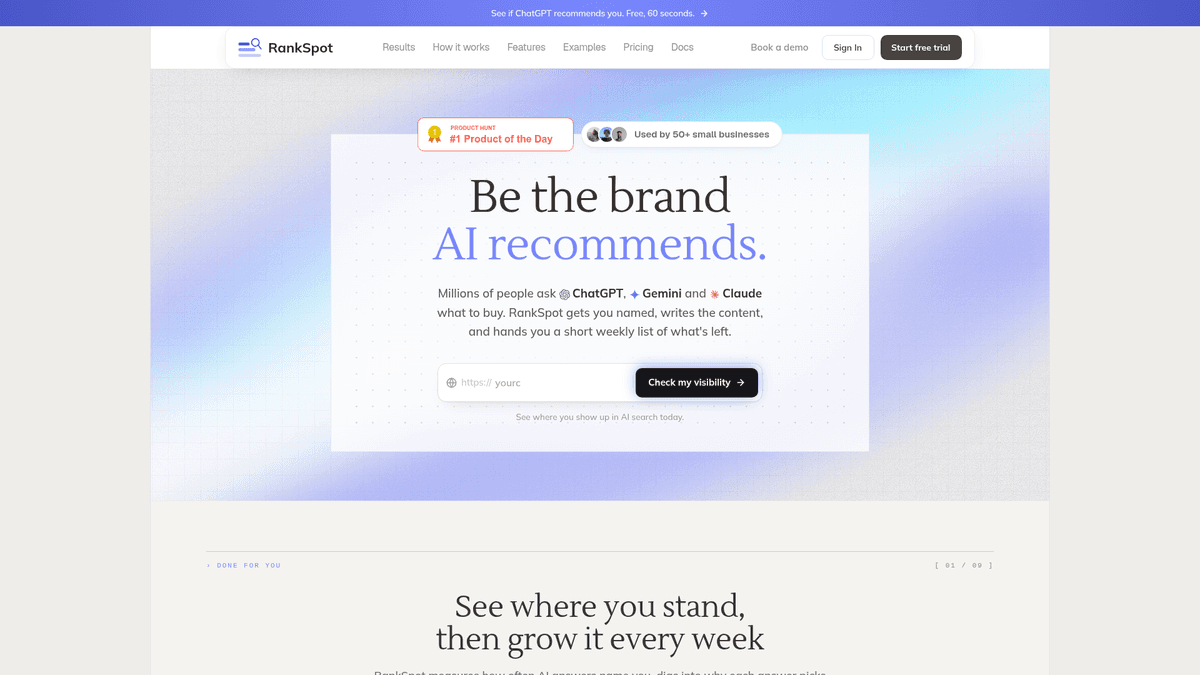
RankSpot handles the work between finding a topic and publishing a post. It learns from your site, builds a 30-day content plan, identifies high-intent keyword opportunities and competitor keywords, writes long-form SEO content, creates images and publishes to a connected blog. It supports WordPress, Webflow, Wix, Shopify, Framer and Ghost. It also finds relevant Reddit and forum conversations, which can show you the questions prospects ask.
RankSpot suits a founder who wants the pipeline to run on a schedule but still wants a say before publication. Its review queue lets you read, edit and approve a post before it goes live; you also approve the content plan. AI visibility tracking, including prompt tracking in the trial, helps you monitor mentions. Seeing your brand in a tracked answer does not mean that answer sent you a visitor.
A small team can use RankSpot to get a steady content plan and direct publishing without piecing together research, writing, design and CMS tools. A writer who wants to control every sentence may prefer an editor-first product. RankSpot offers the first three articles free without a credit card.
2. Surfer SEO
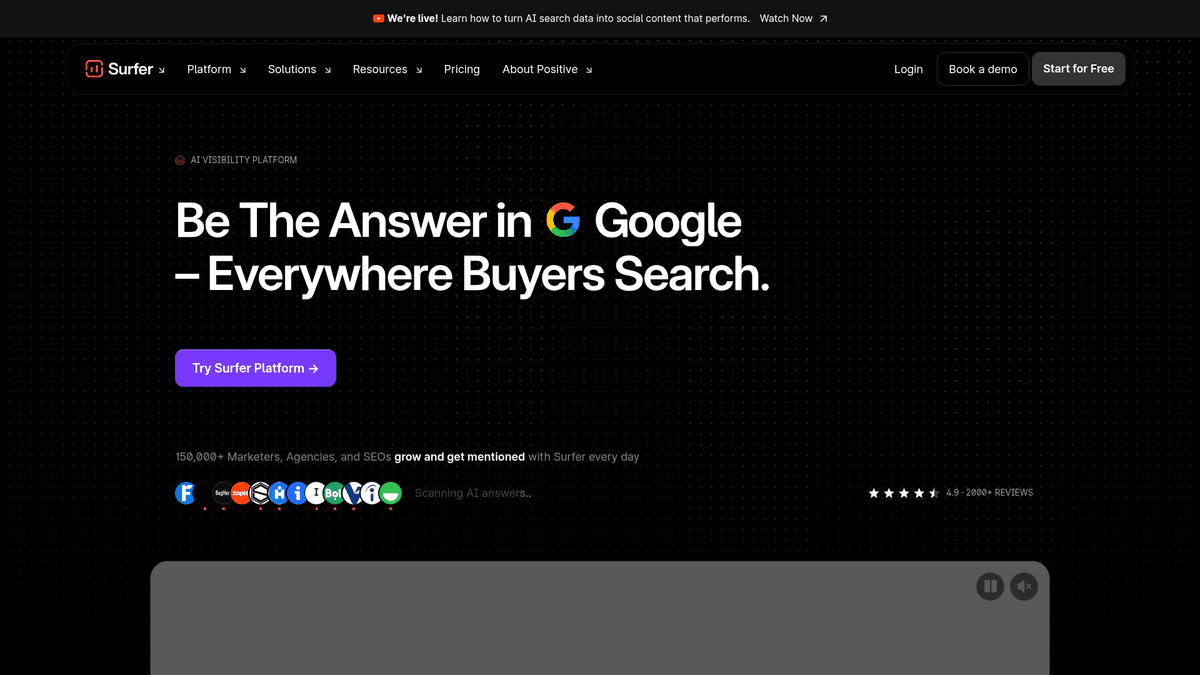
Surfer’s Content Editor gives writers content optimization feedback as they work. Its SERP analysis helps them decide what to cover. Bring a writer with product knowledge and you have a practical way to guide the piece without letting software choose every sentence.
If posts going live without editorial input worries you, Surfer keeps the writer in charge. You will still manage the calendar and publishing yourself. It is a poor fit if you want a fully autonomous replacement.
3. Frase
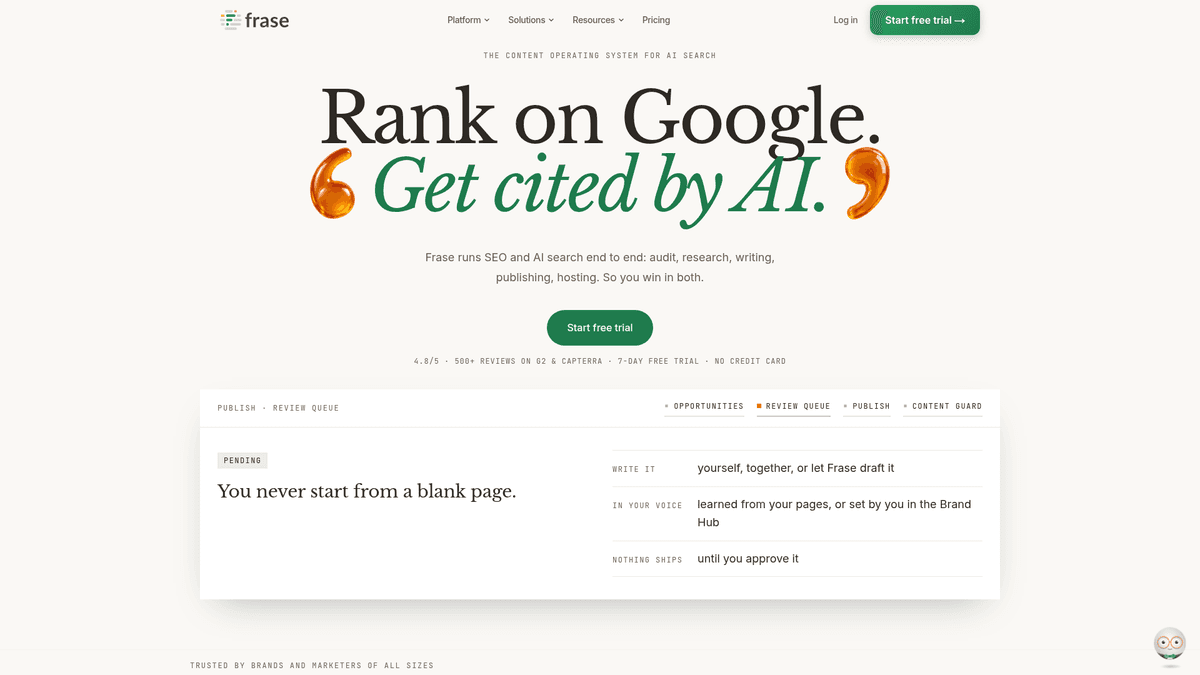
Frase helps turn keyword research into content briefs and drafts. A founder or editor can work out what a page needs to answer, then make the draft specific to the business.
For technical SaaS, ask an engineer or founder to catch unsupported integrations, stale UI descriptions and broad claims before publishing. Someone has to own that review. Frase will not run the whole program for you.
4. Outrank.so
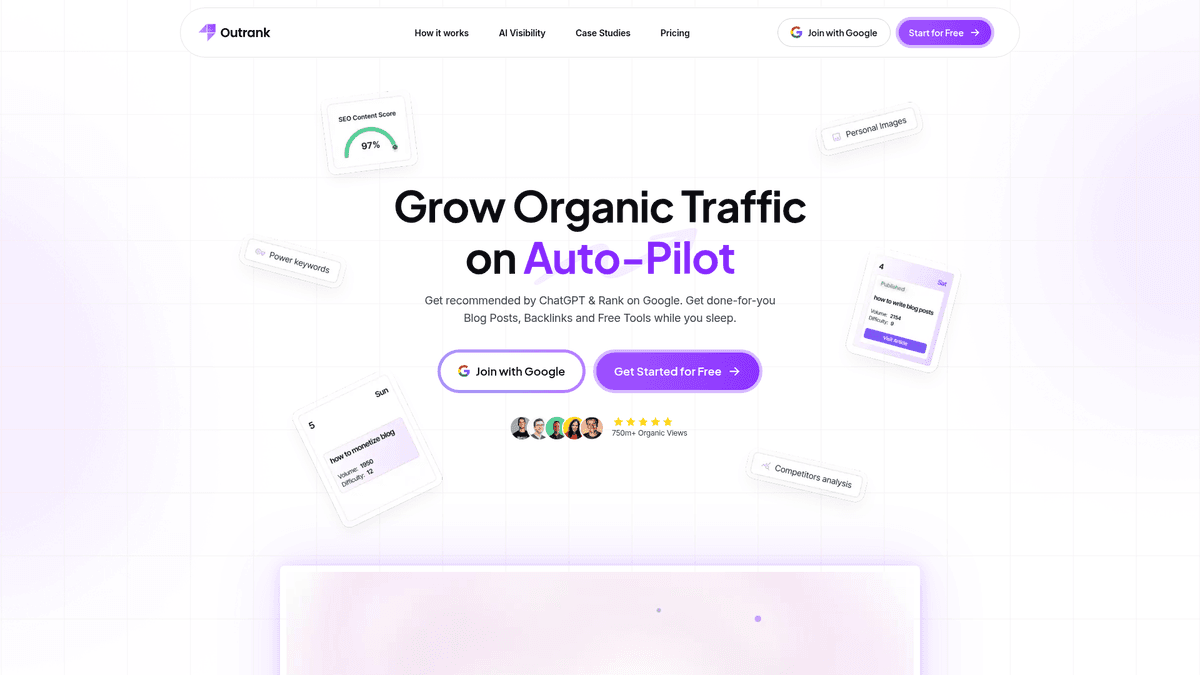
Outrank.so is worth considering if you want a regular blog operation with less manual production. Check whether its topics and posts suit your business stage before you judge it on output volume.
A new developer tool might need a detailed integration tutorial more than another category overview. Keep a short list of topics where your team has something specific to say and compare generated posts against it. Outrank.so can support volume, while you remain responsible for product claims.
5. Koala Writer
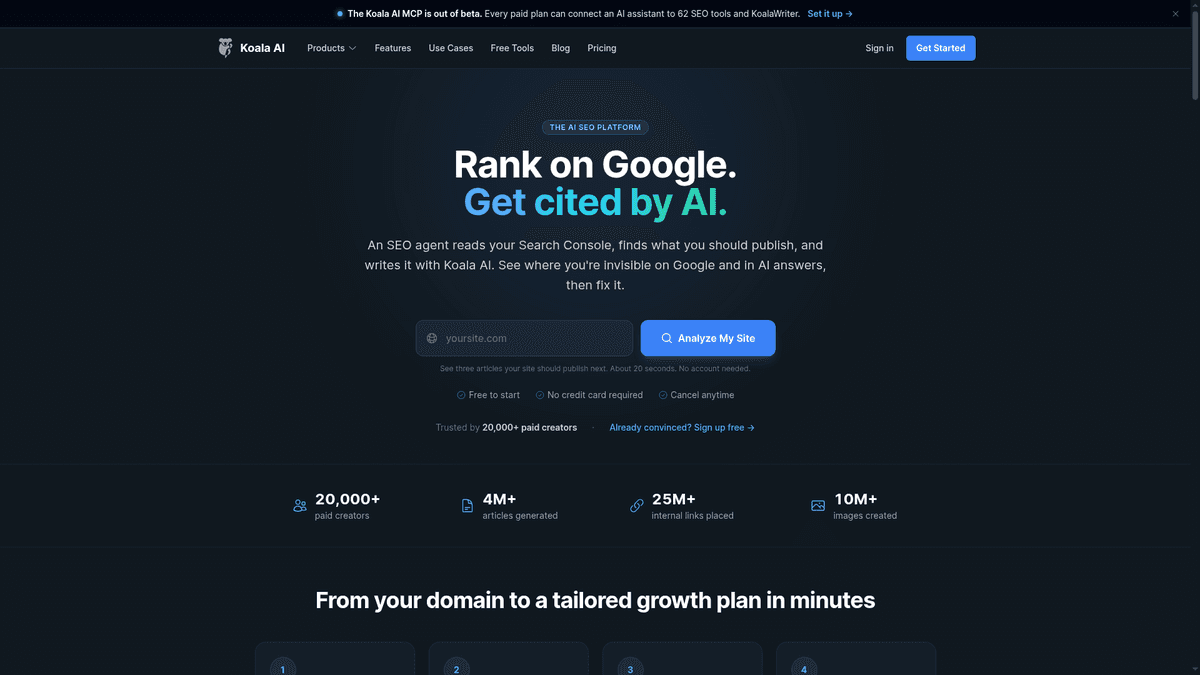
With Koala Writer, you choose the topic, shape the outline and edit the result before publishing. It works well when you know what to write but dread starting from a blank page.
If you publish a few posts a month and add original examples to each one, that control is valuable. You still have to choose and review every article. If that work is becoming a burden, compare other Koala Writer alternatives.
6. SEOWriting.ai
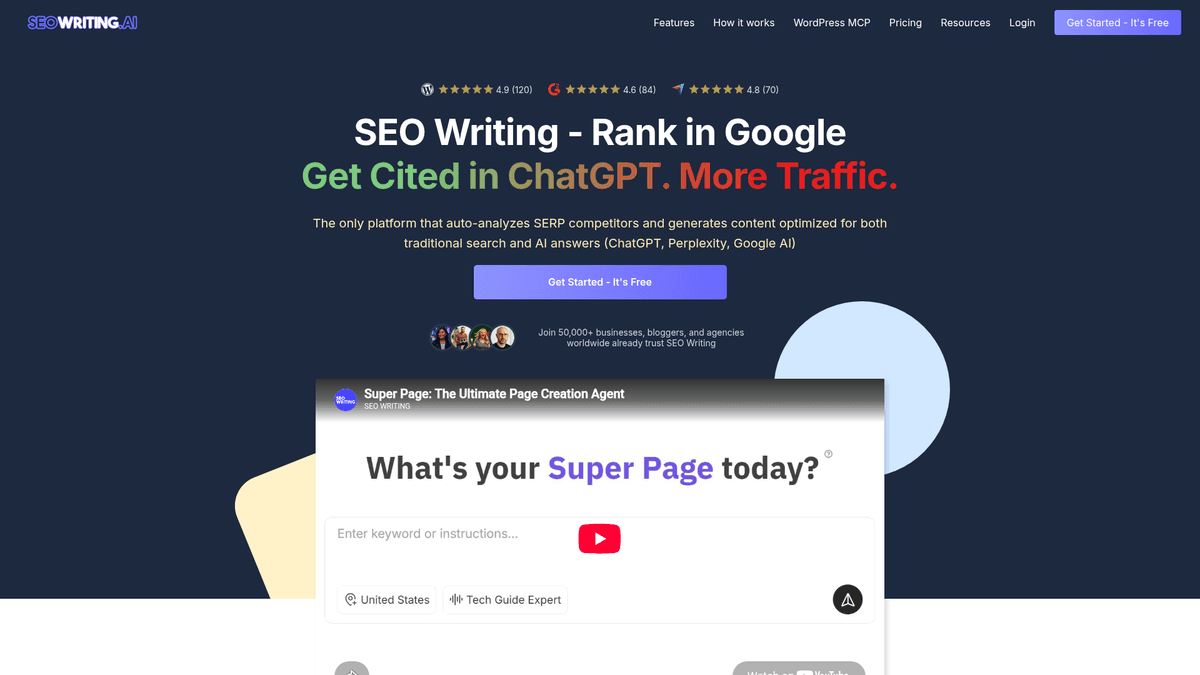
SEOWriting.ai can help a lean team produce a batch of SEO drafts. That backlog becomes a problem when several pages answer the same question in slightly different words.
Group overlapping keywords into one useful page before generating drafts. Tell the tool which product experience to draw on and review the copy for factual errors. You need a clear brief and time to review it; this is a weaker choice if you want someone else to handle strategy and publication.
7. Autoblogging.ai
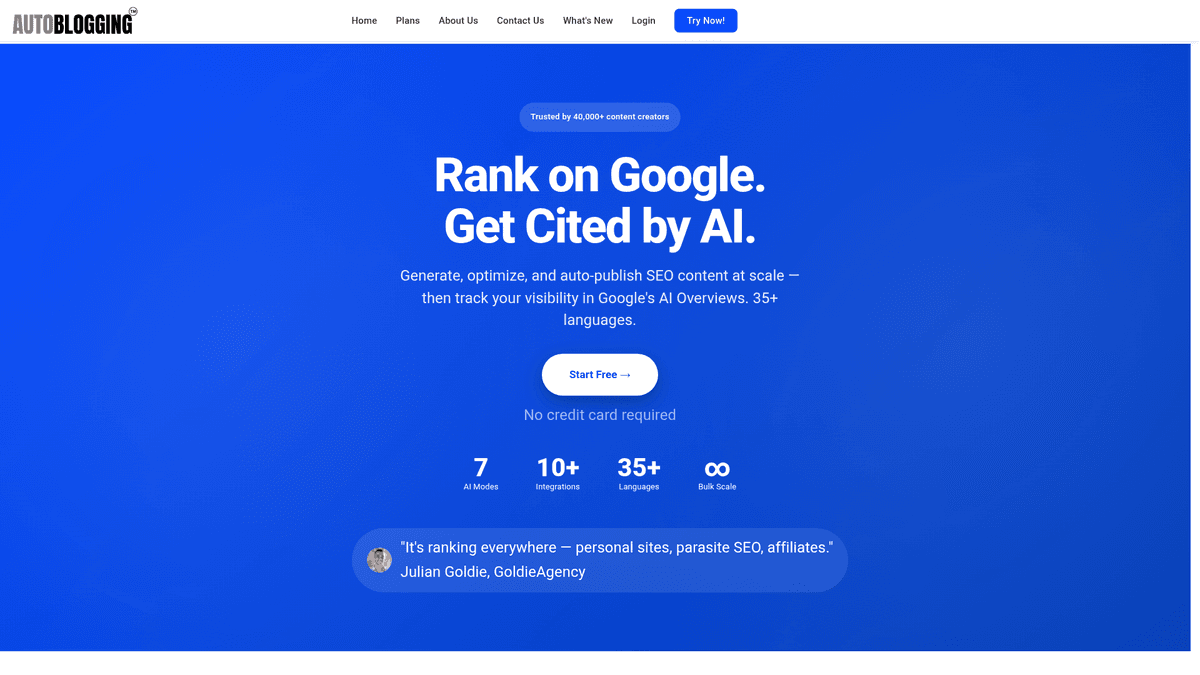
Autoblogging.ai makes article production repeatable, which may suit a site with many straightforward informational topics. If every page needs original product screenshots or a founder’s opinion, expect to spend more time on edits.
You also need enough distinct topics and a way to maintain the published pages. A backlog of drafts will not bring qualified visitors on its own. Reserve time for editorial checks.
8. Search Atlas
Search Atlas brings content work alongside SEO analysis. If your team investigates pages, keywords and site performance as part of its writing process, a broader platform may fit. Our Search Atlas alternatives comparison looks at other ways to assemble that toolkit.
A solo founder who wants the next post written and shipped may find the extra tools burdensome. Before you buy, name the person who will use the SEO data and the decision it will inform.
9. Writesonic
Writesonic suits a team that writes blog posts alongside other marketing copy. You can steer its inputs and edit the results.
That range helps when you need to carry the same product message across channels. For a daily SEO calendar and hands-off publishing, compare the steps you would still do yourself. Writesonic gives you a broad content tool; your team still needs to own the blog strategy.
How to choose without buying the wrong workflow
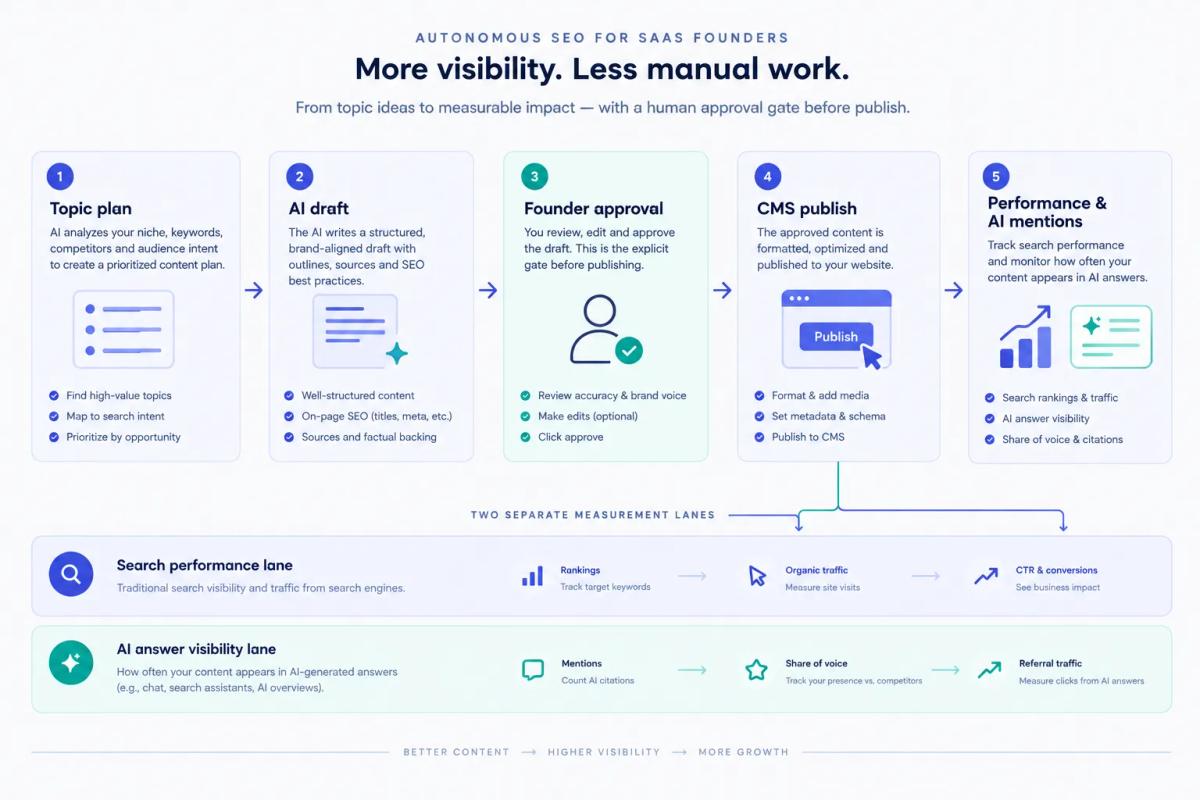
Decide which posts need approval. An engineer should read claims about integrations or security; the person who owns customer stories should sign off on outcomes. A drafting tool does not know your unpublished evidence. If you want automatic publishing, define which kinds of pages can go live without that review.
Keep a separate plan for measurement. Can you see which topics the tool picked, which pages it published and what happened next? Search Console shows search queries, clicks and page performance in Google. AI-powered writing tools, rank tracking and AI-mention tracking do different jobs. If prompt monitoring needs its own tool, our AI visibility tools overview can help you weigh that purchase.
Count the hours you keep spending. A low subscription can leave someone researching topics, rewriting drafts, making images and uploading posts. More automation saves time only if corrections do not eat up those hours. The included article count tells you little about that.
For a small pilot, use a high-intent comparison, a practical how-to and a question you have heard from customers. Give each tool the same business context. Read the drafts for accurate, useful product detail instead of rewarding the longest one.
GEO visibility is a separate decision
Generative engine optimization, or GEO, is about making your pages understandable and useful to AI answer systems. Define terms clearly, give specific examples, cite your sources and answer the question a buyer asked. You can do all of that and still receive no citation.
"Users clicked a link in an AI summary on 1% of visits to pages with a summary." - Pew Research Center
Pew drew that figure from 68,879 Google searches. An impression or citation does not tell you whether someone visited your site. Search Console’s AI-feature reporting helps you see visibility in Google AI features; your analytics tell you about visits.
A tool may help you write for AI-generated answers without measuring whether your brand appears in them. If visibility matters to your board or sales team, you need to know which prompts mention you and which other brands appear there. A Google ranking report will not answer that question. RankSpot targets search and AI answers and includes AI prompt tracking; keep that visibility data separate from visits and sales.
Verdict
Have an editor for every piece? Surfer and Frase give that person more control. Koala Writer works for individual drafts; SEOWriting.ai, Autoblogging.ai and Outrank.so are worth a look when you need batches. Search Atlas fits a team doing broader SEO work, while Writesonic serves a team writing across marketing formats.
If founder time is scarce, start with RankSpot. It takes on the research-to-publish work that draws people to SEObot, adds an approval queue, and tracks AI visibility alongside content production. Try the first three articles. The topics, accuracy and time you spend editing them will tell you whether to keep the schedule running.
FAQ
Which AI tool is best for SEO?
It depends on the work you need to remove. RankSpot is a fit for an automated research-to-publish workflow; Surfer suits editors who want hands-on optimization; Search Atlas suits teams needing a broader SEO toolkit. Choose based on who will approve and maintain the published content.
Which AI agent is best for SEO?
For a founder who wants regular blog production, compare how the agent selects topics, writes drafts and publishes to your CMS. RankSpot is geared toward that end-to-end job. If you need to write and optimize every piece yourself, an editor-led tool may fit better than an autonomous agent.
Can ChatGPT write SEO content?
Yes, it can help draft and revise an article, but you still need a topic plan, source checks, editorial judgment and a way to publish and measure results. A dedicated content workflow reduces that manual coordination. Neither a draft nor a citation-ready format guarantees rankings or mentions in AI answers.