Looking for BlogPilot AI alternatives? Perhaps the drafts are fine, but you still spend hours picking keywords, fixing pages and moving posts into your CMS. I would start with RankSpot if I wanted that SEO workflow handled from research to publication. If I already had a writer and wanted to improve each draft, I would look at Surfer SEO or Frase.
Two similarly named products can cause a mix-up here: I mean BlogPilot at blogpilot.com, not blogpilot.ai. Their integrations and features should not be treated as the same product's. The options below range from full automation to editing and writing assistance.
BlogPilot AI alternatives at a glance
Tool | Best fit | What you gain | Main trade-off |
|---|---|---|---|
RankSpot | Founders who want research through publishing handled | Planned SEO and GEO content, images, CMS publishing | Less useful if you only need a manual draft editor |
Surfer SEO | Editors improving individual pages | On-page content guidance | Requires an editorial and publishing workflow |
Frase | Teams building research-led briefs and drafts | Research, outlining and optimization in one workspace | You still own the wider publishing process |
Koala Writer | Bloggers who need long-form first drafts | Fast article generation | Fact-checking and performance measurement remain your job |
RightBlogger | Solo bloggers needing a broader writing toolkit | Multiple blogging and content tools | Broad tooling may be more than you need for one focused task |
SEOWriting.ai | Teams producing SEO-oriented articles in batches | Bulk-friendly article creation | Volume needs careful editorial control |
Autoblogging.ai | Operators prioritizing article throughput | Automated generation | Less appropriate for hands-on, nuanced editing |
Jasper | Teams writing beyond the blog | Brand-voice and campaign writing | SEO planning and measurement need other tools |
I would pay attention to the work left on my desk after the draft arrives. Who chooses the next topic? Who adds links and images, publishes the post and checks whether it brought in anyone?
1. RankSpot: for a hands-off SEO and GEO publishing pipeline
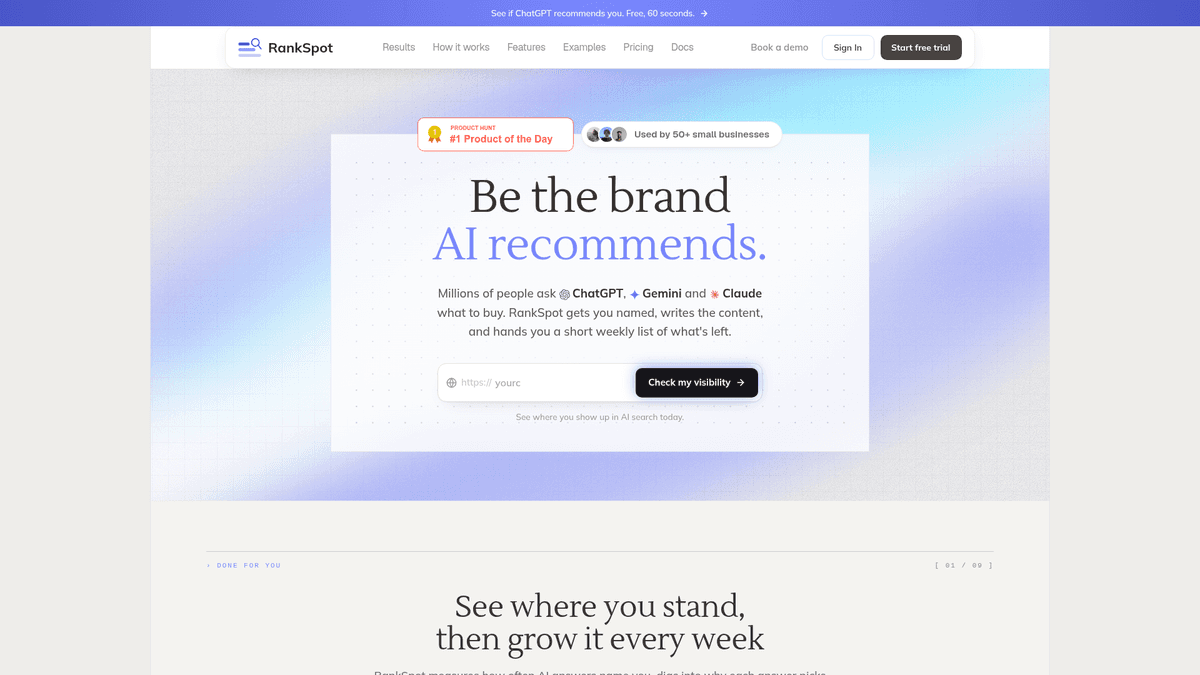
RankSpot is my first pick if the team cannot spare an afternoon for every article. Give it your site and it learns your niche and competitors, finds keyword opportunities, puts together a 30-day content plan, creates long-form posts and branded visuals, then publishes to your blog. The first three articles are free without a credit card. You can keep publishing without juggling separate tools for research, writing, images and CMS delivery.
RankSpot also formats headings, tables, quotes and internal links. Its content targets conventional search and AI answers, and it surfaces Reddit and forum conversations where prospects ask questions. It publishes to WordPress, Webflow, Wix, Shopify, Framer and Ghost.
If topic selection is where you stall, start with a framework for finding high-intent keywords before you automate the calendar.
For founders and lean teams, that saves the handoffs between tools. If you write every paragraph yourself and only want a content score, use a dedicated optimization editor instead. GEO-friendly writing cannot guarantee a citation in an AI answer.
2. Surfer SEO: for improving a draft before it goes live

Surfer SEO works best when you already have a writer and a publishing process. Its strength is page-level optimization: turn a target query into a content brief, use its content editor to shape the draft, and make deliberate revisions before sending the post to your CMS. It also offers AI-assisted writing.
Surfer gives an editor a concrete way to fix a weak outline or thin on-page coverage. You will still need someone to choose next month’s topics and get those posts published.
For the feature-by-feature decision, see RankSpot's breakdown of Surfer SEO alternatives.
It suits content teams polishing important articles. Do not read an optimization score as a rank tracker or proof of traffic; the editor still makes the call on the final draft.
3. Frase: for research-led briefs and optimization
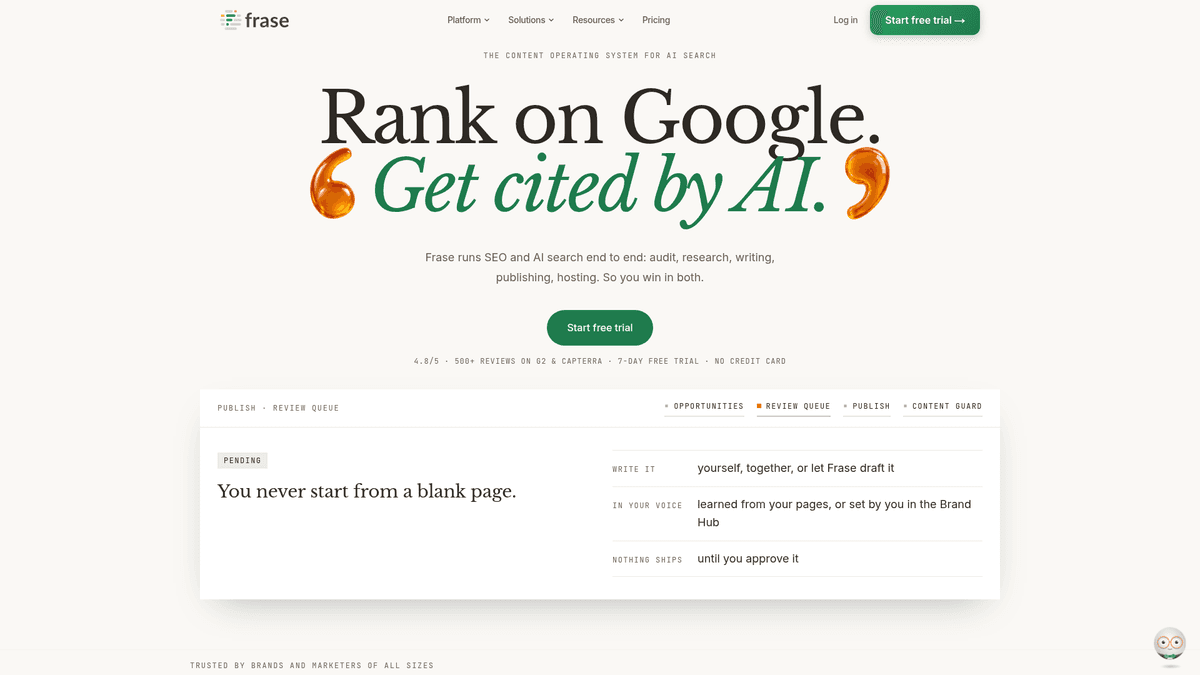
Frase fits the team that spends too long researching a topic before anyone writes. Research, outlines, drafting and content optimization live in one workspace, with an emphasis on search and AI answer engines. The researcher and writer can work from the same brief.
I would use it with a team prepared to review sources and edit the output. You still need someone to check facts, add brand examples, set the publishing cadence and measure results.
It gives a small editorial team a structured research-to-draft workflow. It does not take over the entire content operation.
4. Koala Writer: for getting a long-form draft started quickly
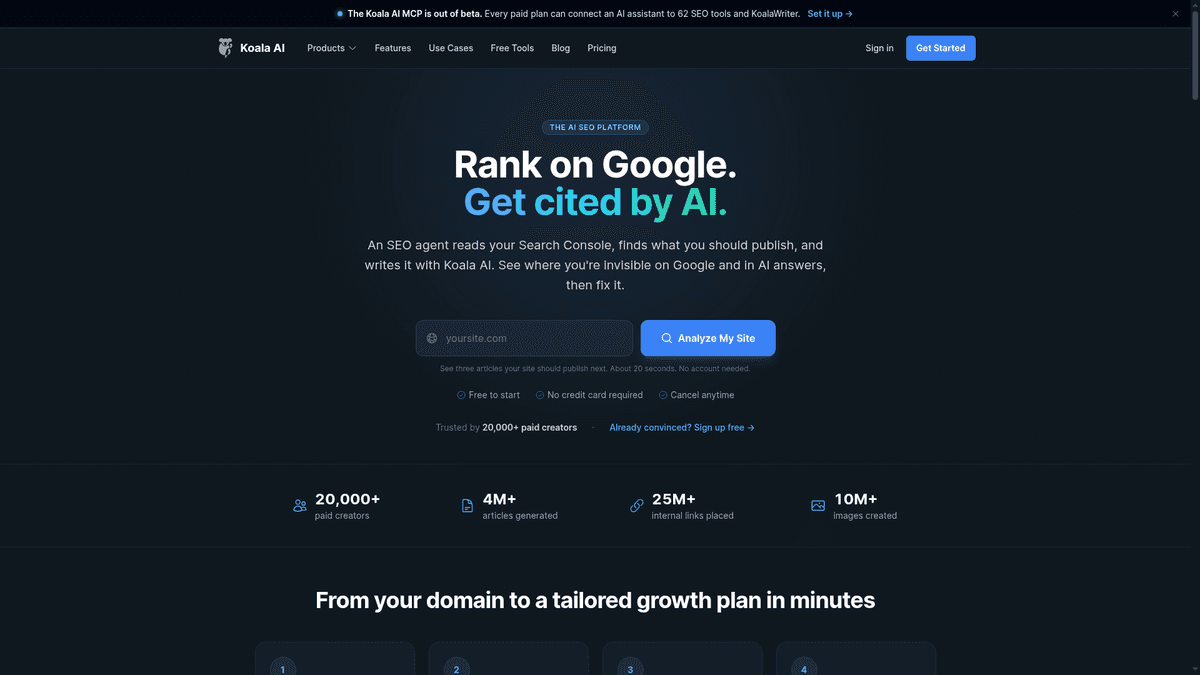
Koala Writer generates formatted, long-form blog posts with minimal prompting. If your topics are settled and the draft backlog keeps growing, that focus is useful. You still need your own topic strategy.
Before a post goes live, I would still check product claims, replace generic examples with experience from the business, and make sure the article answers the query. A fast first draft saves time only if the edits do not recreate the whole writing job.
The Koala Writer alternatives comparison gives you other paths if fast drafting alone is not enough.
Bloggers with an established content plan can use it to move faster. They will need another way to learn which posts bring qualified visitors.
5. RightBlogger: for solo bloggers juggling many content tasks

RightBlogger offers more than an article generator. A solo blogger can use it for posts and the related content and SEO tasks that fill up a workday, rather than opening a different tool for each small job.
If deeper measurement prompted your switch from BlogPilot, decide what you want to see: published output, article improvements or the business those articles bring in.
I would choose it for a blogger who wants a versatile assistant throughout the week. Its writing utilities do not amount to a full SEO strategy or dedicated rank-tracking suite.
6. SEOWriting.ai: for SEO articles produced in batches
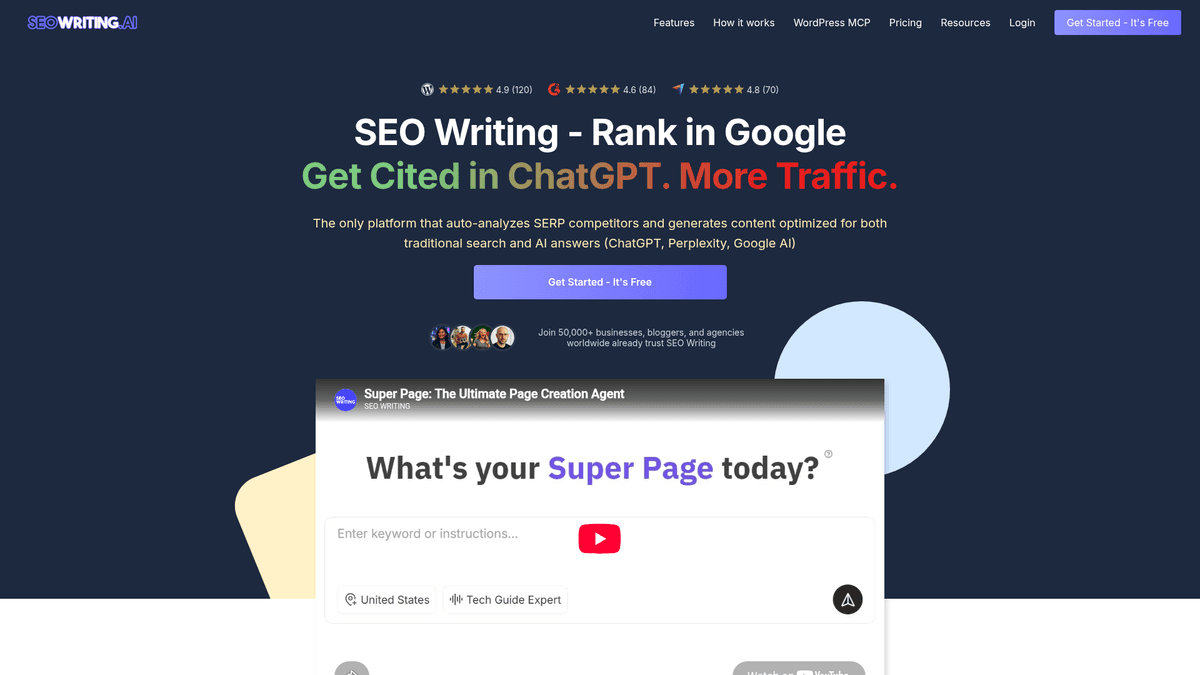
SEOWriting.ai fits a queue of similar article assignments where first drafts take too long. Its SEO-oriented, batch-friendly workflow helps a publisher work through multiple topics.
Before scheduling a batch, give each page a distinct purpose. I would assign one primary reader question per post, then check facts and overlap.
Bring a keyword plan and an editor who can review the output. Batch creation will not prioritize the work or catch mistakes for you.
7. Autoblogging.ai: for high-volume article generation
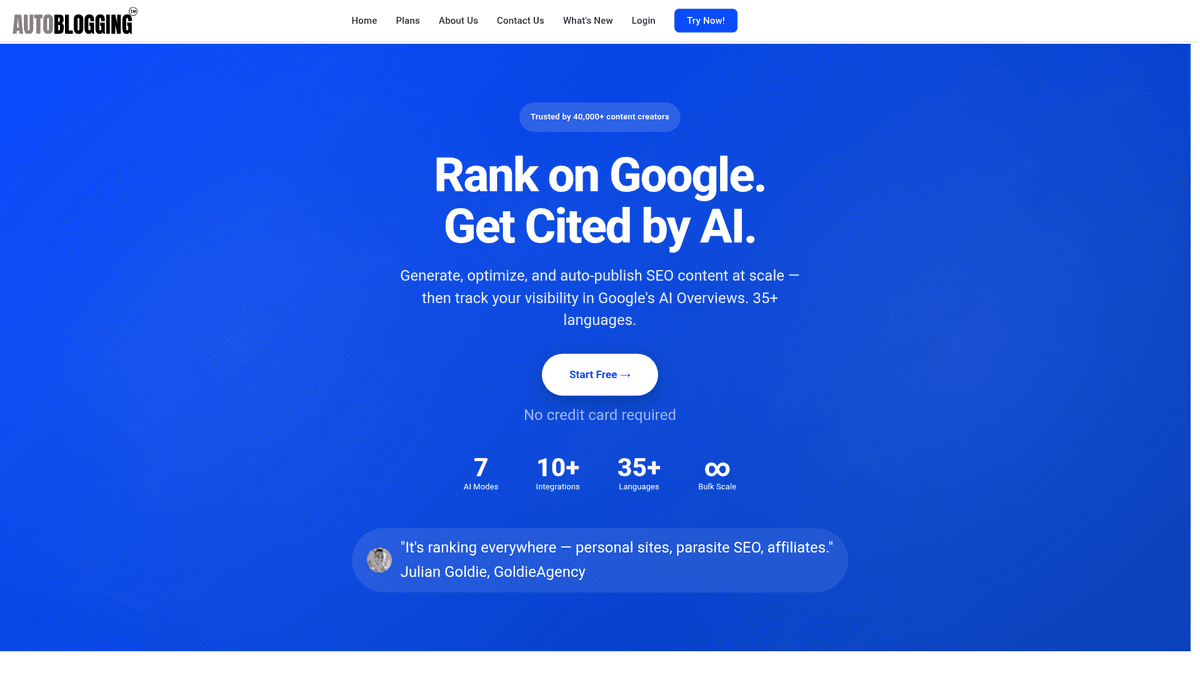
Autoblogging.ai emphasizes throughput. An operator with a settled topic list can use it to cut manual drafting. Posts that need interviews, product evidence or a distinctive point of view still demand substantial editing.
Give the tool a sensible topic list and review accuracy and internal links. You still decide whether each page deserves a place on your site.
It fits publishers with repeatable formats and a review process. More output on its own says nothing about organic performance.
8. Jasper: for brand-led writing across channels

Jasper earns its place when your team writes blog posts alongside email, ads and launch materials. Its brand-voice and campaign workflows help keep that AI content coordinated. I would choose it if consistent brand tone matters more to you than automated SEO publishing.
For a search-led blog, you still need to pick queries, assess opportunities, build briefs and see which pages actually perform. Jasper can help with the words, but the surrounding SEO operation needs an owner.
Marketing teams writing across channels can use Jasper as their writing layer. You will still need other tools for end-to-end SEO publishing and rank tracking.
How I would choose a BlogPilot replacement

Pick the task you keep postponing:
If planning stalls, use a workflow that finds opportunities and puts them on a schedule. A writer waiting for your prompts will leave that job with you.
If drafts take too much editing, try a brief and optimization workspace such as Surfer SEO or Frase. Have your editor finish a real post in it.
If publishing takes forever, look for a pipeline that connects to your CMS and handles formatting, links and visuals.
If you cannot tell what worked, separate production from measurement. Search and analytics data show impressions, clicks and conversions. You may also need position tracking or AI-answer monitoring.
For a trial, choose one high-intent topic and one informational topic. Time each post from idea to publication, note how many facts you corrected, and read the finished page as a buyer would. Follow both pages after they go live. An on-page score tells you nothing about leads. AI writers and auto-blog tools speed up content generation, but I would keep the one that cuts the work my team spends the most time on.
If you need more than a writer, the broader set of SEO automation tools is worth considering before you commit to a stack.
GEO bonus: AI visibility is a separate question
GEO stands for generative engine optimization. You want an AI-generated answer to have a reason to reference your page: a clear answer, evidence and accurate product details a reader can trace back to their source. RankSpot includes search and AI-answer considerations in its content workflow; Frase also addresses both in its research and optimization tools. You still need live SEO performance data from your site.
I would track AI mentions separately from writing for AI answers. Keep a short list of buyer questions, record whether the answers cite your site, and compare those observations with search clicks and inquiries over time. Citations vary by question and model; a writing tool cannot promise them. If you need reporting, ask to see the visibility dashboard before buying a generation tool.
"Users clicked on a link in an AI summary in just 1% of all visits to pages with such a summary." - Pew Research Center
Pew measured Google AI summaries, not every AI assistant. The figure is one reason I would measure citations, visits and business outcomes separately. The AI visibility tools overview focuses on that measurement job.
The verdict
If I were running a small team and wanted to get from an opportunity to a published post without stitching together four tools, I would try RankSpot first. Planning, writing, images and CMS publishing all take time outside the draft, and it handles those jobs together. With a strong writer who needs better on-page briefs, I would pick Surfer SEO or Frase. For a wider brand campaign, I would use Jasper as the writing layer.
Keep an editor responsible for factual claims, whichever tool you choose, and measure what the posts bring back. RankSpot is worth trying first if your biggest cost is the work between topic selection and publication.
FAQ
Which is the best AI for blog writing?
It depends on what you need done. RankSpot fits a team that wants planning through publishing handled, while Koala Writer focuses on faster drafts and Surfer SEO helps an editor optimize an article.
What is the best AI blog?
A useful AI blogging setup publishes accurate content that serves your readers, rather than just producing posts quickly. For hands-off SEO and GEO production, RankSpot is one option; for a hands-on editorial workflow, pair a writer with an optimization tool and your CMS.
Which free AI is best for article writing?
A free writing tool may help you create a first draft, but it will not necessarily handle research, fact checks, optimization or publishing. RankSpot offers a way to try initial articles without a credit card; judge the finished post and the time you spent editing it, not just the generated text.