The best AutoSEO alternatives save you time without leaving you wondering what went live. AutoSEO's service-style arrangement suits owners who want to hand off the job. If you want to choose topics in a self-serve dashboard and follow each post through publication, look at software instead.
I would start with RankSpot for a single planning-to-publishing workflow. A writing tool makes more sense when you want to pick and edit every topic; a research platform suits a team that already has writers.
This video shows how someone can build an automated blogging workflow:
What to compare before leaving AutoSEO
“Automated SEO” can mean a draft generator or a system that picks topics and publishes finished posts. List the tasks eating up your week before comparing subscriptions.
Our guide to SEO automation tools breaks down those different kinds of automation.
Question | Why it matters |
|---|---|
Who picks the topics? | A writing tool still leaves you responsible for keyword research and prioritization. |
Who reviews the draft? | An approval step gives you editorial control; automatic publishing saves more time but needs clear guardrails. |
Does it publish to your site? | A draft in a dashboard is not a live post. |
How does it handle AI discovery? | Search traffic and being mentioned in AI answers are related, but they are not the same outcome. |
Can you see the work? | Ask to see topic choices, drafts, links, and published URLs, not just a promise of “automation.” |
What does it measure afterward? | Google Search Console can show queries and clicks; rank tracking can show movement for selected search terms. Neither tells you whether a draft is accurate. |
You still own factual accuracy, product positioning, and the decision to publish. Consider how API access, a content editor, or Google Docs exports would fit the way your team works. A content brief should also name the reader and the question the page needs to answer.
8 AutoSEO alternatives, by the job you need done
Tool | Best fit | Where you still do work |
|---|---|---|
RankSpot | Founders who want an end-to-end content workflow | Review positioning and factual claims |
Outrank.so | Teams that want a content-focused SEO workflow | Review drafts and publishing setup |
Autoblogging.ai | High-volume first drafts | Topic selection and quality control |
RightBlogger | Solo operators who want writing assistance | Planning and editorial review |
SEObot | Founders exploring hands-off SEO content | Editorial oversight and brand accuracy |
Koala Writer | Writers who want control over article creation | Content strategy and final editing |
Search Atlas | Teams that need a wider SEO toolkit | Operating a broader platform |
SE Ranking | Teams that need research and tracking | Turning insights into published content |
Maybe you know what to write but never find time to upload it. Maybe you publish regularly but have no idea which topics bring buyers. Buy for the task that is holding you back.
1. RankSpot: for a hands-off content pipeline
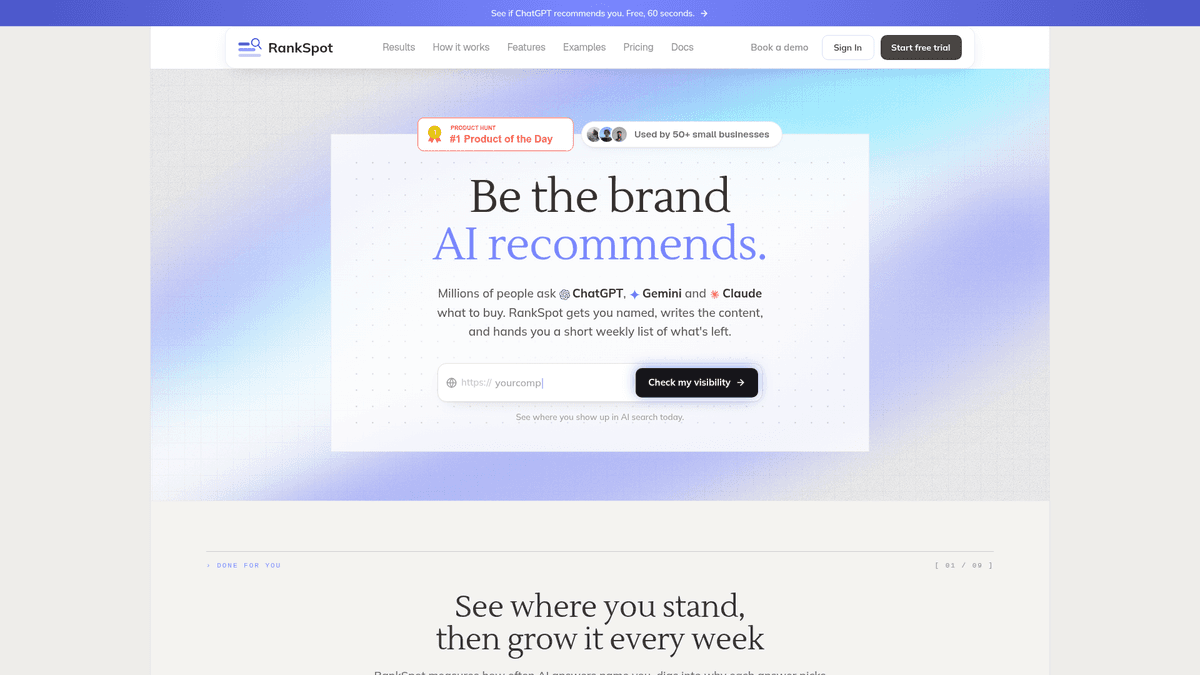
When blog posts keep stalling at research or uploading, I would start with RankSpot. It handles topic planning, keyword and competitor analysis, article creation, on-page formatting, and daily publishing in one workflow. Its articles target conventional search and AI answers.
You can move from topic to live post without juggling a keyword tool, a writer, and a CMS upload. RankSpot connects to WordPress, Webflow, Wix, Shopify, Framer, and Ghost. It also surfaces forum conversations where potential customers ask questions. Those discussions can inform a post, though no tool can promise an AI assistant will cite it.
That workflow frees a lean team from much of the recurring publishing work. I would still review product details, sensitive claims, and voice before a post goes live.
2. Outrank.so: for a content-led SEO workflow
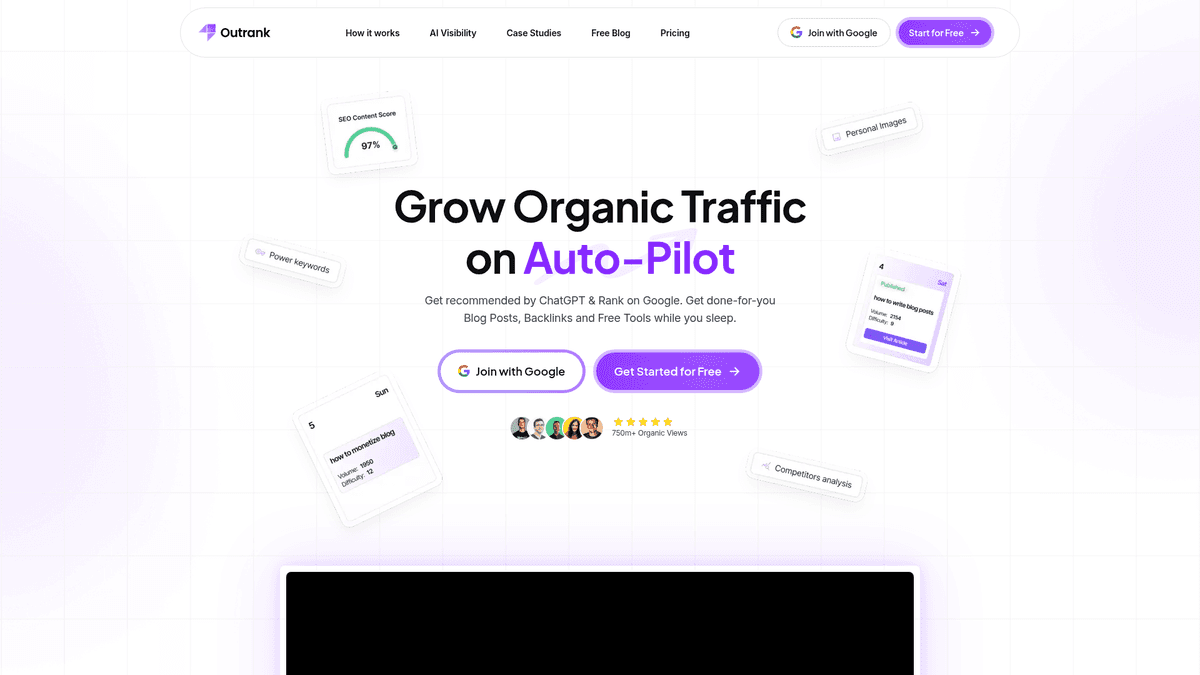
Outrank.so suits teams that want a repeatable SEO article workflow and have someone to steer topics and judge the drafts.
Before you increase volume, decide what counts as an acceptable example, claim, and link. The output should answer a question your customer would ask, in terms that match your product.
If your sticking point is picking topics, start with how to find competitor keywords before you automate the writing.
This can work well for a small team with an editor. You remain responsible for positioning and for catching descriptions that miss how your product works.
3. Autoblogging.ai: for generating drafts at volume
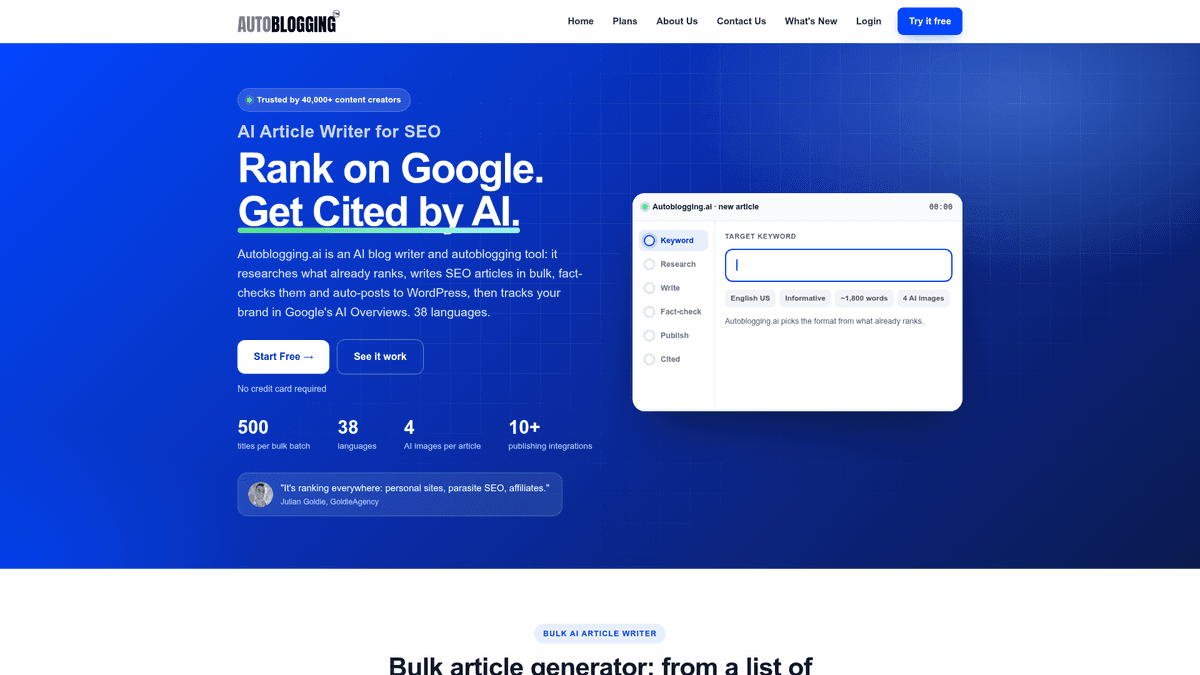
Have more topics than writing time? Autoblogging.ai can produce drafts faster, leaving you to decide which pieces belong on your site.
An ecommerce catalog or a long list of customer questions can justify more drafts. Repetitive pages cannot. Give each one a clear reader and purpose, then review its facts before publishing.
It suits operators who can edit a stack of drafts. Budget time to choose topics and catch invented details.
4. RightBlogger: for a solo operator who wants help writing
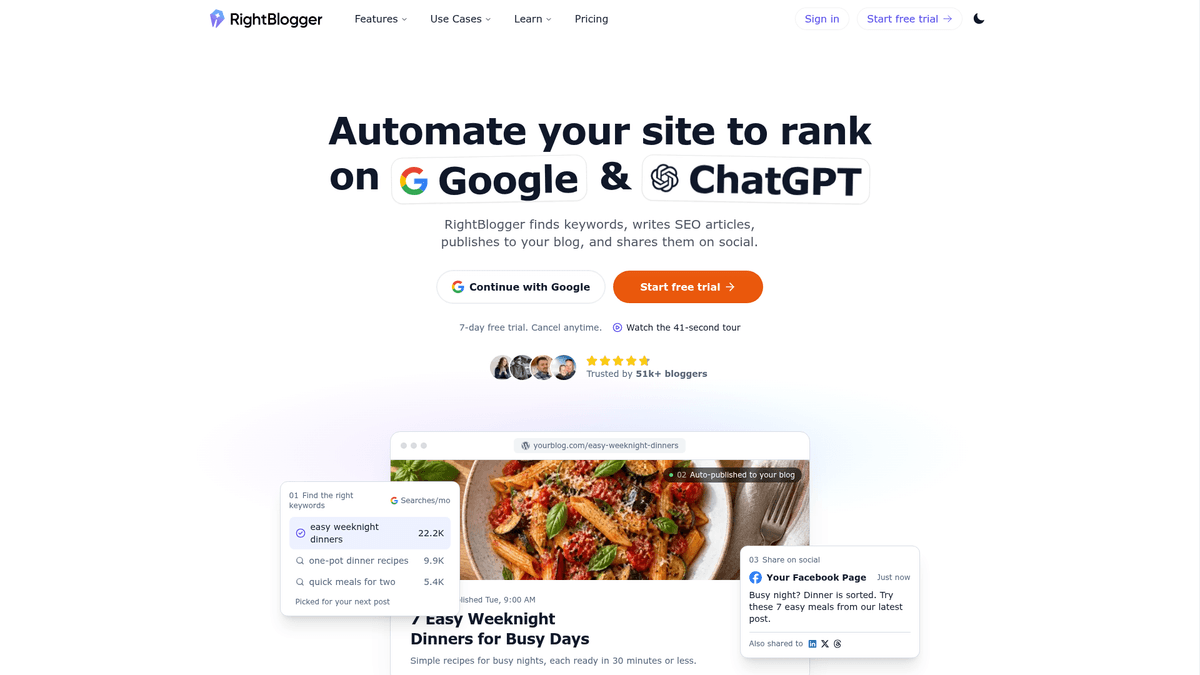
RightBlogger is useful when you know what to say but struggle to get it onto the page. You steer the message as it helps turn an idea into a structured post.
I would use it when I know the customer question and have original examples to feed into a draft. I would also expect to add the specific product details that a writing assistant cannot supply on its own.
You stay in the editor's chair. That means picking topics and managing publication yourself.
5. SEObot: for a more automated publishing approach
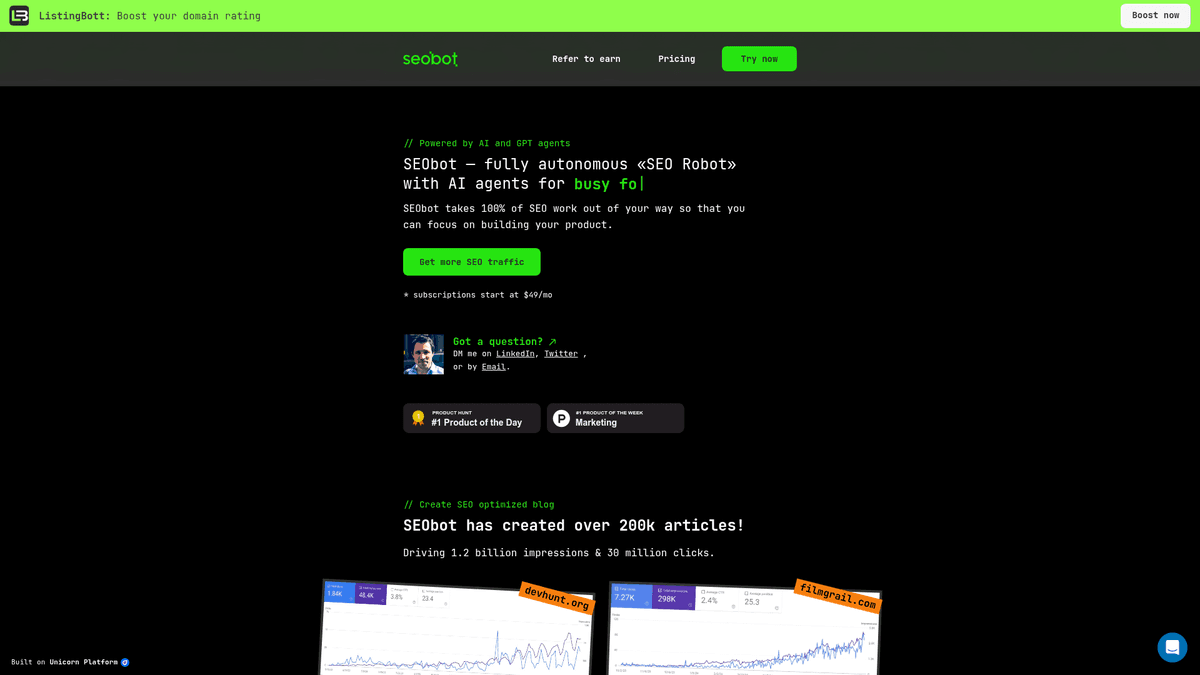
SEObot is worth a look if producing content keeps swallowing your week. Decide how much editorial say you need over a page before it goes live.
You might give a routine educational post a light review. Pricing, compliance, and customer-result claims deserve human approval. Speed is little help if a reader finds an error in the finished page.
For a founder trying to reduce content chores, that approach can help. Sensitive subjects still need a tighter editorial gate.
6. Koala Writer: for controlled article production
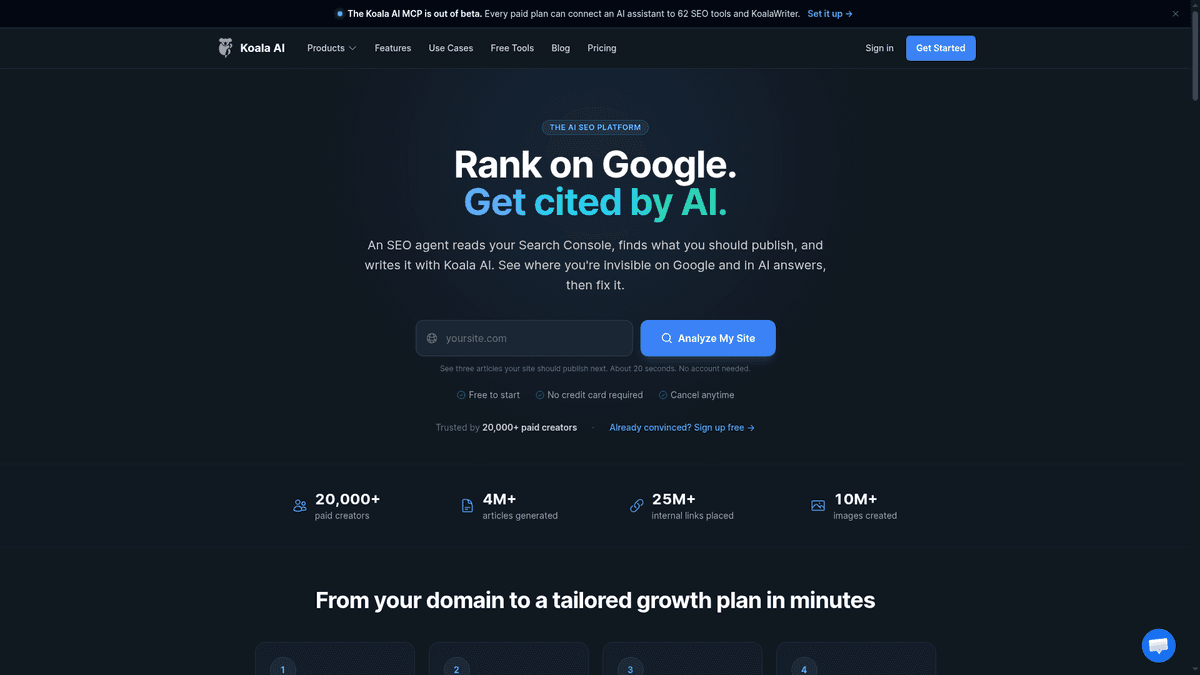
With Koala Writer, you choose the assignment and shape the final long-form post. You stay in charge of the content strategy.
If you have a list of customer questions and original examples ready, you may want a faster first draft rather than another tool that picks topics for you.
It fits a marketer with a topic plan and time to edit. You make the final call on publication.
7. Search Atlas: for a broader SEO operation
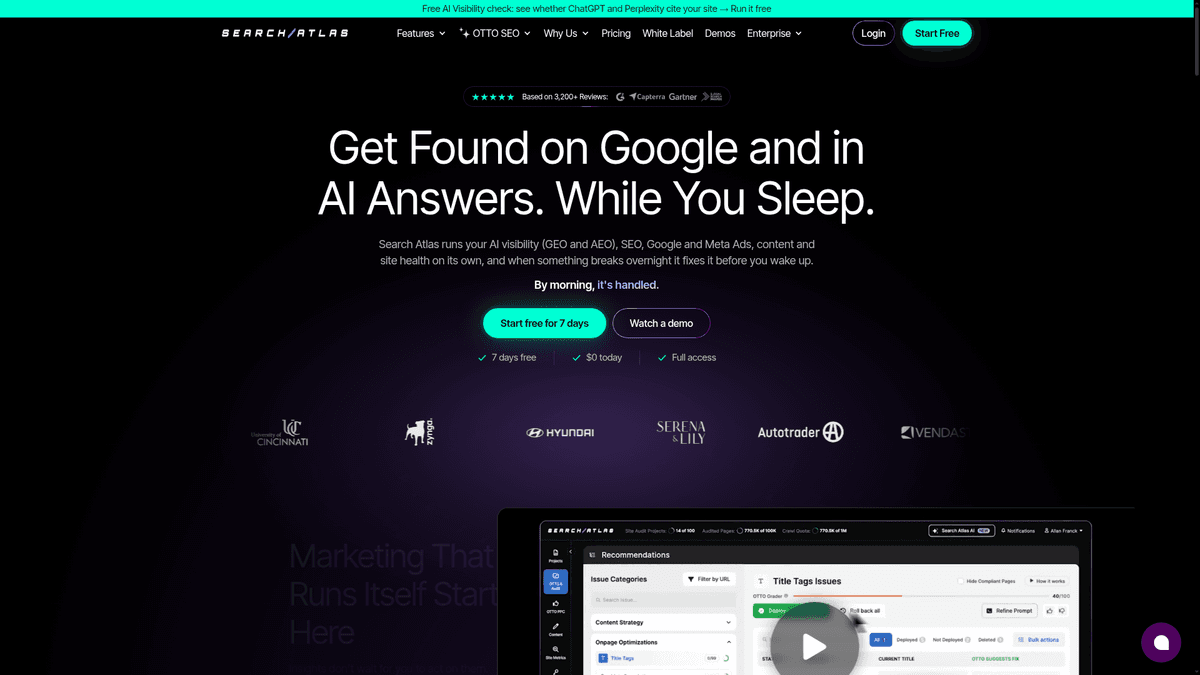
Search Atlas is a broader SEO toolkit for research and optimization. I would consider it when the team has SEO work beyond article production.
If you have someone to use that data, the breadth could pay off. A founder who needs blog posts shipped may instead end up managing another dashboard.
Give someone ownership of the platform and of turning its findings into published pages. Otherwise, the extra features could sit unused.
8. SE Ranking: for research, tracking, and team visibility
SE Ranking handles SEO research and performance work, including keyword tracking and competitor analysis. It is most useful when someone can turn those findings into briefs or updates to existing pages.
Ask yourself whether better visibility into search performance would change what you publish next week. If your calendar is empty because no one has time to write, a production-focused tool tackles that problem sooner.
Make room for ongoing analysis and a separate process to turn findings into finished articles.
GEO bonus: treat AI visibility as a separate question
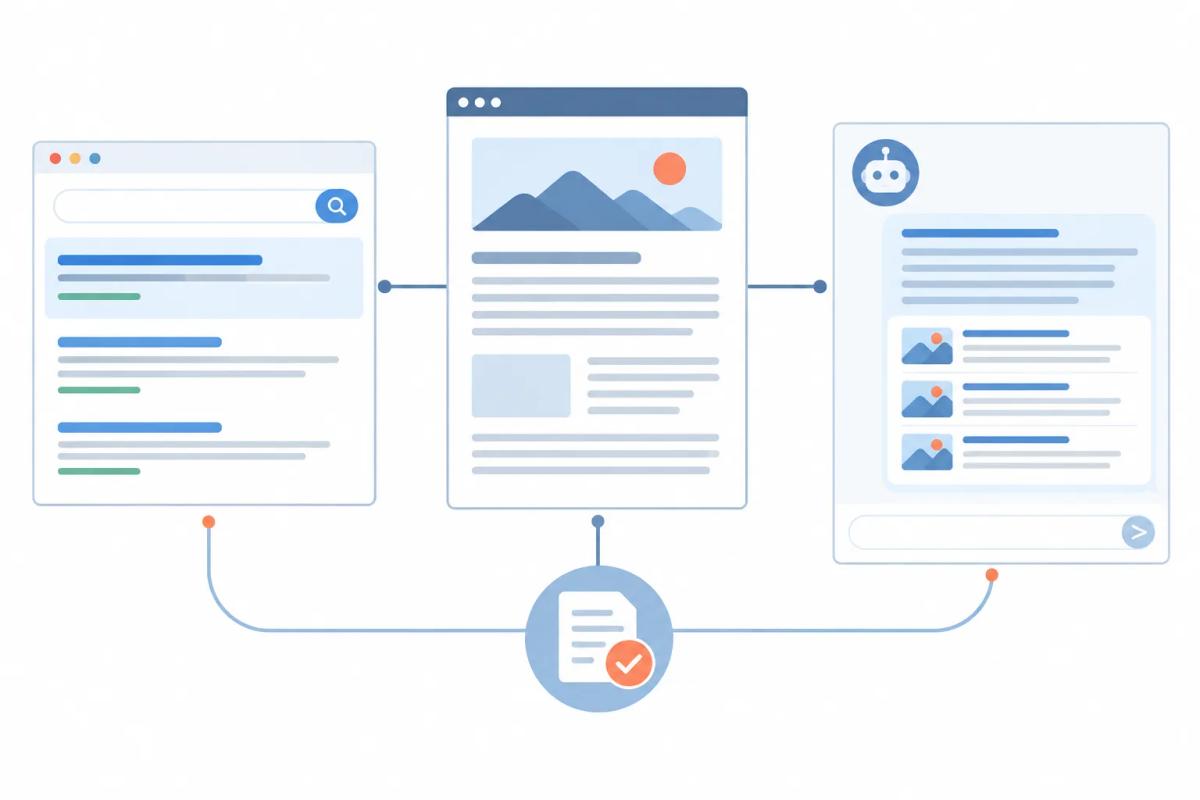
GEO stands for generative engine optimization. It aims to make your brand easier for AI answer tools to find, understand, and cite. Give those tools something solid to work with: product explanations a customer can use, direct answers, and evidence for important claims.
In a March 2025 sample, Pew Research Center found that people clicked a traditional search result after 8% of Google searches with an AI summary, versus 15% without one. For a small business, that is a reason to pay attention to how customers discover you beyond ordinary search results.
"People clicked a traditional result after 8% of searches with an AI summary, versus 15% without one." - Pew Research Center
For a closer look at measurement, see AI visibility tools and what they track.
For AI discovery, a tool might create clear-answer pages, surface questions in forums, or measure brand mentions in AI tools. Decide which of those jobs you need it to do.
No publisher controls which sources ChatGPT, Claude, or Gemini choose for every answer. Be wary of guaranteed-citation promises. Track whether customers find and mention the useful pages you publish.
What automation does not settle for you
Can I rely on AI SEO tools to follow SEO best practices automatically?
You can automate parts of page optimisation. An AI writing tool can suggest headings, draft a post, and add internal linking. It cannot know that a feature on your landing page changed yesterday unless you give it current information. Review AI-generated claims that could affect a buying decision.
For a new article, ask what the reader wants to do after reading. Write a content brief around that question. Then read the finished page to see whether it answers the question and sends readers to helpful pages on your site. If it repeats an existing page, consolidate the two. Google Search Console shows which queries bring people to your established pages; an on-page SEO score cannot tell you whether those people found an answer.
Are any of these tools useful for local SEO?
These tools can help you write local content. A local business might answer “Do you deliver to this area?” or explain how appointments work in a given city. The finished page needs your actual service area, terms, and first-hand details. Avoid churning out near-identical city pages.
If you need technical fixes, backlink analysis, or local listings, compare those functions on their own. Content tools handle a different job. Even a platform with AI content and rank tracking needs someone to decide which service pages matter most.
How I would choose in one afternoon

Name the blocked step. If nobody has time to plan and publish, start with an end-to-end system. If you already have a calendar, a writing tool may be enough. If you have writers but no measurement, prioritize research and tracking.
Run one real topic through the workflow. Pick a question a customer has asked you. Look at the proposed angle, factual claims, sources, formatting, and what it takes to get the piece onto your site.
Decide your approval rule. Auto-publish routine educational posts only if you are comfortable with the controls. Review product, legal, medical, and financial claims before they go live.
Judge the published page, not the dashboard. Can a reader understand the answer? Does it say something true and useful about your business? Is there a sensible next step?
A service model still makes sense when you want someone else to run the work. A self-serve product gives you more control over a repeatable publishing workflow.
If you still need a topic for that trial, find high-intent search terms tied to questions customers ask before they buy.
The verdict
If the blog keeps getting put off, I would try RankSpot first. It handles planning, writing, and publishing together, which helps when you have no time to coordinate three separate steps. Give it a real customer question, then read the resulting page before committing to a larger publishing cadence.
Already have a writer? Pick a research platform if you need visibility into performance, or a writing tool if drafts take too long. Keep your judgment in the process either way.
FAQ
What is SEO automation?
SEO automation uses software to reduce repetitive work such as finding topics, drafting articles, formatting pages, publishing, and monitoring performance. Tools automate different steps, so a draft generator and an end-to-end publishing system are not equivalent. You still need to oversee accuracy and business fit.
What are some good tools to use for SEO?
For hands-off content production, start with RankSpot or assess Outrank.so and SEObot. For writing with more direct editorial control, consider Koala Writer, RightBlogger, or Autoblogging.ai. For broader research and tracking, look at Search Atlas and SE Ranking.
What is new instead of SEO?
GEO adds AI answer visibility to the usual search conversation; it does not make useful website content unnecessary. Publish clear, accurate answers that customers can read and that AI tools can understand. Treat promises of guaranteed citations with caution.