If a Content Harmony brief still leaves you to draft, make images, and upload the post yourself, look for an alternative that handles the steps you struggle to finish. A founder shipping a weekly blog has different needs from an editor assigning work to twenty freelancers.
RankSpot fits founders who need research, writing, images, and publishing together. Frase helps a team that wants to keep writing in-house while speeding up briefs and first drafts. Surfer SEO and Clearscope focus on improving the draft as an editor works. If your team relies on Content Harmony's research-led briefs, you may have no reason to switch.
Why consider a Content Harmony alternative?
Content Harmony gives editors keyword reports, search intent research, briefs, and content optimization. An editor can study competitor outlines, assign a writer, and review the result. The workflow suits a staffed content team. A founder working alone still has to turn that brief into a published SEO content page.
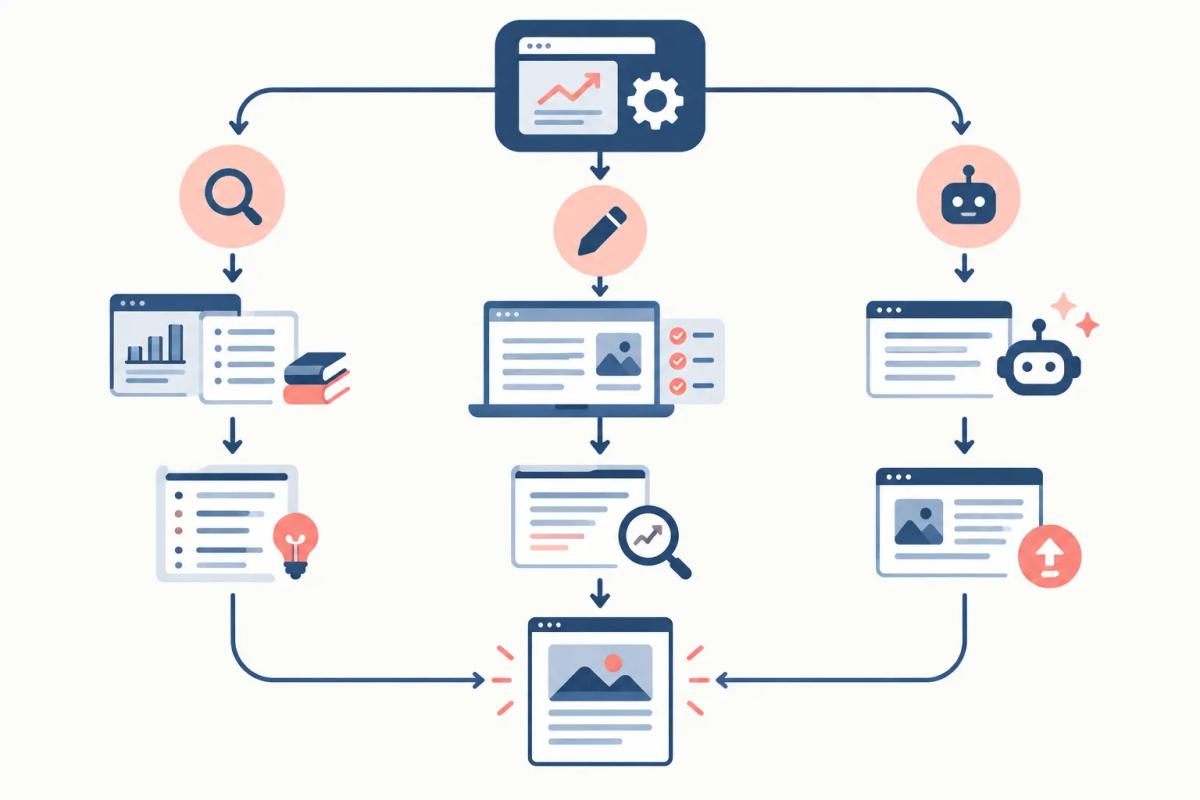
For a small team, content production adds up: research content, build briefs, turn them into drafts, find or create images, edit for accuracy, add internal links, upload, and assess content performance in Google or AI answers. A dedicated briefing platform can still be the right choice when those steps have clear owners. If you are the owner of every step, look for a tool that covers more of them.
Before paying for a replacement, decide what you need it to do:
Do you want better instructions for a human writer? Look at editorial tools and live optimizers.
Do you want a usable first draft? Compare AI writing limits, review workflows, and content quality, not just how fast a tool makes an outline.
Do you want the article actually published and its visibility understood? Prioritize CMS connections and distinguish AI-answer optimization from actual AI-visibility measurement.
Cost matters, too. An inexpensive brief tool can become an expensive process if you still pay separately for drafting, image creation, and publishing. Equally, paying for automation makes little sense if your team already has writers and mainly needs clean assignments. Start with finding high-intent keywords if you are building the workflow from scratch.
Content Harmony alternatives at a glance
Tool | Best fit | Where it helps most | Main limitation to weigh |
|---|---|---|---|
RankSpot | Founder or lean team needing regular published articles | Research to plan to draft to CMS publishing, with GEO-focused content | Less suited to an editor who wants to construct every brief by hand |
Surfer SEO | Writers improving pages as they work | Live on-page optimization and content guidance | You still need to own editorial judgment and the production process |
Frase | Small teams moving from briefs into AI drafts | Research, briefs, AI writing, and optimization | A generated draft still needs a careful subject-matter edit |
Clearscope | Editors working with human writers | Clean writing interface and topic guidance | Not a full production or technical SEO system |
MarketMuse | Teams planning a larger content library | Topic modeling and sitewide content strategy | More strategic overhead than a single-article workflow needs |
SE Ranking | Agencies that also need SEO operations | Research, monitoring, audits, and content tools | Content briefing is one part of a broader suite |
Scalenut | Teams prioritizing AI-assisted output | AI content creation and SEO/GEO workflow | Speed does not remove the need for editorial review |
NeuronWriter | Budget-conscious optimizers | SERP-driven writing and content scoring | Narrower fit for teams seeking hands-off publishing |
Dashword | Teams wanting straightforward briefs | Brief builder, optimization, and monitoring | Less strategic depth than larger platforms |
Orchly | Teams exploring SEO and GEO together | Combined search and AI-answer content positioning | Assess its workflow depth against your actual publishing needs |
The right choice depends on who does the work. A content marketing lead with a freelance bench may prefer the control of an optimizer. If you have no writers, the more urgent question is whether the post goes live without taking up your Sunday.
1. RankSpot: for founders who want articles published, not just briefed
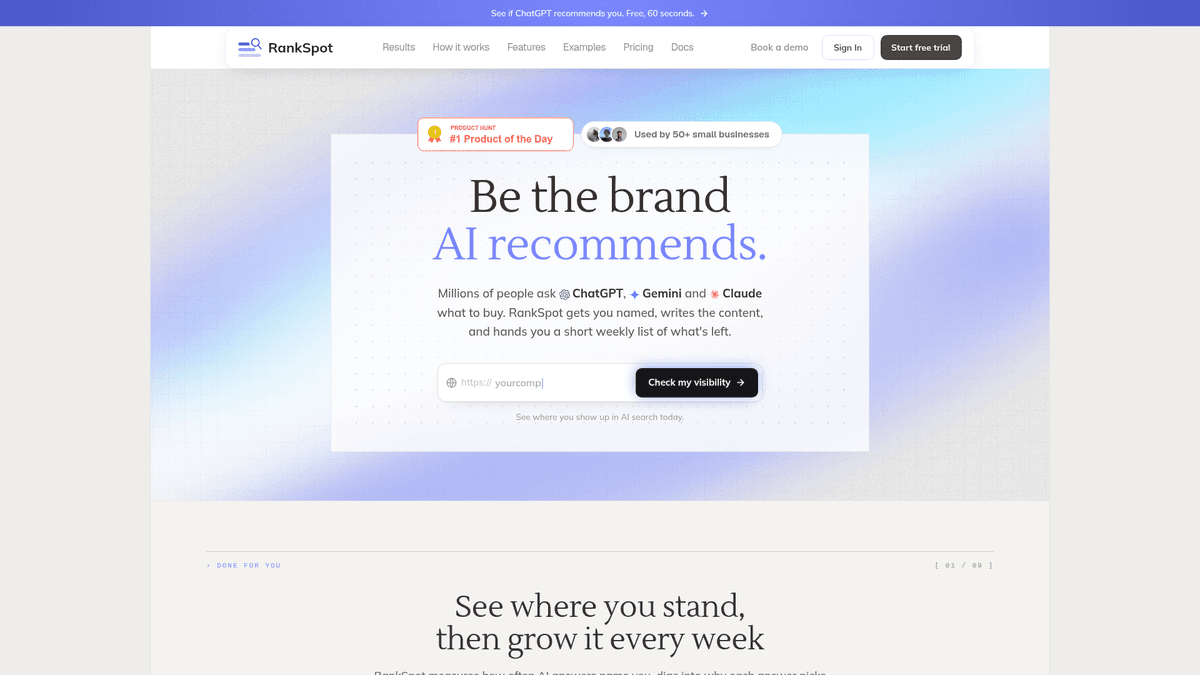
I would start here if I kept missing my publishing schedule. Give RankSpot a website URL and it learns the business and niche, identifies keyword opportunities, builds a 30-day plan, writes long-form articles, makes on-brand images, adds formatting and internal links, and publishes through CMS integrations. You get regular output without having to hand each brief to a writer.
Say you run a small SaaS company with ten bottom-of-funnel questions worth answering. A briefing tool leaves you with ten assignments. RankSpot prioritizes opportunities, produces the posts, and sends them to your blog, removing handoffs between a keyword tool, writer, designer, and publishing queue.
It also frames content for discovery in both traditional search and AI answers. That is useful when you want your brand to be understandable and citable in tools such as ChatGPT, Claude, and Gemini. GEO optimization is not the same as a promise of citations, though; no writing platform can guarantee an assistant will mention you. RankSpot also surfaces Reddit and forum conversations, a separate way to spot real questions your customers are asking.
Best fit: a founder, small marketing team, or agency-style operator who values a repeatable research-to-publish pipeline, direct CMS publishing, and AI-answer-oriented content. RankSpot supports WordPress, Webflow, Wix, Shopify, Framer, and Ghost, and offers the first three articles free without a credit card.
The tradeoff: if your team already has writers and wants to approve every SERP observation and brief detail before anyone drafts, a dedicated briefing tool may feel more natural. Automation saves work, but it does not replace the need to review product claims, examples, and your own brand voice before publication.
2. Surfer SEO: for live optimization while writing
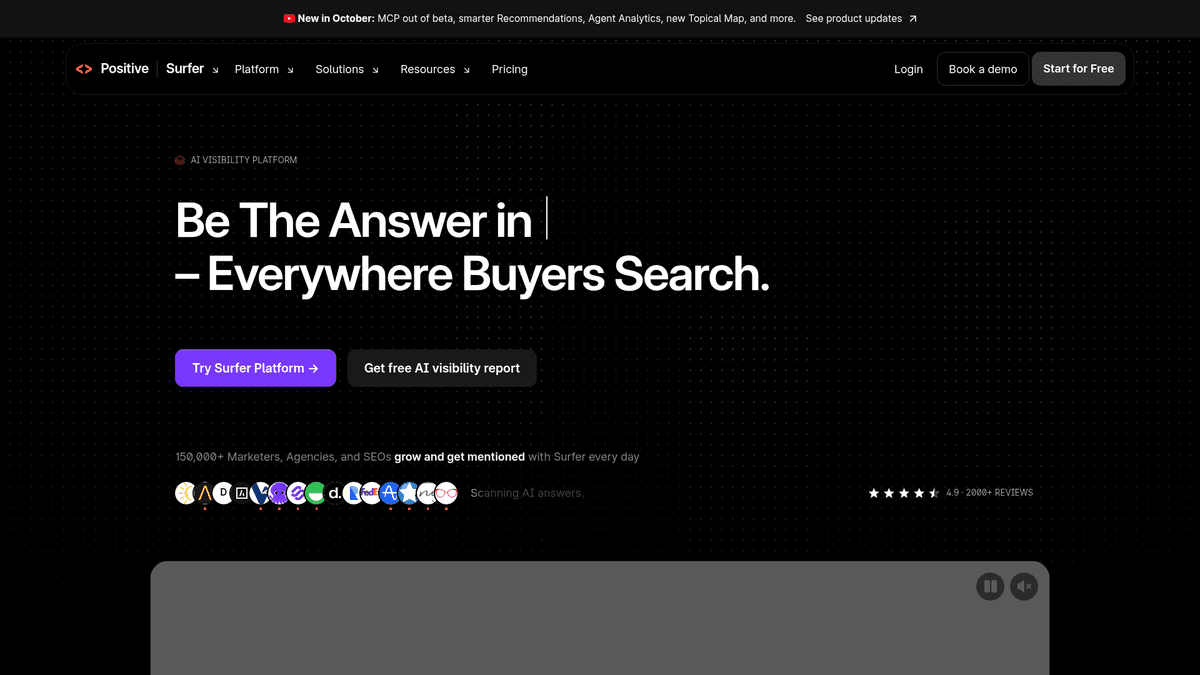
Surfer SEO belongs on the shortlist when the draft, not the brief, is the bottleneck. Its content editor gives writers live feedback on topic coverage and on-page SEO optimization, and its SERP analysis helps inform revisions. I would use it when a team already knows what to publish but struggles to make drafts consistent.
Picture an editor receiving five articles from different freelancers. A shared optimization workflow can help them spot thin sections and missing related concepts without rebuilding the original brief each time. It is also useful for updating pages that are already published: optimization is not always a new-content job.
Surfer is less compelling if you are hoping to eliminate the work of choosing topics, reviewing facts, and coordinating publication. A score tells you about the tool's model of coverage, not whether a paragraph answers a real buyer question. Treat suggestions as editorial prompts rather than instructions to repeat terms until a number turns green. Compare Surfer SEO alternatives if the editing step is your main bottleneck.
Choose it if your team has a writing workflow and wants stronger page-level feedback. Think twice if you mainly need a low-touch path from idea to a published article.
3. Frase: for briefs and AI-assisted first drafts
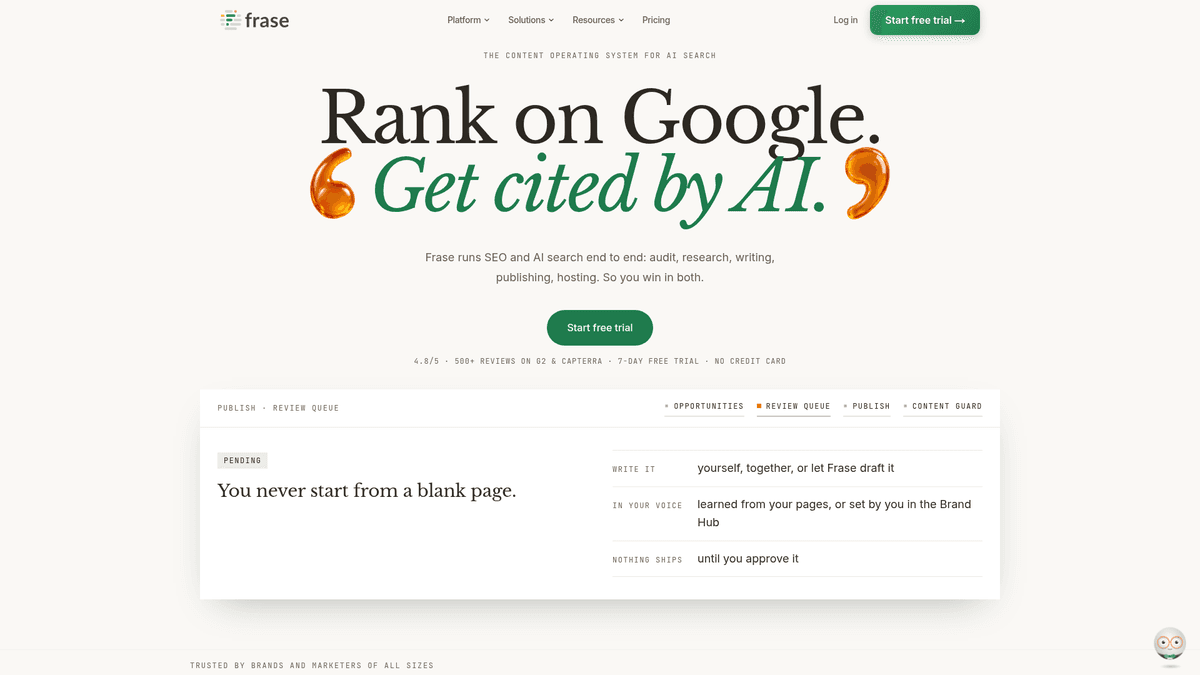
Frase suits you if you like structured research but want to draft without switching apps. It puts question discovery, brief creation, AI writing, and content optimization in the same workspace. You can take a researched topic into a working draft there.
I would give Frase to a small team with an editor who wants to stay hands-on. The editor can use research to shape the angle and let AI help with an initial draft, then replace generic passages with customer language, original examples, and verified claims. That keeps the human decision-maker in control of what the page promises.
Frase offers publishing tools, but someone still needs to edit and source the draft before it goes live. If no one owns that work, faster AI writing can leave you with a backlog of unfinished posts. Compare Frase alternatives if you need a different balance of writing and automation.
Best fit: a solo content marketer or agency editor who wants briefs and AI writing together. Limitation: for a team that wants scheduled, low-touch publication, its research-and-editor workflow may still leave too much manual work.
4. Clearscope: for editors who value a clean writing experience
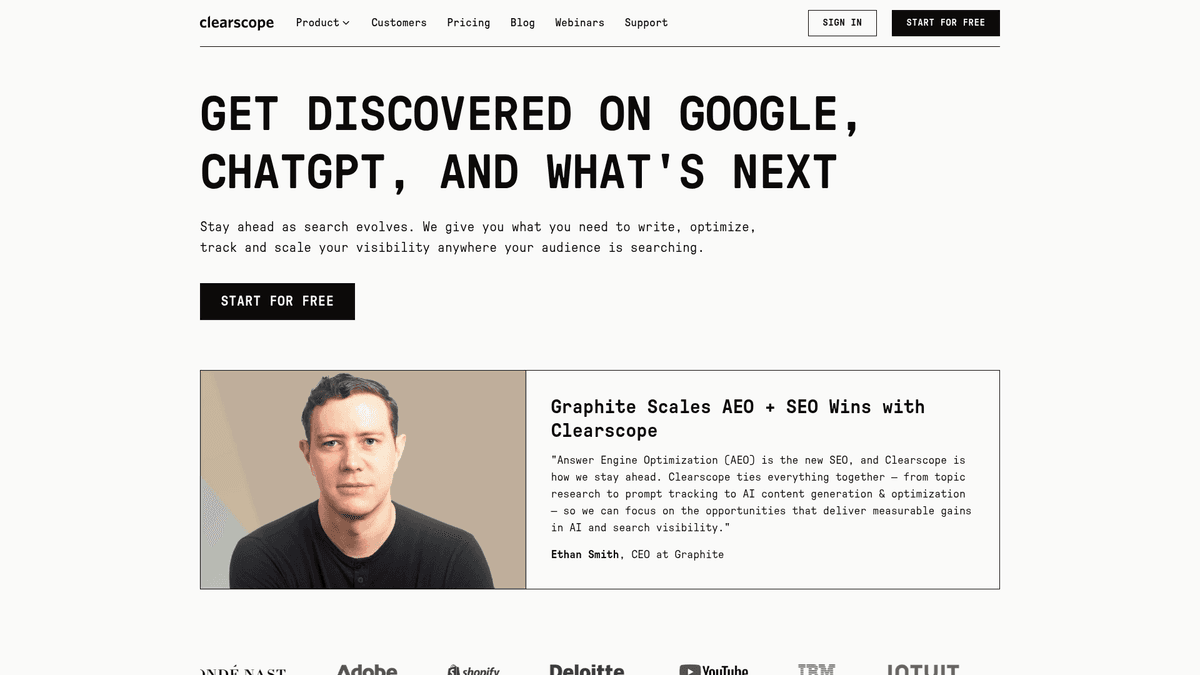
Clearscope makes sense if your writers need guidance they'll use while drafting. Its editor keeps content optimization and topic suggestions easy to find, even when the SEO specialist who set the direction isn't in the room.
If writers ignore a complicated dashboard and send back untouched documents, I would choose the simpler editor. Clearscope gives them feedback in the draft and gives the content lead something concrete to point to during revisions.
It is not a substitute for a content calendar, a publishing owner, or technical SEO work. Nor should an editorial grade dictate every sentence. A useful section that answers a customer's objection can matter more than squeezing in another recommended term. Keep the reader's question at the center of the edit.
Best fit: established editorial teams improving articles written by people. Limitation: a narrower content-optimization focus means it will not replace your entire planning-to-publishing stack.
5. MarketMuse: for content strategy across a whole site
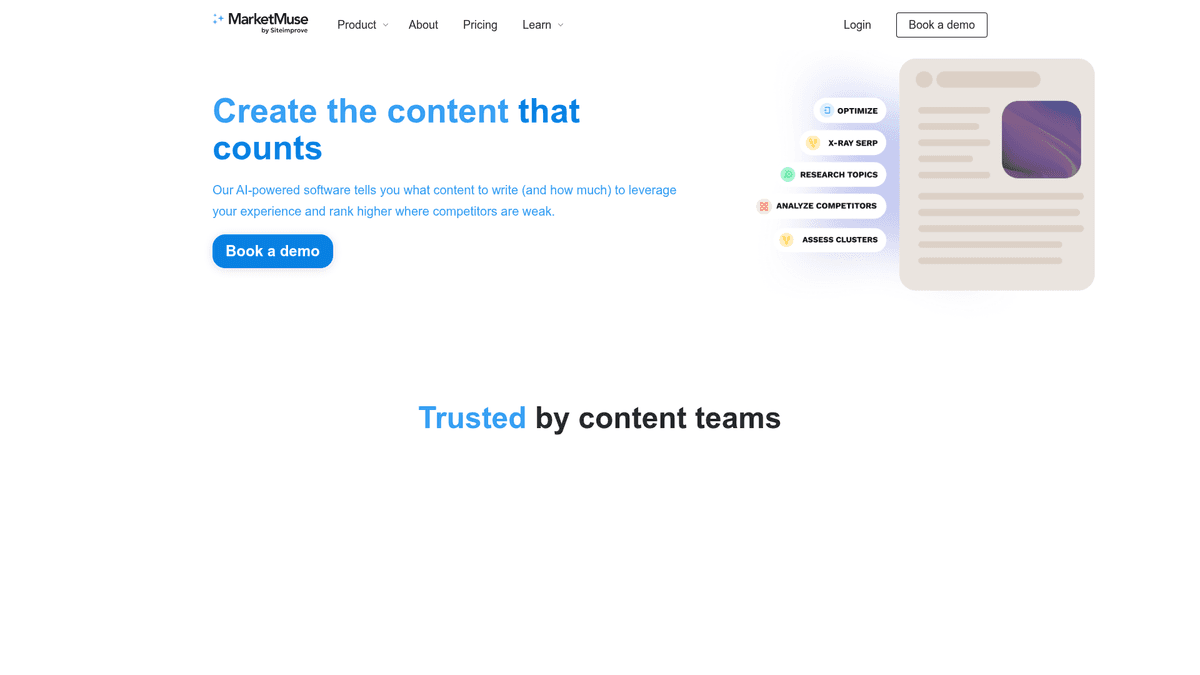
MarketMuse suits a team deciding what a large site should cover next. Its AI-driven topic modeling, content inventory, and strategic prioritization help you plan beyond a single keyword. Personalized difficulty scoring puts a proposed topic in the context of your existing site.
Consider a SaaS company with years of posts across related categories. Another brief for another article will not answer whether to update a weak cluster, consolidate overlapping pages, or invest in a new subject area. A portfolio view is more valuable there than a faster outline.
For a new blog, I would spend the time publishing five useful posts first. MarketMuse earns its place when the library grows and somebody can act on its recommendations across many pages.
Best fit: a content strategist responsible for a substantial library or multiple topic clusters. Limitation: more planning depth than a lean team needs when the immediate issue is getting articles written and live.
6. SE Ranking: for SEO teams that need more than content tools
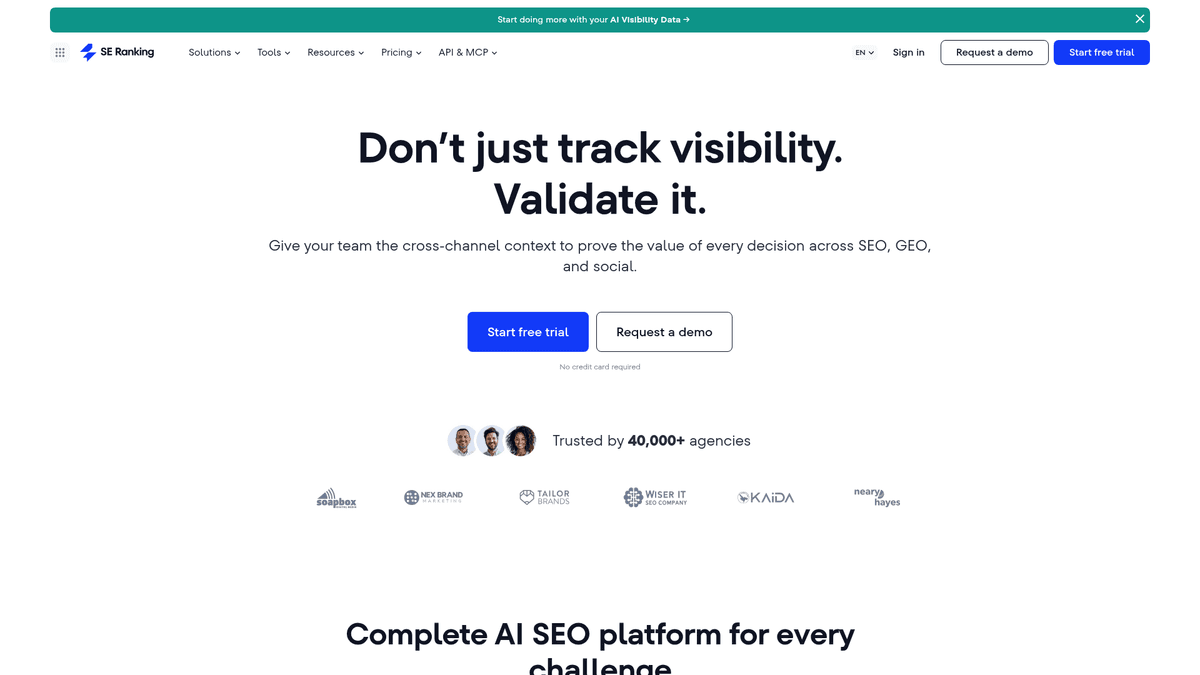
SE Ranking enters the conversation when content is only one part of your job. Keyword research, rank tracking, site audits, and content features sit in a broader SEO platform. For agency teams working across multiple sites, consolidating SEO operations can be more useful than buying the most specialized brief generator.
Think about the weekly work around a blog post: find opportunities, audit the site, watch rankings, then decide whether to update a page or commission a new one. Keeping those signals near the content workflow can make decisions easier, particularly when you manage several clients.
Your team will need time to learn a broader suite, and its brief workflow may feel less focused than a dedicated briefing tool. If your existing tools cover technical SEO and tracking, SE Ranking adds more interface to a job you may have solved already.
Best fit: an agency or in-house SEO lead who wants content work alongside research and site monitoring. Limitation: not the most direct answer to a founder's need for automated article production.
7. Scalenut: for teams leaning into AI-assisted production

Scalenut combines content planning and optimization with AI-assisted writing. It is worth considering if you have people to review output but need to move from topic to draft faster. Its wider SEO and GEO positioning also makes it relevant for teams thinking about how pages appear in AI-driven discovery.
Give Scalenut a clear topic and search intent, then read the draft against what your customers ask you. Inspect the claims and examples closely if you sell a specialized product; AI writing won't know your customers from the prompt alone.
Scalenut can generate an article as well as grade it. You still need someone to own the editing and publishing decisions, so it fits a team that wants help producing drafts more than a team seeking hands-off output.
Best fit: a content team increasing output with AI drafts and human editing. Limitation: fast generation can create a larger editing queue if no one owns quality control.
8. NeuronWriter: for a tighter optimization budget
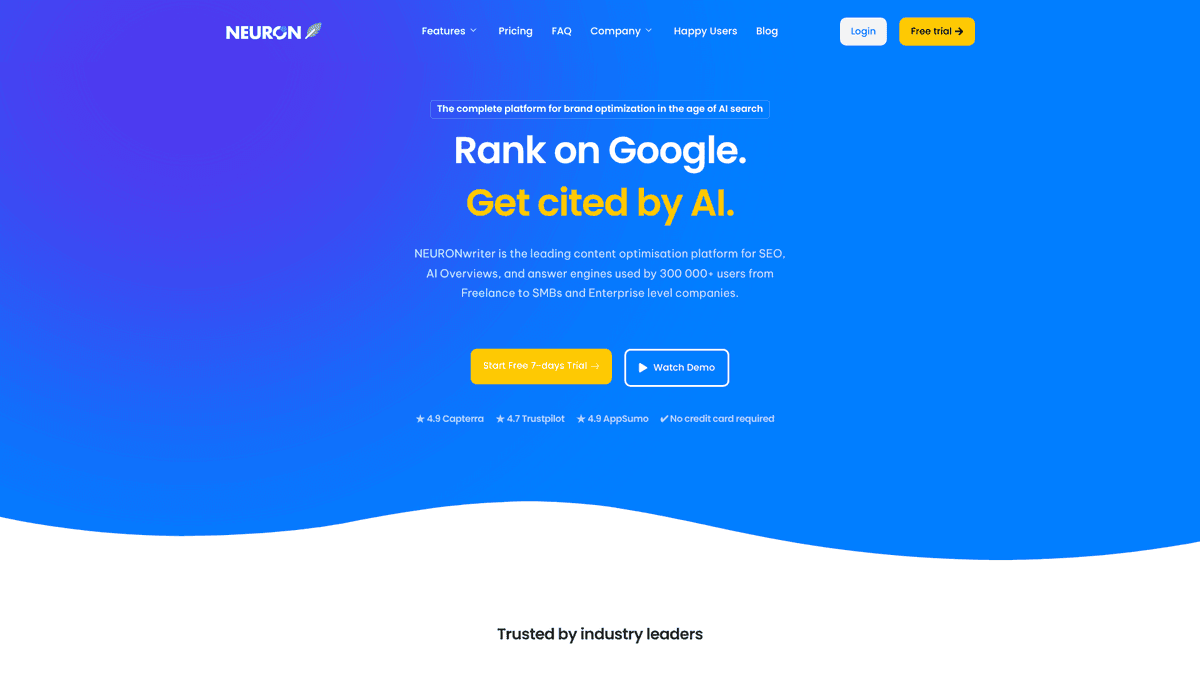
NeuronWriter deserves a look when you want SERP-informed content guidance without investing in an expansive strategy platform. Its appeal is the working editor: compare relevant concepts, improve an outline, and revise an article with search-focused feedback.
For a freelancer or small agency, that can be enough. If the client brings the keyword and the writer knows the subject, the missing piece may simply be a practical optimization pass. You do not need a platform-wide topic model for every assignment.
You still need to choose topics, validate the article, and post it. I would compare NeuronWriter's working limits with that remaining workload before deciding whether the lower entry cost saves money.
Best fit: writers and small teams who want a more accessible on-page optimization workflow. Limitation: it is a weaker match when hands-off scheduling and publishing are the core requirement.
9. Dashword: for simple briefs without a large SEO suite
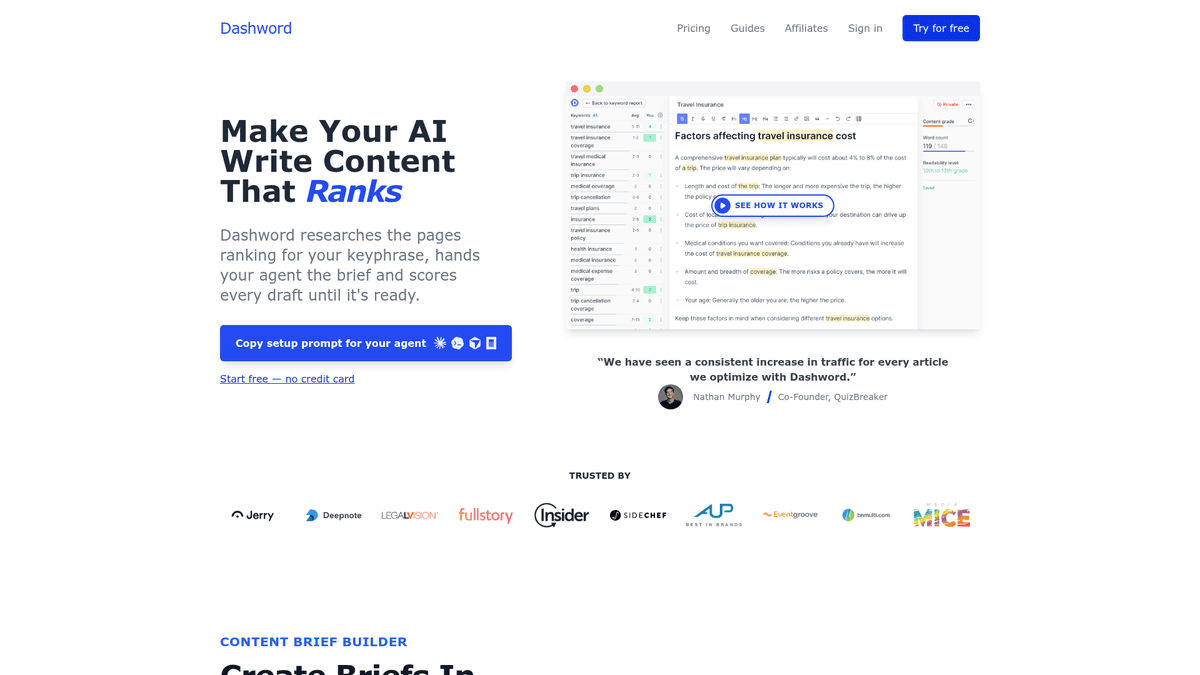
Dashword is close to the brief-and-optimize job. Its brief builder uses ranking-page research, and its optimization workflow helps writers cover relevant terms and questions. It also offers content monitoring for teams that want to revisit published work.
I like the shape of that workflow for an editor assigning work to a small pool of writers. Build a straightforward brief, let the writer draft, review the page for usefulness, then return later when performance suggests an update. You can keep the handoff simple.
If your team already makes good briefs, Dashword may give you a nicer way to do the same job. It won't remove the editing and publishing work that follows. I would pick it for a clearer writer handoff, not to reduce the number of assignments somebody has to manage.
Best fit: a freelance editor or small content team wanting clear brief support and optimization. Limitation: less compelling for company-wide strategy or end-to-end automatic publishing.
10. Orchly: for teams exploring SEO and GEO in one workflow
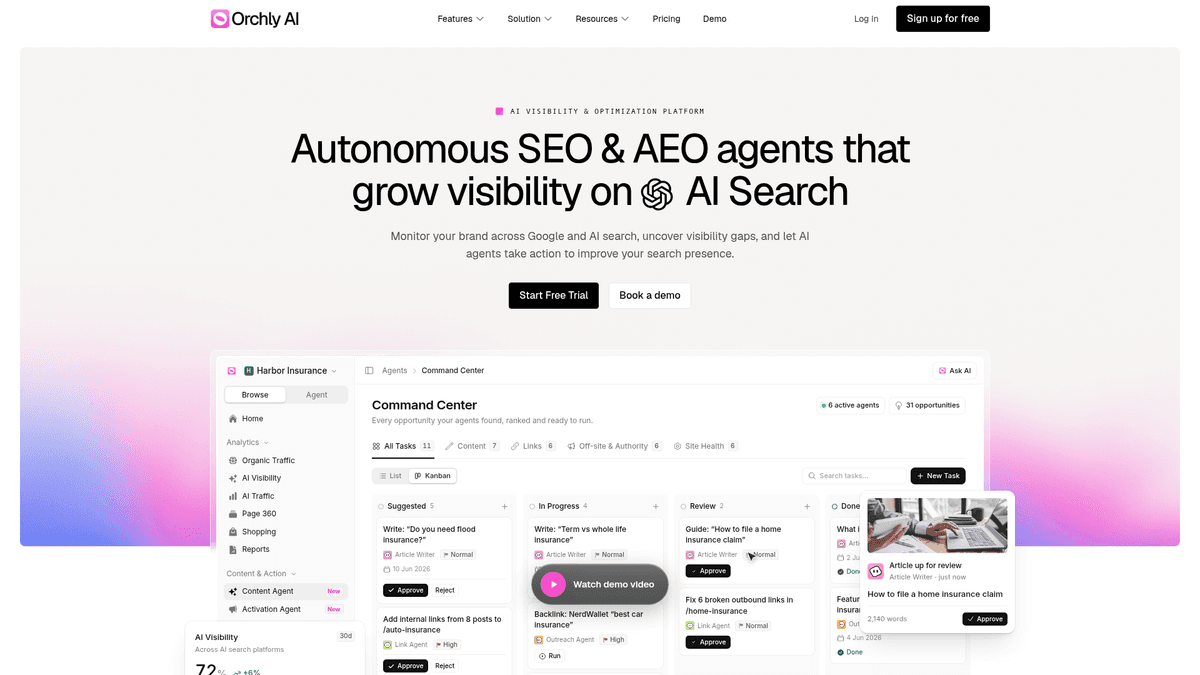
Orchly is one to consider if your brief requirements now include both classic search and the questions people ask AI assistants. That changes the assignment: a good page should answer the question plainly, identify the business or product accurately, and provide useful detail that can stand on its own.
With Orchly, I would start with one article type and a clear brief requirement. See whether its SEO and GEO guidance gives the writer enough direction. If you also need production, take that assignment through to publication and count the steps you still handle.
GEO labels alone do not tell you whether a tool measures mentions in AI answers, improves content for AI retrieval, or both. Those are different jobs. Treat the label as a starting question, not a buying decision.
Best fit: a team deliberately building AI-answer considerations into its content process. Limitation: compare the depth of the practical brief, drafting, and publication workflow against a more specialized option before committing.
GEO visibility is a separate buying decision
There is a difference between writing a page that an AI assistant could cite and measuring whether the assistant actually mentions your brand. Most content tools focus on the first task. AI-visibility platforms focus more on the second.
"Google users clicked a traditional result on 8% of visits when an AI summary appeared, versus 15% of visits without one." - Pew Research Center
Those were observed clicks in Pew's March 2025 browsing data, not proof that AI summaries caused the difference. They show why a search-only reporting view misses part of the picture.
AthenaHQ is worth exploring when you want a dedicated AI-search visibility view and a way to connect mentions to next actions. Otterly AI is oriented toward monitoring how brands appear in AI answers across tracked prompts. Profound is a more expansive AI-search intelligence option for teams making AI visibility a formal reporting discipline. These are bonus tools, not direct substitutes for a content brief or an article production system. For a closer look at tracking, see AI visibility tools.
Start with a concrete question: “When a buyer asks an assistant about our category, are we mentioned, and what source does the answer use?” Tracking that question can inform content improvements. It does not write a credible article, supply product evidence, or publish it for you. A small team may prefer to create useful, well-structured pages first and add specialized tracking when it has enough published content to learn from.
How to choose the right tool
If you used Content Harmony mainly to optimize content
Do not replace a working content brief process just to get a new brief builder. If your writers turn in decent drafts but your editor spends hours improving coverage and on-page structure, try dedicated content optimization tools: Surfer SEO for live scoring, Clearscope for a writer-friendly editorial interface, or NeuronWriter for a smaller optimization workflow. Give each tool an existing article to revise; then ask whether its recommendations make the answer clearer, not just whether its score rises.
If you want better briefs for your existing writers, keep Content Harmony on your shortlist alongside Dashword and Frase. Pick the one that makes the actual writer handoff clearest. If the draft arrives but needs extensive on-page revision, put Surfer SEO or Clearscope into the discussion instead.
If you want AI help but still own editing, compare Frase and Scalenut. Frase is a closer continuation of the research-to-brief process; Scalenut emphasizes AI-assisted production. In either case, assign someone to check claims and replace generic language with your customer's vocabulary.
If you manage a large site, MarketMuse is the strategy choice and SE Ranking is the wider SEO-operations choice. One helps decide how topic coverage fits together; the other puts content in a broader research and monitoring workflow.
If you are the entire content team, count handoffs, not buttons. For one planned article, write down who selects the keyword, makes the brief, drafts, edits, adds images, links internally, uploads, and schedules. A tool that removes only the briefing step may be a fine bargain for an agency and a poor fit for a founder with no time to ship. If publishing is the sticking point, compare SEO automation tools.
One simple trial assignment helps: use the same realistic topic, product facts, and intended reader for each candidate. Look at the brief's clarity, the draft's factual claims, the edits required, and whether a finished page reaches your CMS. The winner is the one that removes work you actually do, without creating a new review burden.
The verdict
There is no single best Content Harmony alternative for every team. Keep a brief-led workflow if your writers are productive and your editor mainly needs better research. Choose Frase when the next step is AI-assisted drafting, Surfer SEO or Clearscope when the issue is editing, and MarketMuse or SE Ranking when strategy or broader SEO operations matter most.
For a founder who keeps postponing the blog because writing and publishing never make it to the top of the list, RankSpot is the option I would try first. It connects keyword discovery, planning, long-form writing, images, internal links, and CMS publishing, while building content with both Google and AI answers in mind. Use the first three articles to judge whether that completed workflow saves you more time than another brief tool would.