Byword is strong when your main goal is publishing lots of SEO pages quickly, especially for programmatic SEO and large page-count sites. But many founders and lean teams do not just need volume. They need keyword discovery, competitor tracking, content planning, formatting, images, publishing, and now optimization for AI answer engines too.
That is where the landscape changes.
In this guide, I’ll compare the best alternatives for different use cases, from fully automated SEO pipelines to editorial research tools and enterprise-grade writing platforms.
Quick comparison table
Tool | Best for | Starting price | Best fit |
|---|---|---|---|
RankSpot | Founders and small teams who want end-to-end SEO automation | Free trial available | Best overall for hands-off growth |
Surfer SEO | On-page optimization and live content scoring | Mid-tier SEO software pricing | Best for teams optimizing content manually |
Outrank | Automated SEO workflow from keyword to publishing | Varies | Best for done-for-you style automation |
Oleno | Content ops and editorial workflow | Varies | Best for teams that want structured content operations |
AirOps | AI search workflows and citation-focused optimization | Varies | Best for teams focused on AI visibility |
Frase | SERP research and brief generation | Mid-tier SaaS pricing | Best for research-heavy writers |
Jasper | Multi-channel marketing content | Seat-based pricing | Best for brand teams |
Copy.ai | Short-form copy and workflow automation | Free and paid plans | Best for sales and go-to-market copy |
Writesonic | Budget-friendly AI writing with broad templates | Free and paid plans | Best for affordable multi-use content |
Writer.com | Enterprise governance and security | Custom/enterprise | Best for large regulated teams |
What to look for in a Byword.ai alternative
If you are switching from Byword.ai, do not just compare “who can generate articles.”
That is too shallow.
The real questions are:
Do you need bulk pages or strategic growth?
Byword.ai shines when scale is the goal. If you want hundreds or thousands of pages, it is built for that.
But if you are a founder, SaaS operator, or small store owner, your real bottleneck is usually not page count. It is figuring out:
which keywords are worth targeting
what competitors are winning with
how to publish consistently without hiring an agency
how to show up in Google and AI answers
Do you want a writing tool or a full pipeline?
A lot of tools still stop at drafting.
A better modern stack should help with:
research
prioritization
writing
formatting
internal linking
image generation
publishing
ongoing optimization
That is why many teams now prefer platforms that replace multiple tools instead of adding one more editor to the pile.
Do you care about AI answer engines?
In 2026, traditional SEO is only part of the picture. The strongest platforms now optimize for visibility in ChatGPT, Claude, Gemini, and similar answer engines.
That means your content needs structure, citations, entity clarity, and clear answers. It is no longer enough to just hit a keyword and a word count.
“Using automation - including AI - to generate content with the primary purpose of manipulating ranking in search results is a violation of our spam policies.” - Google Search Central
That quote is the right framing for this whole category. AI content is not the problem. Low-value, search-first, reader-last pages are the problem.
Why RankSpot is the strongest choice for most founders
Before jumping into the full list, here is the simple version:
If you are a lean team, the best byword alternative is usually not the tool with the biggest batch generator. It is the one that removes the most work from your week while still producing useful content.
That is where RankSpot stands out.
Instead of giving you a faster drafting interface, RankSpot acts like an automated SEO agent. You plug in your site, it learns your niche and competitors, builds a 30-day plan, finds high-intent keywords, writes optimized articles, creates unique images, formats the post, and publishes directly to your CMS.
It also goes beyond classic blog SEO by helping you target AI answer engines and discover Reddit/forum conversations where real demand already exists.
If your current process involves Ahrefs for research, docs for briefs, ChatGPT for drafting, Grammarly for cleanup, Canva for images, then manual upload to WordPress or Webflow, that is exactly the kind of messy stack RankSpot is built to replace.
For a deeper look at where this market is heading, our guide to AI tools for SEO breaks down the broader shift from single-purpose tools to end-to-end systems.
1. RankSpot - Best overall for founders and small teams
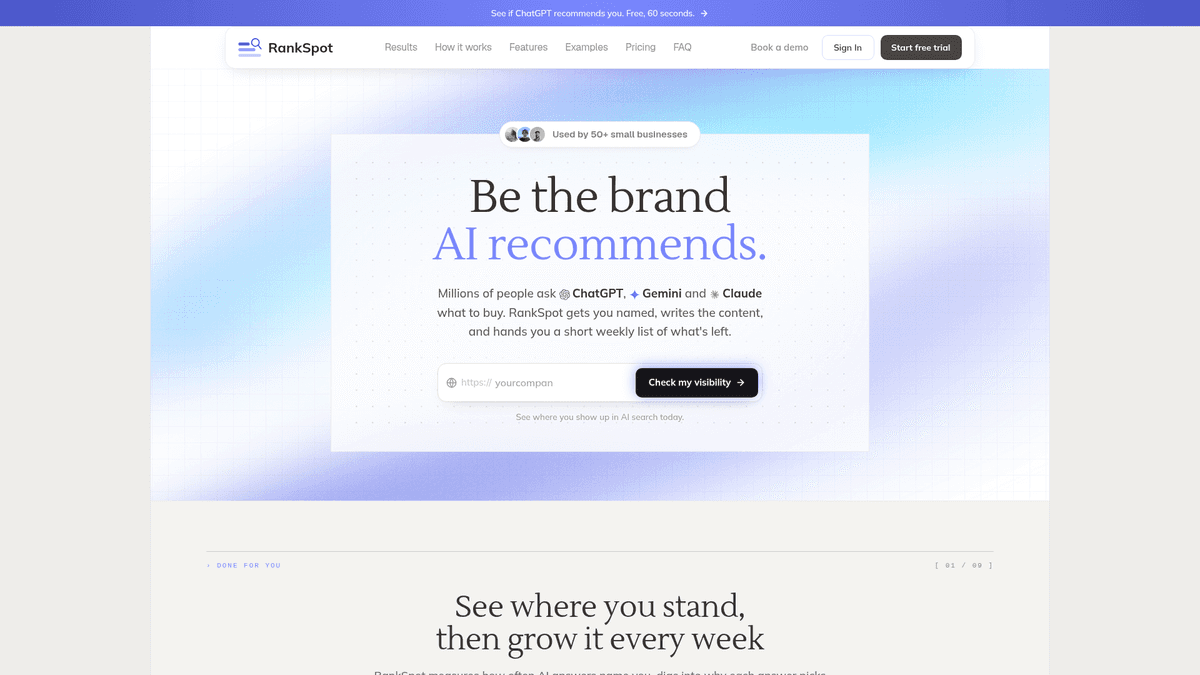
RankSpot is the best fit if you want more than bulk content generation. It is built for founders and operators who need growth without building a full SEO team.
Why it stands out
RankSpot handles the full pipeline:
learns your niche from your site
analyzes competitors
finds high-intent and competitor keywords
builds a content plan
writes long-form SEO articles
generates on-brand images
formats content with SEO best practices
publishes directly to WordPress, Webflow, Wix, Shopify, Framer, Ghost, and more
It also adds two things that matter more every quarter:
optimization for AI answer engines
Reddit and forum conversation discovery for real-world demand signals
This is the difference between “an AI writer” and “an automated content growth system.”
Best for
SaaS founders
indie hackers
e-commerce operators
startups replacing agencies
lean marketing teams that need consistent publishing without more headcount
Where Byword.ai still wins
To be fair, Byword.ai can still be the better fit when your main objective is raw page-count scale for large programmatic SEO projects. If you need to create huge template-driven content sets very fast, Byword remains strong.
But for most small and mid-sized businesses, the bigger win is strategy plus automation, not sheer output volume.
Why it is a better long-term choice
Founders do not need another content tool to babysit. They need something that saves time and compounds traffic.
RankSpot does that by removing manual research, writing, image creation, formatting, and publishing. In practice, that can save 40+ hours per month while keeping your blog active with daily SEO-ready publishing.
It also has a low-friction entry point: first 3 articles free, no credit card.
2. Surfer SEO - Best for on-page optimization
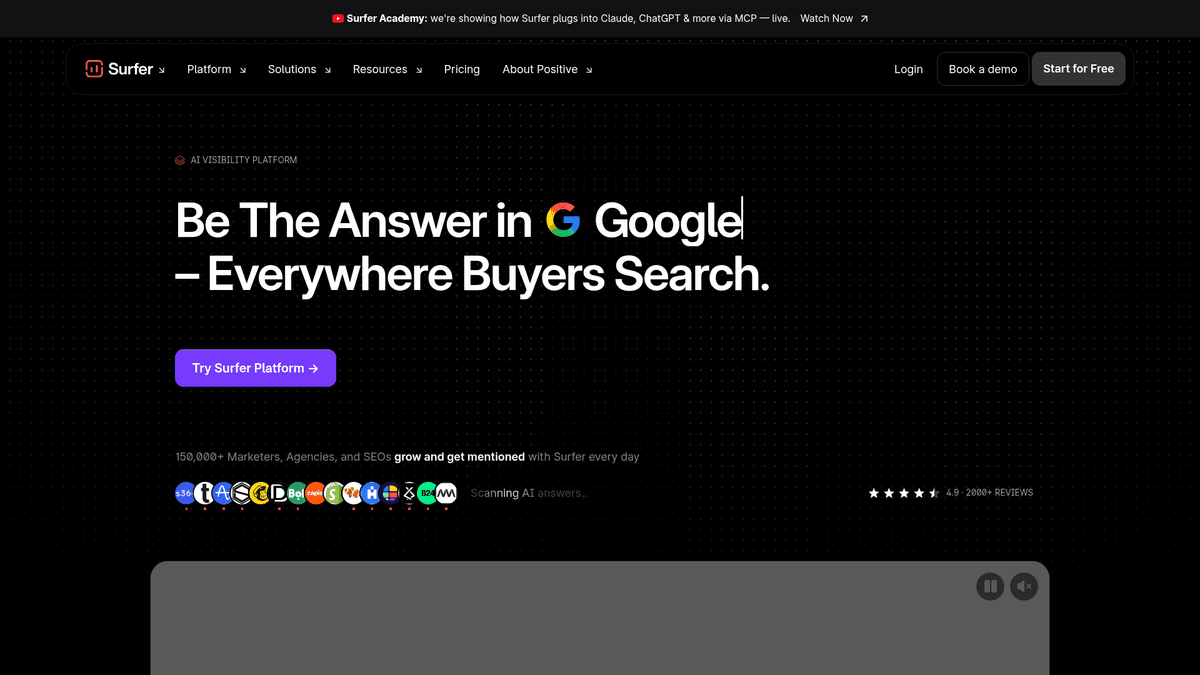
Surfer SEO is one of the most established alternatives if your main goal is improving on-page optimization rather than fully automating content production.
What Surfer does well
Surfer is built around live scoring and SERP-based recommendations. It helps you shape a page around the terms, structure, and coverage patterns seen in ranking content.
Its strengths include:
real-time content scoring
SERP-informed term suggestions
content editor workflows
content audits for existing pages
collaborative optimization process
Where it fits
Surfer is great if you already have writers or drafts and want a strong optimization layer. It is less useful if you want full end-to-end execution with daily publishing and minimal manual work.
Tradeoff
Surfer helps you optimize content. It does not really replace your entire stack.
You may still need separate tools for:
keyword research
planning
drafting
images
publishing
That makes it strong as an optimizer, but weaker as an all-in-one replacement for Byword.ai.
If you are specifically comparing optimization-first tools, our Surfer SEO alternatives guide goes deeper.
3. Outrank - Best for automated SEO workflows
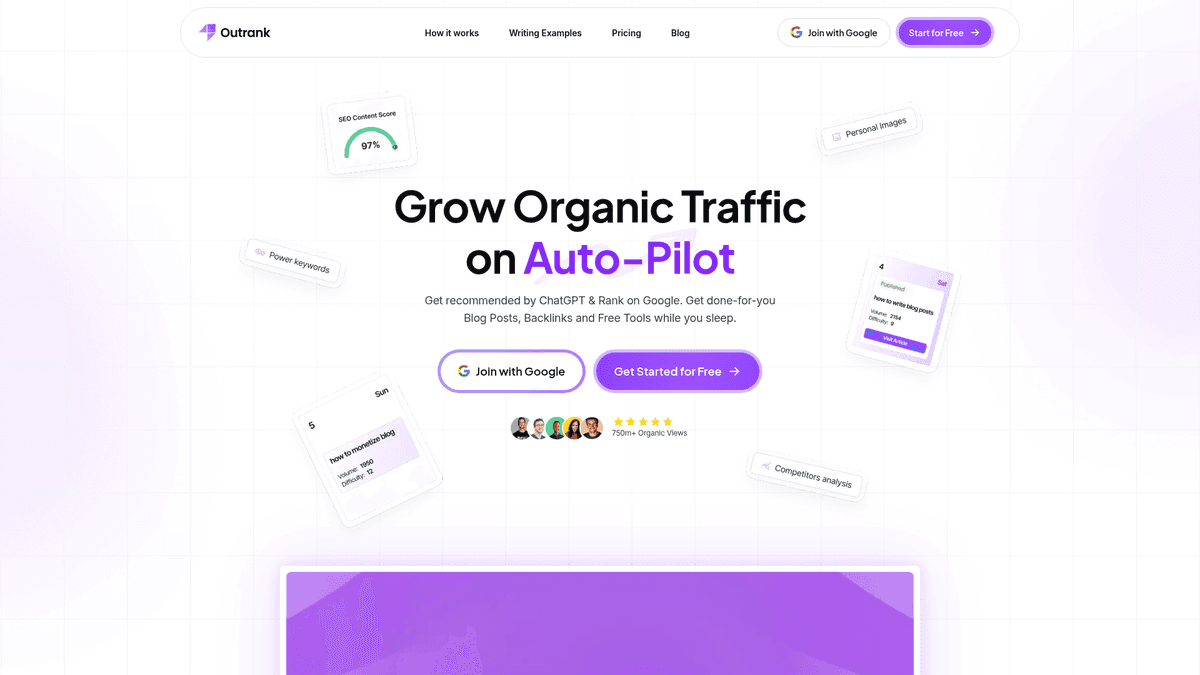
Outrank is one of the closer matches to the “automation-first” promise that attracts people to Byword.ai in the first place.
Why people choose it
Outrank is designed to connect the workflow from keywords to publishing with less manual intervention. That makes it appealing for teams that want content operations to run in the background.
Best use case
Choose Outrank if you want:
automated topic generation
article production tied to SEO intent
publishing workflow support
less hands-on management than traditional editors
Tradeoff
Outrank is closer to RankSpot than tools like Surfer or Frase in philosophy, but the main question is how much strategic depth you want.
If you want keyword prioritization, competitor tracking, AI-answer optimization, built-in image generation, and broader channel opportunity discovery, RankSpot tends to cover more of the full growth loop.
If you want more context around this vendor specifically, see our breakdown of Outrank alternatives.
4. Oleno - Best for content operations teams
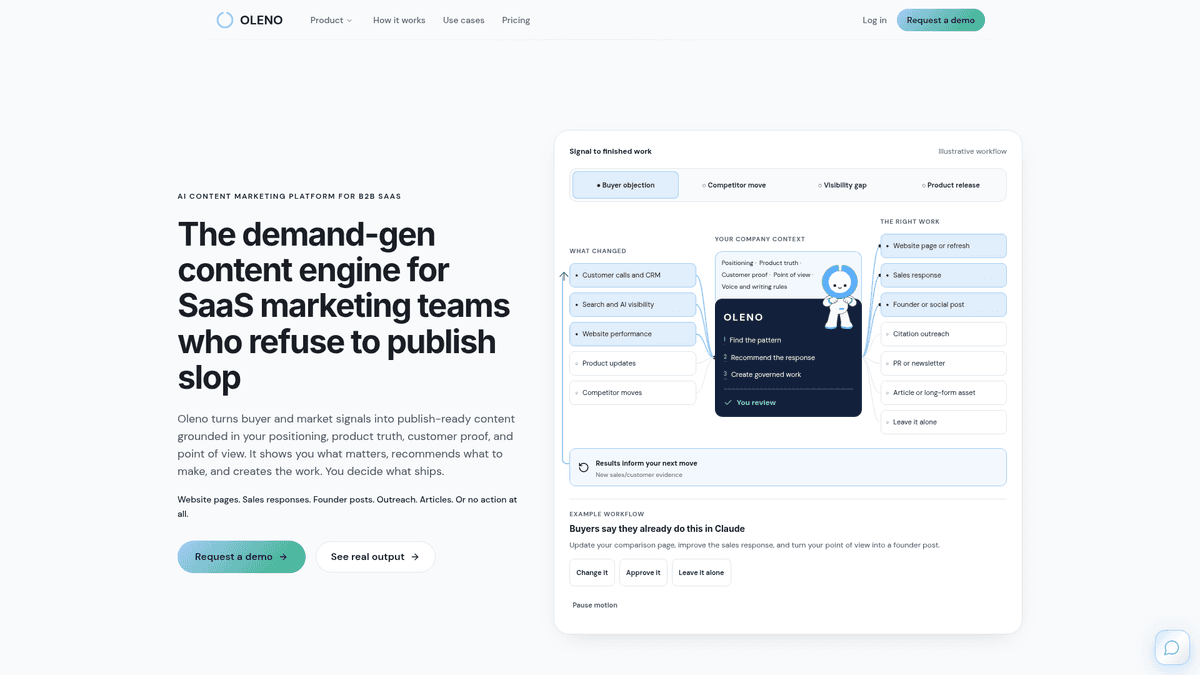
Oleno is less of a simple article generator and more of a content-ops platform.
What makes it different
Oleno is built for teams that want process, repeatability, and structured workflows around planning, creation, and publishing.
It is often appealing when you have:
multiple contributors
editorial review steps
a repeatable content engine
a need for better operational visibility
Best for
in-house content teams
agencies managing multiple workflows
companies that care about consistent content ops more than pure bulk generation
Tradeoff
Oleno is more operational than founder-friendly. If your team is small and your main need is “just make SEO work without more complexity,” a simpler full-automation platform will usually be easier to adopt.
5. AirOps - Best for AI search and workflow flexibility

AirOps has become increasingly relevant because it leans into workflow building and AI search optimization rather than just article drafting.
Why it is interesting
AirOps is useful for teams that want more control over how content and AI workflows are assembled. It can be a fit for advanced operators that care about:
AI search visibility
citations and structured outputs
workflow customization
more modular automation
Best for
technical marketing teams
SEO operators experimenting with AI visibility
teams that want custom workflow logic
Tradeoff
AirOps is powerful, but it may be more tool than a founder needs. If you want to configure systems, it is interesting. If you want a platform that does the work for you with minimal setup, RankSpot is easier to operationalize.
6. Frase - Best for SERP research and content briefs
Frase remains a strong option for research-heavy content workflows.
What Frase is best at
Frase helps you understand what a page should cover before writing starts. It is strong for:
SERP analysis
question extraction
content brief generation
topic coverage guidance
optimization during drafting
When to choose it
Pick Frase if your team writes manually or with light AI help and needs better briefs.
Tradeoff
Frase is excellent at the front end of content creation, but it is not the same as a true end-to-end publishing engine. You will usually still need more tooling around planning, publishing, visuals, and ongoing production cadence.
For teams exploring research-first platforms, our Frase alternatives article compares where these tools overlap and where they do not.
7. Jasper - Best for brand voice and multi-channel marketing
Jasper is still one of the better-known AI content platforms, especially for marketing teams.
Where Jasper shines
Jasper is strong when your content needs go beyond SEO articles and into:
ad copy
social posts
landing pages
email sequences
campaign messaging
It also has mature brand voice controls and collaboration features.
Best for
marketing departments
brand-led teams
companies producing content across many channels
Tradeoff
Jasper is broad, but it is not really designed as a founder-friendly SEO automation engine. It helps teams create content faster. It does not replace the full SEO pipeline in the same way a platform like RankSpot aims to.
8. Copy.ai - Best for short-form copy and workflow automation
Copy.ai is a useful alternative if your real problem is not SEO articles but go-to-market execution.
What it does well
Copy.ai is good at:
sales emails
short-form marketing copy
workflow automation
simple content generation for fast-moving teams
Best for
sales teams
outbound teams
startups needing lots of short-form copy
operators building lightweight automations
Tradeoff
For long-form SEO growth, Copy.ai is not the strongest choice. It is more of a productivity tool for commercial teams than a dedicated SEO publishing engine.
9. Writesonic - Best budget-friendly option
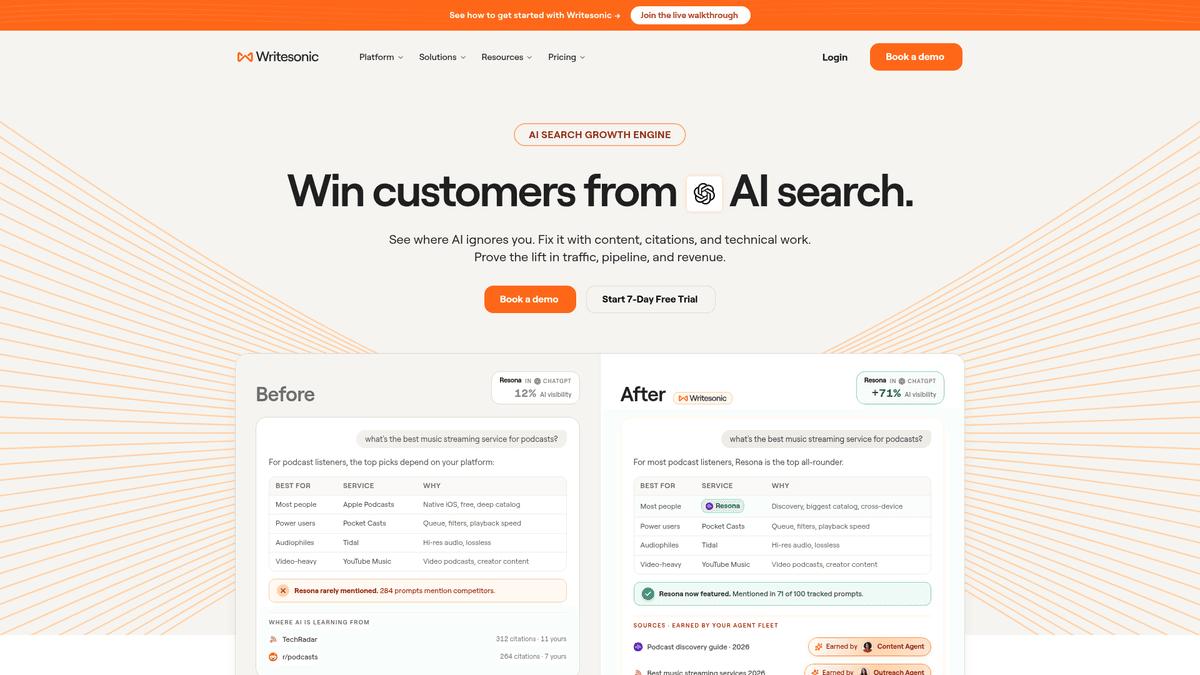
Writesonic stays popular because it is accessible, broad, and relatively affordable.
Why teams consider it
Writesonic can cover a lot of use cases from one interface:
article drafts
landing page copy
product descriptions
general AI writing
template-based content production
Best for
budget-conscious users
small teams testing AI writing
companies that need variety more than depth
Tradeoff
Writesonic is good value, but it can feel like a generalist. If your priority is serious SEO automation or strategic content planning, it may not go deep enough.
If you are weighing lower-cost options in this category, our Writesonic alternatives comparison may help narrow the field.
10. Writer.com - Best for enterprise governance and security

Writer.com is the enterprise pick on this list.
Where Writer.com excels
Writer focuses heavily on:
governance
compliance
brand consistency
security
enterprise AI deployment standards
Best for
large organizations
regulated industries
teams with strict review and approval requirements
companies prioritizing control over speed
Tradeoff
Writer.com is not really a direct founder-style replacement for Byword.ai. It is for businesses with mature internal processes, governance needs, and larger budgets.
Side-by-side decision matrix
If your priority is… | Best choice |
|---|---|
Fully automated SEO growth with minimal manual work | RankSpot |
On-page optimization and content scoring | Surfer SEO |
Automated keyword-to-publishing workflow | Outrank |
Structured editorial operations | Oleno |
AI search workflow flexibility | AirOps |
Research and brief generation | Frase |
Brand voice across many formats | Jasper |
Sales and short-form copy | Copy.ai |
Affordable all-round AI writing | Writesonic |
Enterprise governance and security | Writer.com |
Pricing mindset: what actually costs more
A lot of founders compare tools only on subscription price. That is usually the wrong lens.
The real cost is:
software spend
time spent per article
coordination overhead
editing burden
publishing delay
missed traffic from inconsistency
A $49 or $99 tool can still be expensive if it leaves you doing everything else manually.
And a higher-priced platform can be cheaper if it replaces:
keyword research tools
writing tools
editing tools
image tools
publishing labor
agency retainers
That is the real reason all-in-one automation is growing fast.
“Content marketing costs 62% less than traditional marketing and generates about 3 times as many leads.” - Demand Metric
The takeaway is not “publish more AI content.” It is that content compounds when you can produce it consistently and economically. The best platform is the one that makes consistency realistic.
How to choose the right Byword.ai alternative
Here is the practical decision guide I would use.
Choose RankSpot if…
You want SEO to run without becoming your second job.
This is the best choice if you want:
automated keyword research
competitor-based targeting
article generation
AI-answer optimization
image generation
direct publishing
daily output without manual busywork
It is especially strong for founders and small teams who want a real growth engine, not another tool to manage.
Choose Surfer or Frase if…
You already have writers and mainly need research or optimization support.
These tools help a lot, but they are not the most hands-off choice.
Choose Outrank or AirOps if…
You want automation, but with a stronger emphasis on workflow logic or more advanced operational setups.
These are good fits for more hands-on operators.
Choose Jasper or Copy.ai if…
SEO articles are not your primary need. If most of your work is campaign, sales, or brand content, they may fit better.
Choose Writesonic if…
Budget is tight and you want a flexible starting point.
Choose Writer.com if…
You are buying for an enterprise, not a startup.
Final verdict
If your main goal is bulk programmatic page generation, Byword.ai still has a place.
But if you are looking for a byword alternative because you want more strategic depth, less manual work, better keyword targeting, and a system that can help you grow in both Google and AI answer engines, the best option for most teams is RankSpot.
It is especially compelling for founders who want:
a complete SEO content pipeline
direct publishing
high-intent keyword discovery
competitor tracking
AI citation readiness
less dependence on agencies and fragmented tools
That is the real shift happening in SEO software right now. Teams are moving from “generate me content” to “run growth for me.”
If that is what you want, RankSpot is the strongest place to start. You can test it with your first 3 articles free and no credit card, then see how much work disappears from your content process.