Autoblogging.ai can get a post onto a niche site fast. Then you have to rewrite the introduction, verify a product claim, and work out whether the keyword was worth targeting. If you're looking for an Autoblogging AI alternative, decide which job you want help with: a better draft, a reliable publishing calendar, or a way to see whether AI answers mention your brand.
For most affiliate publishers, I'd start with KoalaWriter if I already have a keyword list and want more control over each post. For a founder who wants research, planning, publishing, and AI-search monitoring in one workflow, RankSpot makes more sense. Neither choice removes the need to verify product facts before publishing.
Why switch from Autoblogging.ai?
Enter a topic, generate an article, publish. The draft may still target a low-value query, skip the comparison a buyer wanted, repeat unsupported claims, or bury the answer under generic headings.
Before replacing your tool, name the actual bottleneck:
Editing takes longer than generating. Prioritize grounded drafts and control over the outline, not the largest article allowance.
Your calendar stalls. Look for topic planning, scheduling, internal linking, and a direct CMS connection.
Traffic arrives but doesn't convert. Choose commercial-intent topics and write from real product evidence, rather than publishing another broad explainer.
You can't see the effect beyond Google. A writer and an AI-answer monitoring tool solve different problems. You may need both.
No autoblogging tool can make a fabricated hands-on review trustworthy. For affiliate pages, add your own photos, actual usage notes, current product specifications, and clear disclosures where applicable. An AI draft is the start of that work, not evidence that it happened.
"Appropriate use of AI or automation is not against our guidelines." - Google Search Central
If choosing topics is the sticking point, start with finding high-intent keywords before paying for higher output.
Quick comparison: which tool solves your bottleneck?
Tool | Best fit | What changes from a simple article generator | Main trade-off |
|---|---|---|---|
RankSpot | Founder running a small team's content program | Keyword discovery, content plan, automated publishing, SEO and AI visibility | Less suited to editors who want to handcraft every paragraph |
KoalaWriter | Affiliate publisher editing each review | Search-aware drafts and affiliate-oriented formats | You still supply judgment and product evidence |
SEOWriting.ai | Budget-minded WordPress publisher | Bulk creation and direct WordPress posting | High output still needs human verification |
Byword | Site owner with a validated keyword spreadsheet | Batch production with little setup | Weak topic lists become lots of weak pages |
RightBlogger | Solo blogger making many content formats | Blog tools plus writing and publishing workflows | A broad toolkit can add choices rather than remove them |
Content at Scale | Team producing long-form drafts in volume | Bulk-oriented, longer-form production | Don't confuse detector scores with factual quality |
Surfer SEO | Editor optimizing important pages | On-page guidance and hands-on improvement | More editorial work than a set-and-forget publisher |
Scalenut | Team building topic clusters | Keyword clustering and a guided writing workflow | Planning and editing remain part of the job |
Outrank.so | Blogger who needs a scheduled content engine | Topic-to-publish automation and internal links | Requires oversight of automatically chosen topics and drafts |
Writesonic | Team pairing content with AI-search insights | Writing plus AI visibility workflows | Broader platform may be more than a niche blog needs |

A fair way to compare costs
To find your cost per usable article, divide monthly spend by the posts you keep, then include research, revisions, images, and uploading time. A cheap bulk plan loses its appeal if most of its drafts need rewriting.
Which Autoblogging AI alternative fits your niche site? Seven core picks
1. RankSpot: for a content program, not a queue of drafts
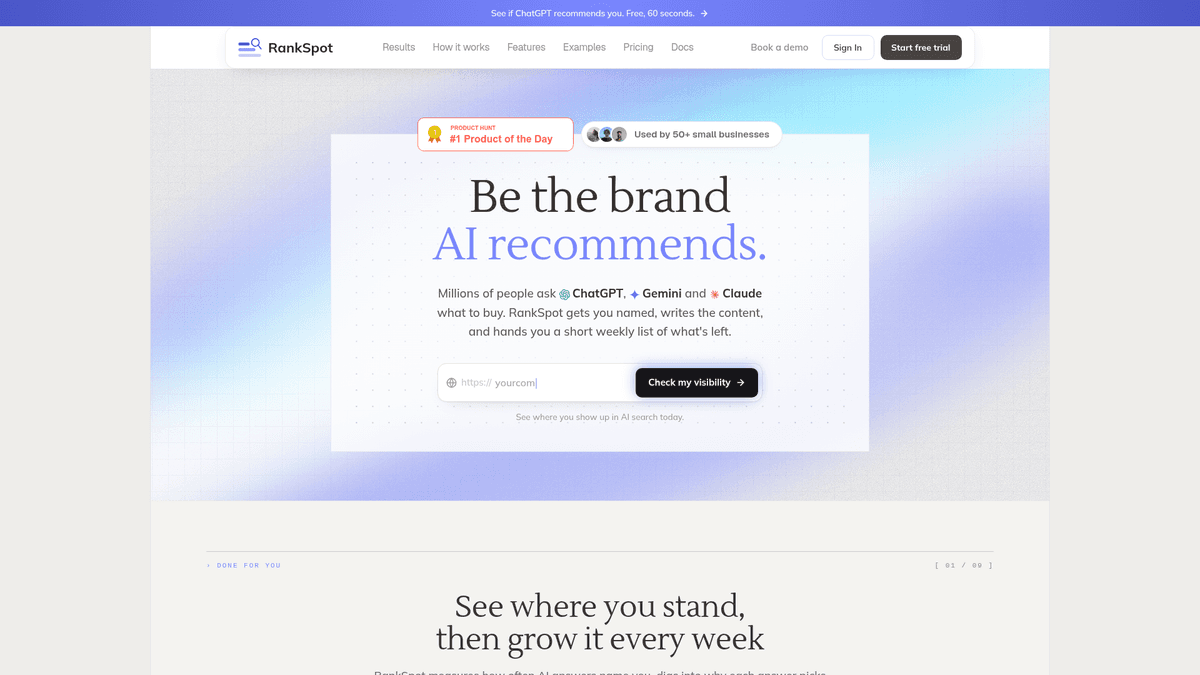
RankSpot suits a founder who wants a steady publishing schedule without hiring an SEO team. It starts with your site and niche, plans topics, researches keywords, creates articles with images and on-page formatting, and publishes to a connected blog. You don't have to feed it the next keyword each time.
For niche sites, selection before generation matters. A polished article about a query with no commercial relevance is a poor investment. RankSpot combines keyword and competitor research with a content plan, then pairs regular publishing with SEO and AI-answer visibility. It also surfaces relevant Reddit and forum conversations, where you can hear how buyers describe their problems.
RankSpot's published plan is $99 per month per site, with 30 published articles and 50 tracked AI prompts per month; the trial includes three articles. That's easier to budget than counting individual word credits, but it's not the right tool if you want to spend an afternoon manually shaping every sentence of a single product review. You should still add original testing and check affiliate claims before anything goes live.
At that entry price, I'd want to use the whole pipeline. If I were publishing only a handful of carefully edited posts, I'd pay for a drafting tool instead. The free trial gives a small business a chance to compare a finished blog post with what its team would otherwise produce, including the work after the first draft.
This is the pick for a founder who wants research through publishing in one routine and wants to watch search and AI discovery without assembling several subscriptions.
2. KoalaWriter: for affiliate-friendly drafts you can finish yourself
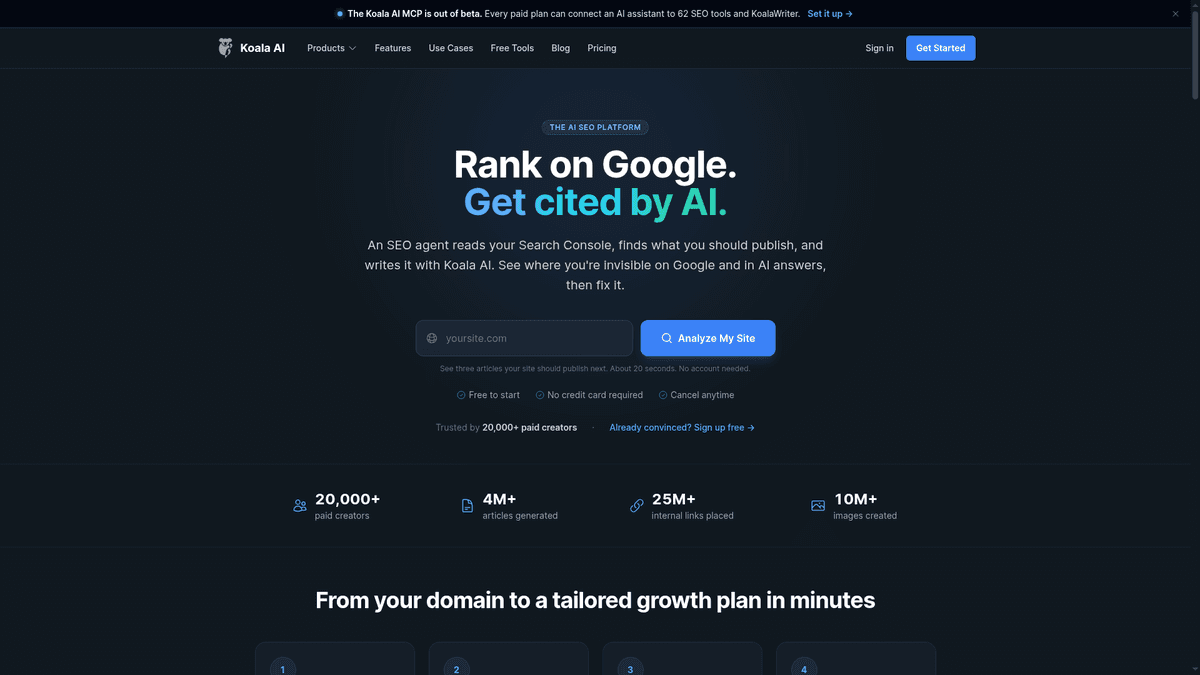
KoalaWriter makes sense when your site earns from comparisons, roundups, and product-led informational posts. Its search-aware drafting and affiliate-oriented formats give you a useful starting structure. Readers looking for the difference between two products can get to the comparison sooner.
I'd gather screenshots, product notes, and price or spec sources before asking it to draft a review. It can organize the page. It can't tell a reader what I liked about a tool I never used. Search grounding helps with the topic, though it doesn't turn someone else's description into firsthand experience.
KoalaWriter is a strong fit for the solo publisher who enjoys editing and already knows which terms to target. The limitation is workflow ownership: deciding the next topic, checking claims, and making sure the site actually publishes remain your responsibility.
On an Amazon affiliate page, I would write the verdict and product-specific caveats myself. AI writing can handle an outline and routine explanation. The recommendations still need evidence I could show a reader.
3. SEOWriting.ai: for low-friction WordPress production

If your current habit is generating posts in batches and pushing them to WordPress, SEOWriting.ai offers a familiar path. It emphasizes bulk creation and WordPress autoposting. You don't have to build a separate upload process before you can publish consistently.
Easy publishing can hide costly mistakes. A batch of affiliate roundups with outdated product details won't improve because its headings are formatted correctly. Feed in a vetted topic list, sample the drafts, and hold buying recommendations for review before they publish.
Choose it if budget and WordPress throughput are your constraints. If the real issue is deciding which pages deserve to exist, spend time on topic selection first. A faster publishing button cannot answer that question.
For a closer look at this workflow, compare SEOWriting.ai alternatives.
4. Byword: for bulk content from an already-researched keyword list
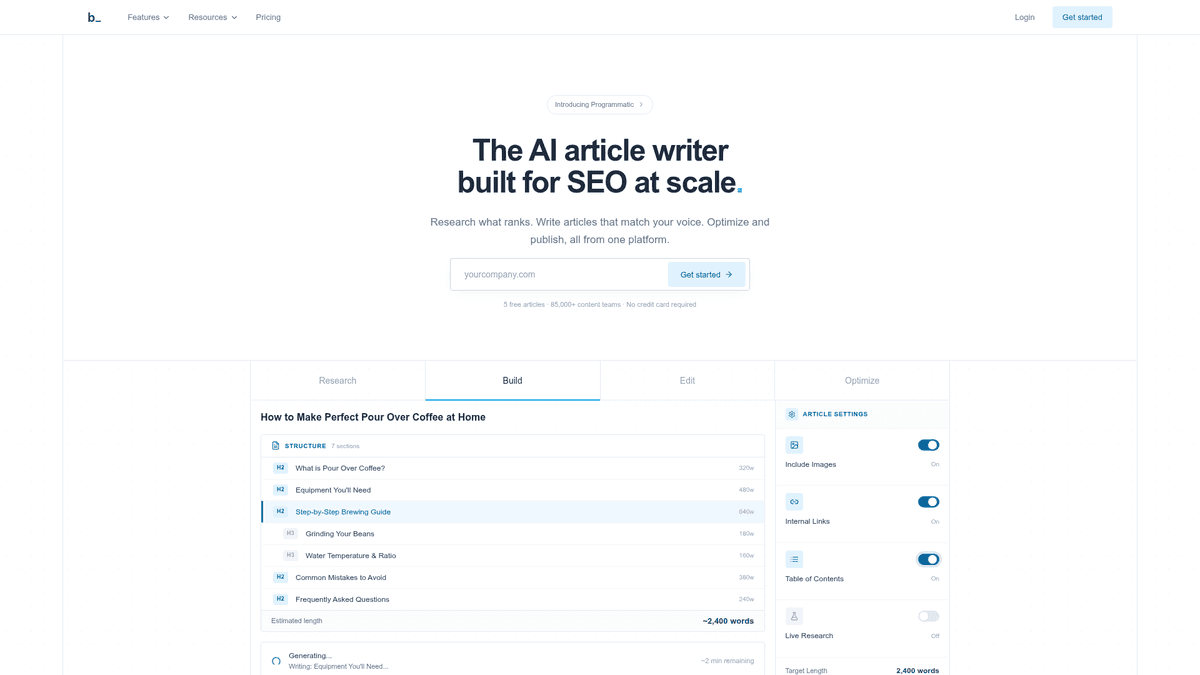
Byword suits operators with several niche sites and a spreadsheet of validated topics. Queue article ideas in a batch instead of prompting one at a time. That works for an informational cluster where you know the intent and the links each page should support.
I would not use a bulk queue as a substitute for a content strategy. Put 100 vague keywords in and you will have 100 pages to sort, edit, or delete. Start with a small cluster, review the pages side by side for duplicated advice, and make sure each answers a distinct question.
Byword's narrower focus is a virtue for operators who have planning and editorial QA handled elsewhere. It is less compelling if you are switching because keyword discovery or post-publication monitoring is what you actually lack.
Is Byword better than Autoblogging.ai? I'd pick Byword for bulk generation from a vetted keyword list. You still need to understand search intent, add distinctive information, and review the published pages. For structured, distinct page types, you may need programmatic SEO rather than another queue of article drafts.
5. RightBlogger: for a solo creator who needs more than articles

RightBlogger is closer to a blogger's workspace than a bare article spinner. Alongside writing, its positioning covers research and publishing tools. That can help when one person handles briefs, posts, and the surrounding blog chores.
Your working style decides whether that breadth helps. If you like refining an angle and preparing the finished page yourself, the toolkit gives you control. If each extra screen becomes another decision you postpone, try a managed calendar.
For affiliate content, I'd use the additional tools to build pages around real buyer questions, then put original product observations into the review. RightBlogger's breadth does not supply those observations for you. Its strength is helping a hands-on blogger move faster, not replacing a careful editor.
6. Content at Scale: for teams with a bulk long-form workflow
Content at Scale targets the heavier production end of this market: long-form drafts and volume. That can be useful when a team has assigned briefs, an editor, and a process for checking source material before pages go live.
Be careful with the promise of “human-sounding” or detector-friendly copy. An AI detector result is not a reliability test, and an undetectable mistake is still a mistake. If you publish product reviews or advice with financial consequences, have a named reviewer validate the claims and update them when products change.
Teams with assigned briefs and editors can put the extra output to use. A first-time niche-site owner will need to build that process before volume pays off.
7. Surfer SEO: for pages worth editing deeply
Sometimes your niche site needs a better existing post more than a new one. Surfer SEO gives an editor a structured way to improve coverage and organization on important pages. You still have to do the editing; it won't run a hands-off publishing calendar for you.
Say a buying guide already attracts visitors but misses the criteria readers use to make a decision. Improve the comparison, answer the missing questions, and show the evidence behind the recommendation. Don't add phrases simply because a content score asks for them. Search relevance still has to make sense to the person reading.
Pick Surfer when you have time to revise key money pages and want a more deliberate editorial process. If the job you cannot keep up with is topic-to-publish automation, it addresses a different bottleneck.
If that editing-first route sounds right, see the Surfer SEO alternatives before you commit.
Three specialist options worth considering
8. Scalenut: for building a cluster around one niche

Scalenut combines planning tools such as keyword clustering with a guided writing experience called Cruise Mode. It appeals when your site has a clear subject but your content map is scattered. Grouping related queries before writing can help you decide which topic deserves a pillar page and which deserves its own focused answer.
Don't turn every keyword variation into a separate article. If two terms call for the same answer, one strong page is usually easier to maintain. Scalenut works best for an operator who wants to participate in planning and editing, rather than leave the entire schedule to an autopilot.
9. Outrank.so: for a set-and-monitor publishing calendar

Outrank.so suits the blogger whose calendar keeps slipping. It handles topics, article generation, scheduled publication, and internal linking in a managed workflow. If consistency is the problem, that schedule is a reason to consider it.
The caution is simple: an automated schedule does not know that an affiliate partner discontinued a product yesterday. Set a review rule for commercially important pages and inspect the topics the system chooses. The best use case is steady coverage of a well-defined niche, with an operator still accountable for factual pages.
If you like this publishing model, the Outrank alternatives comparison offers more options.
10. Writesonic: for content plus AI-search visibility
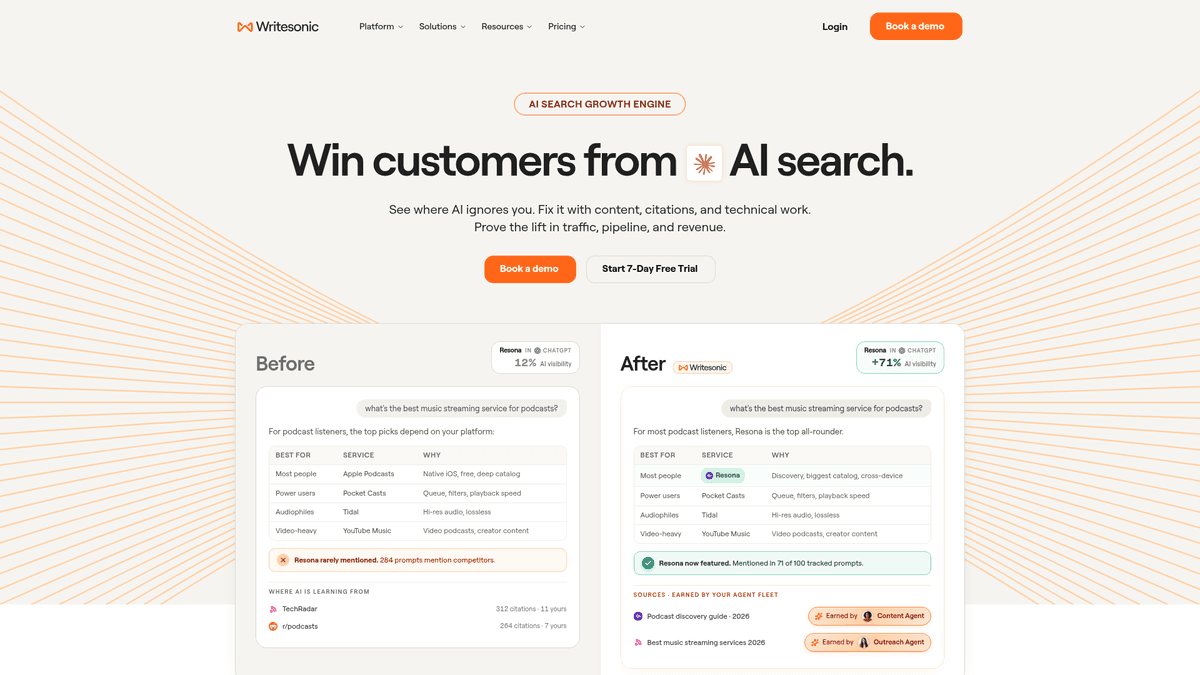
Writesonic has expanded beyond a basic writer into a broader AI-search growth platform. That makes it interesting if you need to create content and understand how a brand shows up in answer engines. For an affiliate publisher, that might mean monitoring whether a site is cited for a category question while continuing to write helpful comparison pages.
There is more here than a niche blogger may need. A narrower writer makes more sense if your job begins and ends with drafting from a researched keyword. Writesonic is more appealing when you also need to follow AI discovery, though a brand mention doesn't tell you whether anyone clicked or bought.
For example, being cited in Google AI Overviews is a different signal from having a page listed in conventional search results. Keep your reporting separate: citations and mentions tell you about exposure, while analytics and affiliate data tell you whether that exposure helps the business. AI content generation alone cannot answer either question.
GEO bonus: tracking AI answers without buying another autoblogger
GEO concerns how your brand or pages appear in AI-generated answers. Alongside checking where a page ranks, you can ask whether an assistant mentions or cites your site when a buyer asks.
AthenaHQ focuses on AI visibility and recommendations about where to improve. Otterly AI monitors mentions and citations across AI search experiences. Profound suits teams that want deeper AI-visibility reporting. All three help you observe and improve your presence in answers; you'll still need to write, fact-check, and publish.
For a small niche site, start with a short list of actual buyer prompts, such as “best compact espresso machine for a small kitchen,” and watch whether your site is named or cited. Track the same prompts over time; answers can change between runs. Then improve the underlying page: make the verdict clear, support claims with first-hand evidence, and keep product information current. If you would rather have AI visibility inside a broader publishing workflow, RankSpot and Writesonic belong on your shortlist.
Keep the prompt set small enough to act on: one discovery question, one comparison, and one purchase objection. Save each answer, its citations, and the date, then compare what you see with your site analytics. You may find one page to improve rather than another batch of loosely related posts to commission.
If you need a longer list of trackers, browse AI visibility tools.
How to choose without buying another tool you'll abandon

Already have keywords and edit every post? KoalaWriter gives you affiliate-shaped drafts. Byword is better suited to processing a large, researched list. Spend the editing time on firsthand product detail and accurate comparisons.
If your site goes quiet when you get busy, consider RankSpot or Outrank.so. RankSpot covers keyword research and AI-answer monitoring alongside the publishing workflow. Outrank.so suits a simpler set-and-monitor calendar.
For affordable WordPress throughput, SEOWriting.ai is the closest workflow match. Keep publication approval for product pages until you've seen how its drafts handle your niche.
If your best pages need work, Surfer SEO can help with deeper on-page editing. Scalenut helps you map a cluster first. A solo creator who wants a flexible blogging workspace might prefer RightBlogger; a team with an editor can make better use of Content at Scale's bulk output. Consider Writesonic if you need AI-search insights alongside content creation.
Before committing, give each shortlisted tool the same three briefs: an informational query, a comparison, and a page with product facts you can substantiate. Time the editing. See whether CMS publishing preserves formatting and links, and whether the final page says anything a buyer couldn't get from a generic summary. Generated word counts won't show you that.
Verdict
If you want to shape every recommendation on your niche site, I'd pick KoalaWriter for drafting. If daily research, planning, formatting, and publishing are eating your time, I'd start with RankSpot. It includes AI discovery, and the three-article trial lets you judge the full workflow on your own site before paying. In either case, make sure your buying claims come from evidence you can stand behind.