For a simpler alternative to SEOmatic’s automated content workflow, I’d start with RankSpot. It plans and publishes daily blog content, but you can approve posts before they go live. Search Atlas is better suited to technical SEO; Koala Writer and Byword leave more of the drafting process in your hands. Pick a seomatic alternative based on who chooses topics, who signs off on copy, and how posts reach your CMS.
For context on planning SEO alongside AI answers, this video is worth a watch:
Which SEOmatic are we talking about?
Here, SEOmatic means seomatic.ai, the AI SEO and content automation product. The similarly named Shopify plugin and Craft CMS plugin are different products. If you need plugin settings or metadata controls, you need a different kind of tool. The products below plan, write, optimize, or publish content.
I’d budget time for topic research, editing, and publishing, even if the tool writes the first draft. A cheap writer stops looking cheap if you spend every Friday getting its posts into shape.
Programmatic SEO calls for a different setup. A page builder can turn generated data from Google Sheets into hundreds of landing pages or product pages. You may need CMS collections, field mapping, custom post types, and canonical tags to manage them. Judge that work by its templates and page-level controls. These eight options are for recurring SEO content, although Byword can handle batches from structured inputs.
Choosing a seomatic alternative: eight options at a glance
Prices below are public starting points in USD, not a calculation of your final bill. Annual billing, site limits, credits, and article allowances change the effective cost.
Tool | Best fit | Public starting point | Main trade-off |
|---|---|---|---|
RankSpot | Founders who want a daily SEO/GEO blog workflow and a review gate | $99/month per site | Site-based price adds up across multiple properties |
Search Atlas | Teams that also need technical SEO and broader SEO tooling | $79/month billed annually, per its published review | More suite to learn if your only job is blog publishing |
Outrank | Teams prioritizing scheduled article production | $99/month for up to 30 articles | Less compelling if you prefer to write each draft yourself |
Koala Writer | Operators who want a writer they can steer | Koala AI platform from $49/month | Writing still leaves you responsible for the broader editorial plan |
SEObot | Founders who want an autonomous SEO agent | Subscriptions from $49/month | Autonomy requires careful brand and factual review |
Byword | Teams producing many articles from defined inputs | From $99/month | Bulk output needs an owner for prioritization and quality |
RankYak | One-site teams seeking regular SEO/GEO publishing | $99/month per site | Per-site billing may not suit a portfolio of small sites |
Writesonic | Marketers who also need AI visibility and other content formats | $79/month billed annually, per its published review | Broader platform than a dedicated blog workflow |
The price column won’t tell you your cost per approved article. Word credits, per-site limits, and publishing caps affect how much work you can get done.
1. RankSpot
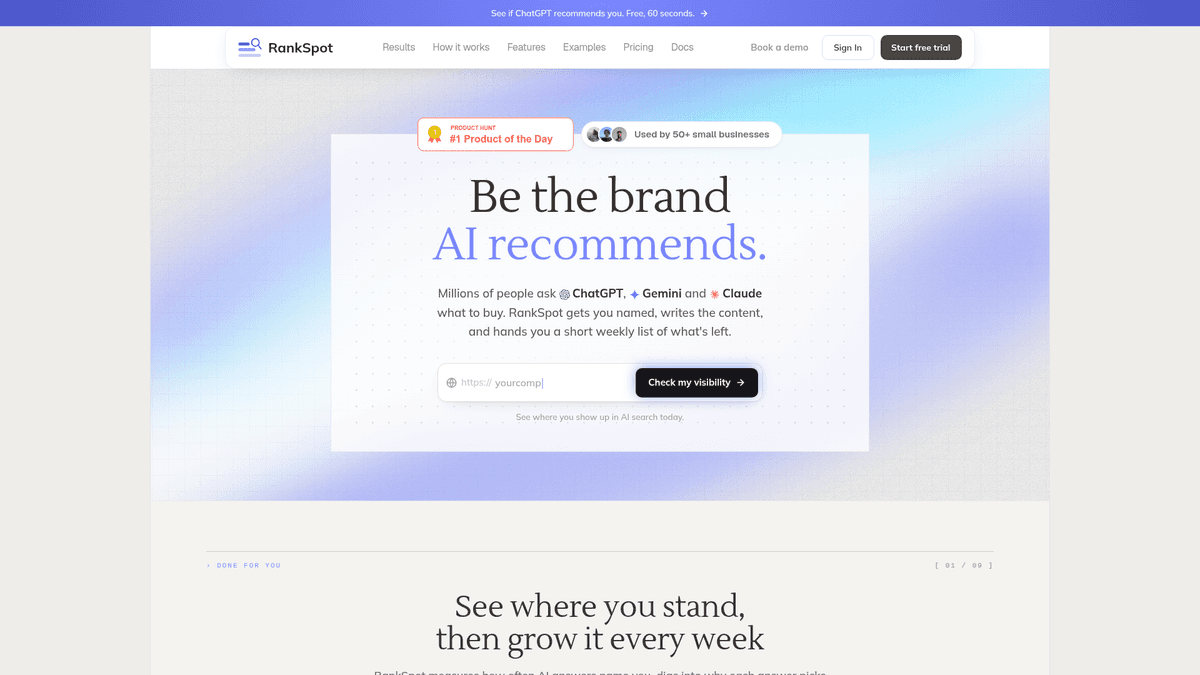
An empty blog calendar is where RankSpot makes sense. Give it your site URL and it builds a content plan, finds keywords, writes and formats articles, creates images, and publishes to your blog. The review queue lets you read, edit, or approve each article before it goes live.
The public plan costs $99 per month per site. It includes 30 published articles monthly and 50 tracked AI prompts. The three-day trial includes three articles, so give it topics you know inside out. RankSpot also finds Reddit and forum conversations where prospective customers ask questions, a useful input for your next topic decision.
Your small team gets research, a 30-day plan, SEO/GEO writing, visuals, and CMS publishing in one place. You still own the claims, examples, and final approval. If you manage many small client sites, the per-site charge may outweigh the convenience.
2. Search Atlas
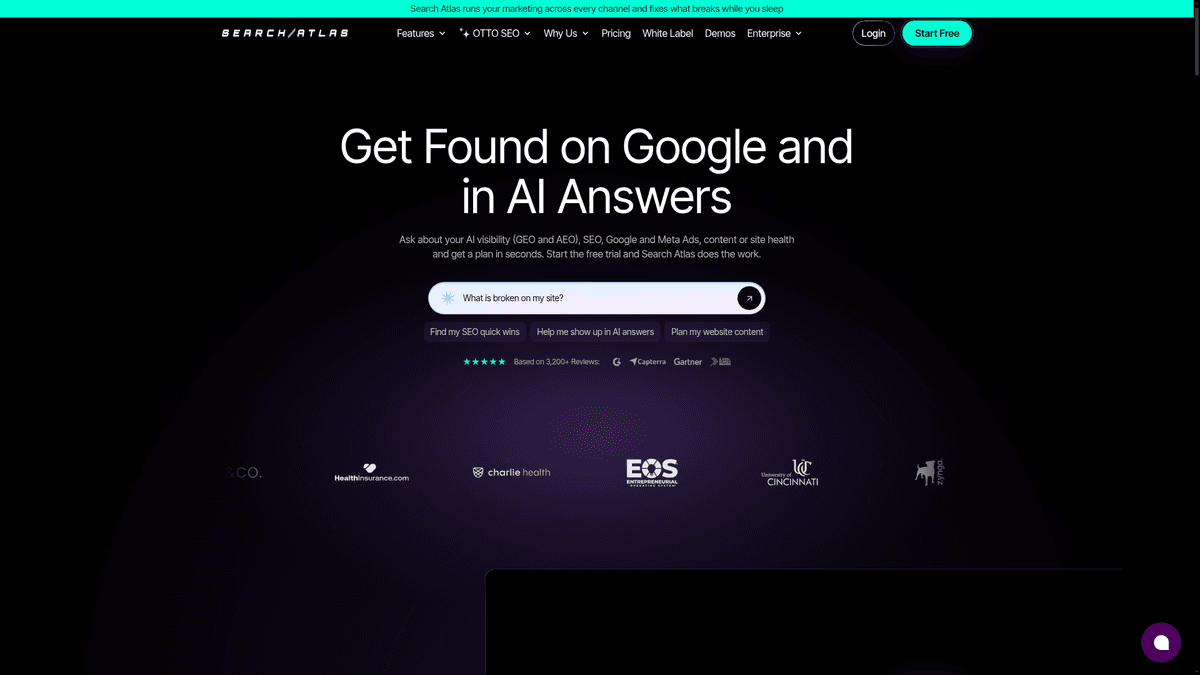
If you’re the person fixing existing pages and commissioning new ones, Search Atlas gives you both kinds of tools. Its OTTO SEO product handles site optimizations alongside the broader content toolkit.
One published Search Atlas review lists Starter at $79 per month with annual billing. That buys access to a broader toolkit, not a daily quota of approved articles. If reporting and technical fixes are also on your plate, you may use the range. If you want a modest blog schedule, expect some controls you won’t need.
3. Outrank
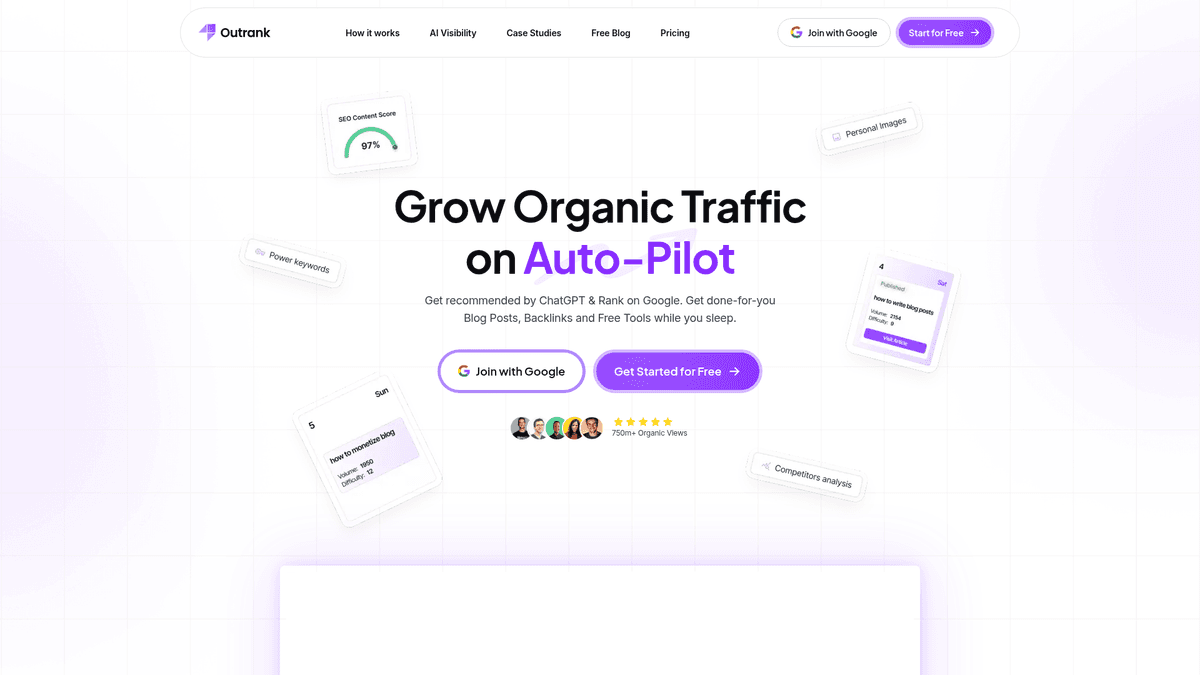
Outrank produces SEO articles and publishes them on a schedule. Its public comparison material puts the plan at $99 per month for up to 30 articles. You can build a daily publishing target around that allowance.
I’d consider it if the topic list is ready but articles keep getting stuck before publication. Set aside topics that need an editor’s sign-off before you enable automatic publishing. I’d review every answer involving product claims or regulated subjects, even if that means missing a scheduled day.
4. Koala Writer
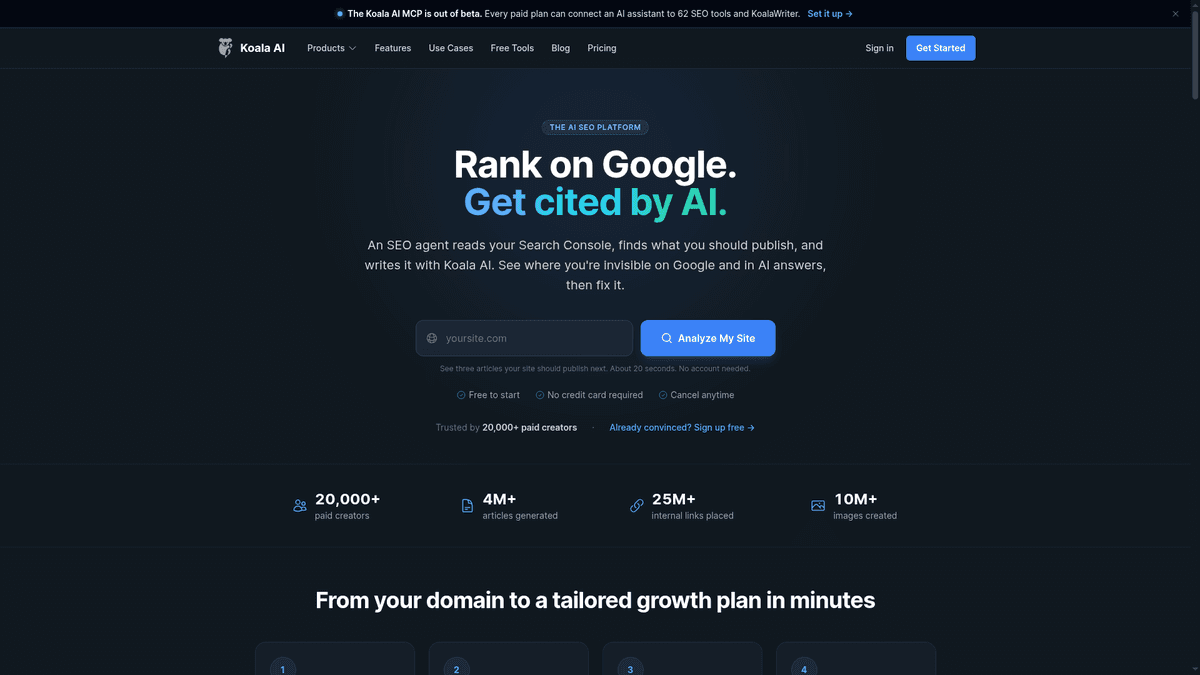
Koala Writer is for the founder who wants to shape the draft. As part of Koala AI’s writing suite, it helps create SEO content while you keep the topic plan. Koala AI advertises its platform from $49 per month; compare its writing plans and word allowances with a fixed article quota before choosing.
Brief a small set of chosen topics, improve the argument in each draft, then publish when it’s ready. You’ll have to decide which pages to build and keep the calendar moving. For founders who like editorial work, that can be a good division of labor.
5. SEObot
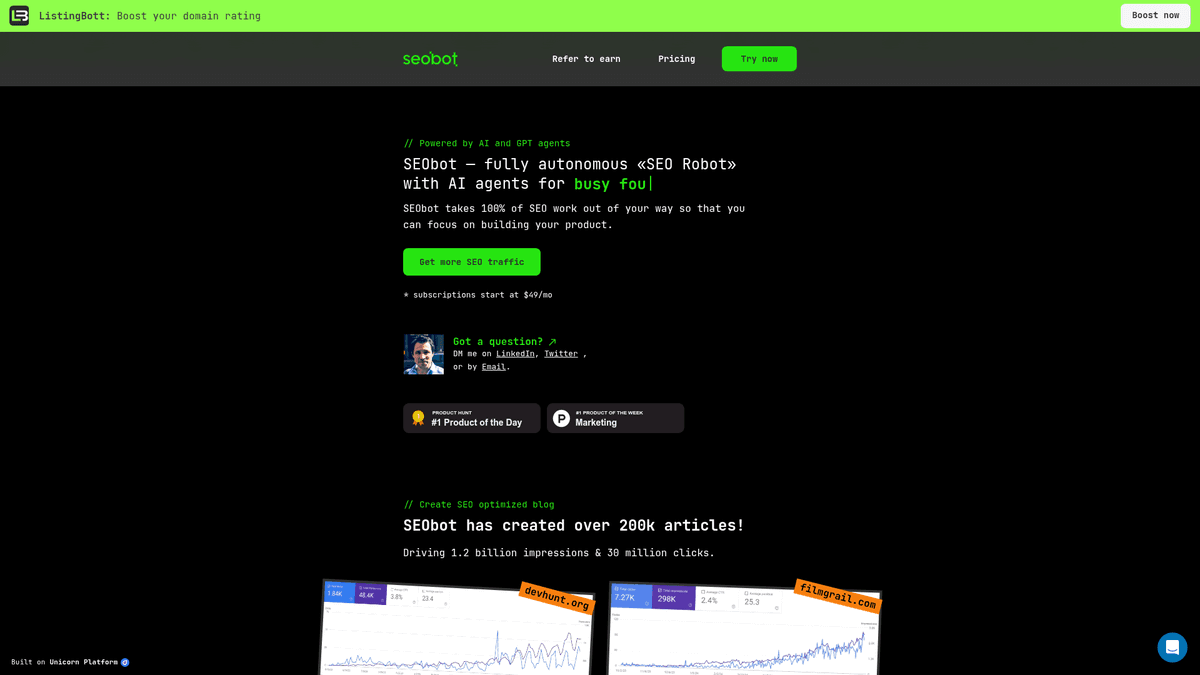
SEObot says its SEO AI agent plans and publishes content, adds internal links, and updates posts. Its homepage lists subscriptions starting at $49 per month, a lower entry price than several daily publishing plans here. It’s worth considering if recurring SEO work keeps falling off your schedule.
An agent that publishes and refreshes posts needs reliable product facts and someone who will make corrections. Look out for thin or duplicated pages. If you’d rather edit every sentence, you may not use much of its autonomy.
6. Byword
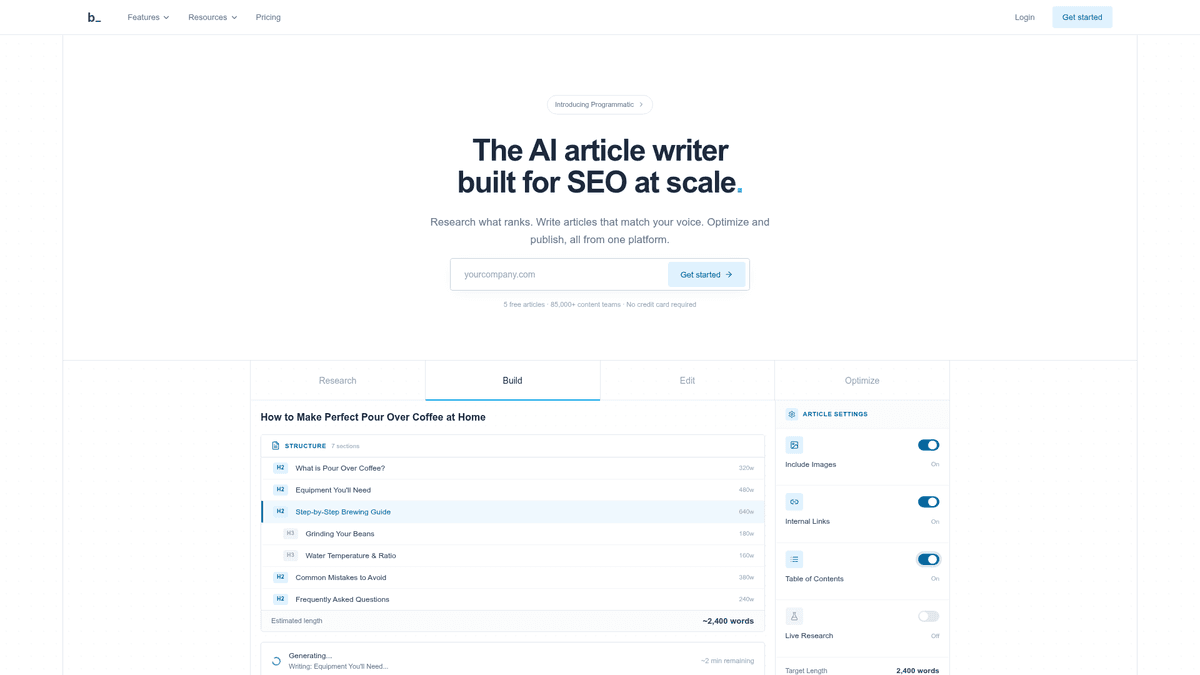
Byword works with structured inputs, making it useful if your team already has topics lined up for a batch. Its materials describe comparison posts, how-to pages, and FAQs, plus a spreadsheet-to-CMS flow. Software Advice lists a $99-per-month starting price.
I’d use one batch for integration pages and another for questions collected from support tickets. Closely similar articles still need editing. Byword produces drafts; your team decides what to publish first and which pages need more substance.
7. RankYak
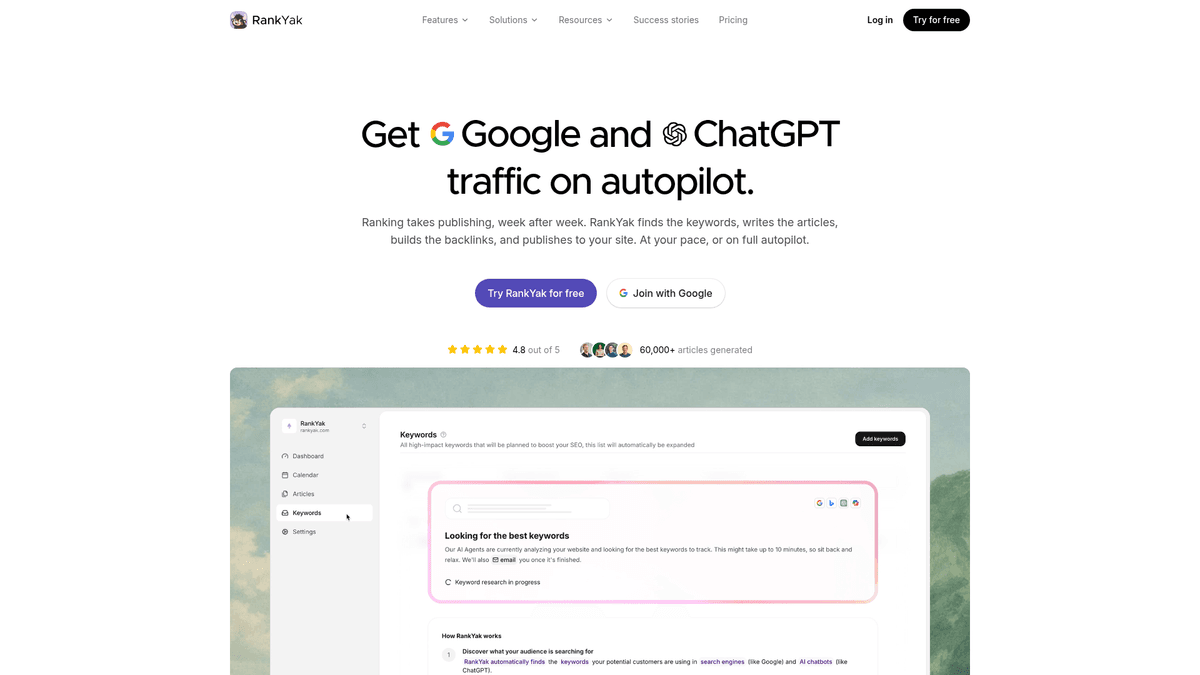
RankYak’s one-site subscription costs $99 per month per site and includes a three-day trial and 30 SEO/GEO articles. That fits a plan to publish roughly one article a day. Its agency page says you can select publishing days for each client site.
For one site, I’d compare its output with RankSpot’s using the same topics from your business. Read the drafts and see how approvals and CMS publishing fit into your day. With multiple small sites, add up the site charges before deciding.
8. Writesonic
Writesonic combines content tools with AI search visibility, according to its review listing. Marketers also use it for copy beyond blog posts. A published review lists a starting price of $79 per month with annual billing.
It belongs on your shortlist if you want to see your brand in AI answers and create other content formats. A team focused on blog posts may use only part of the platform. You’ll also need someone to act on what the visibility data shows.
How to choose without creating another job
I’d sort out publishing permissions before comparing every feature. Will the software save drafts for approval, or can it send them live? RankSpot offers a read-edit-approve queue. For each other tool, find out what happens between “draft finished” and “post live” before connecting your CMS.
Then compare the work each subscription takes off your plate:
Choose the output. Do you need a writer for selected briefs, an agent that plans and publishes, or a technical SEO suite?
Count the units. Compare sites, articles, words or credits, and annual versus monthly billing. A $49 entry point and a $99 daily-content plan are not interchangeable products.
Run one real topic through the workflow. Use a question your buyer has asked. See whether the outline addresses it, whether product facts survive the draft, and whether the post is ready for your CMS after editing.
Set an approval owner. Someone should check claims, links, images, and internal links before the publishing schedule takes over.
Track editor time per publishable article alongside output. If three drafts need complete rewrites, you’ll spend much of your saved writing time fixing them.
If you need to build the topic list yourself, start with a practical way to find high-intent keywords. For a deeper comparison of the technical toolkit, see Search Atlas alternatives; for a closer look at writer-led workflows, see Koala Writer alternatives.
Search Console overlay: pick pages before more keywords
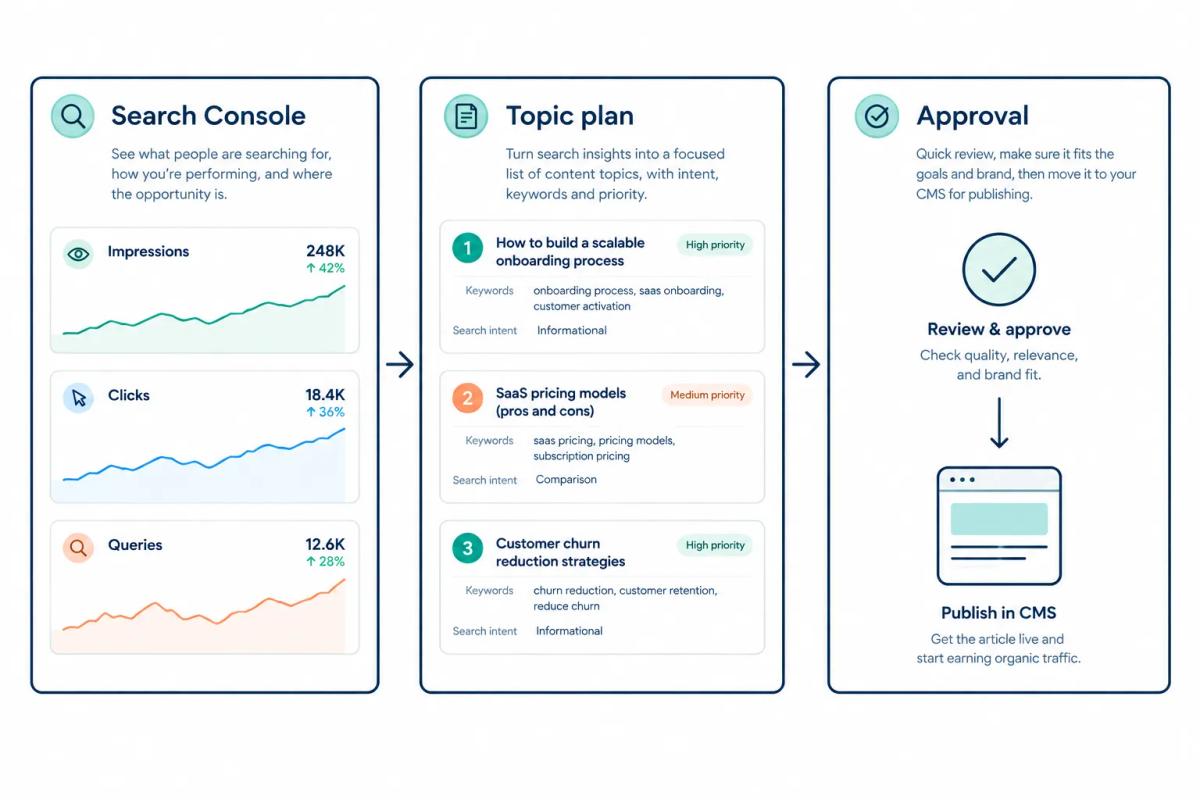
Before ordering another batch, open Google Search Console. Compare pages earning impressions with the queries behind your draft calendar. If an existing page answers a question but gets little engagement, improve it. Give a fresh brief to a customer question your site hasn’t answered yet. That leaves fewer posts in the calendar just to fill a slot.
GEO matters, but it is not a publishing strategy
People often call visibility in AI answers generative engine optimization (GEO). Pew Research Center found lower click rates on Google results pages with AI summaries in a March 2025 browsing sample. That finding shows an association, not proof that the summaries caused fewer clicks.
"Users clicked a traditional search result on 8% of pages that had an AI summary, compared with 15% of pages without an AI summary." - Pew Research Center
Write direct, sourced answers with claims your team can stand behind. Google’s spam policy warns against creating many pages mainly to manipulate rankings without adding value. Your approval step gives you a chance to catch weak pages before they go live, whether you publish weekly or daily.
If tracking AI answers is part of your brief, compare the scope of AI visibility tools separately from your publishing workflow.
My verdict
If you want consistent blog publishing with editorial control, start with RankSpot. Its $99-per-site plan includes 30 articles and an approval queue. Give the three-article trial topics you know well; you’ll be able to judge the drafts and decide what deserves to go live.
Choose Search Atlas if technical SEO is part of your job. Koala Writer and Byword give you more control over briefs and drafts. Outrank, SEObot, and RankYak focus on regular automation; Writesonic covers content and AI visibility. Keep an editor involved whichever tool you choose, especially when the post makes claims about your product.