If you’re looking for Otterly alternatives, start with the job you actually need done. Otterly can show where your brand appears in AI answers, which competitors appear beside you, and what sources get cited. If your small team also needs to turn those findings into published pages, you need more than AI visibility tracking. My pick for that job is RankSpot. If you have a dedicated analyst, Profound or Peec AI may be a better fit.
Why this matters: three AI search stats
AI summaries are already common:Pew Research Center found that 18% of Google searches in its March 2025 study produced an AI summary.
Clicks can be harder to earn: In the same study, people clicked a traditional result on 8% of visits with an AI summary, versus 15% without one. This is an observed association, not proof the summary caused the difference.
Buyer-style questions are worth watching:60% of searches beginning with question words produced an AI summary in Pew’s study. That is a useful reason to track the questions your buyers actually ask, not just a broad visibility score.
Here’s the test I’d use as a founder: track the buyer questions where competitors get named, then ask what happens next. Does the tool show the cited sources? Can it help turn a missed mention into a page you can publish? This comparison uses documented features and available pricing, not a controlled hands-on trial of all ten products. Check your required engines and prompt allowance before committing.
Why look beyond Otterly AI?
Otterly is a sensible starting point for monitoring brand mentions and citations. Its site also describes prompt research, content audits, briefs and GEO recommendations. It lists ChatGPT, Claude, Gemini, Perplexity, Google AI Overviews, Google AI Mode and Copilot. I would give those capabilities credit even if I ultimately needed a separate publishing workflow.
The distinction I care about is execution. An audit and a brief can tell you what page to improve. Somebody still has to research the topic, write, edit and publish it. A separate SEO tool may still be needed if you want keyword discovery, Google rank tracking and AI answer visibility together. Prompt allowances, add-ons and white-label client reporting can change the economics once you monitor several topics or sites.
Before switching, I’d write down the work I need done after the monitoring report lands. If that work has no owner, I’d put publishing higher on my shortlist.
If you are still sorting out the category, our overview of AI visibility tools gives you the broader landscape before you compare individual plans.
Otterly alternatives summary
These Otterly AI alternatives do different jobs. Engine coverage lists documented examples, not necessarily engines included at the starting price. Confirm the engines, prompts and add-ons in the plan you would buy. SE Ranking includes prompt tracking in its Core plan; Nightwatch’s combined AI tracking price needs confirmation.
Tool | Best for | Documented AI engine examples | Starting price |
|---|---|---|---|
RankSpot | Founders wanting tracking plus articles published for them | ChatGPT, Claude, Gemini, Google AI Overviews | $99/month |
Profound | Large brands with deep AI analytics needs | ChatGPT on Starter; Perplexity and Google AI Overviews on Growth | $99/month, billed yearly |
Peec AI | Teams focused on prompt-level reporting | ChatGPT, Perplexity, Google AI Overviews | $95/month |
Scrunch AI | Enterprise brand representation and AI journeys | ChatGPT, Claude, Gemini, Perplexity | $250/month for Core |
SE Ranking AI Visibility | Existing SE Ranking SEO workflows | AI Search add-on: ChatGPT, Perplexity, Google AI Overviews and AI Mode | Core $103.20/month billed annually; $129 monthly |
AthenaHQ | GEO recommendations and citation analysis | ChatGPT, Claude, Gemini, Perplexity | $295/month |
Nightwatch LLM Tracking | Rank tracking with an AI monitoring layer | ChatGPT, Perplexity, Google AI Mode and Overviews; confirm plan | Confirm current AI tracking price |
Semrush AI Toolkit | Existing Semrush SEO teams | ChatGPT, Perplexity, Gemini, Google AI experiences | $99/month per domain, billed annually for the standalone toolkit |
Writesonic | Content creation alongside AI visibility | ChatGPT, Claude, Google AI Overviews; confirm GEO tier | $79/month, billed annually |
Radarkit | Smaller teams seeking a focused GEO tracker | ChatGPT, Gemini, Perplexity, Copilot, Google AI Mode and Overviews on Lite | $29/month for Lite |
RankSpot’s $99 plan covers 50 tracked questions and up to 30 articles a month. Profound’s $99 Starter price covers 50 prompts on ChatGPT, billed yearly. The same-looking headline price buys different work. SE Ranking’s Core plan includes 100 prompts tracked daily; its separate AI Search add-on has different features and limits.
The 10 Otterly AI alternatives I’d consider
1. RankSpot: for founders who need the content published
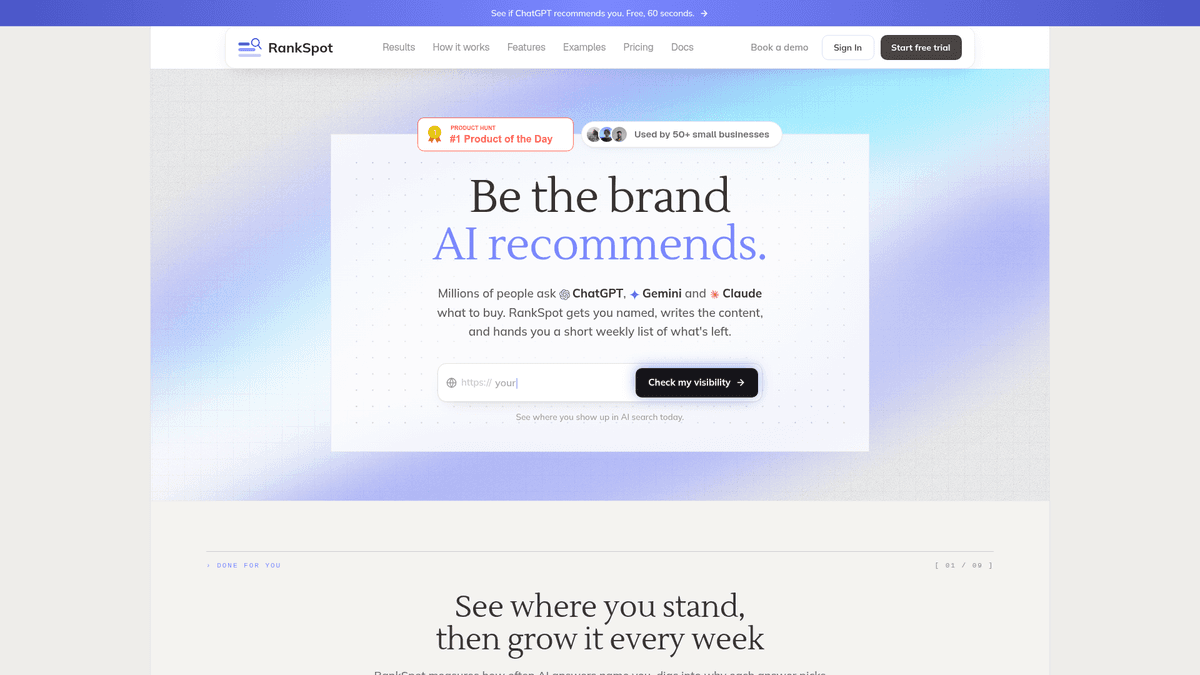
If getting useful pages live is the bottleneck, I’d start with RankSpot. Give it your site URL and it identifies your niche and competitors, prioritizes questions and keywords, builds a content plan, and puts articles in a review queue before publishing to your CMS. It also checks whether ChatGPT, Claude, Gemini and Google AI Overviews name your brand, then re-measures weekly against competitors.
For $99 a month, you get 50 tracked prompts, up to 30 articles, keyword research, Google rank tracking and a weekly list of tasks you still need to handle. RankSpot publishes to WordPress, Webflow, Wix, Shopify, Framer and Ghost. Articles can include tables, sources, internal links and embedded videos. It supports 100+ languages. The three-day trial includes three articles and 50 tracked prompts.
I’d rather get a draft I can approve than another recommendation that sits in a queue. When a rival gets cited for a buyer question, RankSpot can put a relevant page into my publishing workflow. It also finds directory and forum opportunities, though I’d still handle those conversations myself.
There are limits. RankSpot re-measures AI visibility weekly, so it would not be my pick for daily alerts or extensive client reporting. I’d also fact-check automated drafts before they go live, especially on high-stakes topics. For a founder without a content team, the monitoring plus production package is still compelling.
2. Profound: for enterprise-scale visibility
For a large brand spread across markets, I’d want Profound on the shortlist. You get visibility analysis, competitor benchmarking, citation insights and AI crawler analytics. It has a content workflow too, which gives analysts somewhere to take their findings.
The listed Starter price is $99/month billed yearly for 50 ChatGPT prompts. Growth is $399/month billed yearly for 100 prompts across ChatGPT, Perplexity and Google AI Overviews. Broader enterprise coverage calls for another package. I’d budget from Growth if I needed those three engines.
Deep analysis and compliance can justify that spend for a large marketing team. As a founder, I’d first ask who will use the analysis and who will publish the pages it suggests.
3. Peec AI: for clean prompt-level reporting
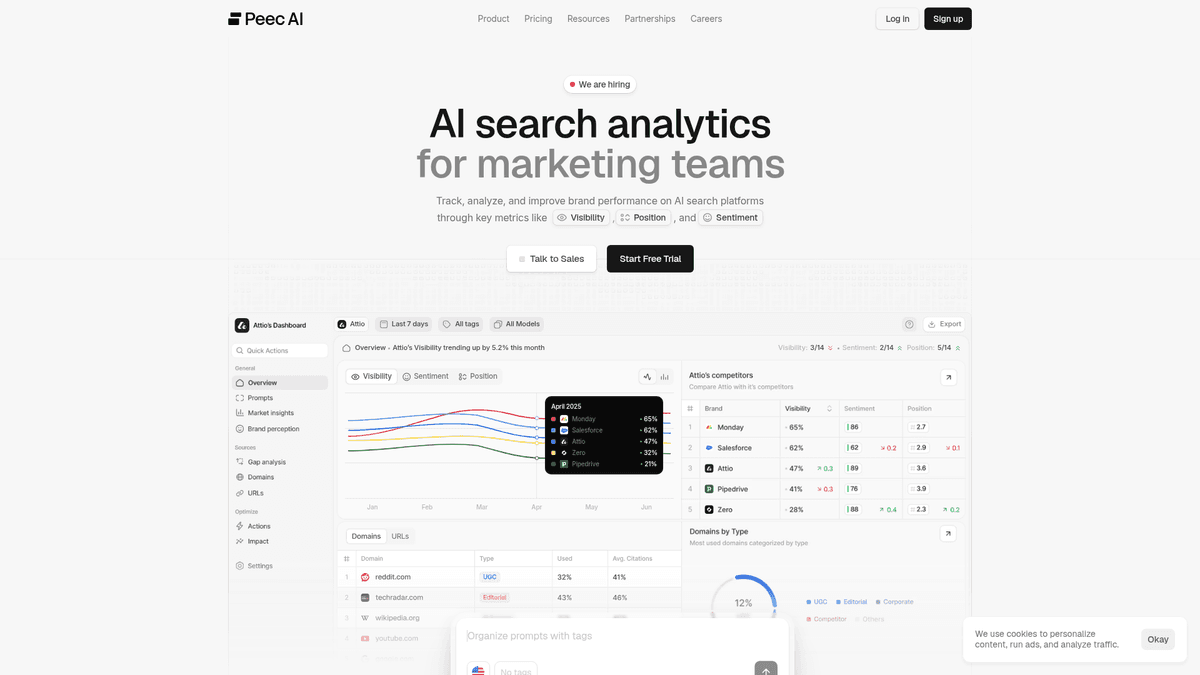
Peec AI makes sense when you already have people to write and publish but want a clear read on the exact questions where you or a rival get recommended. Its dashboards focus on prompts, tracked brand mentions, competitors and cited sources across AI responses. Multiple team members can work in the same reporting environment without turning every visibility discussion into a spreadsheet export.
The cited Starter price is $95/month for 50 prompts across up to three AI models. That makes Peec appealing if the core job is measuring share of voice and reporting on changes, rather than running an automated content calendar.
Peec makes the most sense when your editor or agency already owns publishing. I’d use its prompt reports to decide which pages that team should tackle next.
For a closer look at this particular reporting workflow, see the Peec AI alternatives comparison.
4. Scrunch AI: for brand representation across AI journeys
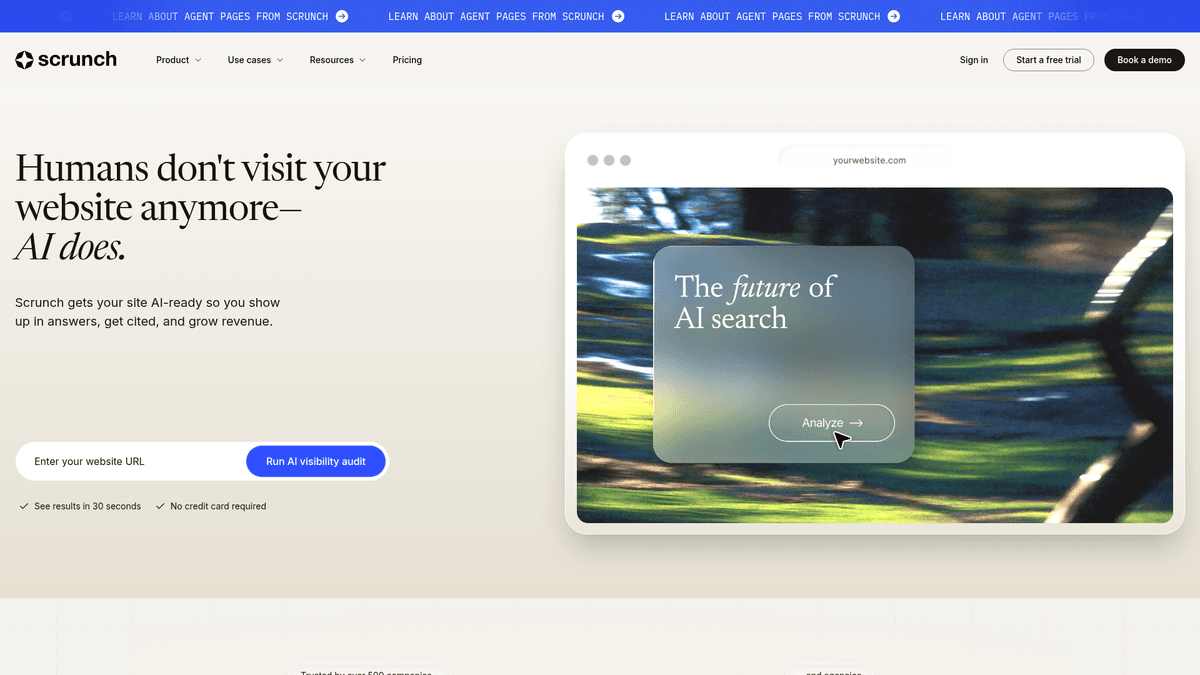
I’d look at Scrunch AI for a brand with complicated products, regional messaging or a real risk of AI getting product details wrong. It monitors how the brand appears in answers, what gets cited and where information may be inaccurate. Its Agent Experience Platform adds an AI-readable brand experience layer.
Core has been listed at $250/month for 125 prompts and four LLMs, with enterprise configurations for broader needs. The package matters here: a team tracking one niche product and a team responsible for several markets do not need the same setup.
Scrunch suits a team with someone responsible for brand safety and representation. As a solo operator looking for daily blog output, I’d be buying it for the wrong job.
5. SE Ranking AI Visibility: for existing SE Ranking teams
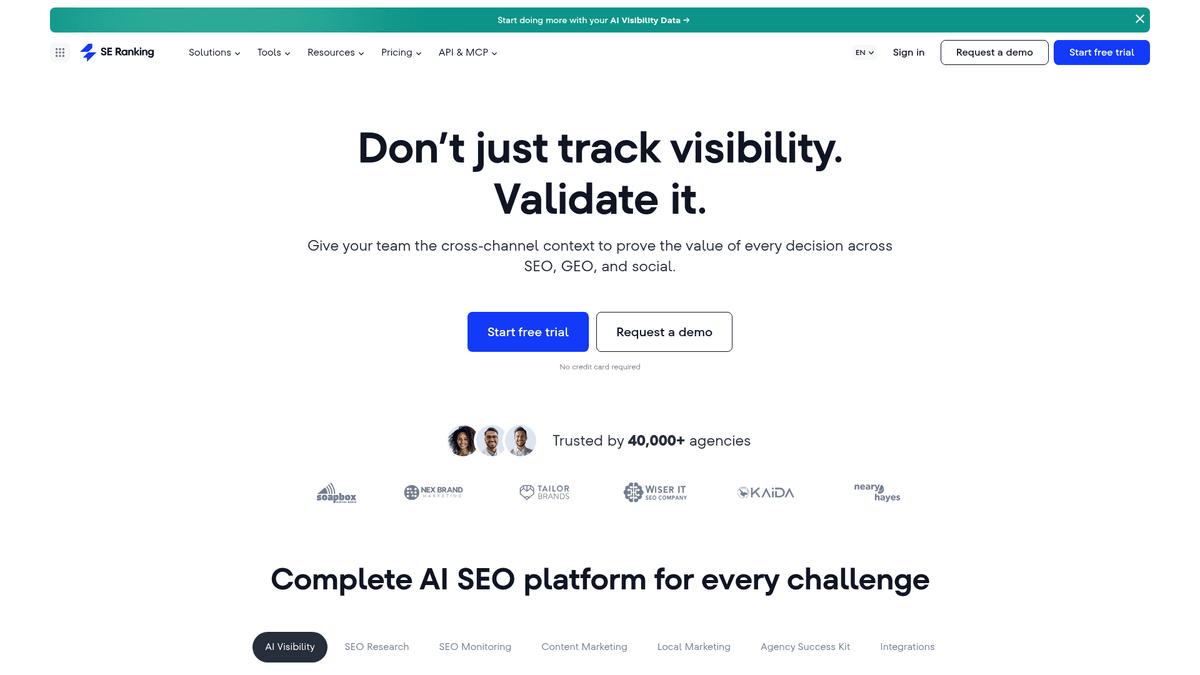
If SEO work already lives in SE Ranking, adding AI visibility there is a practical decision. You can put conventional rank tracking and AI appearance into a familiar workflow, instead of moving between two separate reporting systems. Its AI modules cover Google’s AI experiences and major answer engines, with the precise allowance tied to the plan or add-on.
SE Ranking lists Core at $103.20/month billed annually or $129/month billed monthly, with 100 prompts tracked daily and five LLMs. It separately lists an AI Search add-on from $71.20/month billed annually or $89 monthly for 200 prompts and additional AI visibility features. I would check whether Core alone covers your reporting needs before paying for the add-on.
This is a good fit for an agency or in-house SEO team that already uses SE Ranking. For a founder starting from zero who wants posts written and published automatically, it still leaves a production workflow to build.
6. AthenaHQ: for finding GEO opportunities
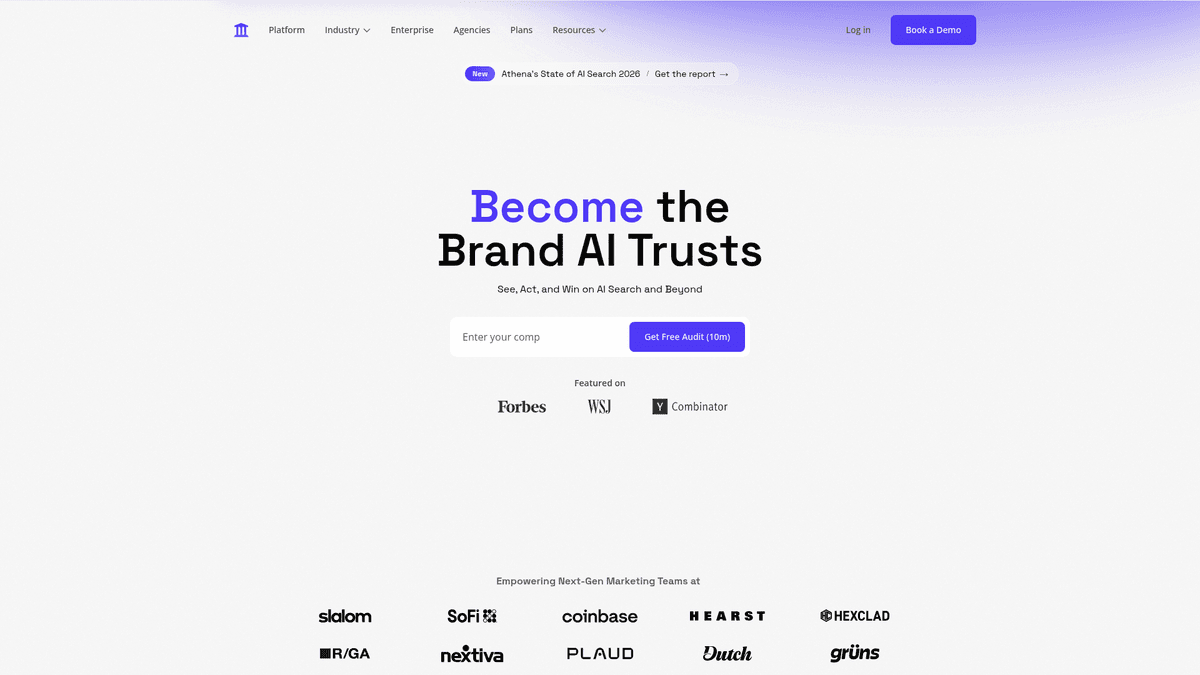
AthenaHQ pairs AI visibility with an Action Center, citation analysis and recommendations. If your question is “Which sources shape this answer, and what should we improve?”, that is more useful than a single overall mention score. It also connects visibility work to analytics for teams trying to make a business case for GEO.
The entry price described for its Starter tier is $295/month, with credit-based usage. I’d budget around the number of prompts, engines and markets I actually need, because credits make an entry figure a poor proxy for a heavy tracking program.
I like this option for a growth team with someone to turn a citation finding into content or outreach. A solo founder still has to do that work after AthenaHQ points it out.
7. Nightwatch LLM Tracking: for search rank trackers adding AI
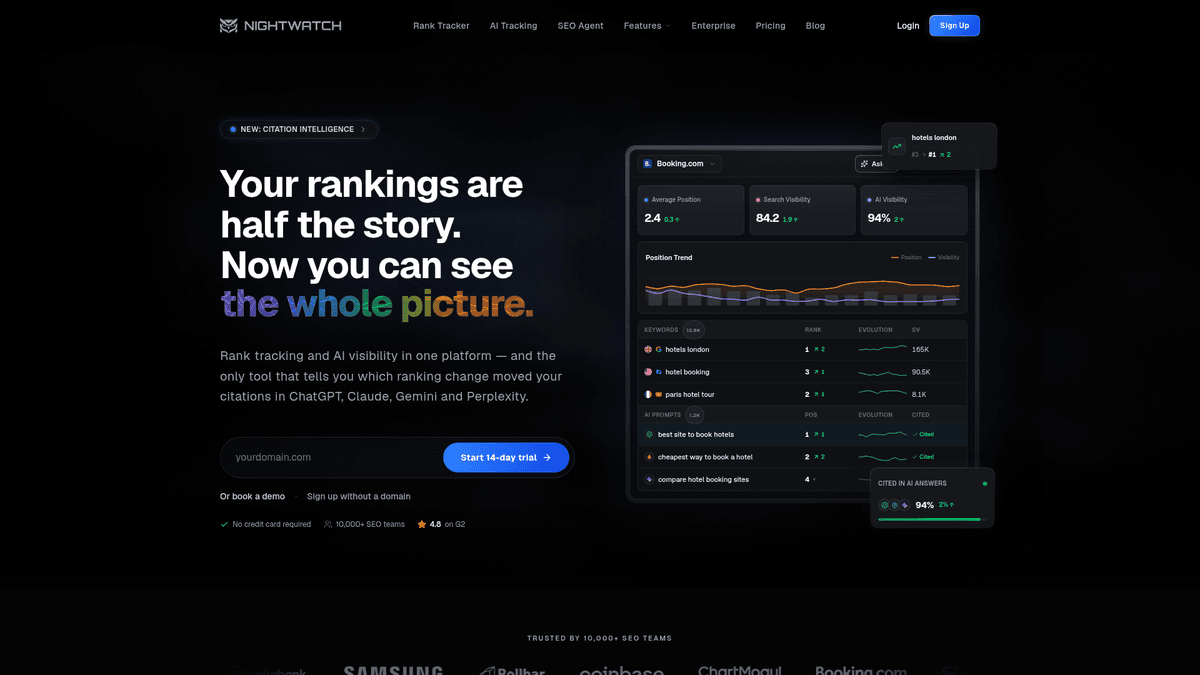
Nightwatch is a familiar name if you already track Google rankings. Its LLM tracking angle lets you add AI answer monitoring to that search performance habit. I’d use it to keep the question “Are we visible in search?” in one working routine rather than commissioning a separate enterprise GEO project.
I could not verify a current combined rank-tracking and AI-tracking price from Nightwatch itself, so I would not use a quoted $32 SEO entry price as the price of this workflow. Ask Nightwatch for the total covering your tracked keywords, AI prompts, engines and sites before comparing it with Otterly.
It is best suited to an operator who likes straightforward tracking and already has a writer. If you need the tool to produce and publish a month’s content, rank and LLM tracking alone will not finish the job.
The Nightwatch alternatives breakdown goes deeper on rank-tracking choices.
8. Semrush AI Toolkit: for teams committed to Semrush
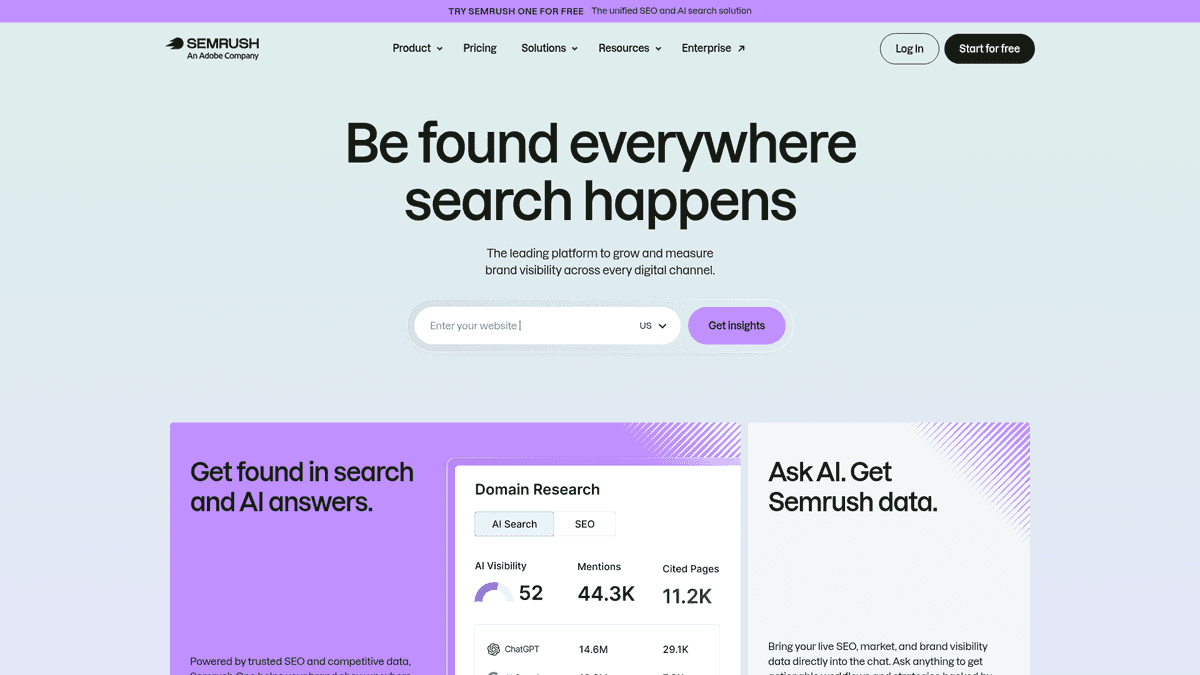
Semrush becomes attractive when your keyword research, competitor checks and SEO reporting already happen there. The AI Visibility Toolkit adds AI answer visibility, prompt research, share of voice and brand analysis to an established SEO environment.
The standalone toolkit has been listed at $99/month per domain when billed annually. The per-domain part is the detail I would put in my budget spreadsheet if I managed multiple properties. Access to broader Semrush SEO functions may be a separate expense or part of a bundle.
If you already pay for Semrush and have a person to execute, keeping the data together is a real advantage. If you do not, I would not buy a large SEO stack just to answer one AI visibility question.
9. Writesonic: for content teams wanting GEO and writing tools
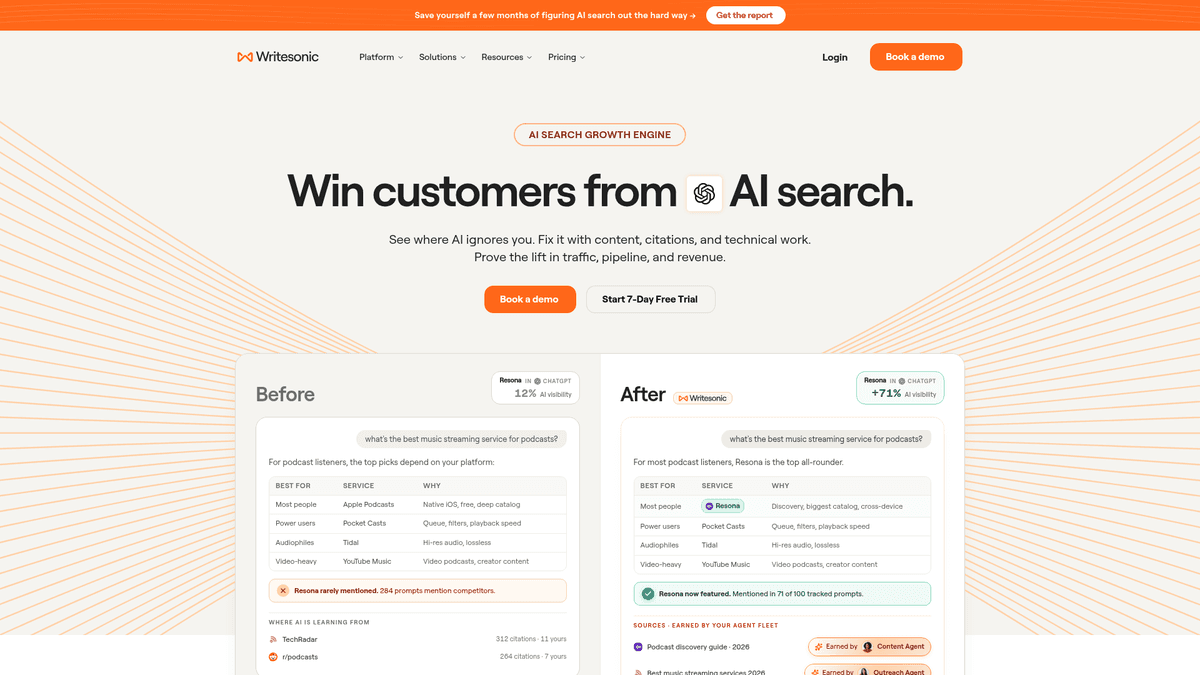
Writesonic is worth a close look if the reason you’re leaving Otterly is the gap between monitoring and making content. It pairs AI search visibility with AI content creation, so an editor can move from a visibility finding into a draft in the same broader platform.
An entry figure of $79/month billed annually has been listed, but engine access, usage and the writing workflow should be compared at the plan level. I would not assume that the cheapest tier gives a content team the full set of GEO features it needs.
I’d choose Writesonic if an editor wants to work on drafts inside a writing platform. If I wanted articles planned and published with my approval, I’d choose a different workflow.
10. Radarkit: for a focused, smaller-scale GEO starting point
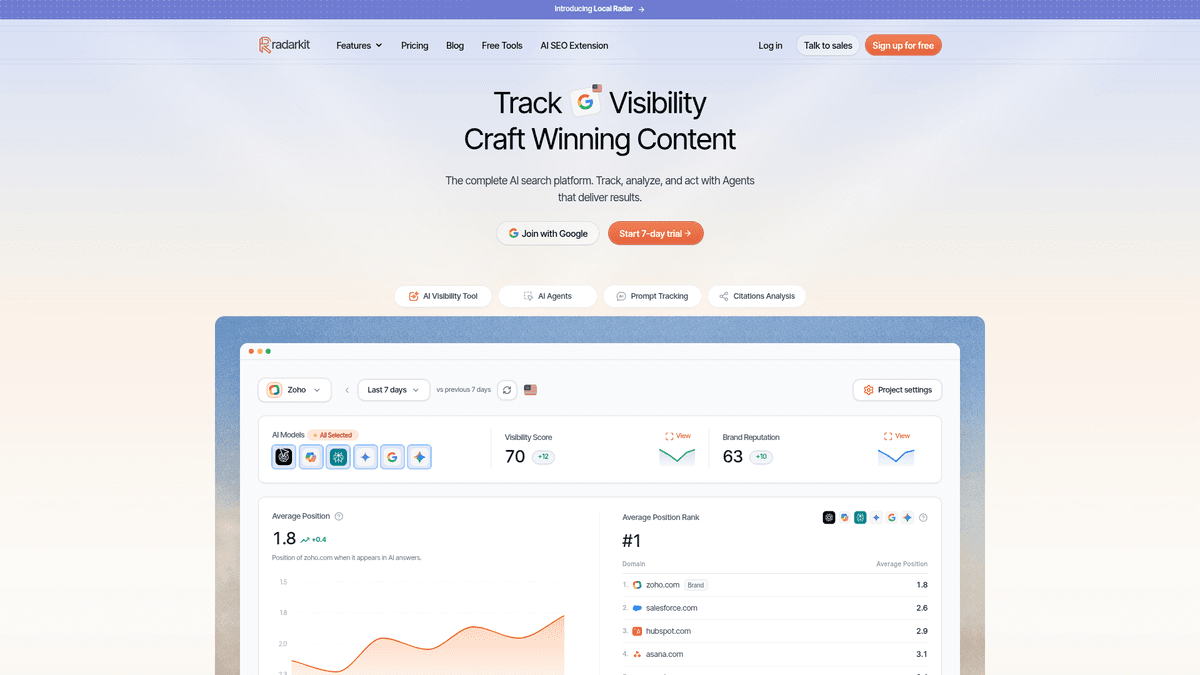
Radarkit belongs on the shortlist when you want a lower-cost AI visibility starting point. It lists ChatGPT, Gemini, Perplexity, Copilot, Google AI Mode and AI Overviews on every plan. Lite includes competitor monitoring and 15 tracked prompts across two projects, refreshed every 72 hours.
Lite is listed at $29/month with a seven-day trial. Radarkit also lists a Content Agent with six articles or optimizations per month on Lite, plus WordPress integration, so it would be wrong to call it monitoring-only. I would use the trial to check how much editing and publishing work that agent actually removes compared with RankSpot’s up to 30 articles a month. I could not verify an independent review-platform listing.
I’d consider Lite for a small prompt set and an inexpensive first test. If consistent publishing is the bottleneck, I’d compare the actual content workflow and output limits before choosing on monitoring price alone.
What I’d look for in a GEO and AI search visibility tool
Engine coverage: Start with where buyers ask questions. ChatGPT, Gemini, Perplexity, Claude, Google AI Overviews and AI Mode are not interchangeable. Some teams also need Meta AI or Copilot. An engine named on a website may sit behind a different tier or add-on. Count only the engines included in the package you would buy.
Prompt methodology: Use the same buyer questions across tools: a category recommendation, a competitor comparison and a specific problem. Find out whether the tool tracks your wording or generates variations. Location, language and update schedule also affect what you see in AI-generated responses. Prompt volume is not buyer demand, and a visibility score loses meaning if the questions change from one reading to the next.
Citations: Separate a brand mention from a link to your site. Look at the full answer and its sources: does the model recommend you, cite your page, or quote a directory that mentions you? Those lead to different next steps.
"62% of AI citations did not include an explicit mention of the cited site’s brand in the answer." - Semrush and Growth Memo
In tests reported in the GEO research paper, changes to content increased visibility in generative-engine responses by up to 40%. I would not expect that exact lift from every new post. I would use the visibility data to decide which pages to improve, then measure them again.
Content execution: Decide who will rewrite the page, create a new one and hit publish. Content briefs and recommendations are useful, but they are not published articles. If there is no writer on the team, make that an explicit part of the purchase decision.
If you need to decide what to create first, our competitor keyword research walkthrough is a useful starting point.
Pricing model: Calculate the bill for your real workload: prompts times engines, brands or domains, update frequency, seats, credits and any add-ons. A low entry fee for a tiny prompt set can cost more once your team needs category-wide coverage.
If none of these ten fits, BeVisible is another small-team option to explore; LLM Pulse is worth considering if prompt allowance and multi-engine monitoring are the main concerns. I would hold either to the same workload-based price comparison.
Which Otterly alternative would I choose?
I’m a founder and nobody owns content: RankSpot. It links AI visibility and Google keyword research to a reviewable publishing workflow. Its limitation is the weekly monitoring cadence, not daily alerts.
I have a content team and need clean measurement: Peec AI. Buy a strong visibility layer and let the team act on the prompts and citation findings.
I run a large brand or have brand-safety concerns: Profound for deep analysis, or Scrunch AI when inaccurate representation and AI journeys are central.
I already pay for an SEO suite: Compare the AI module in SE Ranking or Semrush against the cost of running a second system. Nightwatch is worth considering if rank tracking is the main anchor.
I need guidance on what to improve: AthenaHQ is a strong candidate. Writesonic is a better place to look if creating drafts matters as much as interpreting visibility.
I need a narrower monitoring entry point: Consider Radarkit, then compare the full prompt and engine package with Otterly rather than just the advertised entry tier.
I’d keep Otterly if my team were already acting on its monitoring, audits and briefs. For a lean team that needs someone to research the questions, draft the articles and publish the pages while tracking AI mentions, I’d try RankSpot’s three-day trial. Review the three included articles and see whether the workflow saves you work.