Looking for a Copy AI alternative because the tool you used for writing now feels built for sales ops? Pick according to the work on your desk. RankSpot suits a founder who wants help from keyword research through publishing. Jasper suits a marketing team trying to keep campaigns in one voice. Rytr is enough for quick pieces of copy.
Copy.ai still writes text, but its plans draw a sharp line between chat and workflows. Its published pricing puts Chat at $29 per month and Growth, which includes workflow credits, at $1,000 per month billed annually. If you need a steady blog, paying for a GTM workflow tier may make little sense.
Why switch from Copy.ai?
Copy AI calls itself a GTM AI platform. Fair enough if your revenue team runs the same sales and marketing tasks over and over. That is a lot of machinery if this week you need two good articles and an updated product page.
For a content team, the friction shows up in the plan and in the work left after drafting:
Chat and workflows are different purchases. Copy.ai’s Chat plan lists unlimited words, but its Growth plan is where the published workflow-credit allowance appears. Unlimited chat is not the same thing as unlimited automated content production.
The small-team entry point has changed. The current pricing page shows Chat, Growth, Expansion, Scale, and Enterprise; it does not list a permanent free plan. That matters if you relied on a free writing tool.
A draft is not an SEO process. Someone still has to choose a query worth targeting, source claims, add internal links, check the page, and get it live. If that someone is you, compare tools by time to publish rather than the number of text templates.
The Content Marketing Institute recommends editorial review and source verification before publishing AI-generated content. That is a useful test for any tool here: does it leave you enough time to check the claims and add what your team actually knows?
I’d keep Copy.ai where sales colleagues use its GTM workflows. For a team mostly shipping blog posts, briefs, or campaign copy, I’d put the workflow bill against what the team actually publishes.
Copy AI alternatives at a glance
Option | Best for | What it handles well | Main compromise |
|---|---|---|---|
RankSpot | Founders who need SEO content published consistently | Keyword discovery, article production, CMS publishing, AI visibility | Narrower than a general-purpose marketing copy tool |
Jasper | Content teams protecting a shared brand voice | Brand context and multichannel writing | More setup and seat-based spending |
Writesonic | Teams wanting writing and SEO tools together | Guided articles and search-oriented tooling | Plan limits and editing still matter |
Surfer SEO | Editors improving existing pages | On-page content optimization | Not a complete replacement for a writing and publishing stack |
Frase | Writers building briefs from search results | Research, briefs, drafting, optimization | Human judgment remains central |
Writer | Large organizations with strict brand rules | Governance, style enforcement, enterprise workflows | Too much process for a solo founder |
Rytr | Quick, inexpensive-feeling short-copy workflows | Emails, captions, descriptions, variants | Not a full SEO publishing system |
Scalenut | Teams that want fast search-focused drafts | Cruise Mode, planning, optimization | Speed does not remove editorial work |
ChatGPT or Claude | People who want maximum drafting flexibility | Custom prompting, revisions, synthesis | You build the workflow yourself |
If you already have drafts waiting for an editor, Surfer is worth a look. If you need help writing them, try ChatGPT. If the sticking point is getting researched articles onto your site, RankSpot addresses that longer stretch of work.
What should you replace: AI writing or the content workflow?
If your team already has a keyword list, editorial calendar, and publisher, an AI writing assistant may be enough. Compare output quality on the same brief: does the draft get your product details right, follow your voice, and save editing time? Jasper, Rytr, and ChatGPT or Claude serve different versions of that need.
For a content engine, map the steps beyond text generation: topic selection, research, content creation, internal linking, approval, and publication. RankSpot takes on much of that production chain. Writesonic and Scalenut put search tools around drafting, while Frase and Surfer help an editor improve pages. Your team needs a process it can sustain across multiple topics.
1. RankSpot for hands-off SEO publishing
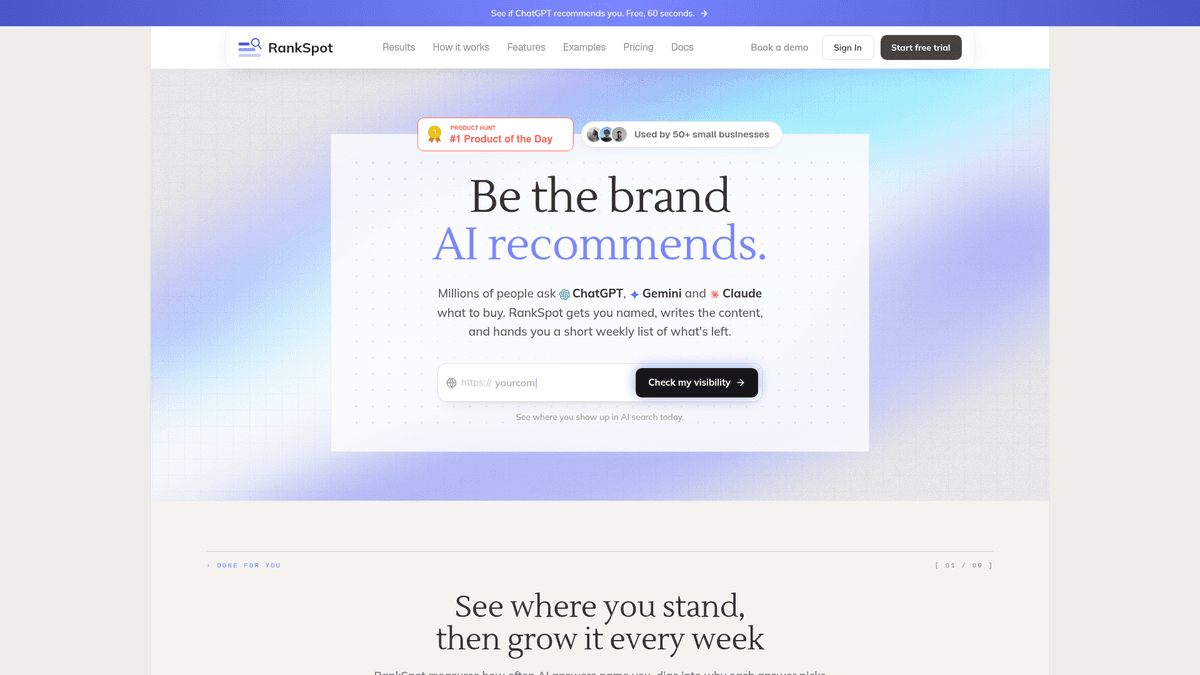
If I ran a small SaaS and kept putting off the blog, I’d look at RankSpot first. Enter your website URL and it identifies your niche and competitors, finds relevant keywords and AI-search questions, creates articles, and publishes through connected CMS platforms. The payoff is a repeatable process for getting pages live.
RankSpot lists WordPress publishing alongside Webflow, Wix, Shopify, Framer, and Ghost integrations. It produces articles with headings, tables, images, citations, and internal links. You can also see Google Search Console search metrics and brand mentions in AI answers. That saves a small team from moving each draft through several separate tools.
A founder or lean marketing team could use it for a content plan, high-intent keyword discovery, long-form articles, and direct publication. RankSpot also surfaces cited forums and Reddit conversations, which helps you find relevant discussions beyond your blog. Its site lists support for more than 100 languages.
You do give up some granular control for that automation. If each article needs legal approval or a reported interview, keep an editor involved. RankSpot lets you edit before publication; I’d use that step for product claims and firsthand details. I wouldn’t pick it for ad headlines or sales GTM workflows.
2. Jasper for a consistent marketing voice

Jasper suits teams that came to Copy.ai for campaign writing. It gives them brand context, marketing workspaces, and guardrails across several content formats. Supply positioning, approved examples, and a clear brief so the shared voice has something concrete to draw from.
I’d put it in front of a content lead coordinating landing pages, ads, emails, social media posts, and long-form content. They need voice consistency across multiple channels, and a shared setup gives writers a starting point. A founder who writes one article a month probably will not get the same value from setting up all that context.
You still have to decide which search pages to make, bring the evidence, and publish them. Jasper charges by seat, so I’d think about how many colleagues will use the workspace before choosing it. It’s a closer match for Copy.ai’s writing side than for an end-to-end SEO operation.
3. Writesonic for writing with SEO tools nearby
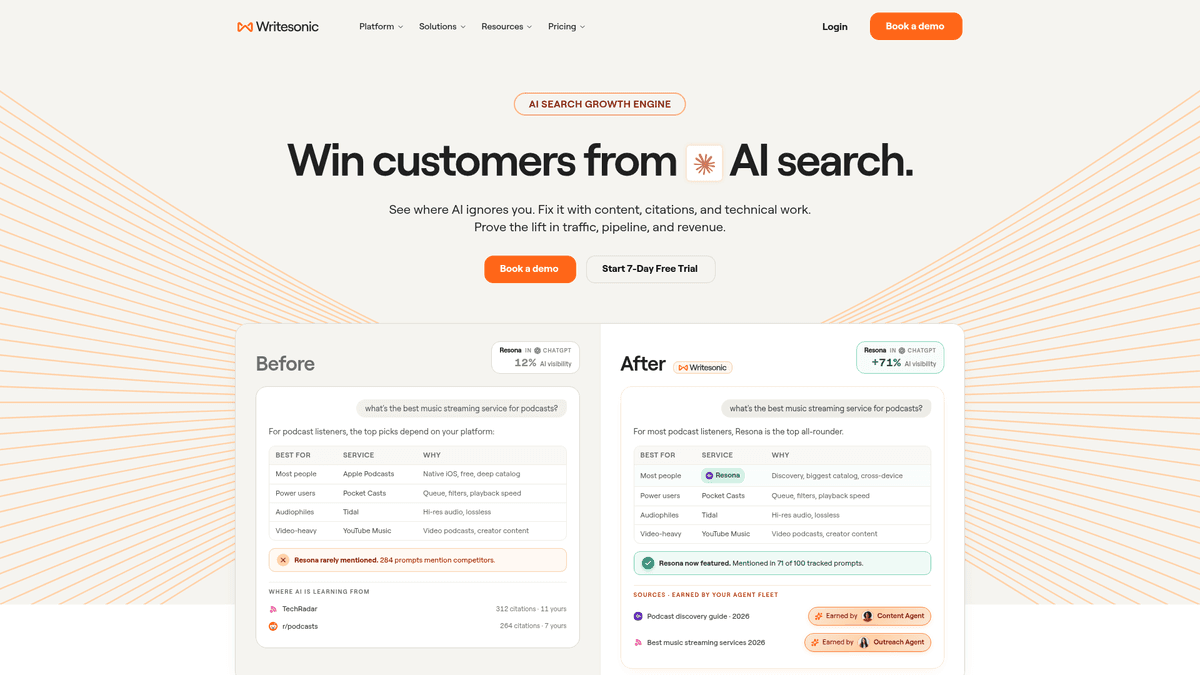
Writesonic combines guided AI writing with search-related tools. You can move from topic to draft without designing each prompt from scratch; its G2 product description also highlights content ideas, site audits, and optimization.
For a two-person team, I’d consider it when the current process is “research in one tab, AI writer in another, and an SEO checklist in a spreadsheet.” Having those tasks closer together can make production less fiddly. You can also use it for other marketing assets, which is useful if blog posts are only part of the job.
Article, project, and user allowances matter as your calendar grows. You’ll still edit the drafts, source claims, and add what only your team knows about the product. If CMS publishing is the part you want to automate, focus on that workflow before paying for the wider SEO suite.
4. Surfer SEO for making existing drafts stronger
I’d choose Surfer when a writer already produces the articles but needs help making each page thorough and aligned with its target query. Its Content Editor gives you on-page guidance as you work. It can help with optimization, though you still need to know what customers ask. You can also compare Surfer SEO alternatives for this job.
Say you have an article that answers the obvious question but leaves out the buyer’s next two questions. Surfer can help your editor see where the page needs more coverage or a clearer structure. You’re working on an article you already have, which makes this quite different from buying a batch-drafting tool.
There is a cost in attention: if you treat every suggested term as mandatory, a natural article can turn into a checklist. Use the suggestions to investigate what the reader needs, then write the answer in your own words. You will still need a writer, a fact-checking process, and a publishing route.
5. Frase for research-led briefs
I’d reach for Frase when a writer needs a better brief. It brings research, writing, and search-content optimization into one workspace: gather the questions around a subject, shape the brief, draft, and improve the page there.
I’d use it for a content program with an editor who wants to direct the story, rather than a founder looking for an unattended publishing machine. It is especially useful when you already have subject-matter expertise but need a repeatable way to turn it into pages that answer the searcher’s actual questions.
Frase won’t know which customer story is worth telling or whether a source backs your claim. A good brief and a careful edit still make the difference. I’d use it at the research-and-drafting desk, with a person responsible for the final article.
6. Writer for governed enterprise content

Writer is built for organizational control: brand terminology, style guidance, approved knowledge, and controlled workflows. When ten colleagues publish under one brand, preventing conflicting claims in thought leadership or product copy can matter more than faster first drafts.
That makes Writer sensible for an enterprise with a review process, especially where approved wording matters. A central source of truth gives teams a better chance of staying consistent as more people create content. It can also serve teams whose AI adoption has to fit existing governance, rather than a founder’s personal prompt library.
For a founder struggling to find blog time, I’d pass. Writer’s controls take setup and coordination. A small team without compliance requirements probably has better things to do than build an enterprise approval process.
7. Rytr for short copy on a small budget
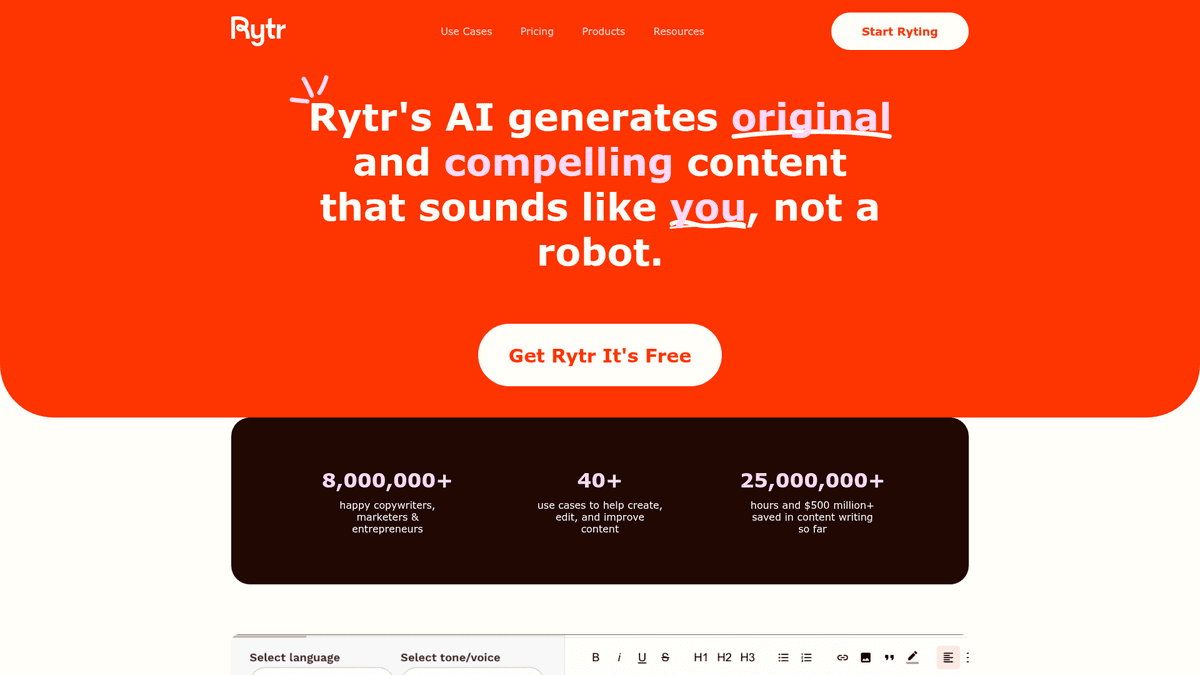
Rytr works well for a solo operator who needs product-description variants, email openers, ad ideas, or a quick social caption. It supports multiple content types and editing tools. Start with a short prompt and refine what it gives you.
I like that Rytr keeps the job small. Five subject lines before lunch shouldn’t require a GTM platform. See whether its suggestions need a quick choice or a long edit; that tells you whether a bigger AI content stack would help with your other tasks.
Its simplicity is the limit. Short-form generation is not keyword prioritization, source gathering, internal linking, or a publication schedule. You could draft a blog with Rytr, but a serious SEO program would still require several other steps and someone to own them.
8. Scalenut for fast SEO drafts

Scalenut gives teams a structured route from topic planning to search-focused articles. Cruise Mode speeds up article creation, and the wider platform covers research, optimization, and GEO visibility. If your writing queue is full of unfinished outlines, that structure could help.
If I had an SEO marketer to make the final editorial calls, I’d shortlist Scalenut to help them get from research to a draft. Keyword grouping and a repeatable creation flow would be useful there, especially when a standalone generator leaves the planning to the team.
I’d judge the speed by how long the cleanup takes. Someone still has to examine the claims and examples and decide whether a reader can act on the piece. Scalenut fits an SEO marketer willing to do that work.
9. ChatGPT or Claude for flexible drafting
For full control over the draft, give ChatGPT or Claude an interview transcript, product notes, an outline, and examples of your voice. Ask for a tighter introduction, challenge an argument, or create a second version. You set the workflow.
I’d start here if I were an experienced writer who likes controlling the brief and the edit. These tools are especially useful for thinking through a difficult explanation or turning rough notes into a workable structure. You can use the same workspace for an email, a product FAQ, or an article, which keeps the learning curve low.
The cost you won’t see on a subscription page is your own time. ChatGPT and Claude can generate text, but you’ll build the keyword plan, source citations, add internal links, arrange approvals, and handle the CMS. I like that freedom when those systems are already in place. Without them, I’d rather solve the publishing process first.
Also worth a look: Koala Writer
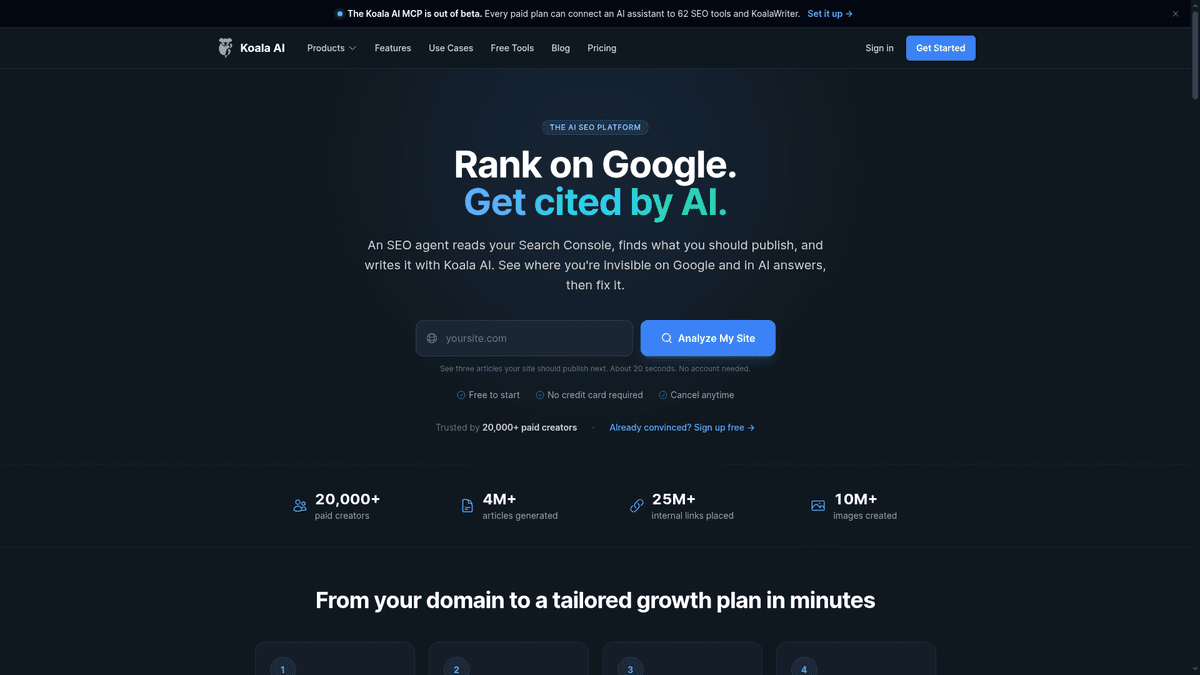
For a niche-site owner or independent blogger, I’d also look at Koala Writer. Its focus is search-aware long-form articles. You can work on a post without learning a GTM system built for a marketing department.
You’ll still decide which topics deserve a post, check facts, maintain the site’s content structure, and distribute what you publish. Koala Writer could be plenty if you’ve already got those jobs covered and need help drafting.
What about GEO visibility?
Your customers may ask ChatGPT, Perplexity, or Gemini for recommendations. GEO (generative engine optimization) concerns whether your brand appears in those answers and whether an assistant cites your site. A tracking tool gives you a baseline; you still need pages worth citing.
AthenaHQ focuses on AI-search monitoring and recommendations. Otterly AI tracks brand mentions and citations across AI answers, including ChatGPT, Perplexity, and Google AI Overviews. Profound is aimed at deeper AI-search analysis and agentic marketing workflows. I’d pick among them based on whether I needed a lightweight monitoring view, actionable recommendations, or a more involved team platform. If monitoring is the priority, compare AI visibility tools before buying another writer.
As a founder, I’d ask: “When someone asks for my category, does my brand appear, and which sources get cited?” Track those answers, then work on the relevant pages or third-party mentions. RankSpot puts AI mention and citation tracking beside content production, saving a small team a handoff. Publishing alone cannot guarantee an AI citation.
How I’d choose without buying another tool I won’t use
Start with the task that stalls after you generate a draft. Then choose the smallest system that removes it:
If your bottleneck is... | Start with... | Keep doing yourself |
|---|---|---|
“We never get around to publishing SEO articles” | RankSpot | Approve claims, add firsthand expertise, assess results |
“Every campaign sounds like a different company” | Jasper | Positioning and final sign-off |
“We need both writing and search features” | Writesonic or Scalenut | Edit for specificity and accuracy |
“Our writers need better briefs or optimization” | Frase or Surfer SEO | Subject-matter judgment and publishing |
“Content must follow central brand rules” | Writer | Governance and approvals |
“I just need short copy quickly” | Rytr | Select and refine the best variant |
“I want to write with AI, my way” | ChatGPT or Claude | The entire research-to-publish process |
Take one real article idea and write down who finds the keyword, gathers evidence, drafts, edits, adds links and images, uploads it, and measures its impact later. If most of those answers are “me,” a cheap text generator could cost you a lot of time. If your team handles everything except drafting, you may not need automation. If handoffs slow you down, compare what SEO automation tools take off your plate.
For a founder who needs consistent organic content, I’d start with RankSpot: it joins keyword discovery, writing, AI-search visibility, and CMS publishing in one flow. Choose Jasper if you spend more time on multichannel brand copy. RankSpot is worth trying if the articles you plan each month rarely make it onto your blog.
FAQ
Is Copy.ai better than ChatGPT?
Copy.ai offers packaged chat and GTM workflows, while ChatGPT gives you a flexible drafting space. If you already handle research, editing, and publishing, ChatGPT may be enough; if you need repeatable sales automation, Copy.ai serves a different job.
Is Copy.ai worth paying for?
It can be if your team uses its GTM workflows and gets value from the automation. If you mainly publish SEO articles or need occasional copy, compare the work you still do by hand with tools built for that specific task.
Is Copy.ai free forever?
Copy.ai’s current public pricing page does not list a permanent free plan. It lists paid Chat and workflow-oriented tiers, so do not assume an old free-plan description still applies.
Is there a free version of Copy AI?
The current published plans do not show a permanent free version. If you need to try content production before paying, compare the trial offered by your preferred alternative rather than relying on an older Copy.ai plan.
Is copy AI better than Jasper?
Copy.ai is a better fit for teams adopting GTM automation and workflow credits. Jasper makes more sense for a marketing team that wants to keep its brand voice consistent across different content formats; neither replaces editorial review or a complete SEO plan by itself.