RightBlogger helps you turn an idea into a blog draft without juggling writing apps. If you also need to find buyer-focused topics, improve old pages, publish through your CMS, and watch for mentions in AI answers, you may need a different setup. Choose a RightBlogger alternative for the step you cannot keep up with.
My shortlist starts with RankSpot for an automated research-to-publishing workflow, Surfer for hands-on optimization, Frase for research-led briefs, and Writesonic for AI search visibility. The other picks address affiliate writing, topic planning, or bulk production. Your own bottleneck decides which one belongs on the shortlist.
For a quick look at what an AI SEO writing workflow involves, this video walks through related writing-assistant options:
Where RightBlogger fits, and when to move on
RightBlogger offers a broad set of AI writing tools and a way to produce content without starting from a blank page. For a solo blogger who knows the topics and likes editing drafts, that can be enough. Its unlimited AI words on paid plans are attractive if you write a lot on one site.
RightBlogger says its paid plans include unlimited words, while its Solo plan covers one site and its Pro plan covers three sites and 90 SEO reports per month. If you wake up wondering which page to create and how an old one performed, a word allowance does not answer you.
Before switching, separate four jobs:
Discovery: Find topics tied to your product and the questions buyers actually ask.
Production: Draft, edit, illustrate, link, and format a useful article.
Publishing: Move approved content into your CMS on a schedule.
Measurement: See what happens in search and, where available, AI answers.
I would pay for the tool that takes the most time-consuming step off my plate. An editor, an autopublishing system, and an AI visibility monitor tackle different jobs. If finding topics is the sticking point, work through a framework for finding high-intent search keywords before buying more writing capacity.
How to evaluate a RightBlogger alternative
Start with the work you want done. An AI blog writer produces drafts; some AI content platforms also plan topics, optimize pages, and publish them. Those labels say little about whether a post will rank in a search engine or appear in an AI answer. Look at the work you must supply and what comes back: an SEO-optimized draft, a CMS-ready page, or a report you can act on.
For each candidate, I would give it the same specific assignment: “Write for founders choosing between two approaches to this product problem, using these first-hand notes.” Then I would look at five things:
Topic selection: Does it find an opportunity or wait for me to type a keyword?
Editorial work: Can I see the sources, correct factual claims, and make the voice sound like ours?
On-page work: Does it handle structure and internal links, or do I need other SEO tools?
Publishing: Is auto publishing supported for the CMS I actually use?
Feedback: Can I tell whether the page was published, indexed, visited, or mentioned in AI answers?
Affiliate marketers may care most about an AI article writer with a product format. A founder with one marketer may need content automation for the calendar; an experienced editor might want an AI assistant for briefs while retaining control of the draft. I would compare time spent per accurate, finished article rather than generation speed.
Compare the eight RightBlogger alternatives
Tool | Best fit | Strongest reason to switch | Main trade-off |
|---|---|---|---|
RankSpot | Founders and lean teams seeking a connected SEO/GEO workflow | Plans, writes, formats, and publishes content with keyword-led prioritization | Less suited to writers who want to control every sentence by hand |
KoalaWriter | Affiliates and solo publishers | Search-aware long-form drafting and affiliate-focused formats | Usage is metered by words |
Surfer SEO | Editors improving drafts and existing pages | Detailed on-page optimization guidance | Still requires an editor and a wider publishing workflow |
SEOWriting.ai | Budget-conscious bloggers | Quick SEO-oriented article creation | Review depth matters if you need distinctive reporting or expertise |
Scalenut | Bloggers moving into topic clusters | Planning and drafting in a connected SEO workflow | More workflow to learn than a simple draft generator |
Frase | Writers who start with search research | Research, briefs, drafting, and content improvement | Approval-led work remains hands-on |
Autoblogging.ai | Operators producing batches of posts | Credit-based bulk content production | High output raises the editorial review burden |
Writesonic | Teams adding AI search visibility | Content creation alongside GEO-focused tools | Visibility and article allowances depend on plan |
Pick two tools that handle your bottleneck and give them the same real topic. How usable are their outlines? Count the corrections and CMS steps before you call either draft finished. A quick generation demo tells you little about the time you spend getting the page ready to publish.
The eight alternatives, by the job they do best
1. RankSpot: Best for an automated SEO-to-publishing workflow
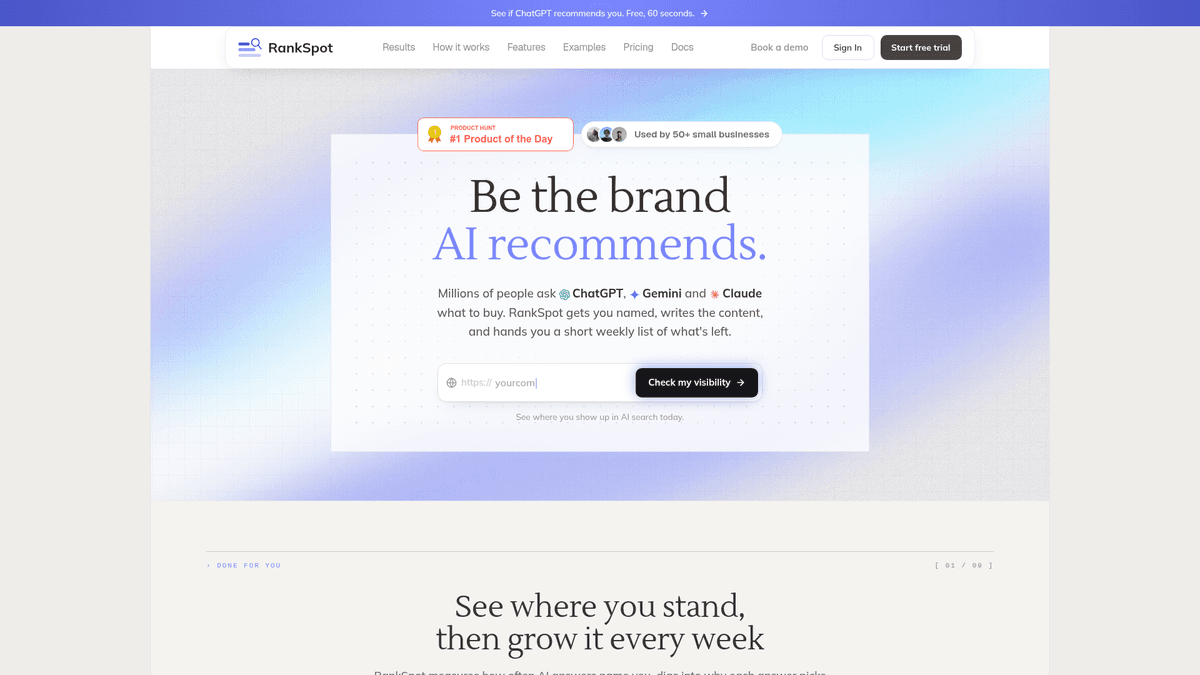
I would show RankSpot to the founder who has “publish regularly” on the calendar but spends the month on sales and support. Give it your site and it can learn your niche, plan topics, find keyword opportunities, write long-form posts, make images, format the pages, and publish them to your blog. The content work also considers discovery through AI answers alongside conventional search.
You can give a standalone writer a keyword and a brief. RankSpot takes on the planning and publishing work around the draft too. If your team consists of you and one marketer, those saved handoffs are worth more than a faster text generator.
Its Google Search Console rank tracking gives the team a way to revisit what happened after publishing. RankSpot also offers the first three articles free without a credit card, so you can evaluate the actual draft-to-CMS workflow on your own business topic.
I would still review product claims, customer examples, and advice touching legal or medical decisions before publishing. Automation gives you time for that judgment. If you prefer to research and craft each paragraph yourself, a dedicated editor such as Frase or Surfer may feel better.
A founder or lean marketer with no time to coordinate research, writing, design, and CMS tasks is the best fit. RankSpot connects those tasks, adds on-brand visuals, and surfaces relevant forum conversations where potential customers are already asking questions.
2. KoalaWriter: Best for affiliate and search-aware drafts
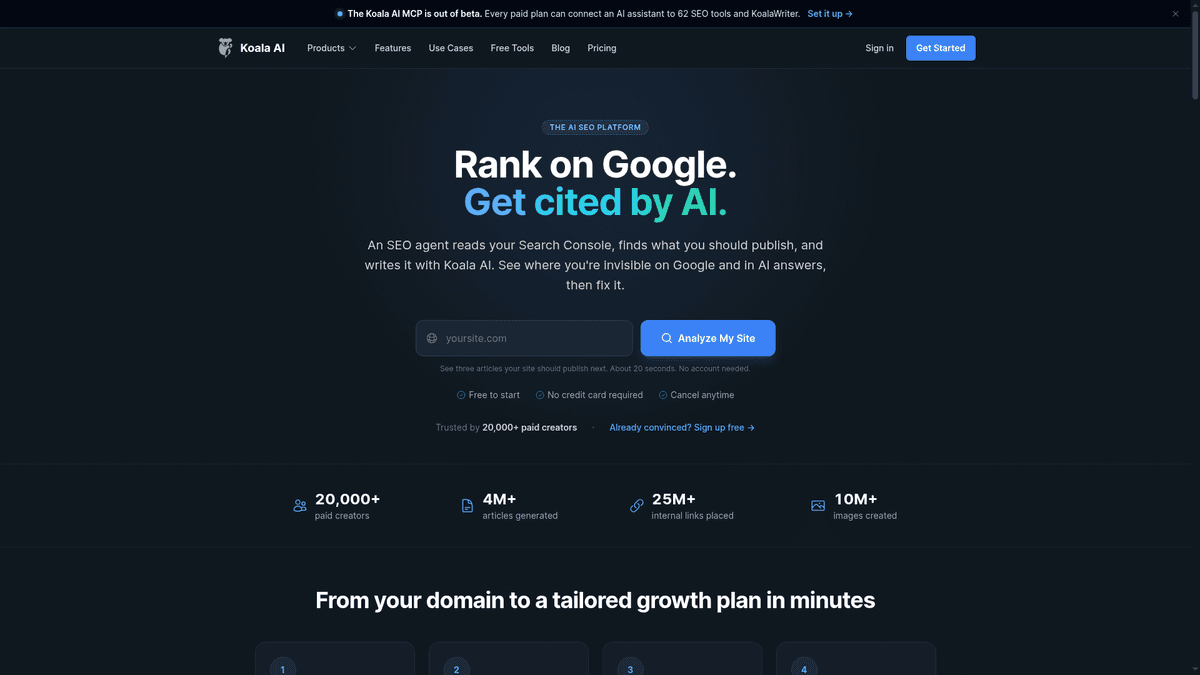
KoalaWriter is handy when you have search topics ready and need better first drafts. It draws on live search information, supports affiliate formats such as Amazon product articles, and publishes to several site builders and blogging systems. I would use it with an editor who can inspect every product claim before it goes live.
KoalaWriter focuses on search-aware article creation rather than a broad collection of creator tools. I would consider it for structured drafts when a team-level visibility dashboard is not part of the purchase.
Its word-based allowance matters for long articles. Count the words you will generate, including rewrites, rather than comparing a low entry price with RightBlogger’s unlimited-word pitch. I would also treat product prices and availability inside any generated affiliate post as facts that need fresh review.
3. Surfer SEO: Best for on-page optimization depth
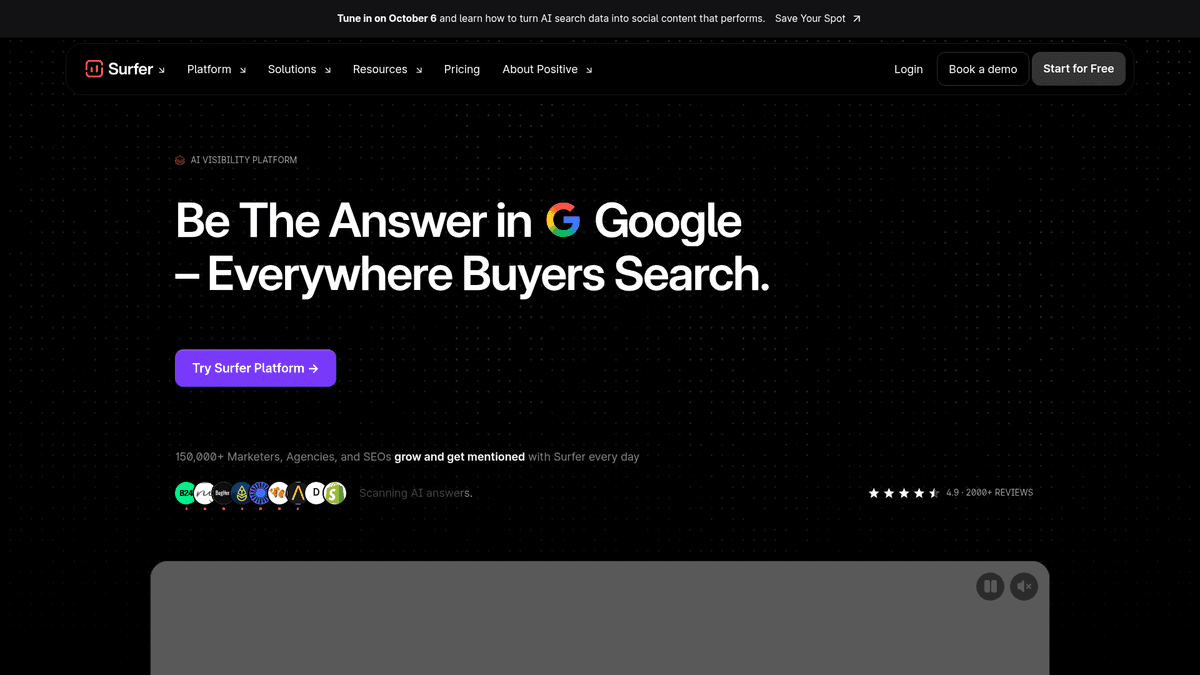
If writers already deliver drafts, Surfer gives the editor more to work with. Its content suggestions draw on the topic and pages competing for the query. Use them to find weak sections or missing context, then decide which suggestions improve the answer for your reader.
I would settle the angle and outline before opening the optimization editor. A score can alert you to gaps in coverage. You still decide whether the examples are honest and the claims are true.
The downside is workflow coverage. A strong editor is not the same as a complete system for topic prioritization, brand-specific drafting, image creation, approval, and scheduled publishing. If your real problem is that nobody has time to write, optimizing an empty document will not solve it.
4. SEOWriting.ai: Best for a budget-focused drafting workflow
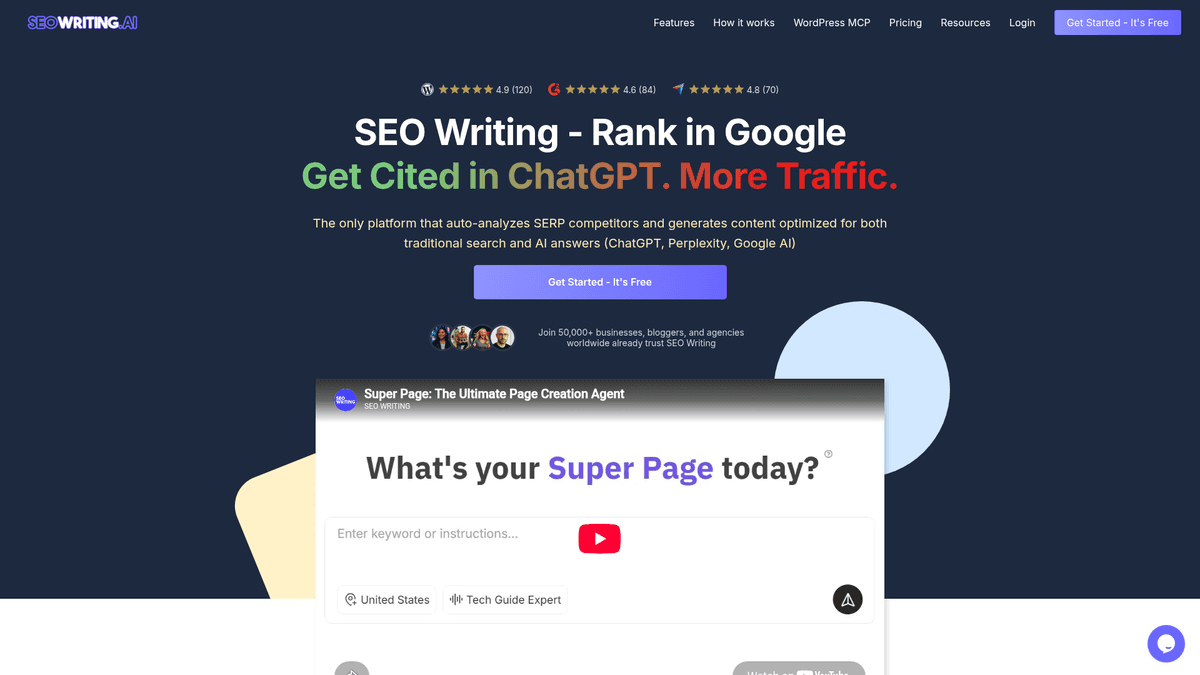
SEOWriting.ai belongs on a budget blogger's shortlist when getting from a keyword to a long-form article takes too much manual work. You can ask it for SEO-oriented drafts without setting up a large editorial workflow.
Read the finished work with care. A local service page, SaaS comparison, or technical tutorial needs details from someone who knows the subject. A vague keyword will not supply them. Add your own product notes and examples before you call the draft complete.
If you need to diagnose why older pages stopped getting traffic or to monitor AI mentions, this is not the first type of tool I would choose. Its strongest case is affordable production, not a replacement for a full measurement practice.
5. Scalenut: Best for building topic clusters

Scalenut suits a blogger ready to plan beyond one-off articles. It connects related keywords with briefs and production, which helps when your site needs several pages around a subject. I would look at it if my calendar felt like a collection of unrelated ideas.
I would begin with a product problem, then map the narrower questions around it. Give the broad topic its own page and use supporting posts for comparisons and use cases. A visitor should be able to follow that path without running into repeated versions of the same article.
The cost is complexity. If you write one personal essay every few weeks, cluster planning is more process than you need. If you publish for a business with multiple products or customer segments, the structure can be worth it.
6. Frase: Best for writers who research before drafting
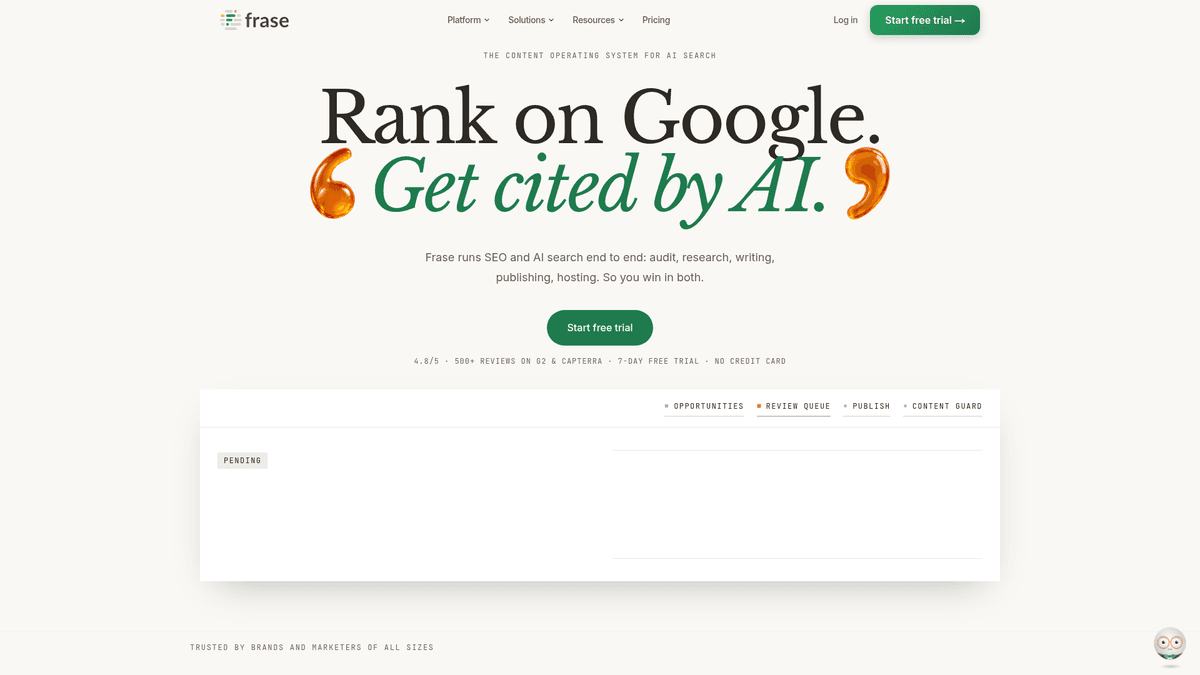
Frase fits the writer who reads search pages, collects questions, and plans an outline before drafting. It puts that research near the editor. You can decide what the page needs to say before asking AI to help write it.
For a small SEO team, this can also make assignments clearer. Instead of “write 1,500 words about X,” give the writer the target reader, the core question, the material that deserves explanation, and the evidence to check. Frase helps organize that preparation; the writer still has to contribute judgment and original knowledge.
It can support content improvement and audits as well as new writing. Its limitation is that the workflow is more approval-led than hands-off. If you want a system to handle your calendar and publish every day while you work on the business, it is not the same purchase as an autopublishing platform.
7. Autoblogging.ai: Best for bulk article production
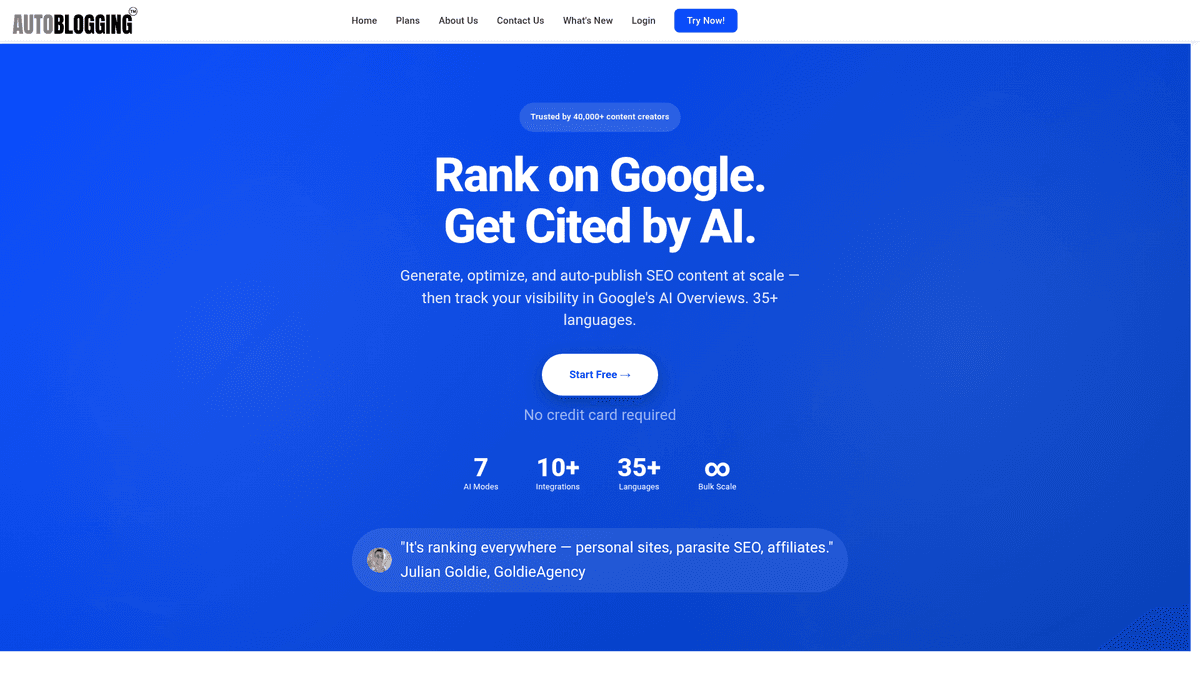
Autoblogging.ai makes more sense if you have a long topic queue and want to work through it in batches. It uses credits and offers multiple generation modes. For a portfolio of niche sites or a backlog of straightforward informational pages, that model can be easier to schedule than individual drafts.
Bulk output creates bulk editing work. You have more claims to validate, overlap to remove, and thin pages to reject. I would only use a batch workflow if someone owns topic selection and reads each finished post before publication.
For a batch, I would sample the finished pages for repeated claims and missing first-hand detail before scheduling the next one. Faster generation only helps if the review process can keep up.
Compared with RightBlogger’s unlimited-word appeal, the key question is which meter you actually use. Credits can be efficient at a predictable article count; unlimited writing can suit a writer who revises heavily on a single site. The output format and review time matter more than the headline number.
8. Writesonic: Best for content plus AI search visibility
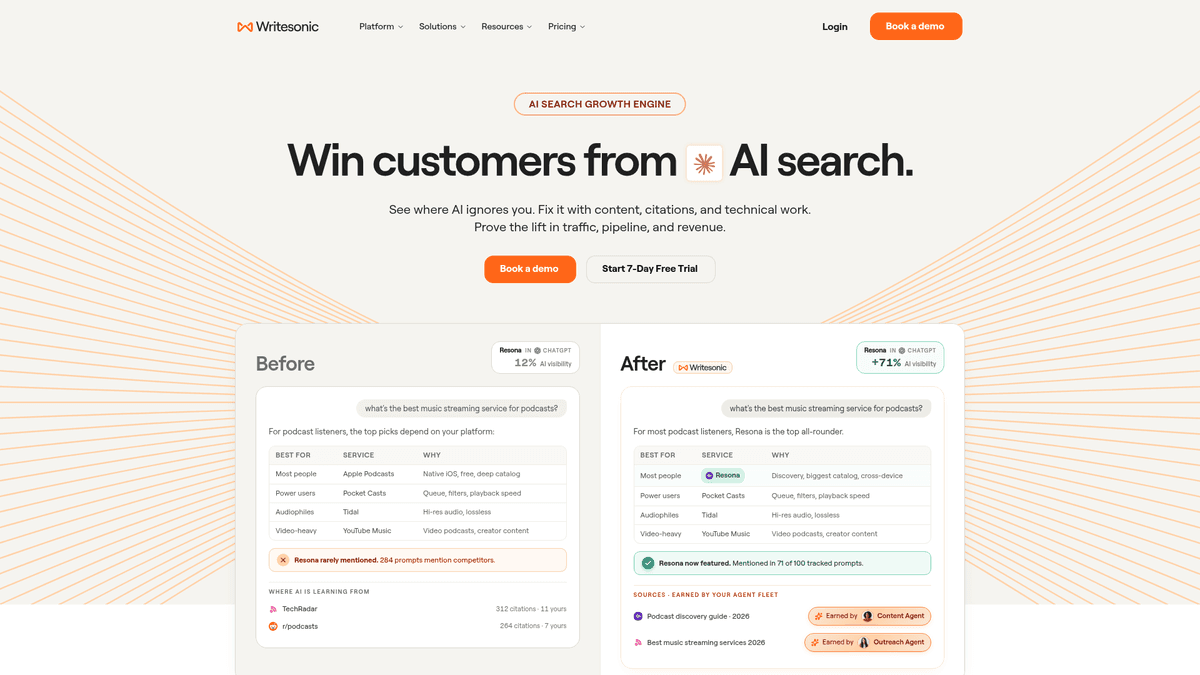
Writesonic combines article creation with search and generative engine optimization (GEO) tools. If your team wants to know how its brand appears in AI-assisted answers, it is worth looking beyond the article writer. Writing speed alone would not be my reason to choose it.
I would start with a small set of buyer questions, not a vanity list of brand prompts. For each question, note which sources an answer cites, whether your brand is mentioned accurately, and whether your own pages answer it well. Then improve the source material a buyer would genuinely find useful. AI mentions are a signal to investigate, not a guarantee of leads.
The trade-off is access and allowance: the content and visibility capabilities you want may sit on different plan levels, and entry-level article limits can constrain a busy calendar. This is best for a team prepared to act on what it learns about visibility, rather than one that simply wants a fast draft.
GEO visibility: the next layer after publishing
Publishing a good page does not tell you whether ChatGPT, Perplexity, or Gemini will surface your business for a relevant question. Search rankings and AI answers are related, but they are not identical reports. In Pew Research Center's study of Google searches, users clicked a traditional result in 8% of visits with an AI summary, versus 15% without one; only 1% of visits with a summary led to a click on its cited sources. That measures Google AI summaries, not ChatGPT or Gemini, but it is a good reason to track visibility alongside traffic rather than treat a citation as a lead.
AthenaHQ, Otterly AI, and Profound focus on monitoring brand mentions across AI answer engines. You would use one beside a content workflow; the monitoring tool will not write and publish the page that might earn a mention. If content production is part of the decision too, look at Writesonic and RankSpot. Our overview of AI visibility tools helps you compare what the specialist dashboards measure.
I would keep this experiment narrow. List the questions prospects ask before they buy; note the brands and sources appearing in the answers; then improve the pages that can genuinely answer those questions. Repeat the same prompts over time. Do not promise your boss “AI rankings” from one screenshot, because answers can change with wording and context.
How to choose the right RightBlogger alternative without buying the wrong kind of tool

If you already have good writers, start with the editor. Surfer helps with detailed on-page work. Frase suits the person who wants research and briefs in the drafting process. Scalenut makes sense if your main challenge is organizing related topics.
If you have topics but no production capacity, start with the writer. KoalaWriter fits search-aware and affiliate drafts; SEOWriting.ai fits a budget-led draft workflow; Autoblogging.ai favors batches. The smaller your review capacity, the more cautiously you should increase output.
If nobody owns the content calendar, start with the pipeline. RankSpot is a better fit when the bottleneck begins before the first draft and continues through images, formatting, and publishing. Writesonic deserves attention if AI visibility is part of the same decision. Neither removes the need for a person to own positioning and accuracy.
Two other options can make sense outside this eight-tool shortlist. Jasper is geared toward teams that need a consistent brand voice across several marketing formats, not just blog posts. Byword is a simpler bulk generation route for operators who want fewer editorial controls in the interface. I would choose either for that specific need rather than assume it solves keyword planning or visibility.
If multiple sites or publishing handoffs are your constraint, a look at SEO automation workflows will help you distinguish a drafting assistant from a publishing system. And if finding defensible opportunities is the bigger obstacle, work through ways to find competitor keywords before committing to a monthly content volume.
To make the final call, take one topic tied to your business and run the same assignment through two finalists. Keep the brief identical. Note how long it takes to get a usable outline, correct the claims, add your own insight, prepare images and links, and publish. Then ask what the tool shows you a month later. The winner is the one that closes your actual workflow gap, not the one that produces the longest draft.
Verdict
Stay with RightBlogger if its drafts and creator tools serve you well, especially if unlimited writing on your site is the main draw. Choose Surfer or Frase for closer editorial control, KoalaWriter or Autoblogging.ai for a specific production model, and Writesonic if GEO monitoring informs your content plan.
For a founder who wants the whole job to move forward without stitching together multiple subscriptions, I would start with RankSpot. Its value is in connecting topic discovery, planning, long-form writing, visuals, and CMS publishing, with AI-answer visibility as part of the direction of travel. Give it a real business topic, read the output carefully, and see whether it gives you back time while making the resulting page more useful.