LLM Pulse can show you where your brand appears in AI answers. If your team struggles to turn that information into published work, look for a tool that handles the next step. Some LLM Pulse alternatives give you deeper visibility data; others fit an existing SEO workflow or help produce content.
Before paying for another dashboard, ask who will write and publish the page when you spot a missing mention. On a lean team, that answer can decide which subscription earns its keep.
Why look beyond LLM Pulse?
LLM Pulse monitors AI search visibility. You can use it to see where your brand and competitors appear in answers. You still need someone to produce pages worth citing. A founder short on writing time may want a publishing workflow; an agency with dozens of clients may care more about reporting depth.
Keep these questions in mind as you compare tools:
What gets measured? Look for the AI engines, prompts, brands, citations, and time periods your team needs.
What can you change? Some products mainly track results. Others help diagnose pages or produce and publish content.
What does growth cost? Add up the prompts, markets, brands, and users you need, since a low entry price may not reflect your eventual bill.
LLM Pulse alternatives at a glance
Tool | Best fit | Primary job | What you still need to handle |
|---|---|---|---|
RankSpot | Founder who needs visibility plus content output | Track AI visibility; plan, create, and publish SEO/GEO articles | A separate specialist tracker for deeper prompt-level reporting |
Profound | Team focused on detailed AI answer intelligence | Analyze AI search visibility and citations | Content production and publishing |
Peec AI | Marketer benchmarking brand presence | Monitor prompts and competitors | Executing the resulting content plan |
Otterly AI | Small team starting AI visibility monitoring | Follow mentions across AI answers | Writing and shipping improvements |
Scrunch AI | Team investigating how AI systems see its site | Monitor visibility and AI access | A regular publishing operation |
SE Ranking AI Visibility | SEO team wanting AI data in its SEO workflow | Connect AI visibility with search work | Turn recommendations into finished content |
AthenaHQ | Growth team wanting GEO analysis and action guidance | Diagnose opportunities in AI answers | Confirm the production workflow fits your team |
Nightwatch LLM Tracking | Rank-tracking team expanding into AI | Add LLM visibility to search reporting | Content planning and publication |
Beamtrace | Team wanting focused AI visibility reporting | Monitor brand appearance in AI answers | Building and publishing the pages that fill gaps |
Ahrefs Brand Radar | SEO team wanting large-scale brand discovery | Explore brand presence across AI tools | Turn discovered opportunities into published pages |
RankSpot combines AI visibility tracking with content production. If you run a complex monitoring program, you may also want a specialist's more detailed reports. Start with the job your team needs to get done.
10 LLM Pulse alternatives for different teams
1. RankSpot: for teams that need to publish, not just monitor
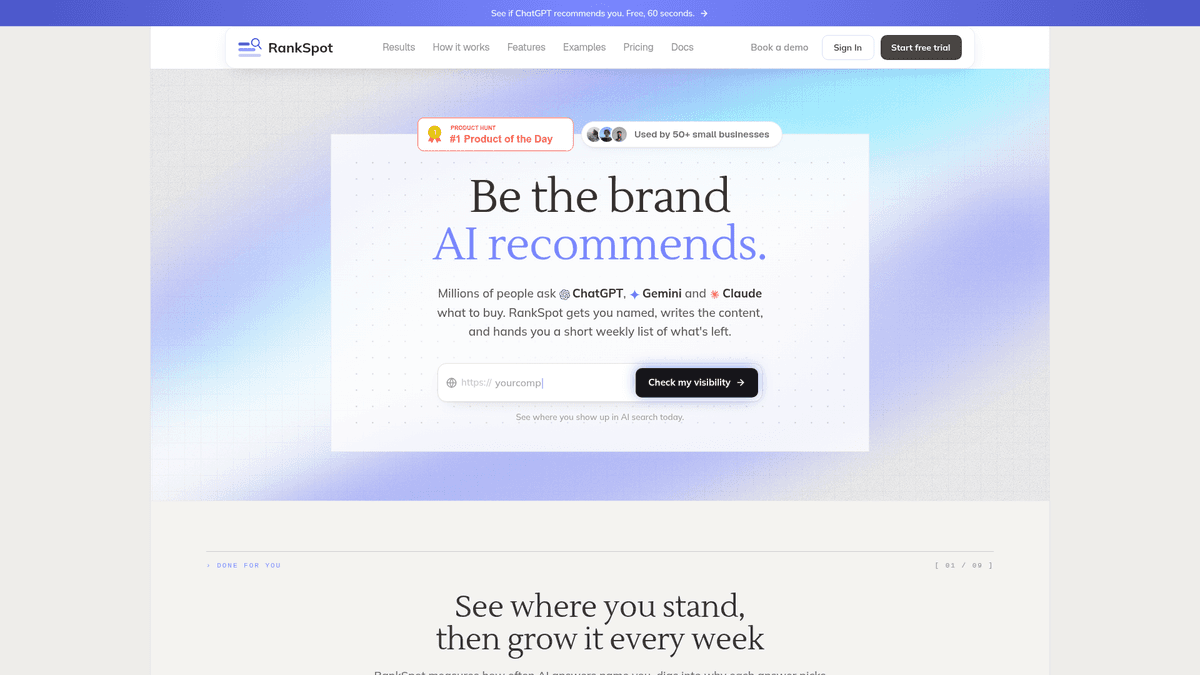
I would put RankSpot on the shortlist if I needed to track visibility and get more content published. It monitors brand presence in AI search, learns about your business from its website, and finds keyword opportunities. Then it builds a plan, writes and formats articles, creates images, and publishes to a connected blog. It targets both conventional SEO and AI answers. You also get Reddit and forum conversation opportunities where potential buyers are asking questions.
Say your visibility report reveals a question you have not answered on your site. RankSpot can help turn that topic into a live post through its CMS integrations, even if you do not have a dedicated editor. For a wider view of the category, see our AI visibility tools overview.
This is a good fit for founders and small teams that need visibility data and a steady publishing process. A specialist tracker may still be useful for granular prompt-by-prompt analysis across a complex reporting program. RankSpot offers the first three articles free without a credit card, giving you a chance to assess the writing and publishing workflow.
2. Profound: for detailed AI search intelligence
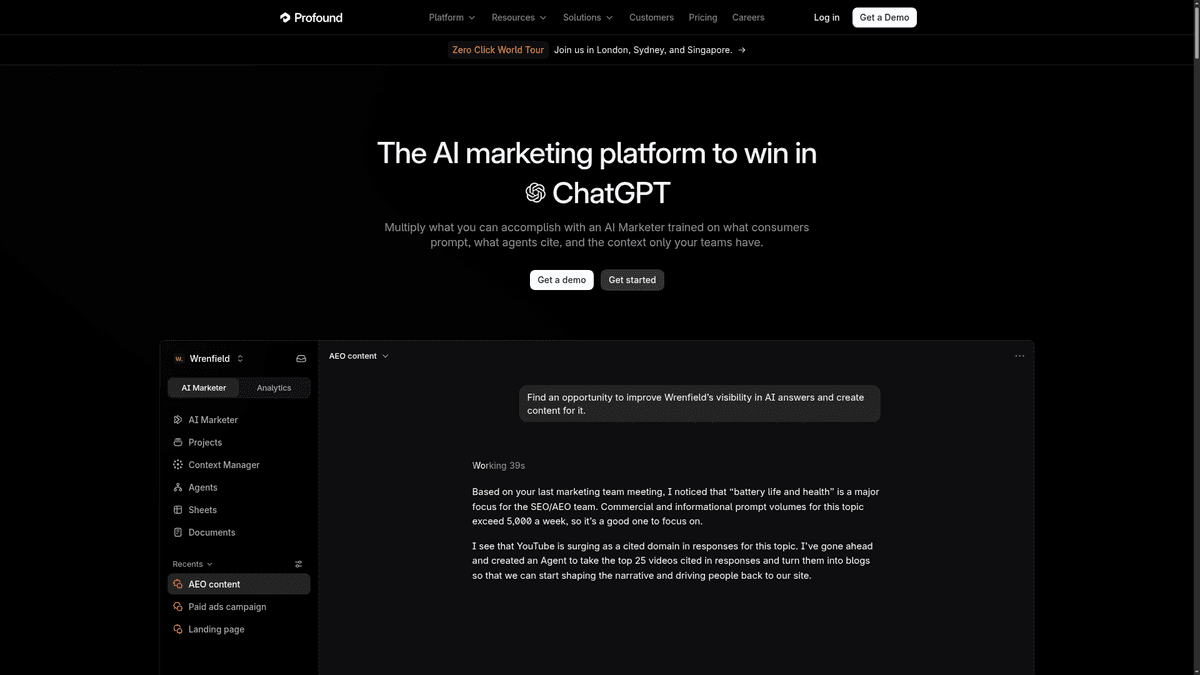
Profound fits a team whose main job is analyzing brand appearances in AI-generated answers. If you already have writers and a publishing process, you can use a specialist platform to investigate mentions and sources.
Profound makes sense when you have the capacity to act on detailed visibility findings. Your team still has to brief, write, edit, and publish the improvements.
3. Peec AI: for prompt and competitor benchmarking
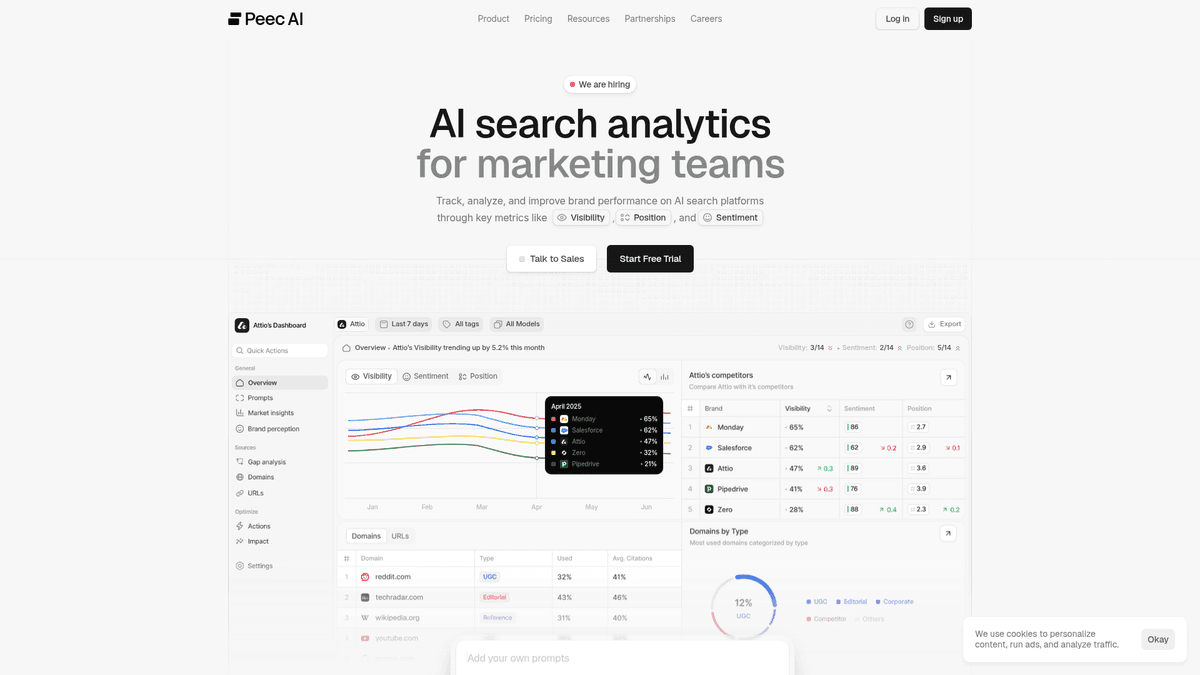
Peec AI helps marketers compare their brand's presence in AI answers with other brands. Start with a set of buyer questions you want to follow over time. Without those questions, even a polished chart leaves you guessing about what the numbers mean.
If your team knows which questions matter to buyers, Peec AI gives you a way to follow the comparisons. You will still need someone to turn the gaps into pages or other useful assets.
4. Otterly AI: for a focused monitoring start
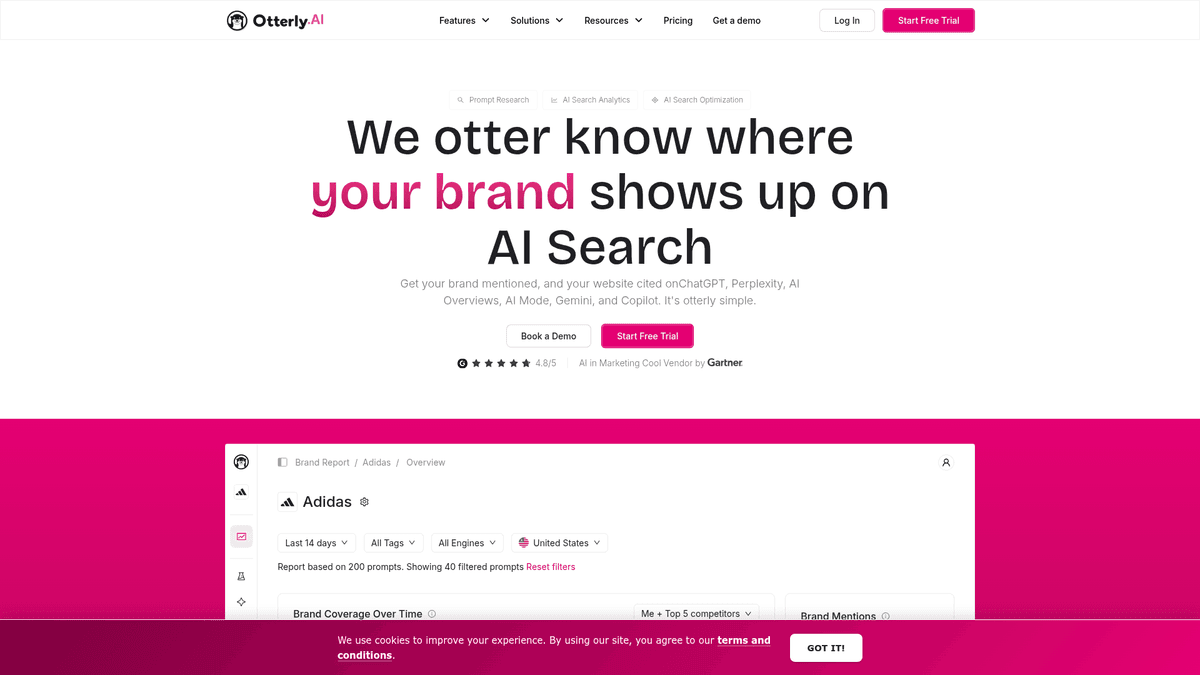
Otterly AI suits a founder starting to track AI mentions while keeping the rest of the SEO stack in place. You can review the results on a regular schedule and send content work to your teammate or agency.
I would consider Otterly AI for a team building its first dedicated visibility routine. Budget time for content work too; the monitoring will not produce pages that could earn citations.
5. Scrunch AI: for AI-facing site investigation
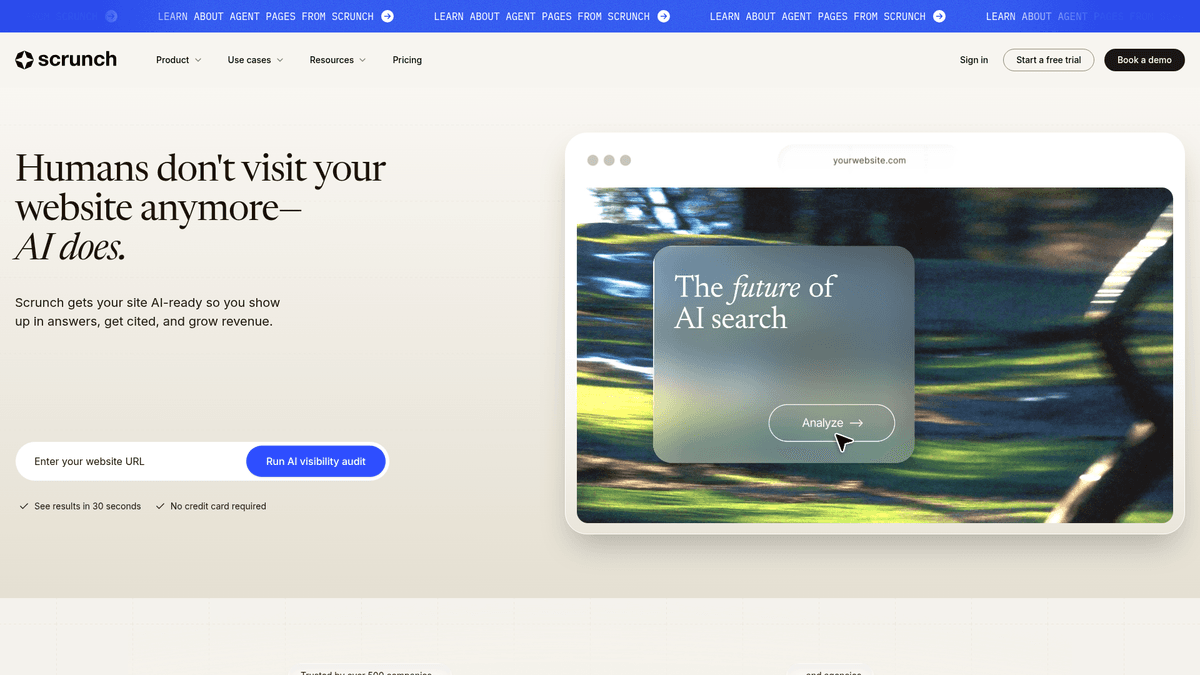
Scrunch AI combines visibility monitoring with a look at how AI systems encounter your site. Consider it if you have useful pages but suspect that access or presentation affects whether they appear in answers.
For a team investigating its AI-facing web presence, Scrunch AI offers more to examine than a mention count. You still need people or tools to update the site and keep publishing.
6. SE Ranking AI Visibility: for an existing SEO workflow
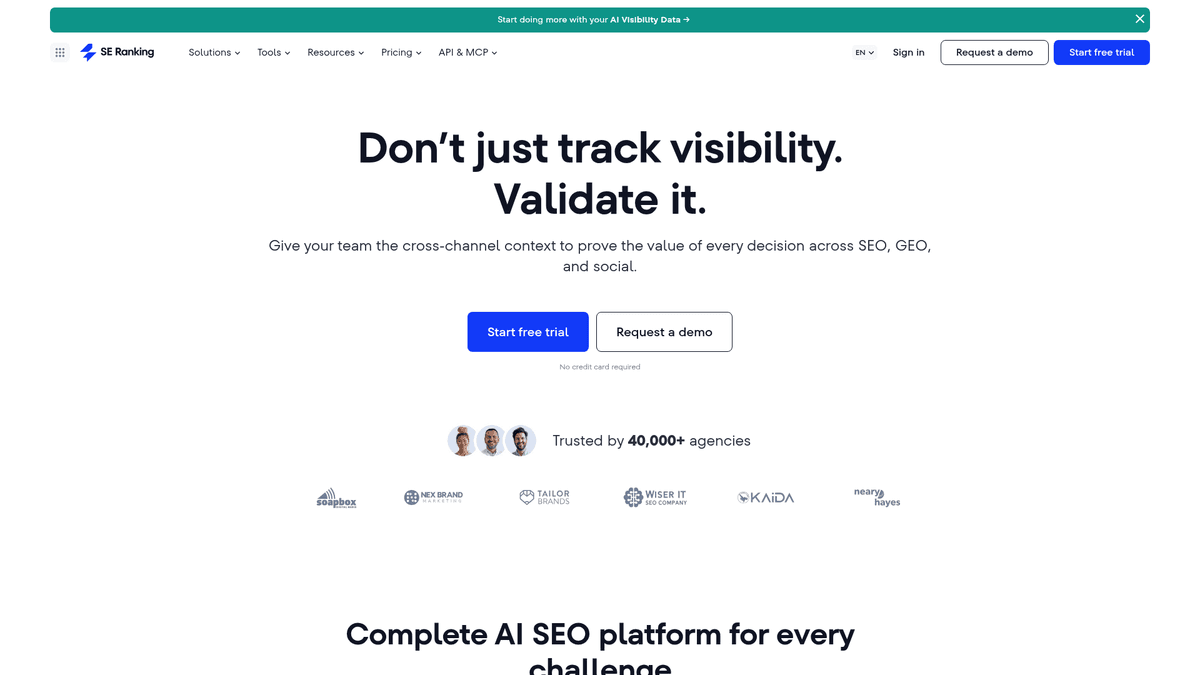
Already using SE Ranking? Its AI visibility functionality lets your team investigate AI answers alongside other search work. You can keep the reporting routine your SEO team knows.
For SE Ranking users, that continuity is the main draw. The connected dashboard still leaves writing and publishing with your team.
7. AthenaHQ: for teams seeking GEO guidance
AthenaHQ may suit a team that needs help prioritizing GEO work. Look at what each finding asks you to do: improve a source, update a page, or answer a buyer question. Your content owner should be able to take it from there.
AthenaHQ fits growth teams that already have someone to carry out the work. It can help guide that person, but it is not a fully automated editorial pipeline.
8. Nightwatch LLM Tracking: for rank-tracking teams
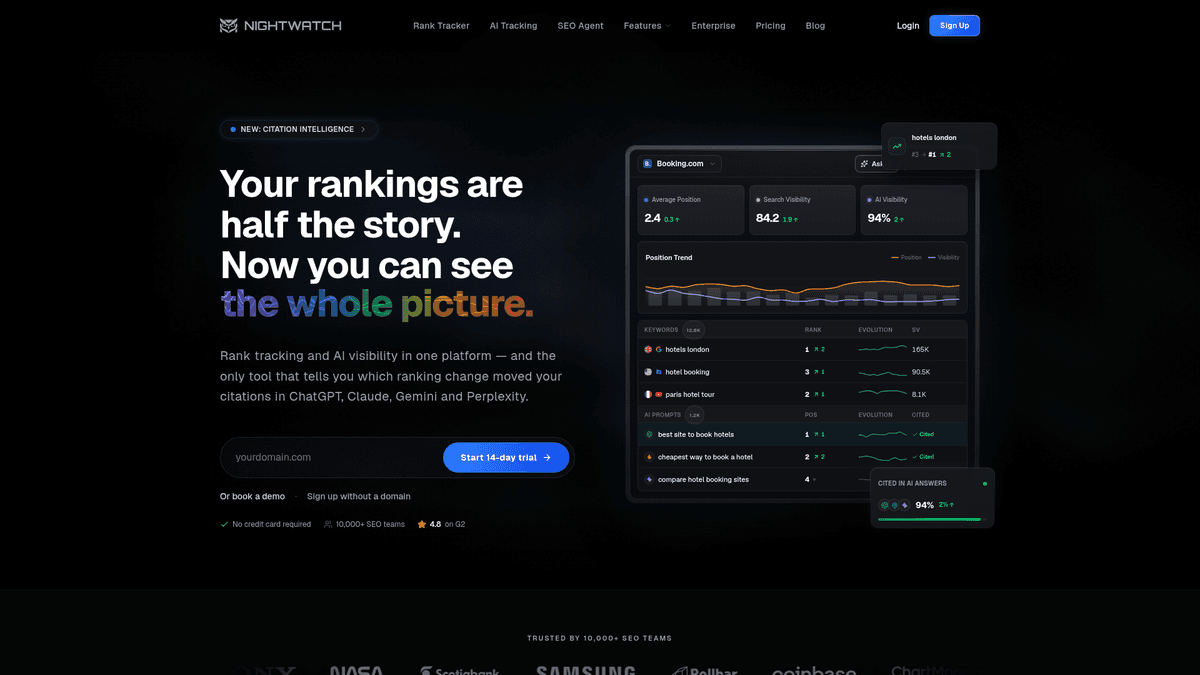
If you already review traditional rankings in Nightwatch, its LLM tracking can sit beside those measurements. Your team can discuss search and AI visibility in its existing reporting routine.
Nightwatch suits SEO teams adding LLM tracking to their existing rank reports. The team must still make and ship content in response.
9. Beamtrace: for focused brand monitoring
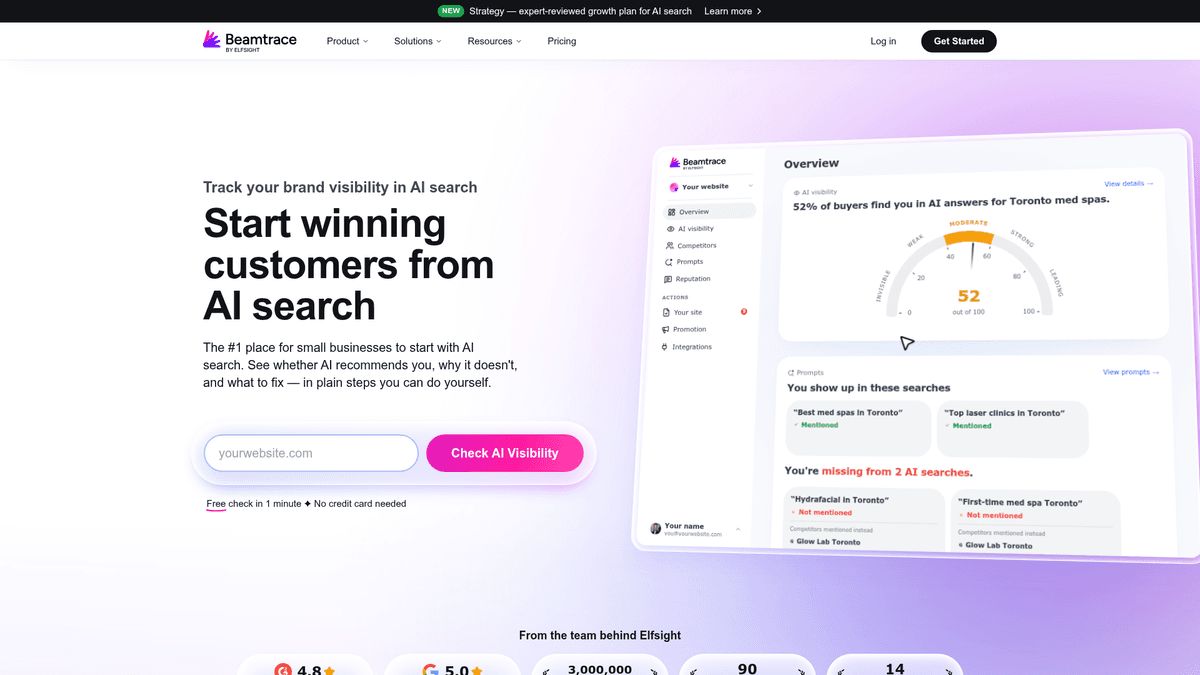
Beamtrace helps answer a focused question: do AI answers mention your brand? Try it with prompts tied to buying decisions. You need enough context around each result to decide what to do next.
Choose Beamtrace if a dedicated AI visibility view is the priority. Plan a separate route from its findings to published improvements.
10. Ahrefs Brand Radar: for broad brand discovery
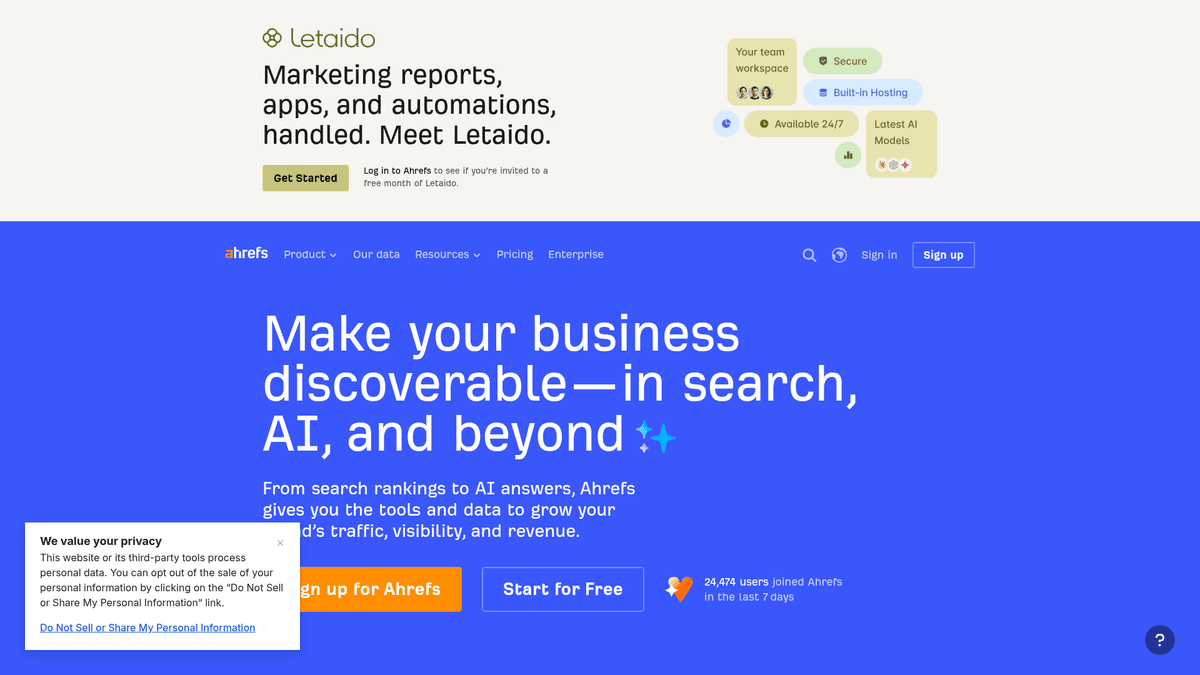
Ahrefs Brand Radar offers broad discovery through its large collection of search-backed prompts, plus custom prompts. If you do not yet know which AI-answer contexts matter to your brand, you can explore widely before building a smaller set of buyer questions to track.
For an SEO team exploring many AI queries, that breadth is useful. Someone must still prioritize the findings and create the relevant pages.
How to choose a GEO tool
Start with engine coverage for the places your customers ask questions. ChatGPT coverage for relevant questions may serve you better than a longer engine list full of prompts your buyers never use. Inspect the prompt methodology too: can you supply buyer questions, separate branded and non-branded prompts, and follow results over time? The prompt set shapes the meaning of every chart.
"In Yext's study of 6.8 million AI citations across ChatGPT, Gemini, and Perplexity, first-party websites accounted for 44% and listings for 42%." - Yext Research
Yext focused on location- and intent-driven queries in four industries. Use those findings to think about your own cited sources, rather than assuming every brand will see the same mix.
For citation tracking, distinguish a brand mention from the page or source an answer cites. You might respond to a missing mention by answering a buyer question; a cited but outdated page may need an update. For content execution, ask whether your team can brief, update, write, and publish after spotting the opportunity. Compare each pricing model using the brands, prompts, seats, markets, and reporting frequency you expect to use, rather than the entry tier.
On a small team, I would assign someone to identify a buyer question, inspect its answers and sources, improve the right page, publish the change, and return to the same question later. If finding questions slows you down, use our high-intent keyword research framework. Buy the tool that helps with the step where you tend to stop.
A small pilot before you commit
Pick five to ten questions a buyer might ask before choosing a product like yours, including a comparison, a use case, and a specific problem. Put the same questions into each monitoring tool. Note its engines, whether you can see the answer and citations, and how clearly it compares your brand with others.
Take one finding through to publication. Can you choose a page, improve it, and get the change live? If your team can ship quickly, better measurement may help most. If the work stalls at “someone should write something,” prioritize an execution tool. Our SEO automation tools for small teams page offers ways to reduce that bottleneck.
The verdict
If you already publish consistently and need sharper AI-answer analysis, look at Profound for depth, Peec AI for competitor comparison, or Ahrefs Brand Radar for broad discovery. SE Ranking and Nightwatch fit teams that want AI visibility in their search reporting routine. If publishing is where your team gets stuck, try RankSpot to turn research and planning into formatted posts on your blog. Add a specialist tracker if you need deeper monitoring.