Looking for a Junia AI alternative? Junia can take a keyword from idea to published article, and that may be enough for your team. You have a reason to switch if editing feels cramped, publishing still takes too much time, or you need to know whether AI assistants mention your brand.
For a small team, I'd put RankSpot on the shortlist if nobody has time to manage research through publishing. If you already have writers, Surfer gives them a stronger editor. Writesonic makes more sense when someone needs to report on AI-search mentions. I'd start with whichever task is still sitting on your calendar.
Why look beyond Junia AI?
Junia covers keyword research, long-form drafts, SEO scoring, images, internal links, brand context, and CMS publishing. You can also generate in bulk or schedule posts. If those tools already keep your blog moving, switching to another AI writer may create more work than it saves.
Before replacing it, check what you are actually paying for: a better AI editor, a faster route to published blog posts, or evidence that buyers see you in AI answers. Those are different jobs. An AI tool that improves SEO optimization on a draft may still leave content creation, approval, and publishing with you.
I would look for the part of your process that still consumes time:
Editors revising competitive pages may need richer SERP research and live term suggestions than a basic content score provides.
Founders still have to choose commercial topics, sequence the work, source images, and get posts into the CMS, even when AI writes a draft.
If buyers search in AI assistants, you need to know which prompts mention your company, what gets cited, and whether that changes over time.
Faster publishing will also multiply weak ideas. Five similar posts built around one vague keyword will not help a buyer choose. Start with a few customer questions and inspect the published pages before you increase the cadence.
Junia AI alternatives at a glance
Tool | Best fit | What changes from a Junia workflow | Main trade-off |
|---|---|---|---|
RankSpot | Founder or lean team needing an automated content pipeline | Turns a site into a plan, articles, visuals, and CMS posts | Less suited to an editor who wants to hand-tune every paragraph |
Surfer SEO | SEO editors revising high-stakes pages | Stronger live on-page scoring and optimization workflow | Editing remains a hands-on job |
Frase | Strategists building briefs and updating content | SERP research, briefs, drafting, and page-level optimization | More setup and review than a hands-off publisher |
Scalenut | Teams wanting guided drafting and clustering | Cruise Mode, topic planning, and GEO-oriented tools | Separate usage allowances can complicate volume planning |
SEOWriting.ai | Budget-conscious long-form publishers | Fast, affordable article generation and bulk workflows | Less suited to deep editorial or AI-visibility analysis |
KoalaWriter | Affiliate and niche-site publishers | SERP-informed drafts with outline control and publishing | Word and credit usage varies with model choices |
Writesonic | Teams measuring AI-search presence | Combines writing with AI visibility and citation reporting | Broad engine coverage depends on tier |
Jasper | Marketing teams with many formats and voices | Brand governance across campaigns, not only SEO posts | SEO-specific research needs a complementary workflow |
Keep SEO rank tracking and GEO visibility in separate columns. A rank tracker shows your URL's position for a keyword. GEO monitoring shows whether an assistant names your brand or cites a page for a prompt. Neither guarantees sales. A tool that prepares content for AI answers may have no way to report citations.
The same distinction applies to AI analytics. A content score evaluates a page; AI search visibility reports what an assistant says for tracked prompts. If a vendor calls both features “AI SEO,” ask to see the actual report and the steps needed to act on it.
In an analysis of 300,000 keywords, Ahrefs found that an AI Overview's presence correlated with a 58% lower average click-through rate for the top-ranking page in December 2025. This is an association, not proof that AI Overviews alone caused the drop. - Ahrefs research
Measure search traffic and AI presence separately. An AI mention cannot be counted as a replacement for a search click.
Eight Junia AI alternatives for SEO and GEO
1. RankSpot: for founders who need the whole pipeline to run
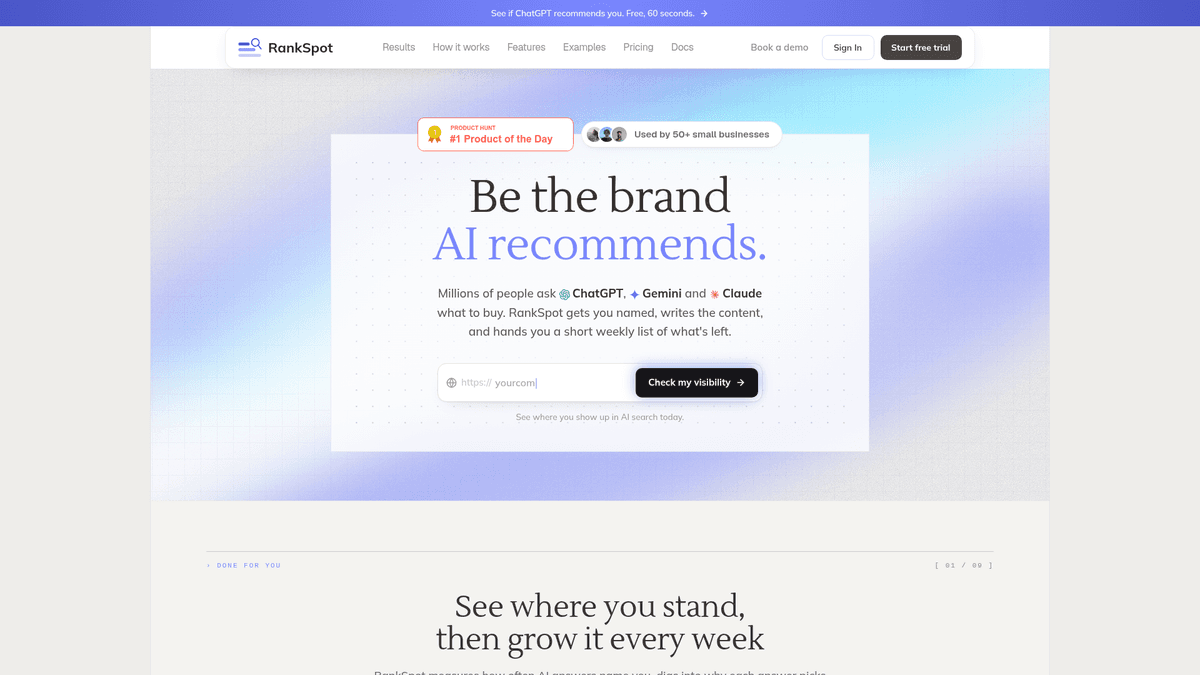
If you're the person writing the posts and running the business, RankSpot is worth a look. Give its SEO agent your website URL. It learns about your business and competing sites, finds high-intent and competitor-keyword opportunities, and builds a 30-day plan. Then it writes long-form SEO content, generates on-brand images, adds internal links and structure, and publishes to your connected blog.
Picking a topic, finding an image, and fixing CMS formatting can eat the time you had set aside for writing. RankSpot handles those handoffs for a daily publishing workflow. It connects to WordPress, Webflow, Wix, Shopify, Framer, and Ghost. If topic choice is still the sticking point, start with a high-intent keyword framework before increasing the cadence.
RankSpot also formats pages for AI answers and tracks where your brand appears across AI assistants. Its Reddit and forum discovery finds conversations where customers ask questions. I would use those threads to sharpen the next article and answer where I could help, rather than post the same pitch in every discussion.
You still need to supply product facts and editorial boundaries, then read the first posts for accuracy, examples, and tone. If you spend hours refining each competitive page, Surfer or Frase may give you better day-to-day control. RankSpot offers the first three articles free without a credit card, so you can assess the finished pages.
For a fair test, give it a real product page and a question a buyer has asked. Check whether the proposed plan targets useful searches, whether the long-form content reflects your offer, and whether the published post sounds like your brand voice. AI agents can take routine handoffs off your plate, but they cannot verify a product claim you never supplied.
2. Surfer SEO: for editors who want stronger on-page control
Surfer is the pick I would make if writers keep asking, “What should I change on this page?” Its Content Editor scores a draft against search-result patterns as they write. Surfer AI can provide the starting article, while its topical planning, audits, and internal-linking tools help with an existing library.
For a product comparison stuck below the results you want to beat, I would use Surfer to revisit the coverage, structure, and terms. Then I'd strengthen the examples and product detail myself. It takes editor time, but that's the work you are buying help with.
Surfer offers AI-search analytics, though you may pay separately for writing and visibility measurement. The limit: a score will not catch every weak claim or supply original evidence. You still need someone to edit and publish. If the editor is the part of your stack you want to change, compare Surfer SEO alternatives.
3. Frase: for research-led briefs and content refreshes
Frase suits a team that builds a brief before anyone starts writing. SERP research, question discovery, AI article creation, and optimization sit in the same workflow. Page auditing and monitoring give you a route back to posts that need an update.
If you have a dozen articles aimed at closely related buyer questions, briefs can give each page a distinct purpose. That keeps drafts from blurring together. Your editor can weigh SEO and GEO signals during revisions, then use Frase's publishing connections and AI-answer visibility features.
The trade-off: you need to use the brief and revision stages to get the benefit. A founder looking for an autonomous calendar may find that demanding. A strategist who signs off on every page may welcome the control.
4. Scalenut: for guided drafting and topic clusters

Scalenut's Cruise Mode takes you from a keyword to a structured draft. Its cluster planning is handy when you need several related pages, rather than another pile of disconnected topic ideas. The editor gives SEO and GEO guidance, and the visibility tools show prompts that mention your brand or a competitor.
I'd put Scalenut in a team that already has an approval process. A strategist plans the cluster; the writer shapes the draft; the editor checks the claims. Publishing and technical-audit features help with the work that follows.
The catch is the separate allowances for articles, clusters, audits, and tracked prompts. A large campaign could use up one while you still have plenty of another. Work out which units your team will use before choosing a tier.
5. SEOWriting.ai: for a tighter content budget
SEOWriting.ai is easier to justify when you already have a keyword list and a repeatable format. It produces long-form SEO drafts and supports bulk content generation without a large research suite. You still own the editing and the rest of the publishing process.
A shop could prepare several articles about product use cases, generate first drafts, then add its own measurements, photos, and customer questions. That work gives buyers something they cannot get from interchangeable AI copy.
The limitation: expect less live on-page coaching than Surfer and no dedicated AI-citation dashboard. If you need to see whether ChatGPT or Gemini names your brand, you will need separate analytics.
This matters if your team measures more than output. Count the time spent turning AI-generated drafts into accurate pages, not just the number of articles an AI platform can produce in one batch.
6. KoalaWriter: for affiliate and niche-site publishing
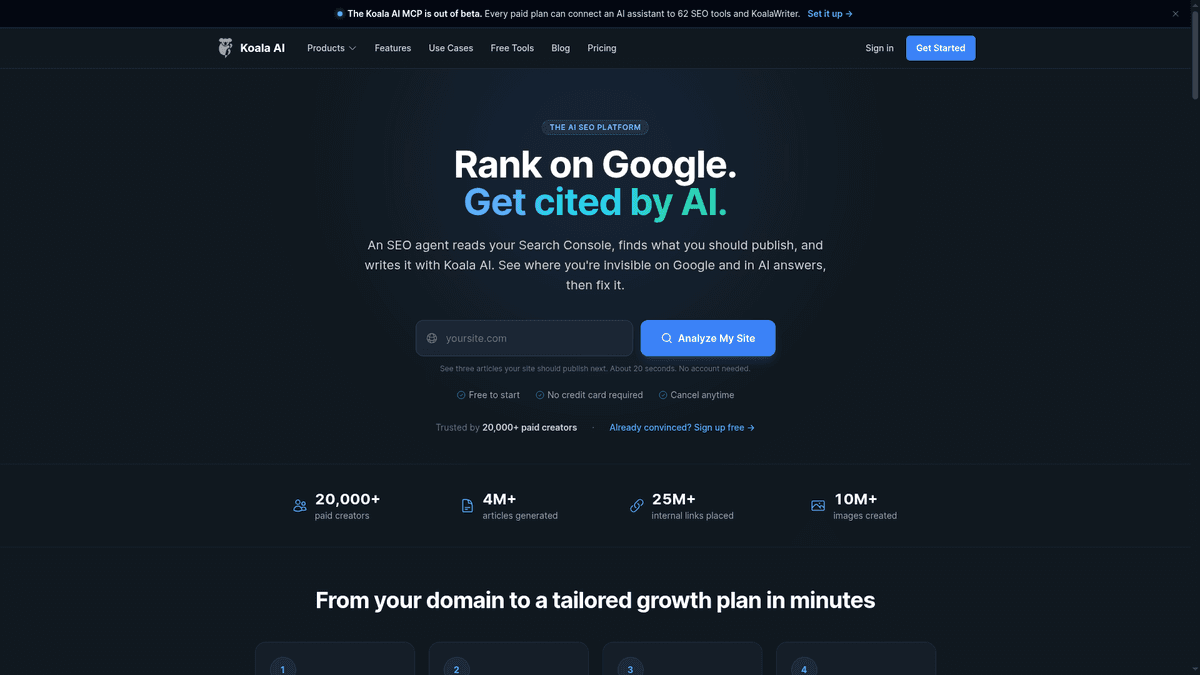
KoalaWriter has an appealing setup for niche publishers: start with a query, adjust the outline, and generate an article with images and internal links. It analyzes search results along the way. Publishing connections help when you run several sites or stick to a regular schedule.
I would spend time on the outline. A review needs first-hand product details and a clear basis for its recommendations; recognizing the query cannot supply either. Use Koala to handle structure and routine sections, then add what your writers know firsthand.
Koala meters words and credits, and your model choice affects consumption. The limit: budgeting takes more attention than it would with a per-article allowance. Koala can prepare pages for search and AI answers, but it has no citation-monitoring dashboard. You can compare other publishing-first tools in the KoalaWriter alternatives.
7. Writesonic: for teams that need to see AI-search visibility
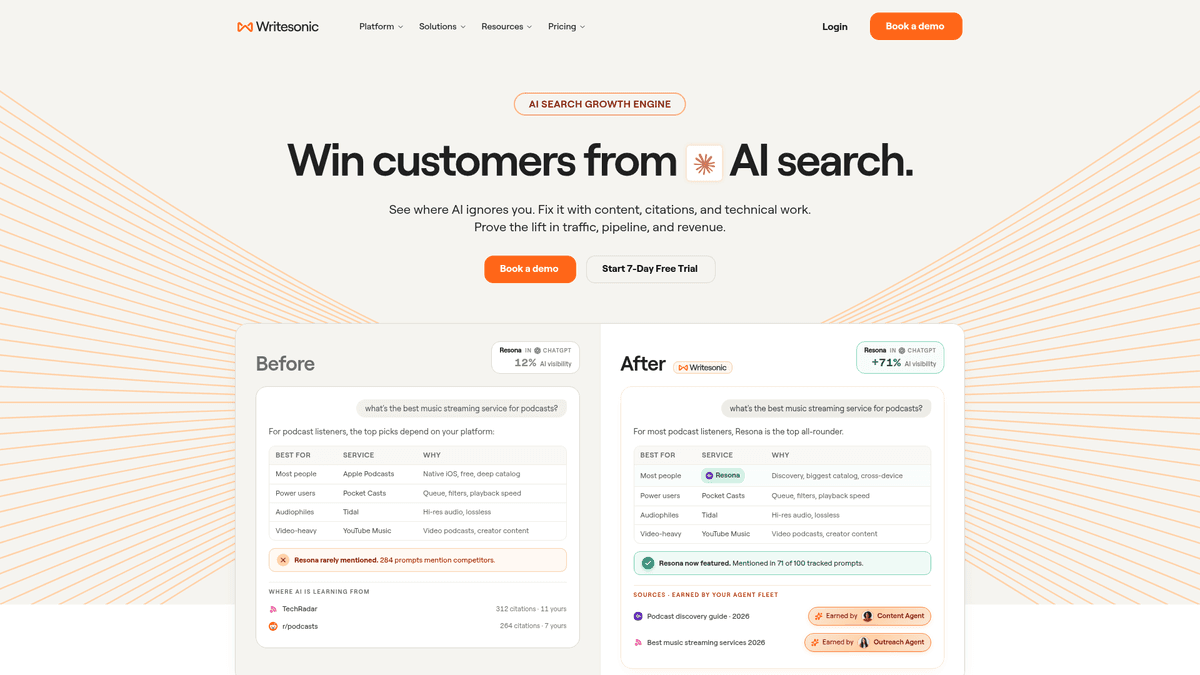
Writesonic is where I'd look if the question in the weekly meeting is about AI answers. Its AI Visibility Tracker reports brand mentions, cited sources, sentiment, and share of voice for tracked prompts. The AI article writer and SEO tools let your team create the page and then follow its presence in those answers, rather than infer it from Google positions.
When a founder asks, “Are assistants recommending us for the problems we solve?”, a Google keyword position cannot answer. Track prompts buyers might type, and separate brand mentions from links to your pages. An assistant citing a forum thread instead of your documentation gives you a different lead from a ranking report.
Engine coverage and prompt volumes vary by plan; the widest coverage sits on higher tiers. That may be too much platform if you need a simple blog writer. For a team with an AI-search reporting target, it deserves a closer look.
8. Jasper: for consistent marketing voice across formats

Jasper makes more sense when your blog sits beside ads, landing pages, emails, and product descriptions. For that team, a consistent voice can matter more than getting from keyword to post quickly. Jasper's brand-context tools help keep those formats together.
Reusable brand guidance can spare your team another round of “make this sound like us.” I would choose Jasper when the blog is one part of a larger content operation and consistent approvals matter more than daily automatic publishing.
Jasper is a weak fit if you want SEO research, rank tracking, GEO monitoring, and publishing in one subscription. You may need other tools for those jobs. Add their cost and workload to the writing subscription before you decide.
Two more options worth considering
You may prefer one of these if you want a straightforward article workflow and can do without combined SEO production and GEO measurement.
RightBlogger suits a solo blogger who wants a simple, high-volume writing toolkit with keyword and blogging utilities. The unlimited-article offer is appealing if you already manage the calendar. You still have to prioritize, edit, and measure each page. I'd look elsewhere if AI citation tracking drives the purchase.
SEO.ai pairs SERP-informed keyword work with AI drafting, which could suit a catalog or ecommerce program. I would look closely at whether its suggested topics answer different buyer needs. You will need to account separately for a managed publishing cadence or visibility across AI assistants.
GEO bonus: when a writing tool is not enough
You can keep Junia for writing and add a specialist to measure AI-answer visibility.
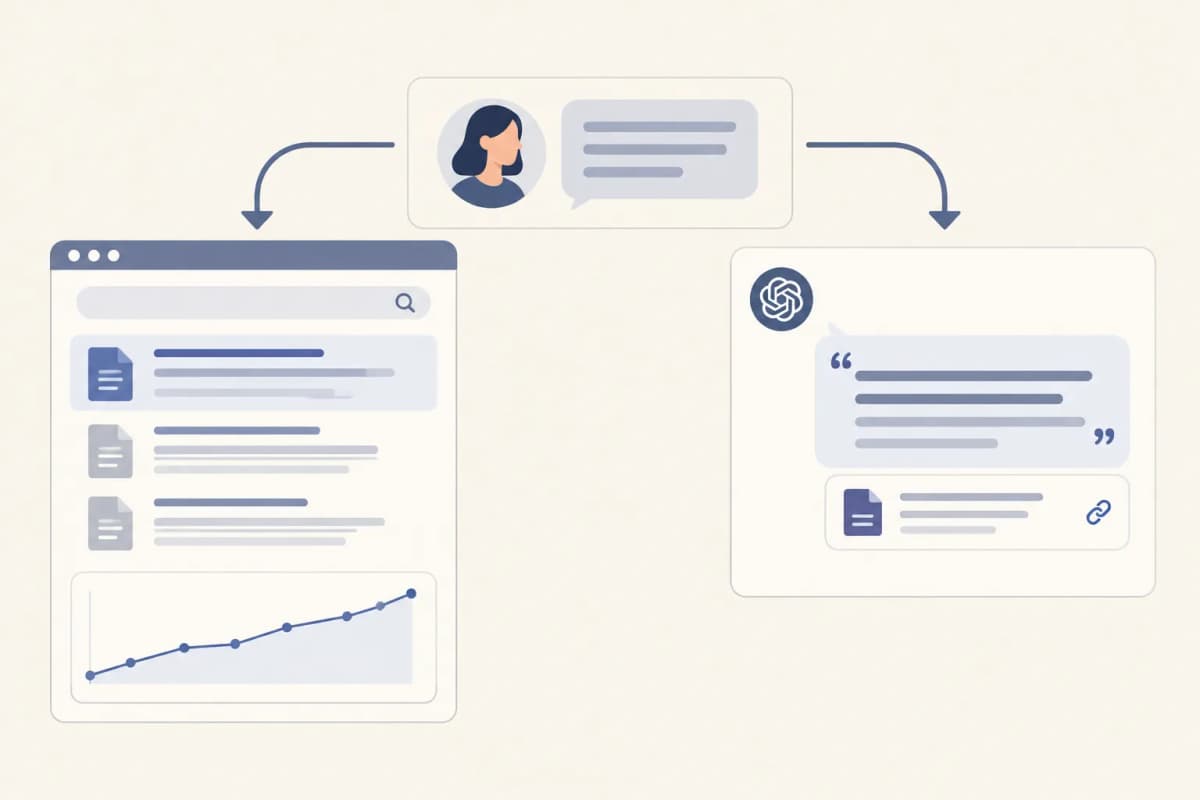
AthenaHQ, Otterly AI, and Profound are monitoring options. Look at how each reports prompt-level mentions, citations of your domain, and other sources in the answer. That information can guide a product-explainer update, help you answer an objection, or show you a source you may want to earn coverage from.
I would keep mentions, citations, visits, and customers in separate columns. AI answers can change between prompts and runs, so track the same buyer questions over time and read the answers, not just the dashboard. If you have few useful pages to cite, get the publishing workflow working first. Compare AI visibility tools when monitoring has its own budget.
How I would choose without buying the wrong workflow
Your best option depends on who has time to do the work next week.
Match the tool to the person doing the work
No dedicated content hire: favor an end-to-end system such as RankSpot. Pick a few high-intent subjects, connect the CMS, and review the first published pages for factual accuracy, useful internal links, and brand fit.
Writers and editors already in place: choose Surfer for live optimization, or Frase if briefs and research are the real bottleneck. Keep human ownership of examples, sourcing, and final sign-off. If you have neither, compare SEO automation tools instead of another editor.
A growing topic-cluster program: Scalenut offers a guided path from keyword groups into drafts. Estimate how many articles, audits, clusters, and tracked prompts you will actually use before choosing a tier.
Budget-first niche publishing: compare SEOWriting.ai and KoalaWriter on the kind of article you produce most often. Count the human edits needed, not merely the minutes to generate a first draft.
AI-answer reporting is mandatory: put Writesonic or a dedicated GEO monitor on the shortlist. Define a fixed set of buyer prompts and distinguish brand mentions from citations of your own pages.
Marketing extends beyond SEO articles: Jasper can be a better center for brand voice and campaign copy. Budget for separate search tooling if you still need keyword planning or monitoring.
Run a small publishing test
For a fair choice, give each tool a commercial-intent article, an educational article, and an existing page to update. Look for accurate product detail and the right internal links. Open the result in your CMS too: formatting problems can eat up whatever time the draft saved.
Start with a clear product brief and real customer questions. Decide who approves the outline and who checks facts on the published page; both jobs may belong to you. Use the same target queries and buyer prompts for each tool. If faster drafts leave you with hours of cleanup, the advertised article count will not help.
Have content teams note each manual step: finding a query, preparing a brief, correcting claims, adjusting the AI content, adding visuals, and publishing. If you work alone, track those steps yourself. The best workflow is the one that removes the steps you cannot keep doing every week, not the one with the most features on its pricing page.
Conclusion: which Junia AI alternative should you pick?
Junia AI remains a reasonable choice if its drafting and publishing setup works for you. Surfer and Frase give editors more control; Writesonic helps teams measuring AI answers. KoalaWriter and SEOWriting.ai suit a draft-volume budget. Switch for the job Junia is leaving undone.
If your content calendar is empty and you have little spare time, I would start with RankSpot. It connects opportunity selection and planning to long-form articles, visuals, and CMS publishing. That leaves you reviewing the output instead of stitching tools together. Try the first three articles free, see whether they answer your buyers' questions, and keep editorial control over what goes live.
FAQ
Which is the best free AI writing tool?
There is no universal best free tool for SEO publishing. If you want to evaluate an automated pipeline rather than just a draft, RankSpot lets you try the first three articles without a credit card; judge the finished pages for accuracy, brand fit, and useful structure before paying.