
How to Use Jev for SEO & GEO: 10 Use Cases, Examples & Costs
Founders usually know they should be doing SEO. The problem is not awareness. It is bandwidth.
Keyword lists pile up. Old posts decay. Internal links never get built. AI search visibility is hard to monitor. And if you try to solve all of this with a normal LLM, the token bill and latency add up fast.
That is where Jev gets interesting.
Jev is not a writing model. It is a decision model. It does not draft articles, explain strategy, or brainstorm angles. It takes an input, answers a bounded question, and returns a typed decision with confidence. For SEO and GEO work, that shape is surprisingly useful.
If a workflow boils down to:
classify this keyword
decide whether two pages belong together
score whether a draft is too thin
check whether your brand was cited
choose who got cited instead
…then Jev can often sit in front of your normal LLM stack and cut both cost and response time.
For lean teams, that matters. It is the difference between running checks once a quarter and running them every day.
What is Jev
Jev is TypeSafe AI’s first “System One Model.” It was released in early access on September 15, 2026. Instead of generating open-ended text, it returns structured decisions.
In plain English: Jev is built for judgment, not prose.
That makes it a strong fit for repetitive SEO and GEO decisions where you already know the set of possible outputs.
A few useful facts to keep in mind:
Jev returns type-safe structured decisions, not paragraphs
it supports three decision types: choice, score, and yes/no probability
it returns calibrated confidence
vendor-reported latency is 70–500 ms
list pricing is $0.042 per 1M input tokens, with free output
it can stay inside the schema you define, but it can still choose the wrong answer
TypeSafe says it was trained with RLCD, short for Reinforcement Learning for Calibrated Decisions
"Jev is our first System One Model: it makes calibrated decisions directly in structured types instead of generating text." - TypeSafe AI
For SEO operators, the key mental model is simple:
Jev decides
an LLM writes
your app or workflow applies the action
That split is what makes jev seo workflows practical.
Jev vs traditional LLMs
You should not think of Jev as a replacement for Claude, GPT, or Gemini. It is a specialist that handles narrow decision tasks upstream.
Here is the cleanest way to compare them:
Capability | Jev | Traditional LLM |
|---|---|---|
Primary job | Make bounded decisions | Generate language |
Output | Choice, score, yes/no probability | Text, code, summaries, JSON, explanations |
Best for | Classification, routing, triage, ranking | Writing, rewriting, explaining, strategy |
Confidence | Built into decision output | Usually inferred or self-reported |
Speed | Vendor-reported 70–500 ms | Often slower for repeated classification |
Cost model fit | Great for high-volume small decisions | Better for lower-volume high-context tasks |
Schema reliability | Strong | Good, but still needs more guarding |
Can explain itself | No | Yes |
Can draft content | No | Yes |
The best pattern is not “Jev or LLM.” It is “Jev first, LLM second.”
For example:
Jev checks whether a title should stay or be rewritten
only the flagged titles go to an LLM
the LLM drafts rewrites
Jev can score the outputs again before publishing
That is the kind of architecture that turns SEO automation from expensive experimentation into something you can run every day. If you are already exploring SEO automation tools, this is the model split worth understanding.
Use case 1: Keyword classification
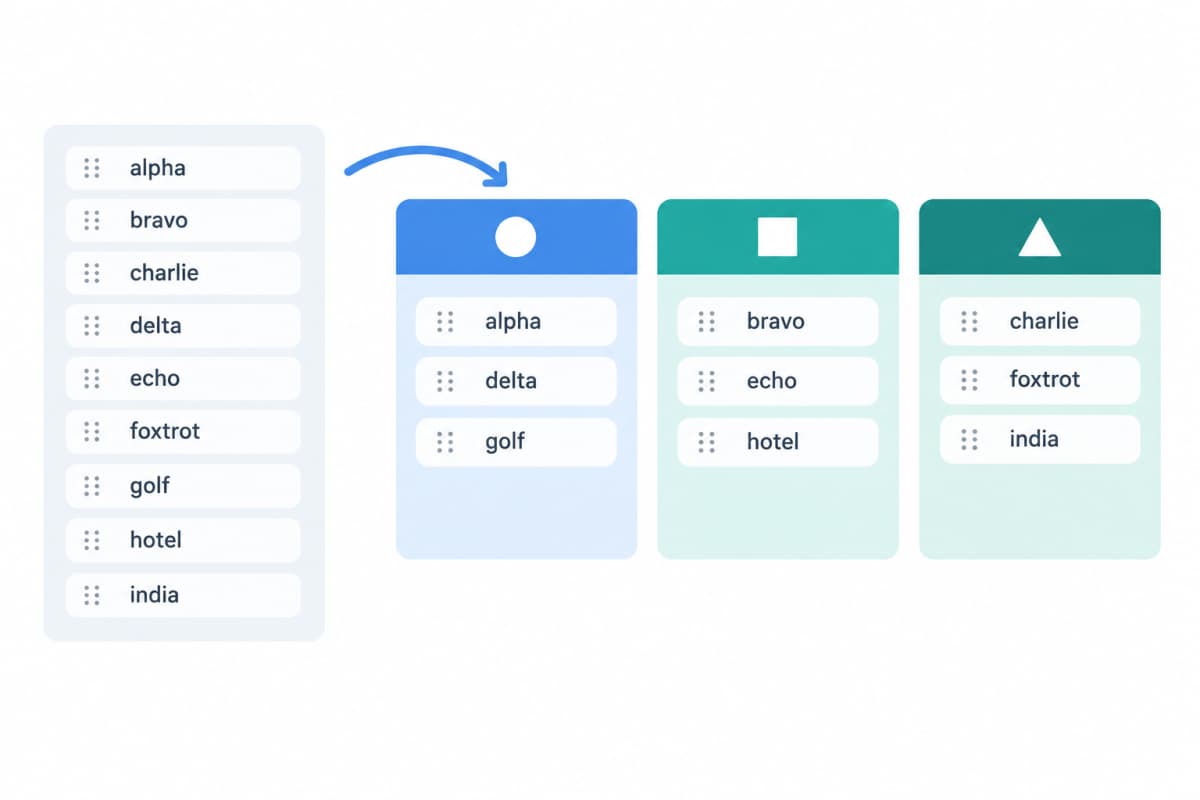
Keyword classification → Turns a messy keyword dump into usable labels like intent, funnel stage, and relevance, so you can prioritize what is actually worth targeting. If you need a deeper framework first, RankSpot’s guide to keyword research is a useful starting point.
Cost at realistic scale:
Volume | Estimated cost |
|---|---|
5,000 keywords | about $0.02 |
20,000 keywords | about $0.07 |
Use case 2: Keyword clustering
Keyword clustering → Tells you whether two keywords belong on the same page or need separate pages, which keeps content cleaner and helps avoid cannibalization.

Cost at realistic scale:
Scenario | Estimated cost |
|---|---|
30,000 shortlisted pairs from a 10,000-keyword set | about $0.08 |
Use case 3: Content pruning
Content pruning → Sorts existing pages into keep, update, merge, or remove, so you can clean up old content and focus effort where it pays off.

Cost at realistic scale:
Volume | Estimated cost |
|---|---|
500 pages | about $0.01 |
5,000 pages | about $0.15 |
Use case 4: Cannibalization detection
Cannibalization detection → Spots when two URLs are fighting for the same intent, so you can decide whether to consolidate them before overlap hurts performance.

Cost at realistic scale:
Scenario | Estimated cost |
|---|---|
8,000 shortlisted pairs from 1,000 pages | about $0.11 |
Use case 5: Internal linking
Internal links → Finds page pairs that have a real editorial reason to connect, making internal linking faster and more consistent without matching everything by hand.

Cost at realistic scale:
Scenario | Estimated cost |
|---|---|
5,000 candidate pairs | about $0.08 |
Use case 6: Pre-publish quality gate
Pre-publish quality gate → Flags weak drafts before they go live, so you can keep quality high by publishing, revising, or rejecting faster.

Cost at realistic scale:
Volume | Estimated cost |
|---|---|
100 drafts per month | about $0.04 |
1,000 drafts per month | about $0.42 |
"Jev is priced at $0.042 per 1M input tokens with free output tokens." - TypeSafe AI
Use case 7: Title and meta triage
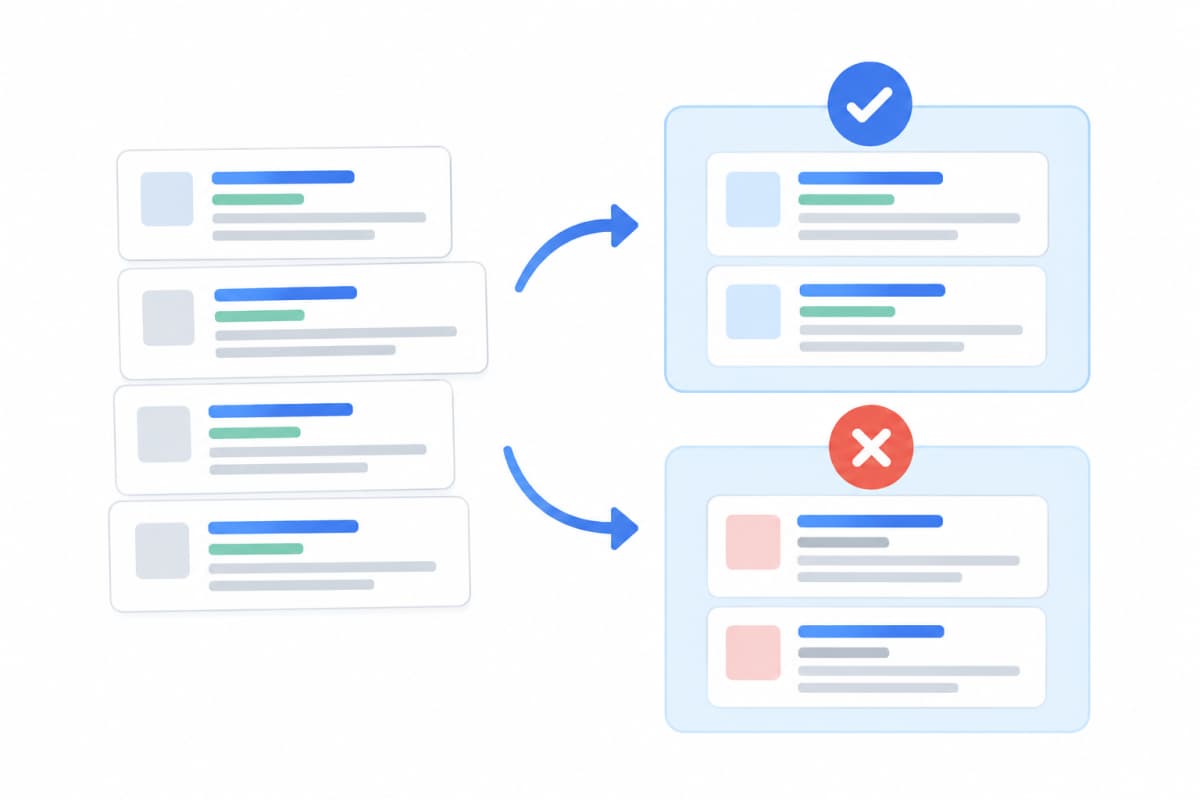
Title and meta triage → Quickly separates the solid titles and descriptions from the weak ones, so only the losers need a rewrite.
Cost at realistic scale:
Scenario | Estimated cost |
|---|---|
2,000 pages | about $0.03 |
Use case 8: AI visibility monitoring
AI visibility monitoring → Checks whether your brand shows up in answers across ChatGPT, Claude, and Gemini, turning GEO from a guess into something you can track.

Cost at realistic scale:
Volume | Estimated cost |
|---|---|
3,000 answers | about $0.08 |
12,000 answers | about $0.34 |
Use case 9: Competitor share of answer
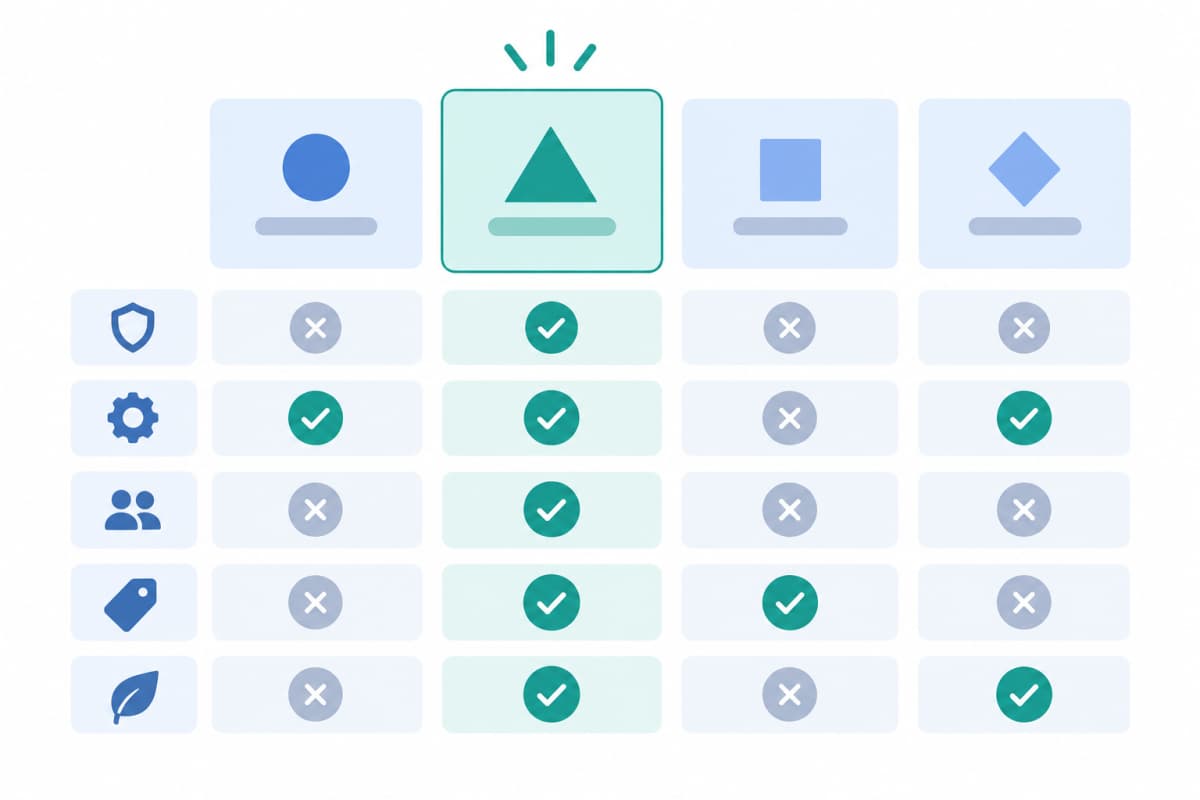
Competitor share of answer → Shows which competitor gets cited when your brand is missing, giving you a clean read on where rivals are winning attention.
Cost at realistic scale:
Scenario | Estimated cost |
|---|---|
5,000 non-cited answers | about $0.11 |
Use case 10: Content gaps from AI fanout queries and forum threads
Jev helps you turn AI fanout queries, forum questions, and current site coverage into a simple decision: cover it, update it, create it, or ignore it. That makes topic planning much more grounded in real demand.

Cost at realistic scale:
Volume | Estimated cost |
|---|---|
2,000 questions | about $0.04 |
10,000 questions | about $0.21 |
This is a strong fit for RankSpot’s workflow because the platform already surfaces Reddit and forum conversations, high-intent opportunities, tracked competitor terms, and AI-answer demand signals. In practice, that means you are not starting from blank-page ideation. You are filtering real demand.
How the collect → narrow → decide flow works
The easiest Jev workflows follow a simple rhythm: collect the data, narrow the list, let Jev make a small decision, and then act on the result.
1. Collect the raw inputs
Start with the sources you already have:
Search Console
keyword tools
your CMS
AI answer monitoring
Reddit and forums
competitor content and tracked keywords
2. Narrow the list first
Do not throw everything at Jev. Use simple filters like rules, embeddings, SERP overlap, candidate URL matching, or competitor shortlists to cut the list down first.
That keeps costs down and gives you better signal.
3. Let Jev make the small call
Ask one bounded question per row, pair, page, or answer.
Choice for categories
Score for scales
Yes/no probability for binary checks
4. Use confidence thresholds
Keep it simple:
High confidence - auto-apply
Medium confidence - send to review
Low confidence - drop or re-check
That is your safety layer.
5. Send only the winners to the LLM
Once Jev has filtered the set, pass only that subset to a stronger writing model for the work that needs actual language quality:
article briefs
rewrites
title rewrites
merge recommendations
final copy
explanations humans will read
6. Publish or queue the action
This is the part that makes the system useful. A decision only matters if it can turn into an action.
For small teams, that is where the time savings come from: research flows into a plan, the plan turns into writing, and the output can be published or pushed straight into your CMS.
Cost summary table
All costs below are arithmetic at Jev’s published list price of $0.042 per 1M input tokens with free output. They are not measured runs. Real totals depend on how much context you pass and how well you shortlist candidates. Pricing may change.
Workflow | Realistic scale | Est. input tokens | Est. cost |
|---|---|---|---|
Keyword classification | 20,000 keywords | ~1.6M | ~$0.07 |
Keyword clustering | 30,000 candidate pairs | ~2M | ~$0.08 |
Content pruning | 5,000 pages | ~3.5M | ~$0.15 |
Cannibalization | 8,000 candidate pairs | ~2.5M | ~$0.11 |
Internal linking | 5,000 candidate pairs | ~2M | ~$0.08 |
Pre-publish quality gate | 1,000 drafts | ~10M | ~$0.42 |
Title & meta triage | 2,000 pages | ~800,000 | ~$0.03 |
AI visibility monitoring | 12,000 answers | ~8M | ~$0.34 |
Competitor share of answer | 5,000 answers | ~2.5M | ~$0.11 |
Content gap decisions | 10,000 questions | ~5M | ~$0.21 |
The exact numbers matter less than the pattern:
Jev is cheap enough to use broadly for triage
frontier LLMs should be saved for writing and reasoning
the combination is what makes large-scale SEO automation workable
Limits to know before you build around it
Jev is useful, but it is narrow.
A few important limits:
It does not write
No article copy. No rewrite rationale. No meta descriptions. No outreach copy. No strategy memo.
You still need an LLM for language tasks.
It can be confidently wrong
Type-safe output does not mean correct output. Jev can stay within schema and still choose the wrong option. That is why confidence thresholds matter.
It is best for bounded decisions
If you do not know the answer set in advance, Jev is usually the wrong tool.
Performance claims are vendor-reported
The speed and benchmark claims around Jev come from TypeSafe. Treat them as useful directional signals, not settled truth.
Early access and pricing may change
If you are designing a production workflow, plan with flexibility. Do not hardwire assumptions that depend on one vendor’s launch price staying fixed.
How to start
If you are a founder or operator, do not try to redesign your whole stack around Jev on day one.
Start with one workflow where:
the question is repeated many times
the output is bounded
the action after the decision is clear
mistakes are low-risk or easy to review
Good first candidates:
title and meta triage
keyword classification
internal linking
pre-publish quality scoring
AI visibility checks
A simple rollout plan looks like this:
Step 1: Label a sample
Take 200 to 500 real examples from your own workflow and label them manually.
Step 2: Define the schema
Decide the exact answers Jev is allowed to return.
Step 3: Set thresholds
Do not auto-apply everything. Create clear confidence bands.
Step 4: Add the LLM only where needed
Use a writing model for the small set of items that pass Jev’s filter.
Step 5: Connect it to a real publishing loop
This is where most teams stall. They build scoring, not execution.
That is also why end-to-end platforms matter. RankSpot combines keyword discovery, competitor tracking, writing, image generation, formatting, internal links, and direct publishing in one workflow. Instead of stitching together Ahrefs, Canva, Grammarly, and CMS handoffs, you get one system that can publish daily, optimize for both search and AI answers, and scale across 100+ languages.
Final verdict
Jev is not a better chatbot. It is not trying to be one.
It is a fast decision layer for repetitive, structured judgments. For SEO and GEO, that is more useful than it first sounds.
A lot of the work founders avoid is not creative. It is operational:
sorting keywords
checking overlap
deciding whether to merge pages
finding internal links
gating weak drafts
measuring whether AI engines cite you
Those are exactly the kinds of jobs Jev can handle well.
The smart setup is simple:
let Jev make the small decisions
let an LLM do the writing
let your automation or CMS do the publishing
If you want the practical version of that setup without building the whole stack yourself, RankSpot is the easier route. It handles the full SEO and GEO pipeline end to end: research, planning, long-form writing, AI-answer optimization, internal formatting, image generation, and publishing into your CMS. You get the first 3 articles free, no credit card, and a workflow designed for founders who want growth without hiring an agency or spending nights inside spreadsheets.
FAQ
What is Jev for SEO? Jev is the SEO workflow layer founders use to turn strategy into execution faster. In this article, that means combining research, planning, drafting, optimization, and publishing so content can be built for both search and AI answers.
How is Jev different from ChatGPT for SEO? ChatGPT can help write and brainstorm, but Jev is closer to an end-to-end SEO system. It can decide what to publish, how to structure it, and how to optimize it for distribution and rankings instead of stopping at the draft.
What SEO tasks is Jev best at? Jev is best at the repetitive, high-leverage parts of SEO: keyword and topic research, outlines, long-form content, internal formatting, AI-answer optimization, and publishing workflows. That makes it useful when you need consistent output without building a big content team.
Does Jev write content or improve rankings directly? Jev can help create and optimize content, but it does not magically improve rankings on its own. Rankings still depend on the quality of the content, the search intent match, and the overall SEO/GEO system around it.
Is Jev worth using for small teams? Yes, especially for founders and small teams that need to move fast without hiring an agency. It saves time on execution and keeps the SEO process consistent, which is where automation usually pays off most.