For a BlogSEO AI alternative that plans content, publishes it and tracks your brand in AI answers, I'd start with RankSpot. If you already handle planning and publishing, KoalaWriter and SEOWriting.ai can help with drafts; Surfer and Frase give editors more control. Work out which step is slowing you down before you switch.
Where BlogSEO fits into your content strategy
BlogSEO helps teams with AI-powered blog content creation. If you're considering a replacement, look beyond content generation: check how it handles topic selection, editing, publishing and measuring results. The best alternative depends on which of those steps takes the most time.
If Shopify publishing is important to you, test a complete post in your store before switching. Check the formatting, images and links, not just whether the tool says it supports integrations.
I also wouldn't switch for a “GEO” badge alone. Ask to see the buyer prompts, the brands named in AI answers and the sources cited, then use those details to decide what to publish. Whatever tool you choose, your team still has to supply accurate product details.
What to look for in a replacement
Your workflow has four parts. A tool may handle drafting well while leaving you to plan and publish each post:
Topic selection: Does it prioritize purchase-intent questions and account for pages you already have, or just generate a long keyword list?
Production: Can you edit claims, add firsthand product detail, create visuals and build relevant internal links?
Publishing: Does it connect to your CMS, especially a Shopify blog, or stop at an export button?
Measurement: Can you see Google performance and the prompts where AI assistants name or cite your brand?
For a Shopify store, take one article all the way through this loop before paying for volume. A convincing draft is not a replacement if a founder still has to upload images, paste HTML, fix links and schedule every post.
In an analysis of 300,000 keywords, Ahrefs found that results with a Google AI Overview had an estimated 34.5% lower average click-through rate for the top-ranking page than comparable informational results without one.
That's a comparison of Google search results, not a measure of ChatGPT traffic or a prediction for your site. Track search clicks alongside AI citations so you know what each channel contributes.
Compare seven BlogSEO AI alternatives by workflow
Tool | Best fit | Research and writing | Shopify publishing | AI-answer visibility | Main trade-off |
|---|---|---|---|---|---|
RankSpot | Founder wanting one ongoing SEO and GEO workflow | Keyword and competitor research, planned articles | Direct integration | Tracks prompts, citations and brand mentions | Less control than a dedicated manual editor |
KoalaWriter | Blogger who wants fast SEO drafts | SERP-informed writing | Assess your exact store workflow | Not the central workflow described here | Publication and measurement need separate attention |
SEOWriting.ai | Budget-conscious bulk draft production | AI article creation | Assess your exact store workflow | Not the central workflow described here | Volume still needs editorial checks |
Surfer SEO | Team editing existing content | Content scoring and optimization | Not a direct Shopify publishing workflow in the cited comparison | SEO-focused optimization | Human editor remains central |
Scalenut | Team organizing clusters and drafts | Planning and AI drafting | Assess your exact store workflow | Check separately for the reporting you need | More setup than a basic writer |
Writesonic | Team that wants AI content plus AI-search tooling | Multi-format AI content | Assess your exact store workflow | AI-search features are part of its positioning | Feature breadth can complicate a simple blog workflow |
Frase | Editor building briefs and optimizing pages | Research, briefs and SEO/GEO optimization | Not a direct Shopify publishing workflow in the cited comparison | AI-search tracking described in its platform coverage | Copy-to-Shopify handoff remains |
“Assess your exact store workflow” means a direct Shopify connection is not established by the information in this table. For a merchant, that distinction matters more than a generic “integrations” badge.
1. RankSpot: for a founder who wants the whole loop
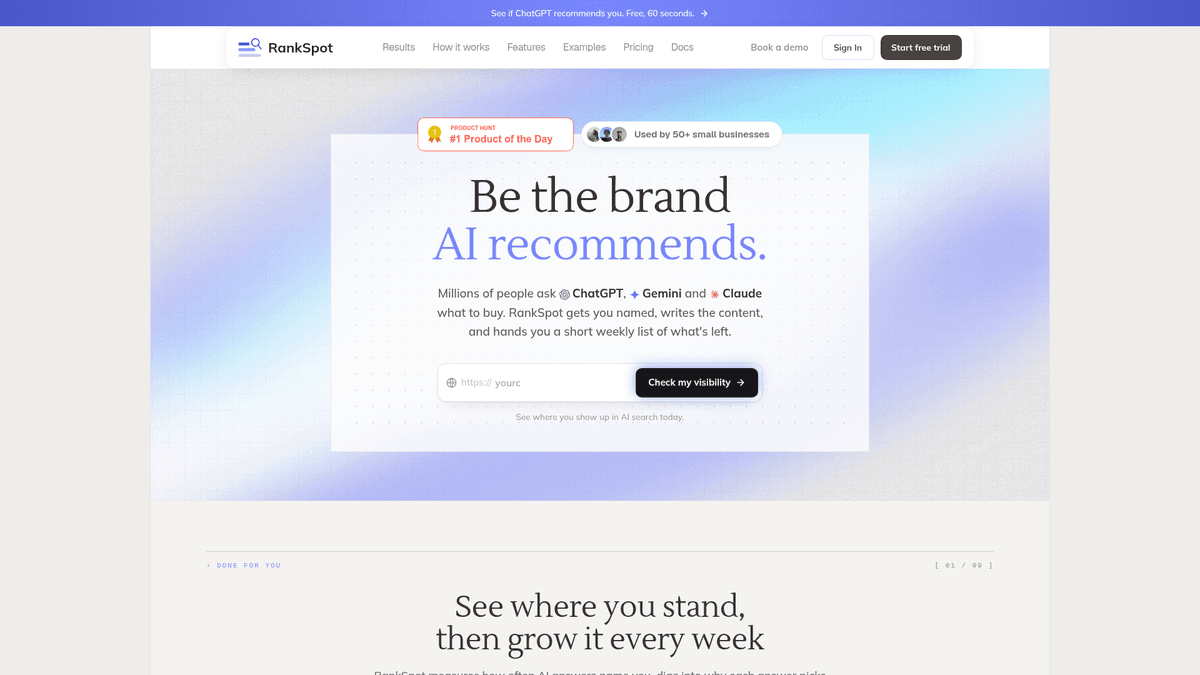
RankSpot fits when you want a content program to run without coordinating separate research, writing and publishing tools. Add your website URL and it analyzes your niche and competitors, finds keywords and questions buyers ask AI assistants, plans articles, writes them, and publishes to WordPress, Webflow, Wix, Shopify, Framer or Ghost. This AI-driven content workflow connects your content strategy to publishing; Search Console data sits alongside brand mentions, cited domains and the prompts where competitors appear.
Say an AI assistant recommends another brand to buyers in your category. You can see the prompt, write a useful comparison with evidence, and publish a page it can cite. RankSpot also surfaces cited directories and relevant forum or Reddit conversations; use those leads to contribute where you have something useful to say.
The articles can include images, headings, tables, sources and internal links. The homepage advertises up to 30 articles a month, 100+ languages and a three-day free trial; its current on-page pitch lists $99 a month. A customer quote on the site attributes four clients directly to search, but that is an individual account, not a forecast for your site.
Who I would choose it for: a lean SaaS team or Shopify merchant who wants topic discovery, publishing and AI-answer tracking connected in one subscription. The limitation: if you want to fine-tune every paragraph against a live content score, a dedicated editing environment such as Surfer or Frase gives the writer a more hands-on workflow. More automation also makes a final factual review important, especially for medical, legal or financial claims.
2. KoalaWriter: for bloggers who still like to edit
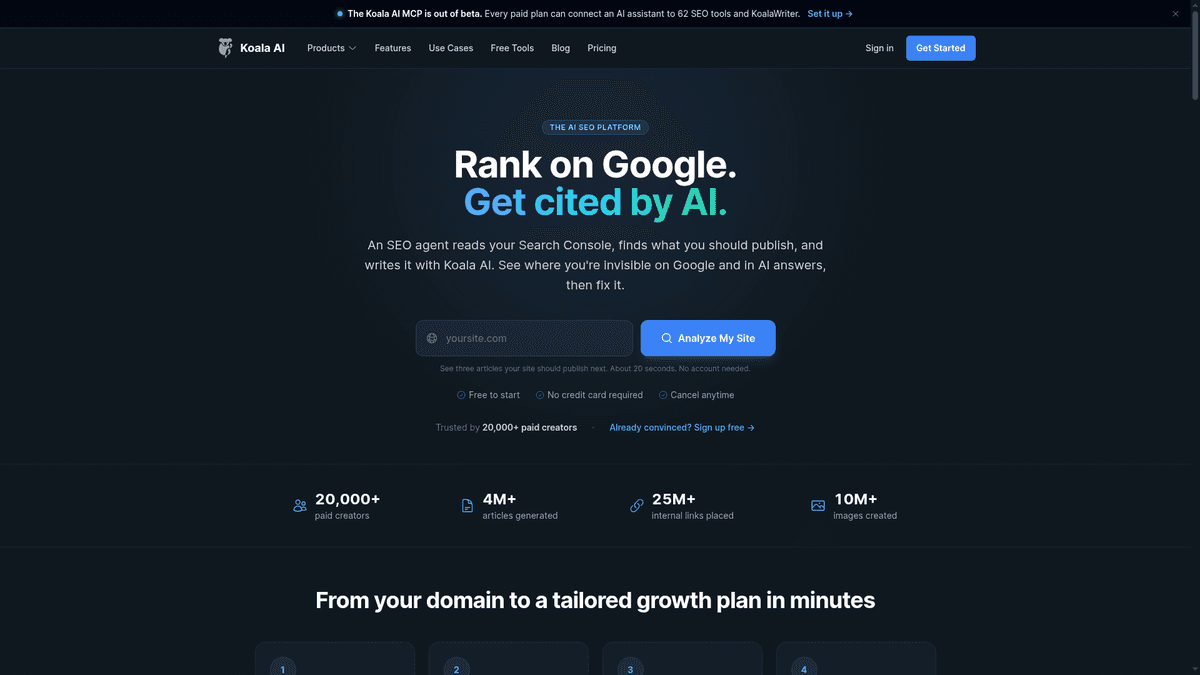
KoalaWriter makes sense if your topic list is ready and you need help finishing posts. Give it a focused question, then add the examples, screenshots and opinions that make the post yours. A solo blogger may find that more useful than a reporting suite. For other draft-focused options, see our KoalaWriter alternatives.
I would prepare an outline from the customer's question, generate a draft, then rewrite any product recommendation I couldn't support from experience. An affiliate article also needs accurate availability, specifications and disclosures. Bulk drafting helps with production; you still choose the topics.
Best fit: a creator publishing to an established blog who is comfortable handling strategy and performance measurement elsewhere. The catch: drafting does not by itself tell you which buyer questions AI answers cite, nor does it establish a verified end-to-end Shopify publishing path for your particular store.
3. SEOWriting.ai: for teams with a large draft queue
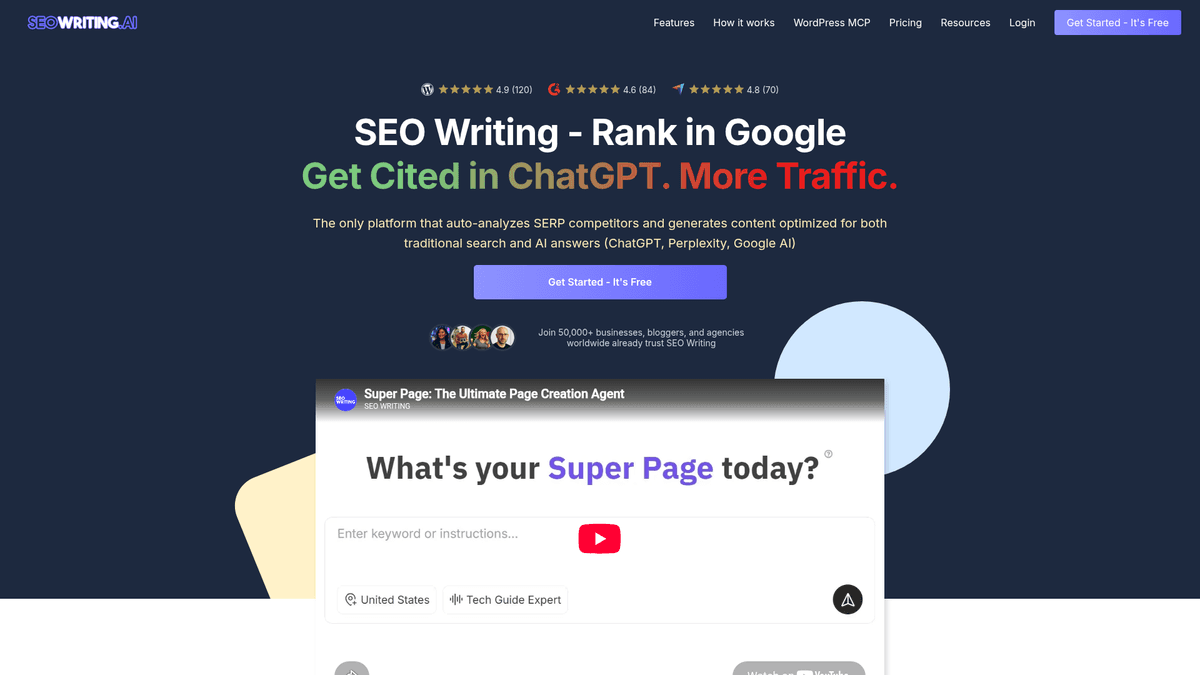
SEOWriting.ai suits a store with more product questions than writing time. You could work through a queue of sizing, material comparison and care posts. The backlog matters: generating articles before choosing useful questions just leaves you with more drafts to sort.
A store selling linen bedding needs answers tied to its real materials, dimensions and care policy. Generic copy about better sleep won't help someone choose a product. Nor will a post that points to the wrong item or repeats an existing category page.
Best fit: a budget-sensitive operator willing to own keyword selection, editing and performance tracking. The limitation: generation volume is not proof of SEO depth or GEO visibility. For Shopify, make the publish step part of your decision, not an assumption based on the product name.
4. Surfer SEO: for improving drafts before they go live
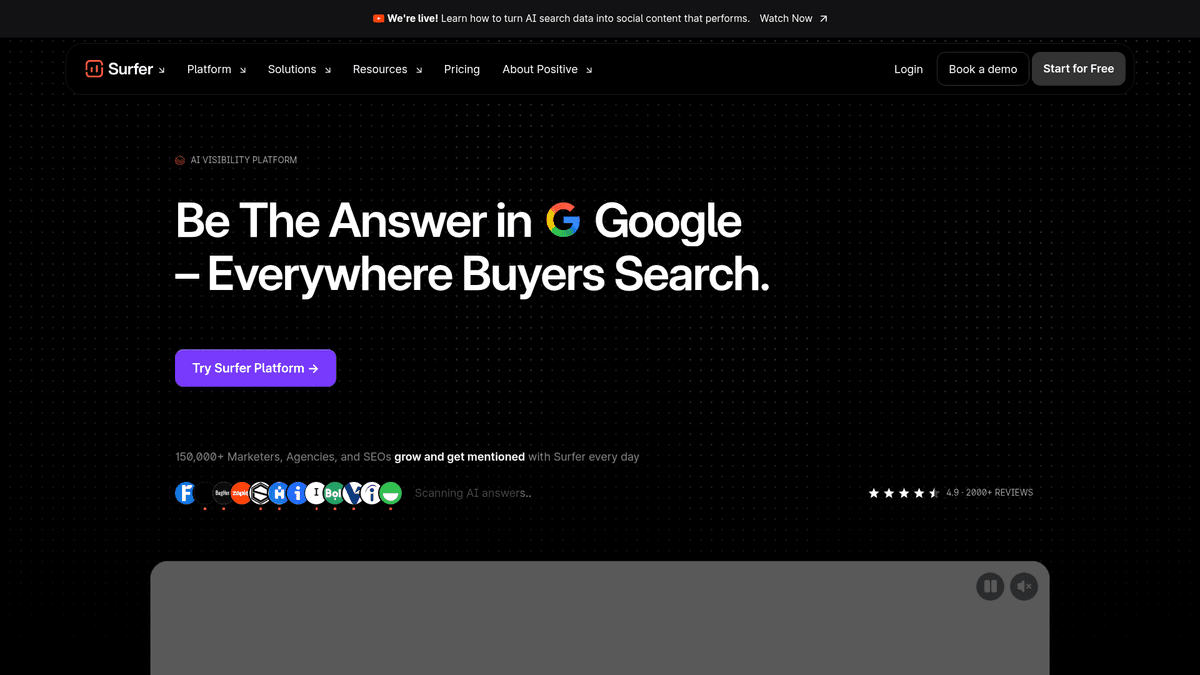
Surfer works best when someone on your team already writes and edits. Its content editor draws on search-result patterns, helping that person prepare briefs and spot missing subtopics in existing posts. It supports hands-on content optimization, not a guarantee of SEO results.
A content score helps diagnose a draft; it cannot guarantee a ranking. Add firsthand comparisons and accurate product facts before chasing a higher number. If the draft answers the question, avoid repeating points to lift the score. For more editorial options, see these Surfer SEO alternatives.
Best fit: a content team with someone accountable for briefs and revisions. The limitation: Shopify merchants looking to replace scheduled auto-publishing will still need a publishing process; Surfer is strongest as an editor, not as an unattended store blog engine.
5. Scalenut: for planning a topic cluster

Scalenut suits a team planning a group of related pages. Its clustering and guided drafting can organize ideas into a schedule. A shoe store, for instance, could separate a trail-shoe buying guide from sizing advice and a road-versus-trail comparison, then link each page to relevant products.
This is where I would be careful with any clustering tool: similar-looking keywords do not always deserve separate URLs. If two proposed posts would answer essentially the same question, consolidate the plan before you publish them. The planning layer is only valuable when it helps you make that decision.
Best fit: a small marketing team that wants structured research and a repeatable writing process. The limitation: it is more involved than a lightweight draft writer, and you should establish separately how publishing and AI-answer reporting fit your setup.
6. Writesonic: for a broader content and AI-search stack
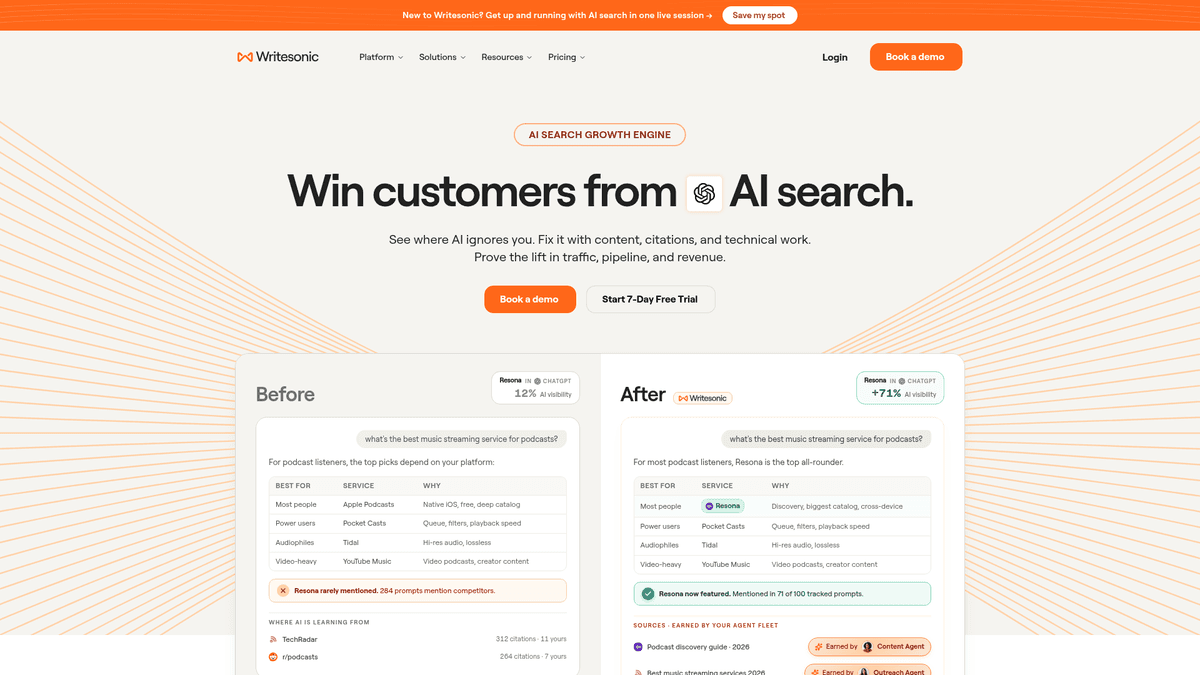
Writesonic makes more sense if your team writes landing pages and campaign copy as well as blog posts. It combines AI writing with AI-search visibility features. For a Shopify merchant who needs one post a week, that breadth may be more than the job calls for.
If GEO is the reason you are considering it, define the actual report you need. Brand mentions across tracked prompts, links to your domain, and mentions of a rival are three different signals. A platform that presents all three is more useful than a dashboard that gives one unexplained “AI score.” Then connect that report to a real page or distribution action.
Best fit: a marketing team that values breadth and can manage a multi-feature system. The limitation: if all you need is a post every week and a simple approval step, a larger toolkit can create more work than it removes.
7. Frase: for editors who research, brief and refine
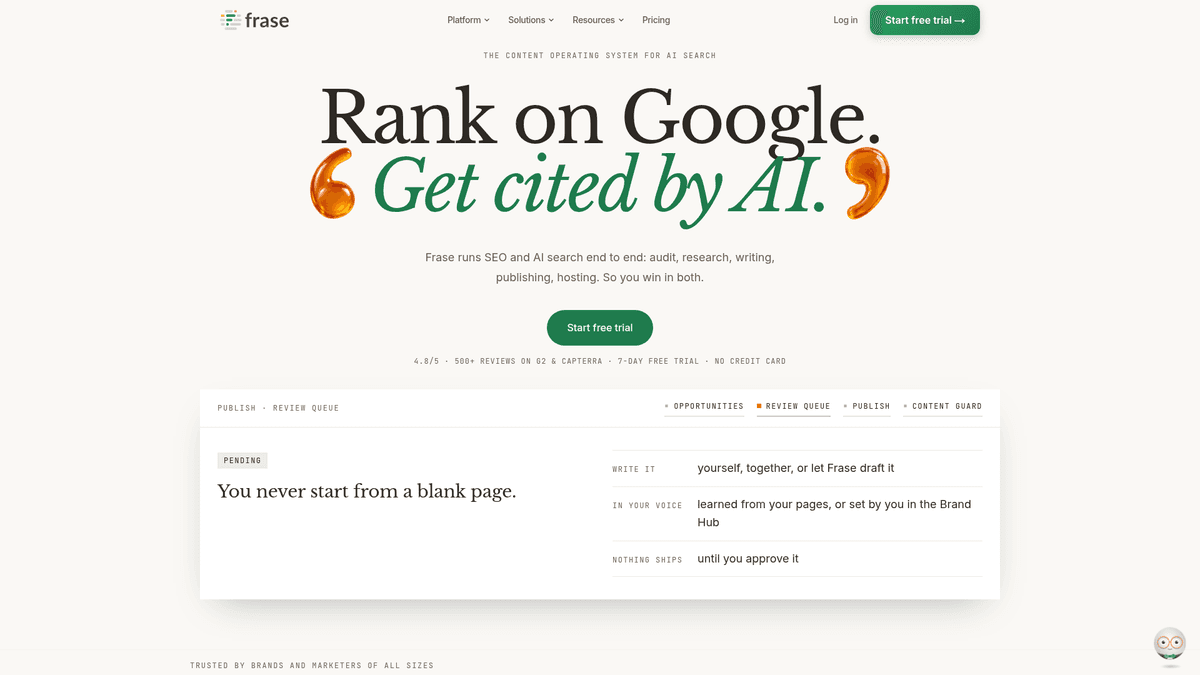
Frase gives an editor research, briefs, AI drafting, SEO and GEO optimization, and AI-search tracking in one place. I would use it to investigate a question, shape the brief, edit the draft and update the page as new evidence comes in. It leaves room for the person making SEO optimization decisions.
For a Shopify store, there is an important workflow distinction. Frase's described publishing options include WordPress, Webflow and Wix, but not Shopify. If Shopify is your main CMS, budget for a separate handoff rather than treating it as a drop-in autopublisher.
Best fit: an editor or agency that cares more about page quality and research control than unattended production. The limitation: extra hands-on steps are the point of the product, and the Shopify publishing gap may be decisive for a solo merchant.
GEO bonus: tools for monitoring AI answers
AthenaHQ, Otterly AI and Profound belong in a separate category from blog writers. They are names to consider when the central job is monitoring where your brand appears in AI responses and which sources those systems cite. Pairing a monitoring product with a writing workflow can make sense if you already have a reliable editor and CMS setup; it does not solve a broken Shopify publishing process.
For a merchant, start with five real buying questions: “Which size fits?”, “What is this made from?”, “How does it compare with [competing type]?”, “Can I return it?” and “Which store sells it?” Record whether each AI answer names your brand, links to a page, cites a third-party source, or omits you. Then fix the underlying content and product information before adding more posts. AI mentions are useful directional evidence, not a substitute for orders or qualified leads. If measurement is the main purchase, compare dedicated AI visibility tools.
How I would choose and switch
Your biggest bottleneck | Start here | What you still own |
|---|---|---|
No time to research, write and publish | RankSpot | Brand facts and approval of sensitive claims |
You know the topics but cannot finish drafts | KoalaWriter or SEOWriting.ai | Topic quality, fact-checking and reporting |
Content exists but needs stronger briefs or edits | Surfer or Frase | Publication and conversion paths |
You need a coordinated series of related pages | Scalenut | Consolidating overlapping topics |
You need cross-channel content and AI-search insight | Writesonic | Choosing the right workflow and interpreting reports |
For a Shopify migration, I would take a small, reversible path:
Inventory what exists. Export your post URLs and review Search Console impressions, clicks and queries. Keep posts with useful traffic and links; changing writing software does not require changing their URLs.
Separate refreshes from new posts. Improve pages already getting impressions before generating another post for the same intent. Map each proposed article to one primary question and one helpful product or collection destination. Use a competitor keyword check to find useful questions without copying another store's content plan blindly.
Pilot one complete publication. Check rendered headings, images, product links, author information, internal links and indexing. If a tool cannot complete the Shopify handoff you need, add the manual time to your comparison.
Measure two channels. Watch search queries and clicks alongside a small stable list of AI prompts. A citation is promising; a qualified visit or sale tells you whether the content actually helps the business.
The same principle applies to a WordPress or Webflow blog. Keep your existing URLs and useful content. Change the production process, not your entire library, unless an audit gives you a reason to consolidate a specific page.
Bottom line
For a founder who wants fewer handoffs, RankSpot is my first choice: it connects research, writing, direct Shopify or other CMS publishing, Google performance and AI-answer visibility. For a blogger who enjoys shaping each draft, start with KoalaWriter. Choose Surfer or Frase when editing depth matters more than automation; Scalenut suits a planned cluster, while SEOWriting.ai and Writesonic fit different volume and breadth needs. No tool guarantees rankings or AI citations.
If your current process falls apart between a keyword idea and a live post, start a RankSpot trial with one buyer question and inspect the published page and visibility report before expanding the schedule.