Looking for Sight AI alternatives? Start with the problem you need to solve: monitoring costs, missing engine coverage, or the work that piles up after you find a gap. A dashboard can show that ChatGPT left out your brand. Someone still has to research the topic and publish a page worth citing.
Otterly AI and Peec AI focus on monitoring. Profound and Scrunch AI give larger teams deeper visibility data. RankSpot and Writesonic bring content creation into the picture, though they handle it differently. I'd choose based on what the team can do after the report arrives.
This walkthrough shows how prompt-based AI search tracking works:
Why look beyond Sight AI?
Sight AI suits a team watching how its brand appears in AI answers. A founder publishing alone may need help producing content; an agency reporting on ten clients may need more tracking capacity. Before switching, pin down what you need to know:
Which buyer questions mention your brand, and which cite your site?
Are the engines you care about included in the plan you can actually afford?
Can you distinguish a one-off answer from a repeatable trend?
Once a competitor wins a citation, who will research, write, and publish the response?
A mention names your business; a citation links to a source. One does not guarantee the other. Ahrefs analyzed more than 31,000 mentions of its own brand and found that AI Overviews linked to Ahrefs in 10.7% of them, compared with 51.6% in Perplexity. Those rates describe Ahrefs, not every brand. I'd want to read the answers behind any visibility score.
"AI Overviews linked to Ahrefs in 10.7% of mentions; Perplexity did so in 51.6%." - Ahrefs
For a closer look at the starting point, see RankSpot's Sight AI review. If you are still deciding what to measure, its AI visibility tools overview explains the wider category.
11 Sight AI alternatives at a glance
Plans differ on engine access. The table shows entry-tier coverage when it is published; elsewhere, it shows the tracking to compare. Prices follow the billing basis in each cell. Extra prompts or engines can raise the total.
Tool | Best for | AI engines or surfaces to assess | Starting price |
|---|---|---|---|
RankSpot | Founders who need content execution alongside AI visibility | ChatGPT, Claude, Gemini and Google AI Overviews listed in plan | $99/month |
Otterly AI | Small teams starting prompt monitoring | ChatGPT, Google AI Overviews, Perplexity, Copilot | $29/month |
Peec AI | Prompt and competitor reporting for teams | ChatGPT, Google AI, Perplexity and other plan-dependent engines | $95/month |
Profound | Enterprise visibility programs | ChatGPT at entry; broader engines on higher tiers | $99/month, billed annually |
Nightwatch | SEO rank tracking plus LLM monitoring | ChatGPT, Claude, Gemini, Perplexity and Google AI surfaces | €79/month, billed annually |
SE Ranking AI Visibility | Teams already in SE Ranking | Google AI surfaces, ChatGPT, Perplexity, Gemini | $129/month Core |
Writesonic | AI content production with visibility workflows | ChatGPT, Gemini, Google AI Overviews at entry | $99/month |
Scrunch AI | Enterprise tracking and AI crawler experience | ChatGPT, Claude, Gemini, Perplexity and Google AI surfaces | $250/month, billed annually |
Radarkit | Lean GEO monitoring for agencies | ChatGPT, Copilot, Gemini, Perplexity and Google AI surfaces | $29/month |
AthenaHQ | Citation analysis and optimization | ChatGPT, Perplexity, Gemini, Claude and Google AI surfaces | Free tier; paid from $295/month |
Semrush AI Visibility Toolkit | Existing Semrush users | ChatGPT, Google AI, Gemini and Perplexity reporting | $99/month per domain, billed annually |
Sight AI's Pro plan starts at $99/month. Against that price, count the prompts and engines you would use and the work each plan takes off your hands. A cheap prompt allowance and a content-production subscription buy different things.
1. RankSpot: best when you need to publish, not just measure
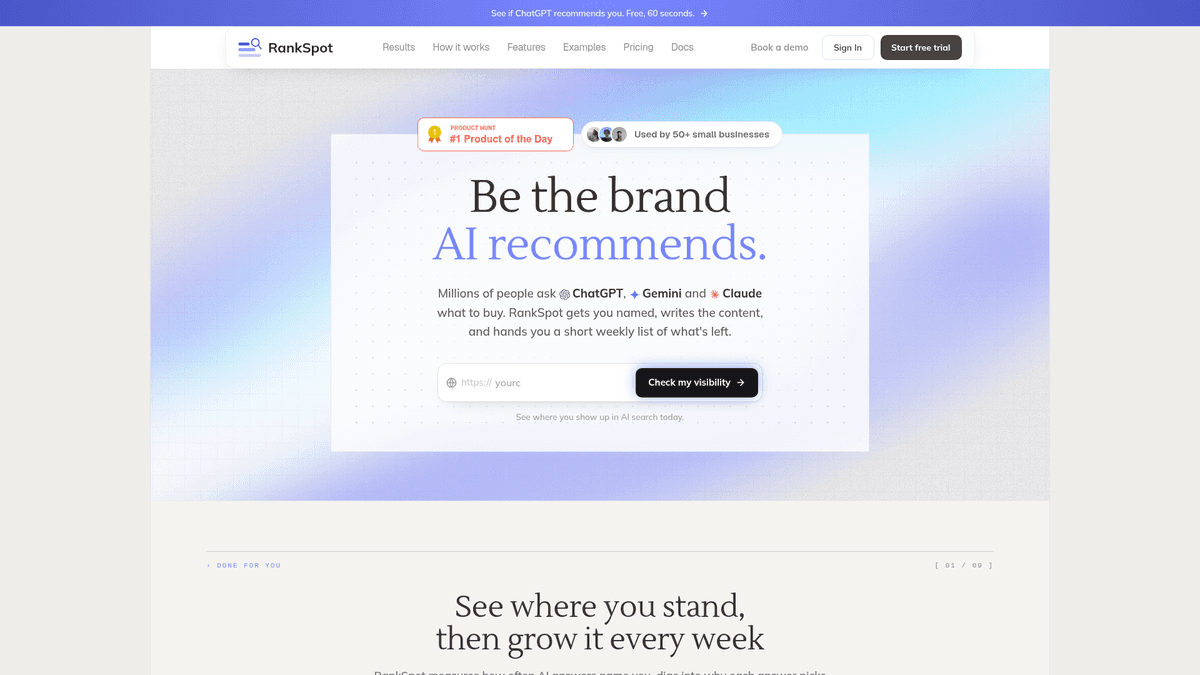
RankSpot suits a founder who finds a visibility gap and needs to publish something about it. Its AI workflow handles keyword research, competitor opportunities, a 30-day content plan, long-form articles, on-brand images, formatting and direct blog publishing. The articles target both search results and citations in AI answers. The displayed starting plan costs $99 per month; the first three articles are free, with no credit card required.
Daily publishing helps when your team has a backlog of topics and nobody to write or upload posts. RankSpot publishes to WordPress, Webflow, Wix, Shopify, Framer and Ghost. It also finds Reddit and forum conversations where prospective customers are asking questions.
I'd choose it if finding high-intent topics and getting pages published are the sticking points. A large team investigating historical prompt-level data may need a specialist analytics tool instead. A dedicated monitor is also a simpler buy if reporting is all you need.
2. Otterly AI: best affordable starting point for monitoring
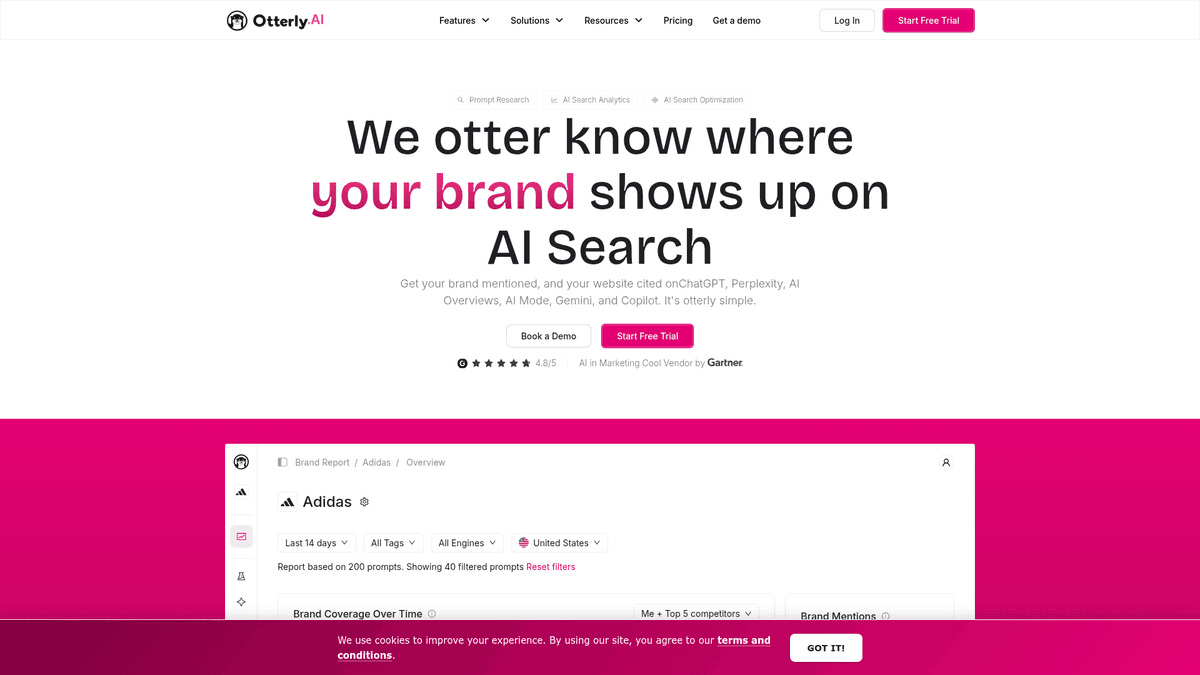
Otterly AI lets a small team follow a set of prompts over time. Its $29-per-month Lite plan covers 15 prompts and includes ChatGPT, Google AI Overviews, Perplexity and Copilot. That allowance works best for AI monitoring across a short list of buyer questions.
Engine expansion is where I'd pause. Gemini, AI Mode and Claude are paid add-ons, so your bill can rise above the entry price. Fifteen prompts also go fast across several products, regions or buying stages.
I'd pick Otterly to establish whether a brand shows up in AI answers, then assign someone to turn the findings into new or revised content. The Otterly AI alternatives comparison goes further on monitoring options.
3. Peec AI: best for a shared prompt-level view
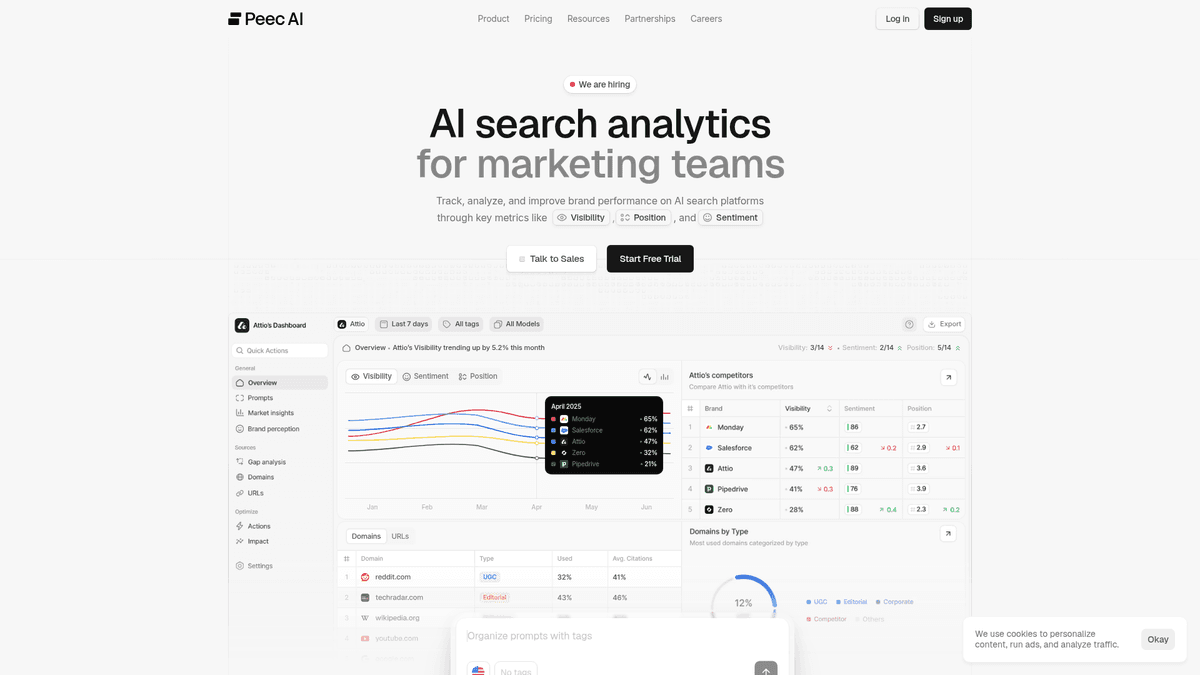
Peec AI helps teams organize prompts, compare brands and read answers together. Plans start at $95 per month. Brand plans limit how many engines you can track at once. Check the included set before buying.
An SEO lead could use it to hand writers a list of missing mentions and citations. Writers still need a separate content workflow, and extra engines can raise the bill. Compare the package you'd use rather than the logos on the homepage.
4. Profound: best for a large AI visibility program
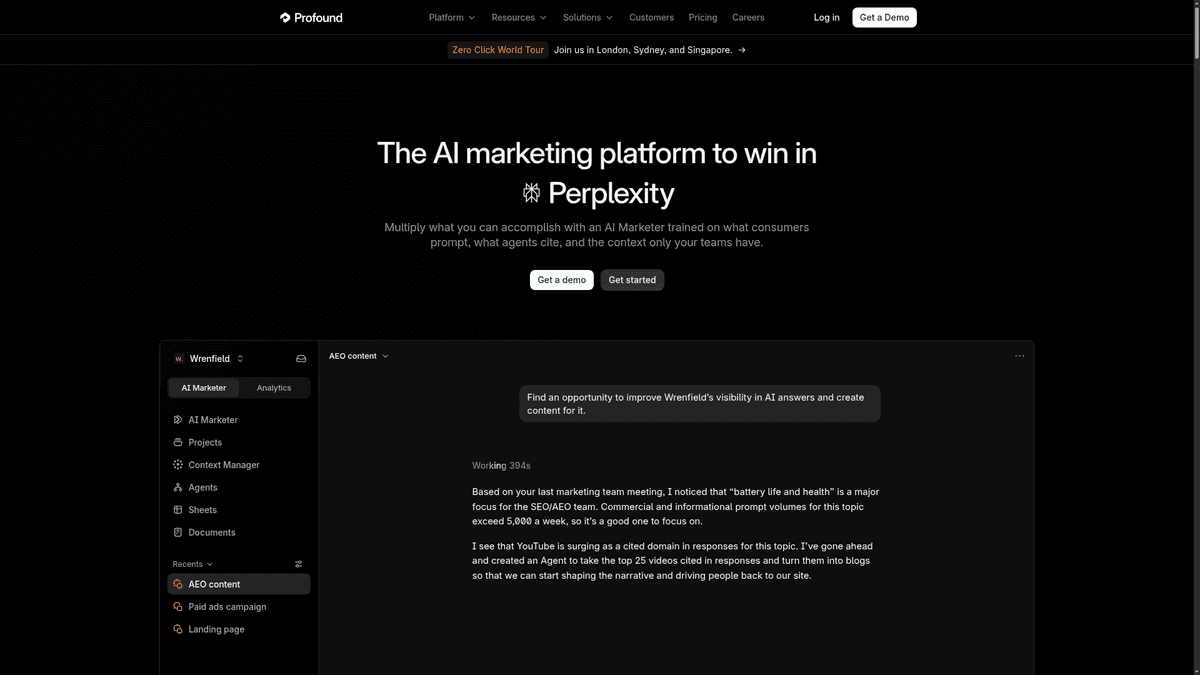
Profound tracks brand presence, citations and competitors. Its prompt-volume data can help a large brand see what people ask AI and decide where to spend its research and content budget.
Starter costs $99 per month billed annually, with 50 prompts and ChatGPT as the only included engine. Growth costs $399 per month billed annually and adds engines and capacity. Teams that need broad coverage would have to budget for a higher tier.
An analyst with a budget for deeper data will get more use from Profound than a founder whose immediate problem is getting pages published each week.
5. Nightwatch: best for connecting rankings with AI monitoring
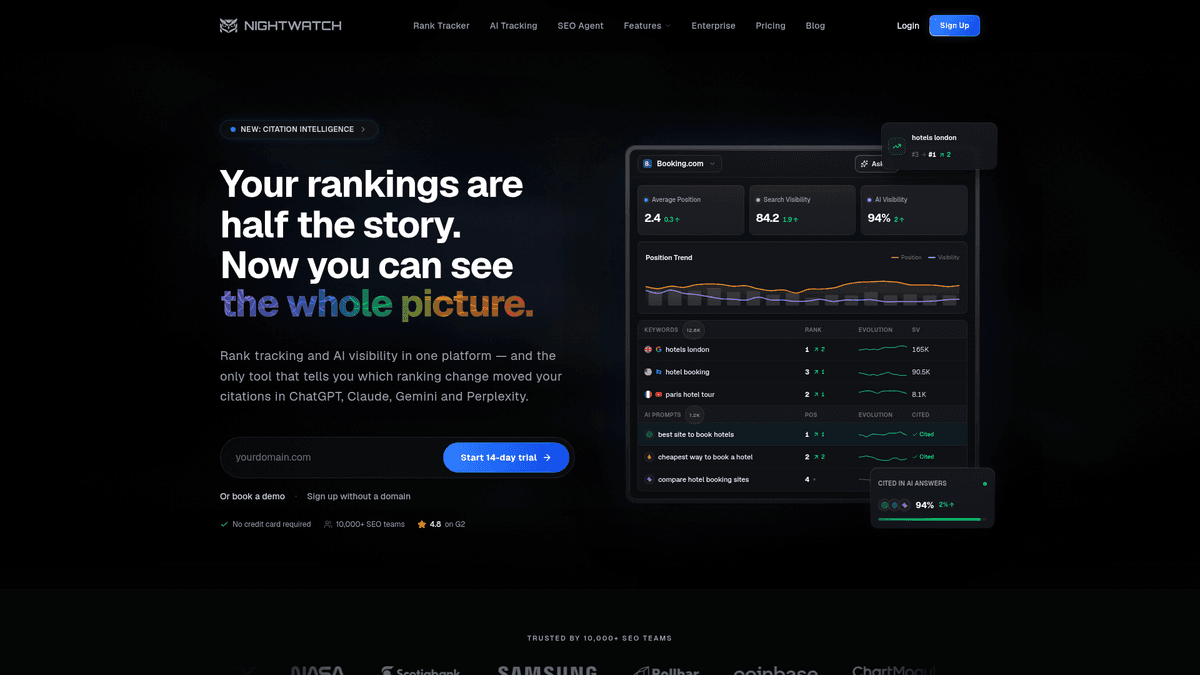
Nightwatch fits an SEO team that tracks search rankings and wants to watch LLM visibility alongside them. You can look for topics that gain search visibility, then see whether those topics appear in AI answers after a page update.
Nightwatch displays a €79-per-month Starter price with annual billing; that tier lists ChatGPT, Claude, Gemini, Perplexity and Google AI surfaces. I'd consider it if rank tracking anchors your reporting. You'll need another workflow to research and publish articles.
6. SE Ranking AI Visibility: best for current SE Ranking customers
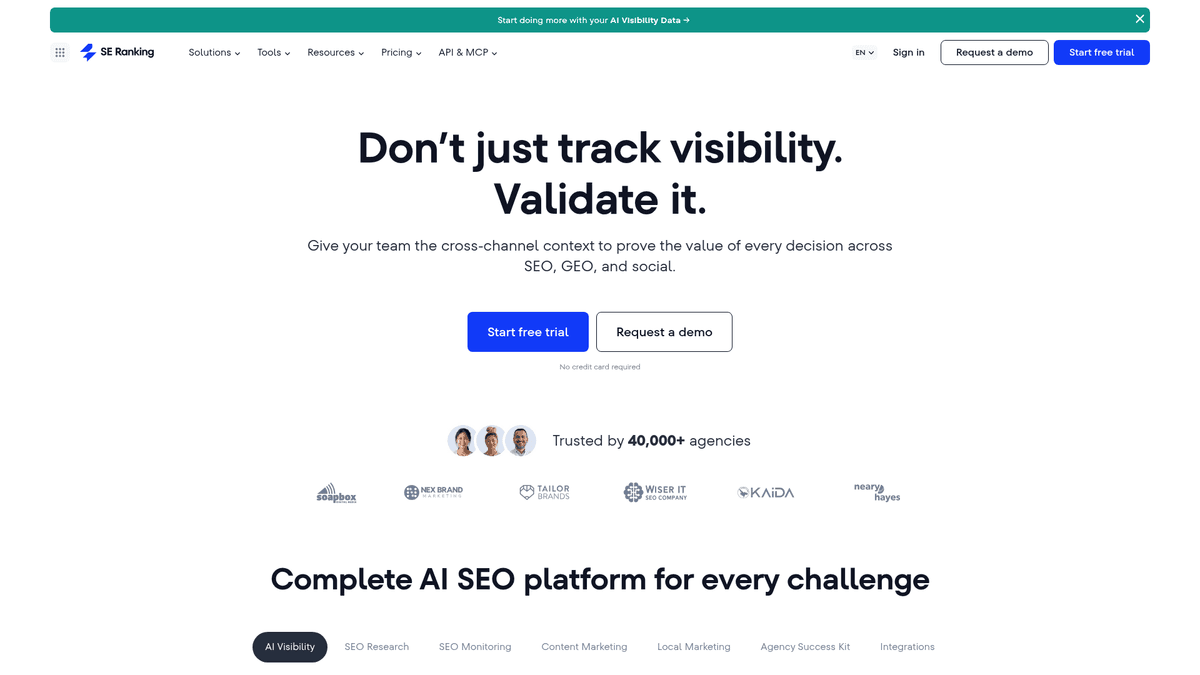
SE Ranking makes the most sense if your team already uses its SEO data. Keeping prompt visibility near search reporting helps you decide which landing pages to update and which topics need a new article.
The Core SEO/GEO subscription starts at $129 per month and includes AI prompt tracking. An AI Search add-on costs $89 per month for expanded limits; you don't need it to start. AI prompt checks measure something different from search rankings. Existing customers can add them without moving to a new reporting stack, though the Core subscription may be a bigger purchase than a founder needs.
7. Writesonic: best for teams that want AI-assisted writing
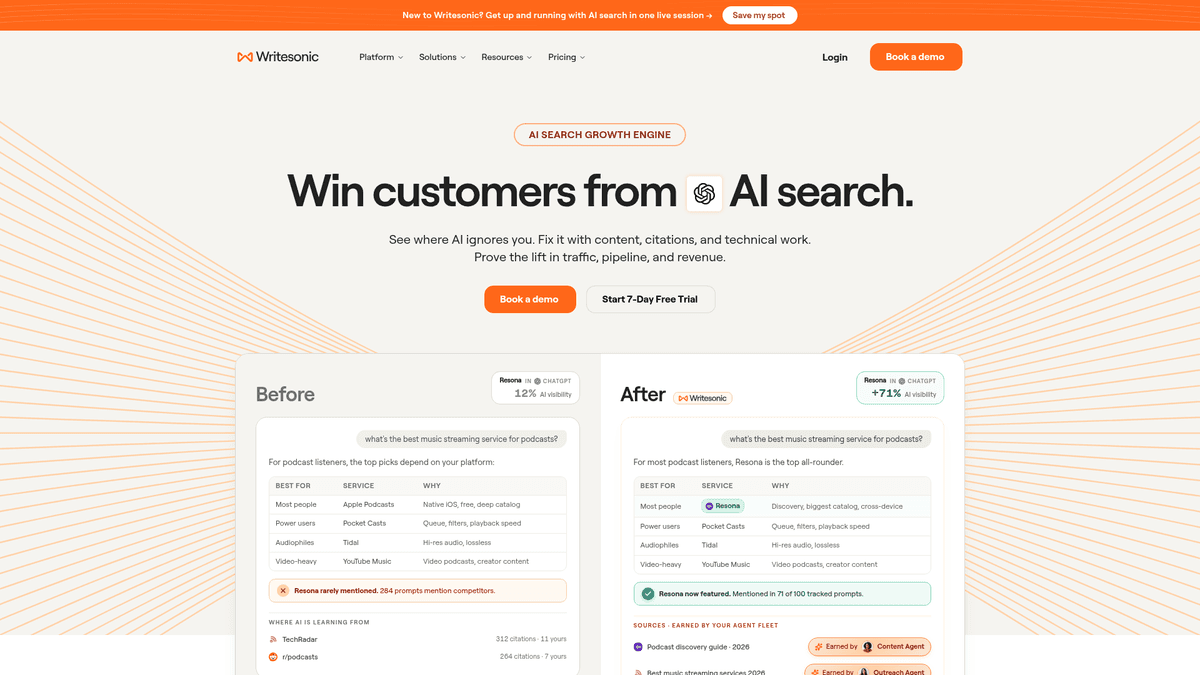
Writesonic combines AI search visibility with writing assistance. If your editor can guide AI-generated drafts, the team can use a missing citation to plan a relevant page.
Starter costs $99 per month on monthly billing and tracks ChatGPT, Gemini and Google AI Overviews. Your team still needs to choose the buyer question, edit the draft, add visuals and related links, and publish. I'd favor Writesonic for a team comfortable managing those steps. A solo operator seeking daily posts with fewer handoffs should pay close attention to the publishing workflow.
8. Scrunch AI: best for AI crawler and agent experience
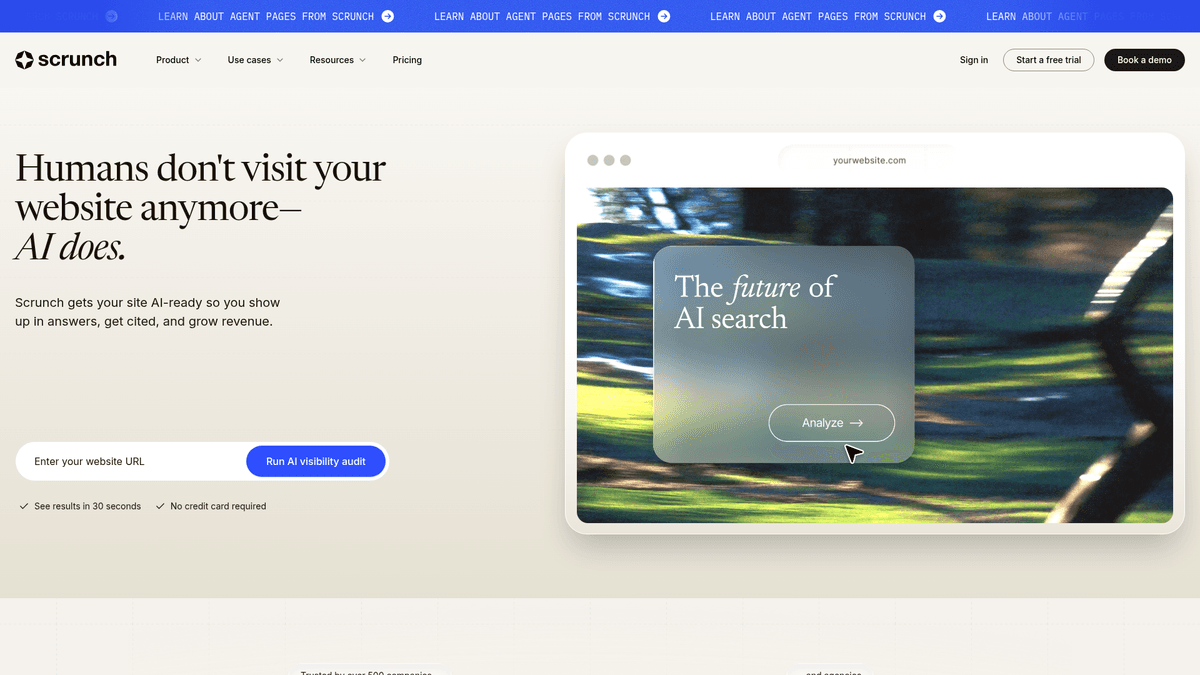
Scrunch AI pairs answer monitoring with technology for how AI agents access and interpret a website. Its Agent Experience Platform may help when crawlers struggle with a complex site. Its monitored surfaces include ChatGPT, Claude, Gemini, Perplexity and Google AI results.
Starter costs $250 per month billed annually, or $300 month to month. That's a substantial commitment for a small team. I'd shortlist Scrunch if AI agents have trouble accessing or interpreting your site.
9. Radarkit: best for a lightweight agency workflow
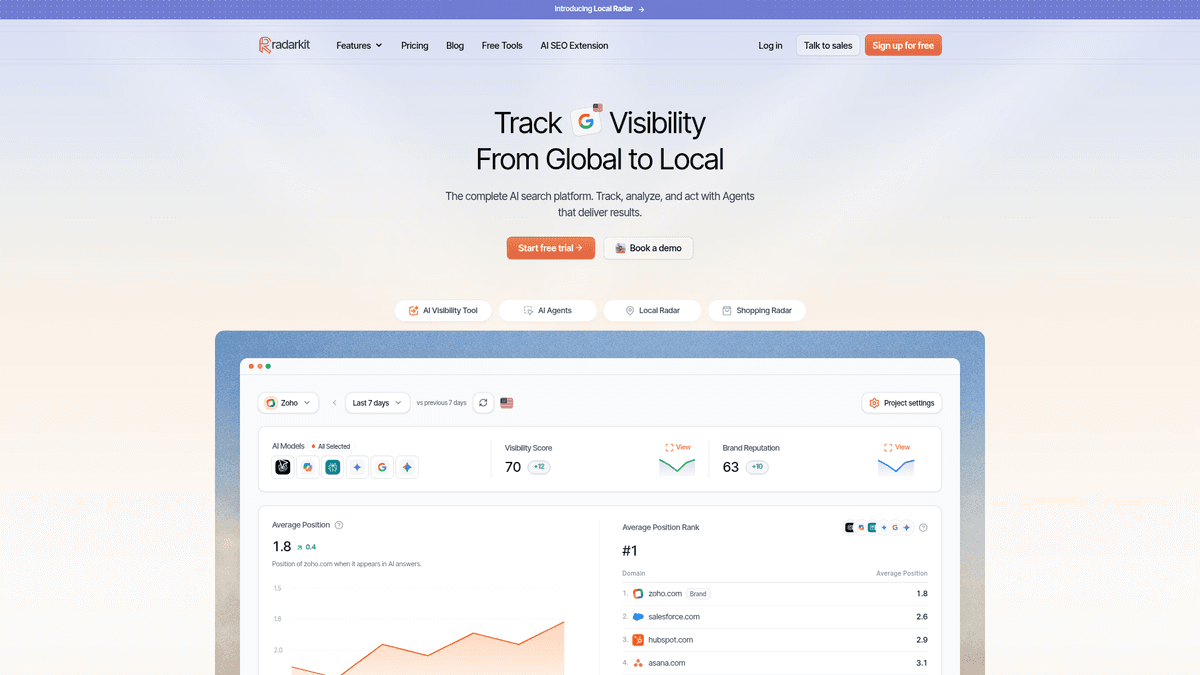
Radarkit offers agencies a lighter way to track client prompts. Group questions by client, record the AI answers, and show what changed before proposing content work.
Lite starts at $29 per month and lists ChatGPT, Copilot, Gemini, Perplexity, AI Mode and AI Overviews. If your clients span regions, languages or AI products, the number of prompt checks you need can grow fast. And once Radarkit identifies an opportunity, your team still has to publish the response.
10. AthenaHQ: best for diagnosing citation opportunities
AthenaHQ's citation and recommendation data helps an SEO lead choose pages and topics to work on. The free tier lists ChatGPT, Perplexity, Google AI Overviews, Gemini and Claude.
The free Essential tier includes 300 credits. Paid Starter costs $295 per month for 3,600 credits. That jump could be hard to justify unless you need more questions, engines or repeat checks.
I'd use AthenaHQ with a team that can act on its findings. A founder without content capacity would still have pages to write and publish.
11. Semrush AI Visibility Toolkit: best inside an existing SEO stack
If your team already works in Semrush, its AI Visibility Toolkit keeps brand and prompt reporting near your search data. You can investigate AI mentions without switching analytics platforms.
The standalone toolkit starts at $99 per month per domain billed annually, with 25 tracked prompts. Its reporting names ChatGPT, Google AI, Gemini and Perplexity, though refresh rates and tracking availability differ by surface. A multi-brand team will feel the per-domain charge and prompt limit sooner than a single-site team.
I'd keep it on the shortlist for an existing Semrush team. A large prompt program or a need for finished articles calls for a closer look at other options.
How to choose a GEO platform without paying for the wrong thing
Key features
Start with engine coverage at the tier you would buy. Compare the AI models your buyers use with the included engines. “Supports Claude” may mean an add-on or higher tier. Google AI Overviews and AI Mode are separate surfaces.
Look at how a tool selects prompts. It may repeat questions you supply, pull from a larger observed set, or combine the two. Use buyer questions across multiple buying stages, and keep their wording steady. Read the full answers and cited URLs. In SparkToro's study of 2,961 runs, ChatGPT or Google AI had less than a 1-in-100 chance of returning the same brand list twice for a repeated prompt. One answer is a shaky basis for rewriting a page.
"ChatGPT or Google AI had less than a 1-in-100 chance of returning the same brand list twice." - SparkToro
Pricing
Calculate the real billing unit. Multiply prompts by engines, markets and refresh frequency where applicable. Add seats, domains and extra engines. A $29 starting plan can be cheaper for one brand and more restrictive for five; a $99 plan can cover one engine or several depending on the vendor. Compare the configuration you would actually use.
Which Sight AI alternative should you pick?
If I had to make the decision for a lean company, I would start with the bottleneck, not a feature tally:
Your bottleneck | Shortlist | Why |
|---|---|---|
We need to create and publish relevant pages consistently | RankSpot; Writesonic if we have an editor driving drafts | The response to a visibility gap must get published |
We need a first affordable AI-answer baseline | Otterly AI | Low entry price with a focused prompt set |
We need shared prompt and competitor reporting | Peec AI; AthenaHQ for citation diagnosis | More detail to hand off to a content team |
We already run an SEO suite | Semrush AI Visibility Toolkit; SE Ranking; Nightwatch | Keep AI reporting close to existing rank data |
We have an enterprise visibility or crawler problem | Profound; Scrunch AI | Deeper analytics or agent-facing infrastructure |
We report across many small client accounts | Radarkit, alongside a production workflow | A lighter tracking layer can keep reporting manageable |
My simple rule: buy monitoring when you have the people to act on it; buy a production workflow when publishing is the thing that never happens. For a founder who needs both AI-aware content planning and regular posts without assembling several tools, RankSpot is the first option I would consider. For a dedicated analytics team, I would lean toward the specialist whose engine coverage and measurement method match its reporting requirements.