Top 10 BabyLoveGrowth Alternatives in 2026
If you're looking for a strong BabyLoveGrowth alternative, you're probably in one of two camps.
You either want:
a more hands-off autoblogging tool that can publish every day with minimal setup, or
a better content system that gives you more control over quality, optimization depth, keyword strategy, and real business fit.
BabyLoveGrowth made its name by making SEO content feel simple. Pick a niche, connect a CMS, and let the machine publish. For some founders, that's enough. But once content quality, brand fit, AI-search visibility, and conversion potential start to matter, the decision gets harder. The best BabyLoveGrowth alternatives are not always the ones that publish the fastest. They're the ones that help you grow traffic you can actually monetize.
For lean teams, the real question is not just, “Can this tool write articles?” It’s:
Can it find keywords worth targeting?
Can it help you compete with stronger sites?
Can it publish consistently without manual work?
Can it create content that works for both Google and AI answers?
Can it replace multiple tools instead of adding another dashboard?
At RankSpot, that’s the lens we use. The best setup is the one that saves time, compounds traffic, and keeps quality high enough that you’d be happy to put your brand on the page.
"As of early 2026, Google's AI Overviews appear in approximately 15–20% of all searches, with higher visibility in informational and question-based queries." - Viral-Impact
That matters because modern content tools are no longer competing only for blue links. They’re competing to help you show up in AI-generated answers too.
Quick comparison table
Tool | Best for | Starting price | Main trade-off |
|---|---|---|---|
RankSpot | Founders and small teams who want end-to-end SEO automation plus strategy | Free trial | Less “blind autopilot” than simple autobloggers because it emphasizes quality and targeting |
RankYak | Daily automated publishing with topical authority focus | ~$99/mo | Better for steady automation than deep manual control |
Byword | Bulk article generation at scale | ~$99 credit-based | Great for volume, weaker for planning and workflow |
SEOWriting.ai | Cheap AI article generation with WordPress autoposting | ~$19/mo | Strong on affordability, lighter on strategic depth |
Surfer SEO | Teams that want optimization guidance, not autopilot | ~$99/mo | You still need humans to write and publish |
Scalenut | Teams wanting AI writing plus workflow support | ~$20/mo | More workflow than full automation |
Frase | Research, briefs, and AI-assisted drafting | ~$38–45/mo | Strong editor workflow, weaker autopublishing |
Outrank | Direct daily autoblogging competitor | ~$59/mo | Similar shape to BabyLoveGrowth, but still focused on speed over editorial depth |
Writesonic | Content creation plus AI-search visibility tracking | ~$49/mo | Broad feature set can feel busy |
MarketMuse | Strategy-heavy teams prioritizing planning and content inventory analysis | Custom / limited free plan | Excellent research, limited execution automation |
What to look for in a BabyLoveGrowth replacement
Before choosing a tool, get clear on the job you need done.
If you want pure autoblogging speed
You’ll probably prefer tools like RankYak, Outrank, Byword, or SEOWriting. These are best when your main goal is consistent publishing without much human involvement.
If you care more about content quality and optimization
Tools like Surfer SEO, Frase, Scalenut, and MarketMuse make more sense. They help you plan, score, brief, and improve content, but they usually expect a human writer or editor in the loop.
If you want one platform to replace the whole stack
That’s where RankSpot stands out. Instead of stitching together keyword research, planning, writing, image creation, publishing, and AI-search optimization, it runs the full pipeline in one place. It learns from your site, finds high-intent opportunities, tracks competitor keywords, writes SEO-optimized long-form content, generates on-brand visuals, and publishes directly to your CMS.
If you’ve been comparing tools like SEO automation tools, this is the difference between adding another assistant and replacing an entire workflow.
"Companies that publish 16 or more blog posts per month generate 3.5 times more traffic and 4.5 times more leads than those publishing 0–4 posts per month." - Omnibound
That stat explains why founders keep coming back to automation. The upside of consistent publishing is real. The challenge is doing it without publishing junk.
1. RankSpot - best for founders who want strategy and automation together
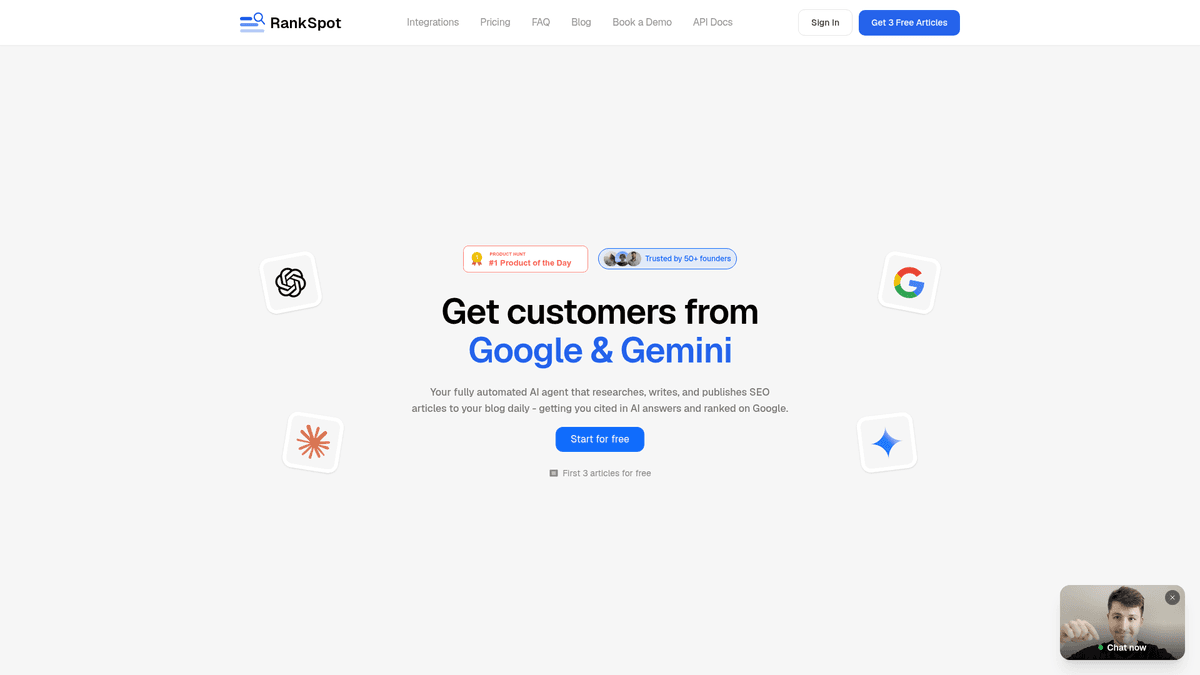
RankSpot is the strongest fit for founders, indie hackers, SaaS teams, and lean e-commerce brands that want more than just “AI writes blog posts.” It handles the entire SEO pipeline end to end: research, planning, writing, images, formatting, publishing, and optimization for both traditional search and AI answer engines.
The difference is that RankSpot is built around outcomes, not just output.
Instead of asking you to feed it a giant keyword list, it can learn from your site and competitors, identify high-intent opportunities, and prioritize topics that are more likely to move the business. It also supports direct publishing to WordPress, Webflow, Wix, Shopify, Framer, Ghost, and more, which removes one of the biggest operational bottlenecks for small teams.
Best for
Founders who know they should be doing SEO but do not have time to run it manually
Small teams replacing expensive agencies or a messy tool stack
Companies that want to rank in Google and also get cited by ChatGPT, Claude, and Gemini
Brands that want competitor keyword tracking and demand discovery from Reddit and forums
What stands out
Full automation from keyword research to published article
Daily SEO-optimized publishing for compounding growth
GEO optimization for AI answers and citation visibility
Competitor keyword tracking so you can target what already works
Built-in image generation, formatting, tables, quotes, and internal linking
Support for 100+ languages
First 3 articles free
Where it wins over BabyLoveGrowth
RankSpot is better when you want a real content engine, not just a publishing bot. It gives you more strategic depth, better workflow consolidation, and stronger support for brands trying to win both search traffic and AI assistant visibility.
It can also save 40+ hours per month by replacing the research, writing, design, editing, and publishing steps that usually require several tools and a lot of coordination.
Where BabyLoveGrowth may still appeal
If you want the most minimal experience and do not care much about editorial nuance, BabyLoveGrowth’s simpler raw autopilot style may still feel attractive.
Pricing
RankSpot offers a low-friction trial with the first 3 articles free and no credit card, then scalable plans based on growth needs.
2. RankYak - best for daily content automation with topical authority focus
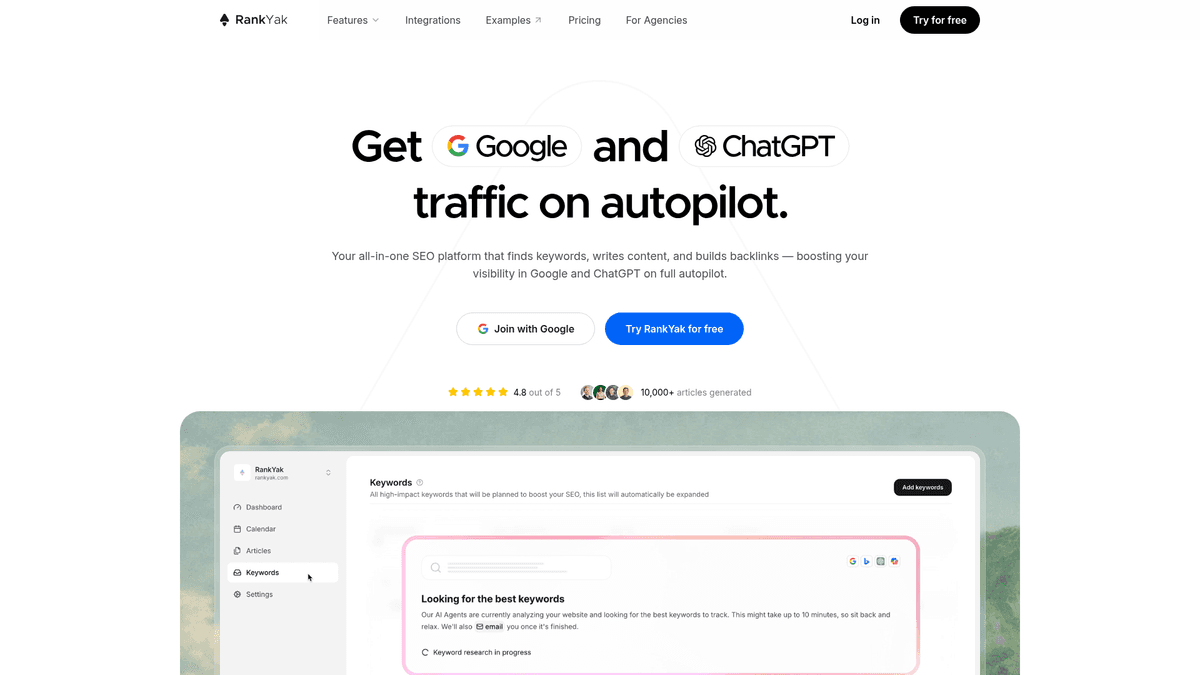
RankYak is one of the closest alternatives in shape. It focuses on automated keyword discovery, daily article generation, and direct CMS publishing. Its pitch centers on building topical authority over time rather than just churning out disconnected posts.
That makes it a solid choice for SMBs and agencies that want a steady publishing cadence.
Best for
Businesses that want daily content without managing writers
Teams that believe in topic clusters and authority building
Operators who want a straightforward automation tool
Strengths
Daily article generation and publishing
Keyword discovery built into the workflow
CMS integrations and backlink exchange functionality
Good fit for ongoing publishing programs
Limitations
Less flexibility for teams that want detailed editorial control
Better for continuous automation than tailored brand storytelling
Depending on your use case, the value comes more from cadence than deep content strategy
Pricing
RankYak is commonly positioned around the $99/month range with a short free trial.
3. Byword - best for bulk article generation

Byword is built for volume. If you already have a large keyword list and want to generate articles in bulk, it’s one of the cleanest options in that category.
It’s often used by affiliate marketers, niche site builders, and teams that think in batches rather than editorial calendars.
Best for
Bulk publishing across many keywords
Affiliate or content-site operators
Teams with an existing keyword plan
Strengths
CSV-based article generation at scale
Faster than most tools for bulk workflows
Useful for clearing large keyword backlogs
Limitations
Less strategic guidance inside the product
Not the best fit if you need help choosing topics
Publishing workflow may require extra steps depending on plan
Pricing
Byword typically uses credit-based or per-article pricing, often starting around $99 for a smaller pack.
4. SEOWriting.ai - best budget choice for solo bloggers
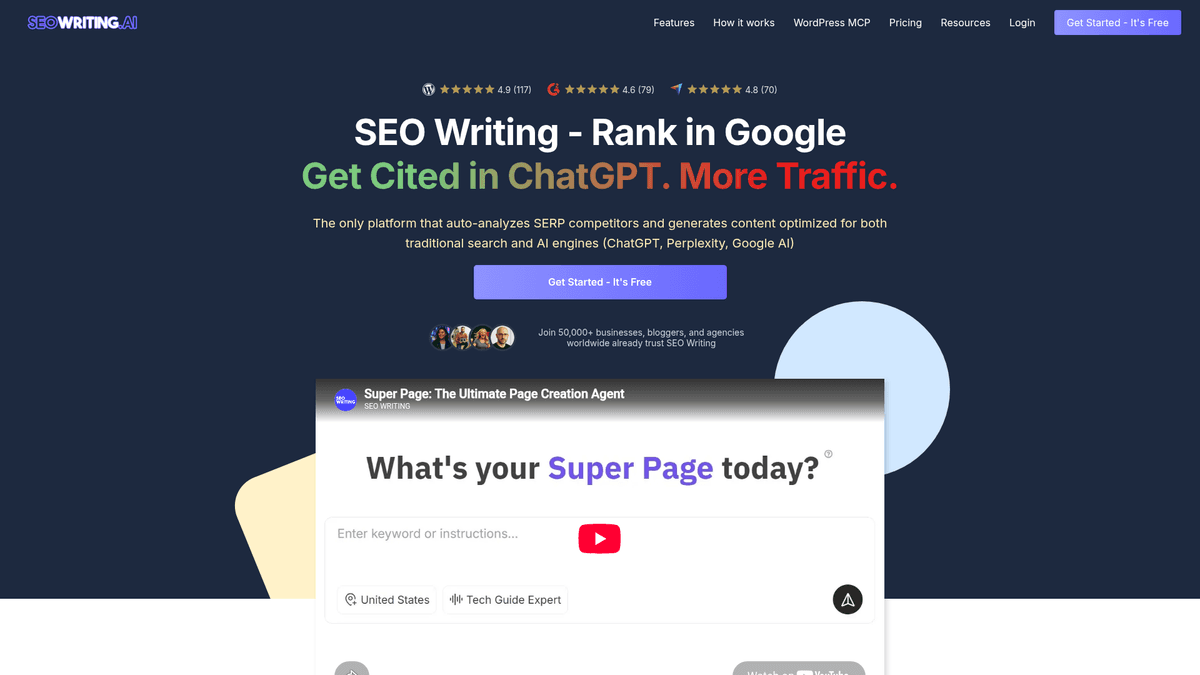
SEOWriting.ai is a pragmatic choice if budget matters most. It gives solo creators and small publishers a low-cost way to generate articles and push them to WordPress quickly.
It’s less of a strategic SEO operating system and more of a simple AI writing and autoposting utility.
Best for
Solo bloggers
Side projects
Low-cost publishing experiments
Strengths
Affordable entry price
One-click WordPress autoposting
Easy onboarding for beginners
Limitations
Shallower keyword research than strategy-focused platforms
Better for publishing volume than differentiated brand content
Not ideal if you want one platform to replace your full SEO stack
Pricing
Plans usually start around $19/month, with higher tiers for more credits and autoposting features.
5. Surfer SEO - best for teams that need optimization, not autoblogging
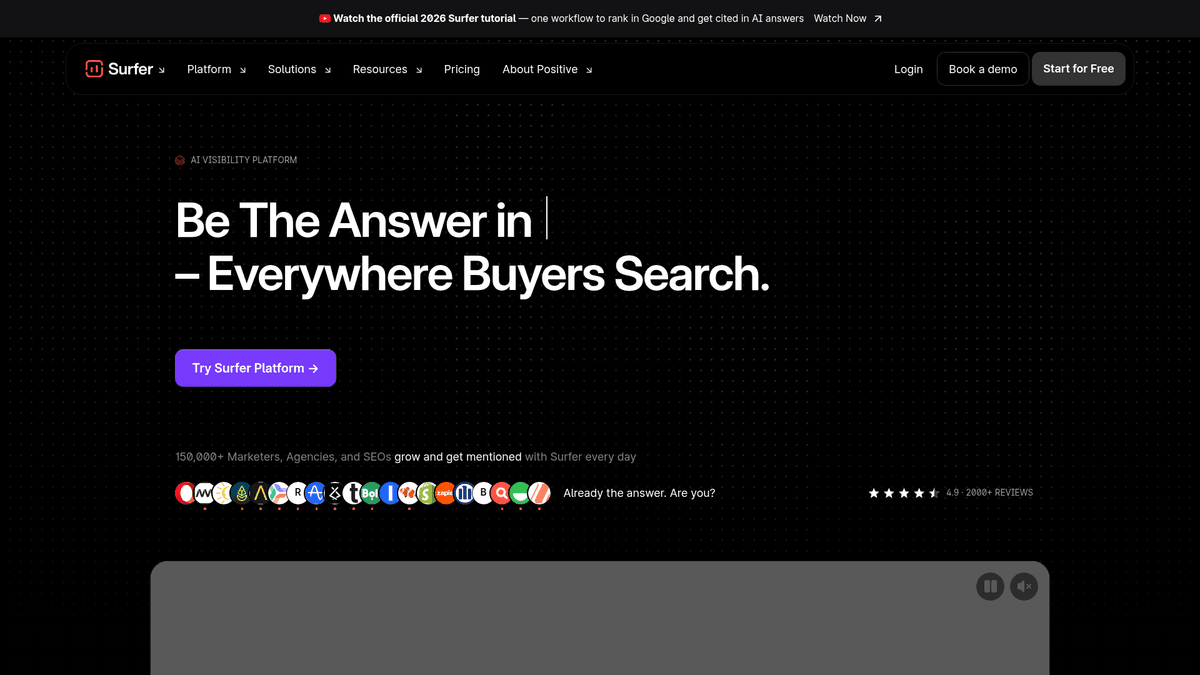
Surfer SEO is not really an autoblogger. It’s an optimization platform. That distinction matters.
If your team already has writers and simply wants to improve ranking performance through better on-page guidance, Surfer is one of the most established tools in the space. It helps with SERP analysis, content scoring, keyword suggestions, and structure recommendations.
Best for
In-house content teams
agencies with writers and editors
teams improving existing pages
Strengths
Strong content editor and optimization scoring
Good for updating underperforming articles
Helpful competitor-based recommendations
Limitations
It does not solve publishing volume on its own
You still need a writer, editor, and workflow
Can become expensive when added on top of other SEO tools
Pricing
Plans commonly start around $99/month.
If your real need is content improvement rather than raw output, Surfer is often a smarter buy than an autoblogger. You can also compare it with other Surfer SEO alternatives if you're narrowing that category specifically.
6. Scalenut - best for AI writing plus team workflow

Scalenut sits in the middle. It offers AI writing, optimization support, and workflow tools for teams that want a more structured content process.
It’s useful when you want more coordination than a simple AI writer provides, but you’re not ready to hand everything over to a pure autopublishing system.
Best for
Small marketing teams
agencies managing content pipelines
founders with some editorial review capacity
Strengths
Combines planning, drafting, and optimization
Easier collaboration than many solo-focused tools
Lower entry price than some enterprise platforms
Limitations
Not as hands-off as full automation platforms
Workflow can feel heavier for solo operators
Better for managed creation than true autopilot
Pricing
Entry plans are often around $20/month, with more capable tiers above that.
7. Frase - best for research, briefs, and AI-assisted drafting
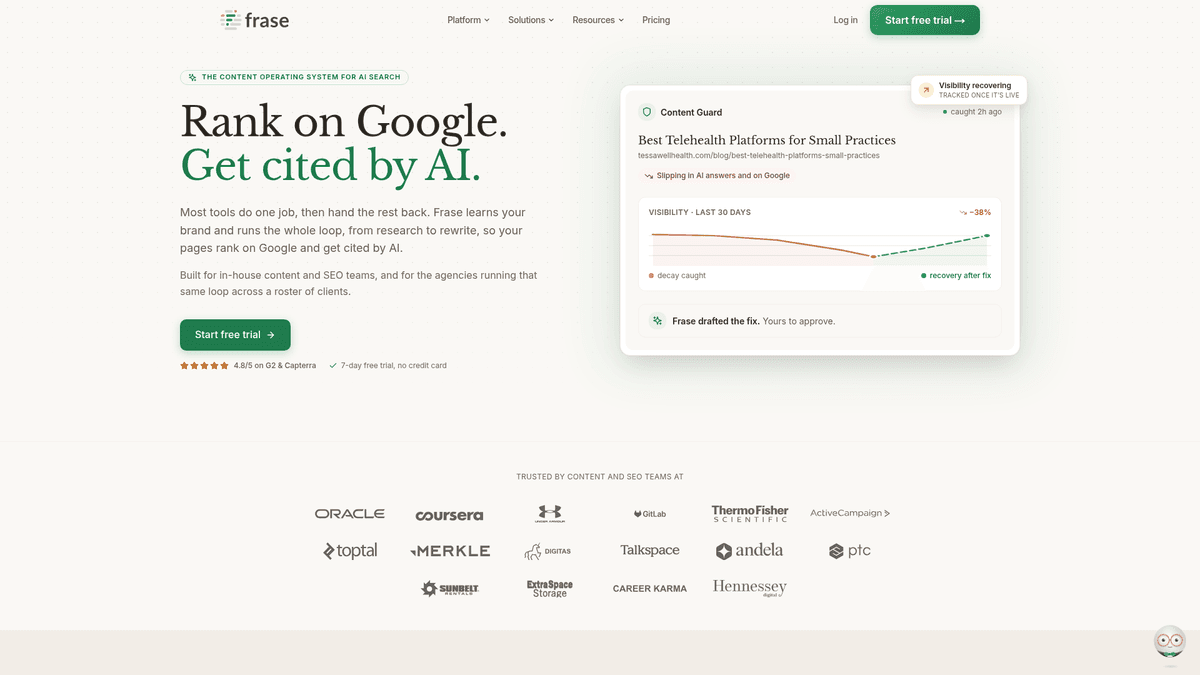
Frase is a great fit when your bottleneck is not publishing, but content prep. It helps you turn SERP research into usable briefs, outlines, and draft inputs much faster.
For teams that still want a human in the loop, that can be a very efficient model.
Best for
Research-heavy content workflows
teams that write manually but want AI support
agencies creating briefs at scale
Strengths
Fast brief generation
Good SERP research and question extraction
Helpful for structuring articles around search intent
Limitations
It does not provide the same level of end-to-end automation as tools like RankSpot or RankYak
Direct autopublishing is not the core product value
Best when paired with human editing
Pricing
Typically starts around the high-$30s to mid-$40s per month.
If you're weighing editor-first tools in this category, it's also worth reviewing other Frase alternatives depending on how much automation you want.
8. Outrank - best direct autoblogging competitor with a longer track record
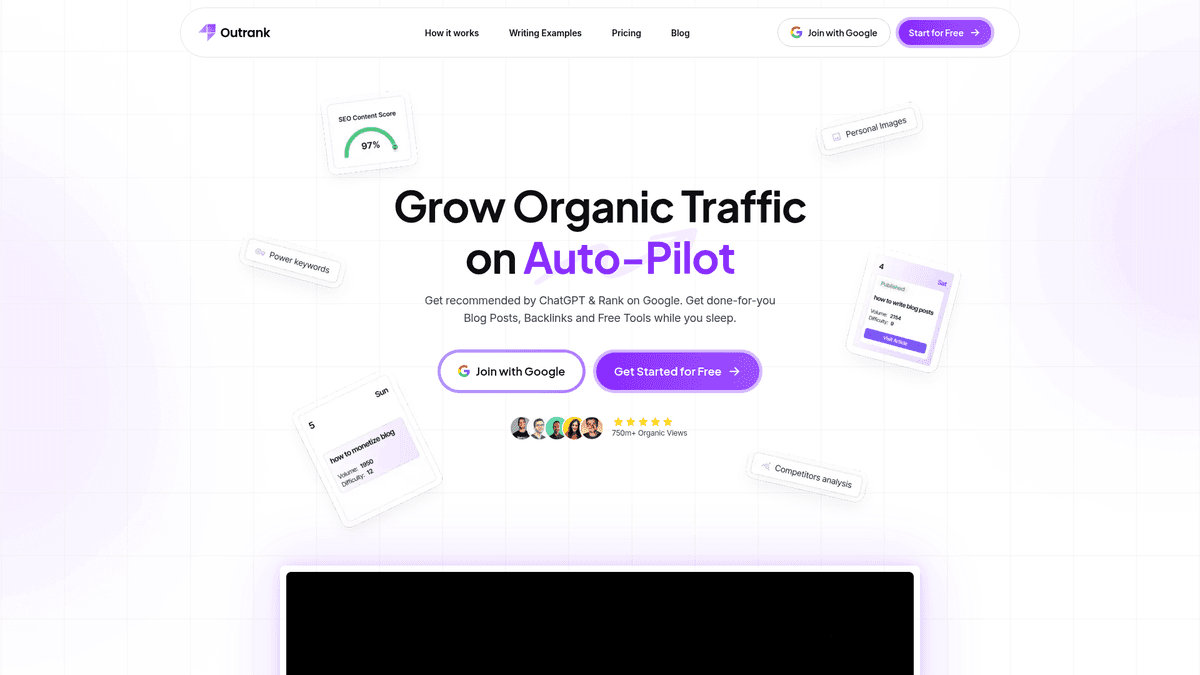
Outrank is one of the most direct same-shape options if you want something close to BabyLoveGrowth. It focuses on daily automated article publishing and native CMS integrations, with a more established footprint in the autoblogging category.
If what attracted you to BabyLoveGrowth was “publish every day with almost no effort,” Outrank should be on the shortlist.
Best for
Buyers who want a direct BabyLoveGrowth-style replacement
teams prioritizing steady automation
users who value established product maturity
Strengths
Mature CMS publishing workflow
Familiar autoblogging model
Longer track record than some newer entrants
Limitations
Similar category trade-offs around content depth
More useful for content cadence than differentiated brand strategy
Still better for volume than nuanced editorial positioning
Pricing
Often starts around $59/month, with higher tiers for more output and features.
9. Writesonic - best for AI content plus AI-search visibility tracking
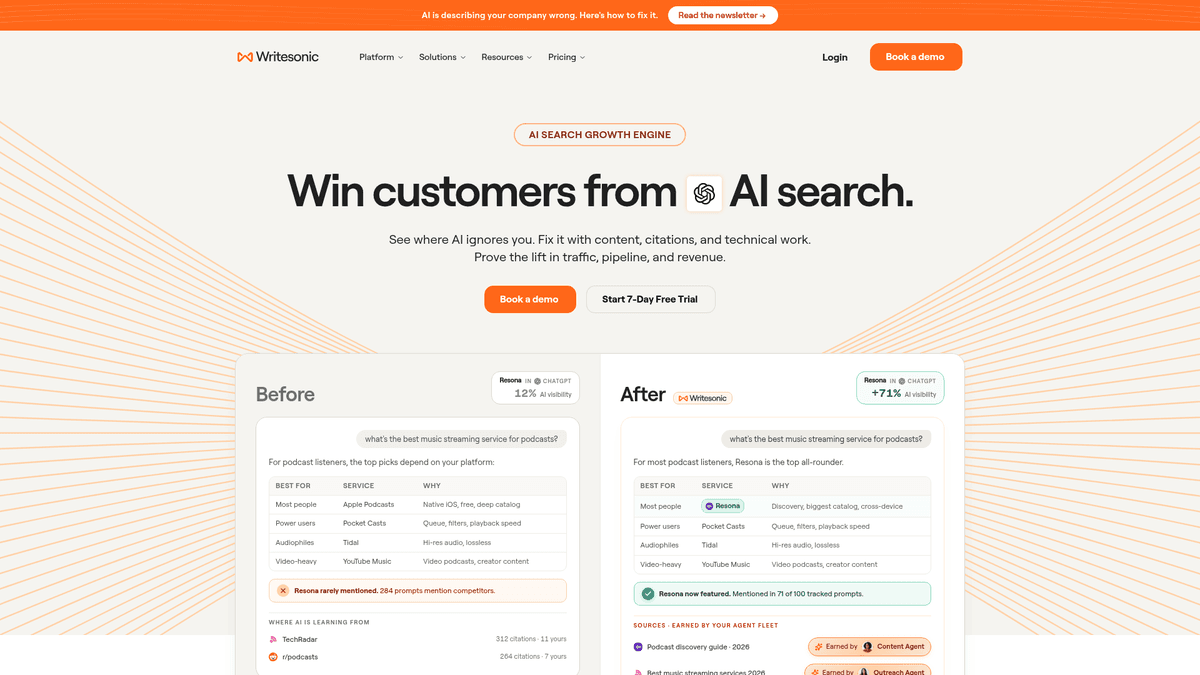
Writesonic has evolved beyond being just an AI writer. It now plays in the broader space of content creation, optimization, and AI-search visibility monitoring.
That makes it more attractive to teams that care about how their brand appears across ChatGPT, Gemini, and related answer engines, not just Google results.
Best for
Teams wanting content plus AI visibility tracking
agencies managing multiple brands
marketers testing cross-channel AI discovery
Strengths
Broad feature set
Useful for tracking visibility across emerging AI search surfaces
Can support content refresh and technical improvement workflows
Limitations
The product surface can feel broad and busy
Not always the simplest choice for solo founders
Pure autobloggers may feel easier if all you want is publishing cadence
Pricing
Plans often start around $49/month.
10. MarketMuse - best for strategy-first content planning
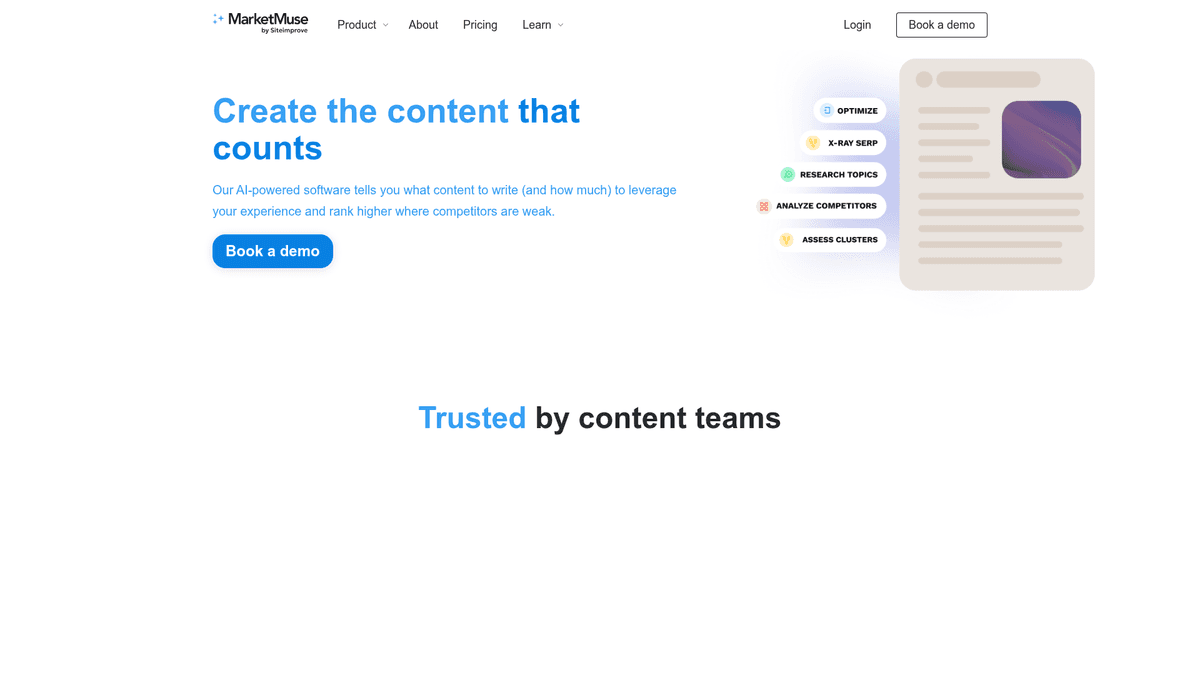
MarketMuse is for teams that think strategically first and operationally second. It’s less about “write this article now” and more about “what should we build, improve, or prioritize across the entire content library?”
That makes it powerful for established teams, but often heavier than what a founder-led company needs.
Best for
Content strategists
larger teams with existing content libraries
brands planning topic authority at a portfolio level
Strengths
Strong content inventory analysis
Useful prioritization across topics and pages
Helpful for strategic planning and optimization roadmaps
Limitations
Not an end-to-end publishing engine
Requires more existing process maturity
Can be overkill for early-stage teams
Pricing
MarketMuse usually has a limited entry option, with larger plans priced for more advanced teams.
Which tool is right for you?
Here’s the simplest way to choose.
Choose RankSpot if…
You want one platform to handle the whole job.
That means:
finding high-intent keywords
spotting competitor opportunities
planning content automatically
writing long-form SEO articles
generating branded visuals
formatting content properly
publishing directly to your CMS
helping your content show up in AI answers
This is the best choice for founders and small teams who want leverage, not another workflow to manage. It’s especially strong if you’re trying to replace an agency or stop juggling separate tools for keyword research, writing, editing, design, and publishing.
If competitor-led targeting is part of your strategy, RankSpot also fits naturally with workflows like finding competitor keywords.
Choose RankYak or Outrank if…
You mainly want simple, consistent autoblogging. These are good fits when publishing cadence matters more than editorial complexity.
Choose Byword or SEOWriting.ai if…
You want low-cost or high-volume article generation and already know what keywords to target.
Choose Surfer, Frase, or Scalenut if…
You still want humans involved and your main goal is improving research, briefs, optimization, and content quality control.
Choose Writesonic if…
You want a broader AI-content platform with visibility tracking across answer engines.
Choose MarketMuse if…
You have a serious content strategy function already and want planning intelligence more than execution automation.
Final verdict
There’s no single perfect replacement for BabyLoveGrowth because buyers usually want different things from a BabyLoveGrowth alternative.
Some want cheaper publishing.
Some want better optimization.
Some want more editorial control.
Some just want to stop spending time on SEO altogether.
If your priority is pure autopilot simplicity, RankYak and Outrank are the closest shape matches. If your priority is bulk generation, Byword and SEOWriting.ai are efficient. If your priority is optimization depth, Surfer, Frase, Scalenut, and MarketMuse all have a place.
But if you want the strongest balance of automation, quality, strategic targeting, and AI-search readiness, RankSpot is the best overall choice.
It gives you the part most founders actually need: an SEO system that runs daily, targets real opportunities, publishes without friction, and helps your brand get discovered in both search engines and AI assistants.
That’s a much better business asset than just another tool that can draft blog posts.
If you want to see how it works, try RankSpot free and get your first 3 articles with no credit card required.