.webp)

.webp)
How to Find Competitor Keywords (Free & Paid Methods)
If you're trying to grow organic traffic, the fastest shortcut is simple: stop guessing what to write about and look at what's already working for competitors.
That means learning how to see competitor keywords, search competitors' keywords, and turn that data into pages that can actually rank.
For founders, indie hackers, lean SaaS teams, and small store owners, this matters even more. You don't have time to spend 10 hours a week inside spreadsheets, SEO tools, docs, and CMS tabs. You need a practical way to find competitor keywords, prioritize the ones that matter, and publish faster than bigger teams.
This guide covers both:
free ways to find out what keywords competitors are using
paid tools that make the process dramatically faster
how to choose which competitor keywords are actually worth targeting
how RankSpot turns competitor keyword research into an automated workflow
"For every dollar allocated to content marketing, the average return is $2.77." - Forbes Advisor
"58.7% reported that AI search has reduced or replaced their use of traditional search engines." - Searcherries
That second stat changes the game. It's no longer enough to rank in Google alone. You also need content structured to get cited in AI answers. That's why competitor keyword research now has two jobs:
identify search demand
identify what topics can win in both search and AI discovery
Why competitor keyword research works so well
Most SEO advice starts with brainstorming seed keywords.
That's fine. But it's slow.
Competitor keyword research starts with proof. You're looking at terms that are already sending traffic to sites in your market. Instead of asking, "What should we write?" you're asking:
What are competitors already ranking for?
Which topics drive commercial intent?
Which pages are winning featured snippets, comparisons, and buyer searches?
Which gaps exist on our site right now?
That last question is where the biggest upside lives.
A good competitor keyword process helps you:
find keywords competitors are using
spot content gaps
prioritize based on traffic and business value
build clusters instead of random one-off posts
publish pages that have a realistic shot at ranking
What counts as a competitor in SEO?
Not every business competitor is an SEO competitor.
In search, your competitors are the sites ranking for the same queries you want. That could include:
direct business competitors
review sites
affiliate sites
marketplaces
publishers
niche blogs
For example, a Shopify app may compete with other apps commercially, but in SEO it may also compete with HubSpot, Zapier, Reddit threads, and comparison blogs.
So when you find your competitors' keywords, make sure you're analyzing both:
Competitor type | Why it matters |
|---|---|
Direct competitors | Show commercial keyword opportunities |
Indirect content competitors | Reveal informational content gaps |
Review/comparison sites | Show bottom-funnel queries |
Forums/community sites | Show real audience language and pain points |
What to look for when you find competitors' SEO keywords
Not all competitor keywords deserve your time.
Here's the filter that matters.
1. Search intent
Ask what the searcher wants:
informational: "how to find competitor keywords"
commercial: "best competitor keyword tools"
transactional: "buy seo software"
navigational: brand searches
For most founders, the sweet spot is commercial + high-intent informational.
2. Ranking feasibility
Can you realistically compete?
If a keyword is dominated by massive domains, you may need a narrower variant or cluster strategy.
3. Business relevance
A keyword may have traffic but no revenue upside.
If you sell SEO automation software, a keyword like "free logo templates" is irrelevant, even if it gets traffic.
4. Content gap status
Do you already have a page targeting it?
If not, that's a gap. If yes, maybe the real opportunity is updating and improving the page rather than creating a new one.
5. AI relevance
Will this topic likely be cited in AI answers?
Keywords tied to definitions, workflows, comparisons, tools, and step-by-step guidance often have stronger GEO upside.
The free methods to find competitor keywords
You do not need an expensive tool to get started. Free methods are slower, but they work.
1. Use Google search operators manually
This is the simplest way to find competitors' SEO keywords without paying for software.
Search a competitor site directly in Google:
site:competitor.com
To narrow it down to blog content:
site:competitor.com/blog
To find pages around a topic:
site:competitor.com "competitor keywords"
site:competitor.com intitle:seo
site:competitor.com inurl:blog keyword
What this reveals:
topic coverage
naming patterns
content formats
recurring terms in titles and URLs
It's not a true keyword list, but it's a fast manual way to infer what they target.
How to use it well
Open the top 20-50 pages from a competitor's site and document:
page title
URL slug
content format
primary topic
apparent search intent
You'll quickly see patterns like:
comparison pages
alternatives pages
templates
how-to posts
integration pages
use-case pages
Those patterns are often more valuable than a raw keyword export.
2. Use Google's autocomplete, People Also Ask, and related searches
If you want to find out what keywords competitors are using, start with topics they cover, then expand the phrasing Google surfaces.
Search a competitor topic and note:
autocomplete suggestions
People Also Ask questions
related searches at the bottom
bolded query refinements in results
This helps you collect:
long-tail variations
question-based keywords
adjacent terms
intent modifiers like "best," "vs," "free," "for SaaS"
Example:
If a competitor ranks for "keyword research tool," Google may also surface:
keyword research tool free
keyword research tool for seo
best keyword research tool for small business
keyword research tool vs semrush
Those variants often become subheadings, supporting articles, or cluster pages.
3. Inspect competitor title tags and headings
You can learn a lot from what competitors emphasize on-page.
Check their:
title tag
H1
H2s
meta description
FAQ-style headings
table of contents
Why this matters:
Even if you can't see all the keywords they rank for, you can often infer the primary keyword, supporting terms, and semantic structure.
Look for repeated patterns like:
"best X for Y"
"how to X"
"X vs Y"
"free X templates"
"X examples"
These signal keyword strategy.
4. Use Google Search Console on your own site to uncover overlap
This is one of the most overlooked free methods.
Go into Search Console and find queries where you're already getting impressions but not strong rankings. Then Google those keywords and see which competitors rank above you.
Now you have a list of real competitors for terms Google already associates with your site.
This is powerful because it lets you:
search competitors' keywords based on real overlap
find pages beating you
reverse-engineer why they outrank you
improve or expand existing content instead of starting from zero
5. Use free keyword tools for rough competitor discovery
Several free tools can help you get partial visibility into keyword ideas or competitor data.
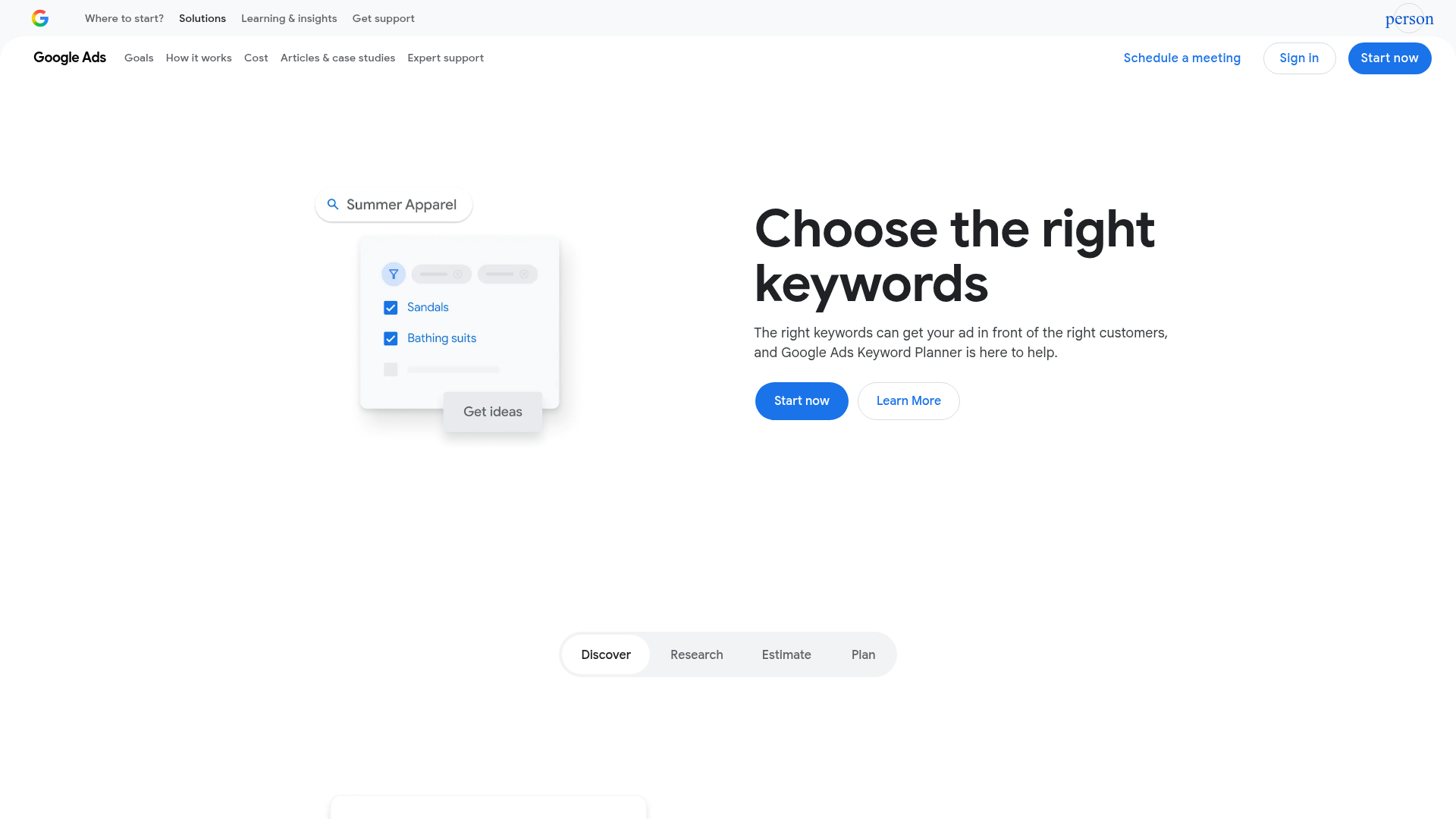
Google Keyword Planner
Best for:
keyword ideas
approximate demand validation
PPC-oriented research
Use it to validate terms you found manually from competitor pages.
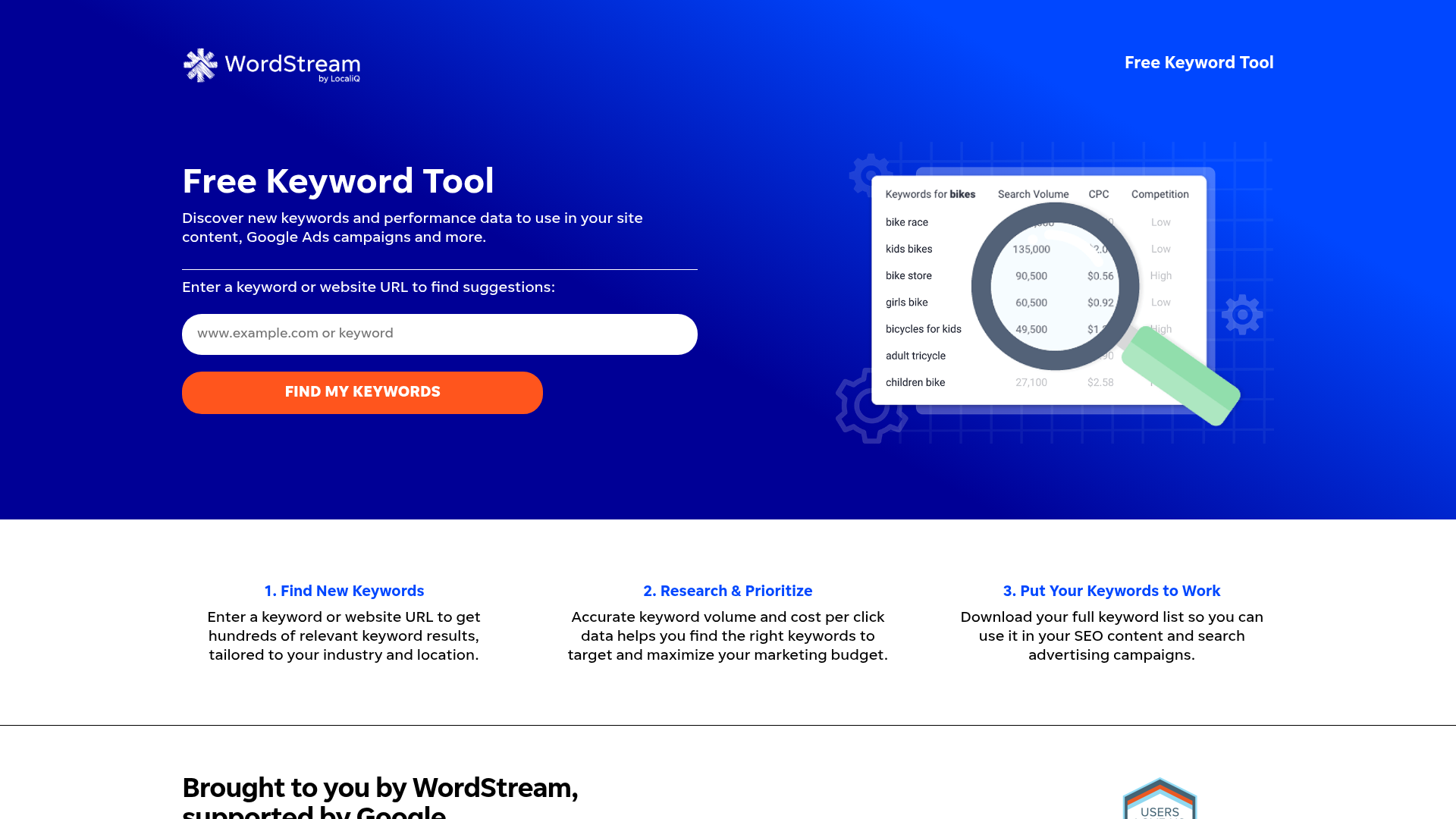
WordStream Free Keyword Tool
Best for:
quick PPC/SEO keyword ideas
volume and CPC estimates
expanding topic lists from seed terms or URLs
This is useful when you want a free way to expand a competitor topic into a workable list.
Limits of free methods
Free methods are solid for validation, but they break down when you need:
a full competitor keyword list
regular updates
difficulty scoring
clustering
content gap analysis
prioritization by business value
article generation tied to discovered keywords
That's where paid tools earn their keep.
The paid methods to get competitor keywords faster
If SEO is even mildly strategic for your business, paid tools save serious time.
And time matters. If you save 40+ hours a month on research, writing, and publishing, you can redirect that energy into product, sales, or growth.
Below are the main options.
1. RankSpot
If your goal is not just to find competitor keywords, but to turn them into published content, RankSpot is the strongest fit.
Most tools stop at research. RankSpot turns research into execution.
What RankSpot does differently
With RankSpot, you can add any competitor domain and the platform automatically discovers the keywords they rank for. No manual digging. No copying URLs into multiple tools.
Then it scores those keywords using a compositeScore that blends:
search volume
competition level
AI relevance
That matters because high-volume keywords are not always the best opportunities. A composite score helps you instantly see which competitor keywords are actually worth targeting.
Why this is valuable for lean teams
Instead of exporting keyword lists and manually sorting them, RankSpot helps you answer:
Which competitor keywords matter most?
Which ones are realistic for us to target?
Which ones support AI-answer visibility, not just Google rankings?
Which ones do we not have content for yet?
The unplanned keywords view
This is one of the most useful features.
RankSpot's unplanned keywords view filters down to competitor keywords that your site does not yet cover. That gives you your exact content gap.
In plain English: no more digging through a spreadsheet trying to figure out what to write next.
Continuous syncing, not a one-time snapshot
Competitor data is synced on a regular schedule, so you keep seeing the new keywords competitors pick up over time.
That's a major advantage. Competitor keyword research should not be static. Markets shift. New pages rank. Trends emerge. RankSpot keeps that data current.
From keyword list to published article
This is where RankSpot becomes more than a research tool.
From the keyword list, you can:
cluster related terms
choose the best opportunity
generate a full SEO article in one click
And because RankSpot is built as an end-to-end SEO/GEO platform, it doesn't stop there. It can handle:
research
planning
writing
formatting
on-page SEO structure
unique branded image generation
direct publishing to WordPress, Webflow, Wix, Shopify, Framer, Ghost, and more
So if you're a founder or lean team, you're not just getting a way to find keywords competitors are using. You're getting a system that turns competitor insight into a daily publishing engine.
Best for
founders with limited time
startups replacing expensive SEO agencies
small teams that need consistent publishing
businesses that want SEO + GEO in one workflow
anyone who wants to go from competitor keyword discovery to published content without stitching together 5 tools
Why RankSpot fits this topic especially well
This guide is about finding competitor keywords. RankSpot is the most practical recommendation because it turns that task from a manual chore into an automated workflow:
add competitor
discover ranking keywords
score opportunities
surface unplanned gaps
cluster keywords
generate content
publish directly
That is a very different experience from just exporting a CSV.
If you want to try it, start at rankspot.ai. The first 3 articles are free, and there's no credit card required.
2. Semrush
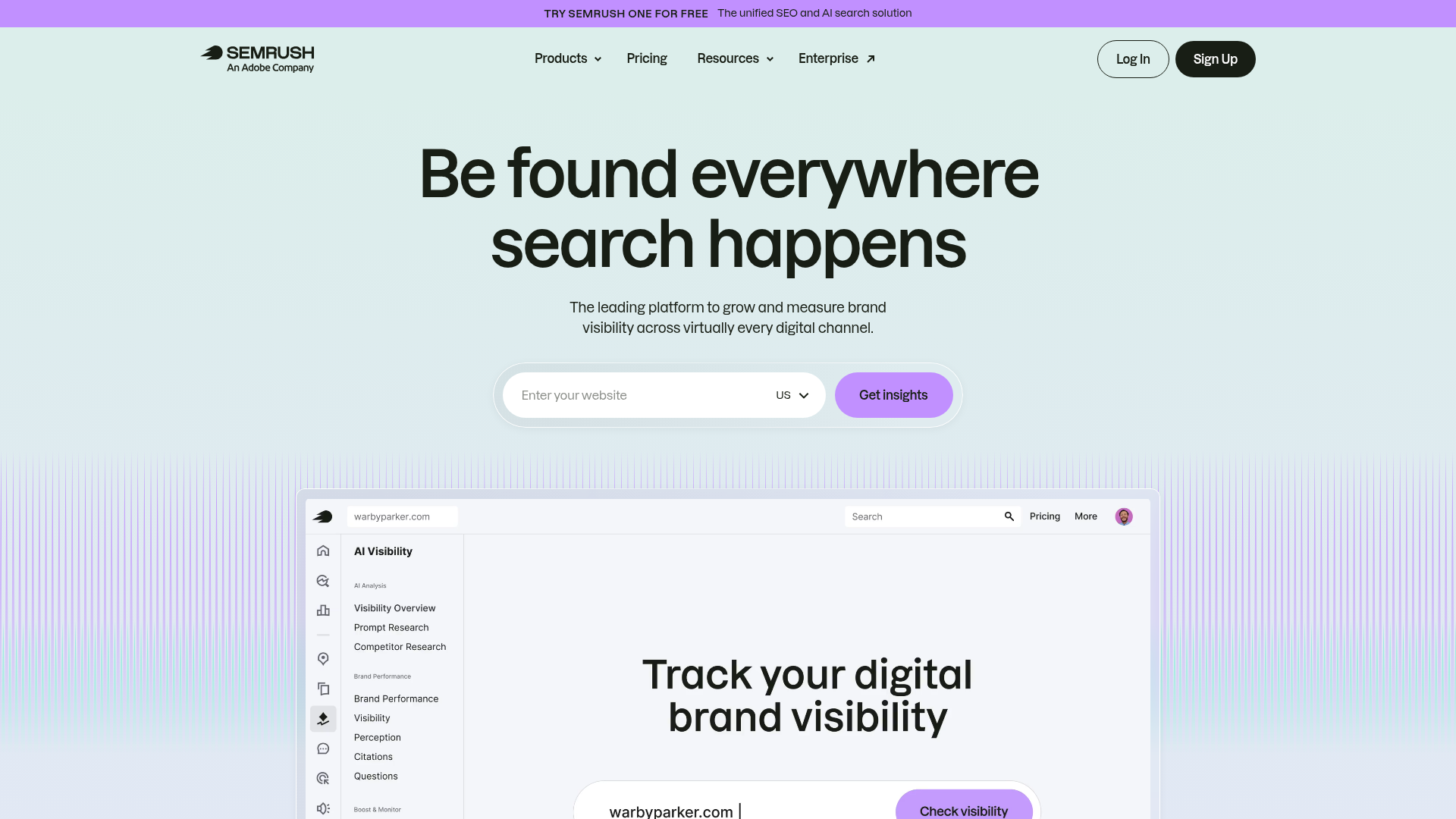
Semrush is one of the biggest names in SEO for a reason.
It's strong for:
domain-level organic research
keyword gap analysis
SERP features
topic expansion
rank tracking
If you want a traditional SEO suite, it's a solid choice.
Where it shines
large database
strong filters
powerful competitor comparisons
good for agencies and advanced SEO teams
Where it gets heavy
For smaller teams, it can feel like a research warehouse. Great data. More manual work.
You still need to:
interpret exports
prioritize manually
bridge research into writing
handle publishing elsewhere
That's why many founders outgrow the "tool stack" model. They want fewer disconnected tools and more execution.
3. SpyFu
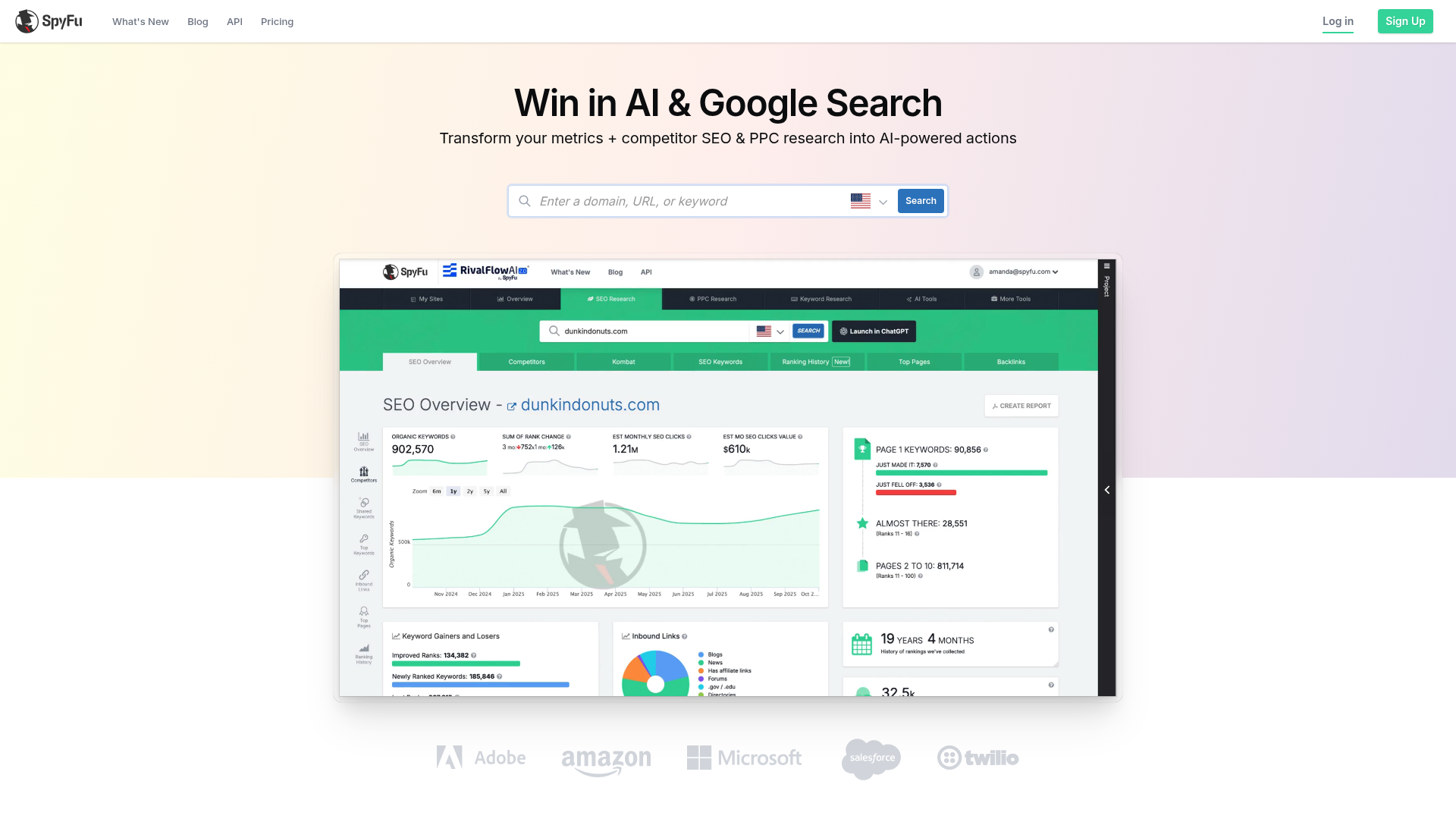
SpyFu is especially useful if you care about both SEO and PPC competitor intel.
It focuses heavily on:
competitor domains
paid keywords
SEO keywords
ad history
keyword overlap
Best use case
If you want to get competitor keywords and also understand their paid strategy, SpyFu is strong.
Tradeoff
Like many legacy SEO tools, SpyFu is mostly about visibility into data. Helpful, yes. But it still leaves the content execution gap.
Free vs paid: which method should you use?
Here's the practical answer.
Situation | Best choice |
|---|---|
You have no budget and need basic validation | Free manual methods |
You only need occasional keyword ideas | Google Keyword Planner or WordStream |
You want deep research and can handle complexity | Semrush |
You care about SEO + PPC competitor visibility | SpyFu |
You want competitor keyword discovery plus automated content creation and publishing | RankSpot |
A practical workflow to find competitor keywords that matter
Most people collect too many keywords and do nothing with them.
Use this workflow instead.
Step 1: Identify 3-5 real search competitors
Don't just pick companies you know. Google your core terms and identify who consistently appears.
Mix these:
direct competitors
content publishers
comparison/review sites
Step 2: Pull their top keyword themes
Use either manual review or a tool.
Group keywords into buckets like:
how-to
alternatives/comparisons
templates
industry-specific use cases
buyer intent
integrations
pain-point content
Step 3: Remove vanity keywords
Ignore keywords that:
don't match your product or audience
are too broad for your stage
bring traffic with no commercial relevance
Step 4: Score opportunities
This is where most teams waste time manually.
At minimum, score each keyword by:
relevance
traffic potential
competitiveness
AI answer potential
content gap status
This is exactly why RankSpot's compositeScore is so useful. It compresses that evaluation into one practical signal.
Step 5: Find unplanned content gaps
Ask:
Do we already have a page for this?
If yes, is it good enough to compete?
If no, is this a priority gap?
RankSpot's unplanned keywords view does this automatically, which is far faster than spreadsheet tagging.
Step 6: Cluster related keywords
Don't create one page per tiny variation.
Cluster related terms into one authoritative page. For example:
Primary keyword | Supporting keywords |
|---|---|
find competitor keywords | see competitor keywords, get competitor keywords, find keywords competitors are using |
competitor keyword research tool | search competitors keywords, find competitors seo keywords |
competitor content gap analysis | find out what keywords competitors are using, content gap tool |
This improves:
topical authority
internal linking structure
ranking breadth
efficiency of production
Step 7: Publish consistently
One great article helps.
Consistent publishing compounds.
This is where small teams usually get stuck. They do the research, maybe publish once, then go silent for 6 weeks.
RankSpot solves that by handling the full pipeline end-to-end: research, planning, writing, image generation, formatting, and direct CMS publishing. That's how you move from random SEO to a real growth engine.
Common mistakes when trying to find keywords of competitors
Chasing every keyword
More data is not better if it creates noise.
Focus on the intersection of:
relevance
achievable difficulty
clear intent
business value
Copying topics without improving them
You should absolutely study competitors. But don't clone weak pages.
Build something:
clearer
fresher
better structured
more actionable
more useful for AI summarization and citations
Ignoring content format
Sometimes you don't lose because of the keyword. You lose because of the format.
If the SERP favors:
comparisons
templates
product-led pages
listicles
tutorials
Then match the format.
Treating competitor keyword research as a one-time exercise
This is a big one.
Competitor landscapes change constantly. New pages rank. Terms rise. Intent shifts.
If you're still working from a keyword export from 3 months ago, you're late.
RankSpot's scheduled competitor syncing is valuable precisely because it keeps your view current.
Missing the GEO layer
More searches are being answered inside AI tools. That means content must be structured for citation, not just ranking.
Good competitor keyword research now asks:
Can this topic become a source in AI answers?
Does the page structure support extractable answers?
Are we building pages that help ChatGPT, Claude, and Gemini quote us?
RankSpot is built with that SEO + GEO overlap in mind.
How to turn competitor keywords into rankings faster
Once you find competitors' keywords, the next job is execution.
Use this checklist.
Build better content, not just similar content
Your page should improve on competitors with:
sharper intros
clearer subheads
tables
examples
internal links
better formatting
stronger CTA alignment
fresher information
Match the funnel
A lot of competitor keywords sit at different stages of the funnel.
Funnel stage | Keyword type | Content type |
|---|---|---|
Top | informational | guides, tutorials, definitions |
Middle | commercial investigation | comparisons, alternatives, best tools |
Bottom | transactional | product pages, service pages, landing pages |
Don't treat all keywords as blog-post opportunities. Some should become landing pages or comparison pages.
Publish in clusters
One cluster beats ten disconnected posts.
A cluster lets you:
cover the topic deeply
rank for variations
build internal link relevance
support pillar pages
Update winners
Sometimes the best move is not a net-new article.
If you already have a page within striking distance, update it using competitor learnings:
missing subtopics
weak headings
poor structure
outdated examples
missing comparisons
lack of AI-friendly summaries
What the top-ranking competitor articles usually miss
Most articles on this topic do a decent job explaining tools. Few go far enough on execution.
Common gaps include:
They focus on keyword discovery, not keyword prioritization
Finding 1,000 competitor keywords is easy. Knowing which 20 matter is the real work.
They rarely connect competitor research to publishing
The handoff from "keyword found" to "content live" is where momentum dies.
They ignore ongoing monitoring
Competitor keyword research is usually presented as a one-time task instead of a living process.
They underplay AI search visibility
Search is no longer just blue links. If your content isn't structured for AI answers, you're leaving discovery on the table.
They don't solve the founder problem
Founders do not need more dashboards. They need leverage.
That's why a workflow-oriented platform like RankSpot is more useful than a pure research tool for many small teams. It removes the operational drag between insight and execution.
The simplest way to win with competitor keywords in 2026
If you're serious about SEO, here's the shortest path:
identify the right competitors
pull their keyword universe
score opportunities by value, competition, and AI relevance
isolate the gaps on your site
cluster keywords into smart content plans
publish consistently
You can do that manually. It works. It's also slow.
Or you can use a platform that automates the entire workflow.
RankSpot is built for exactly this use case. Add competitor domains, discover all the keywords they rank for, see which ones matter via compositeScore, monitor new keywords as they appear, isolate unplanned keywords that represent your real content gaps, then generate and publish optimized articles directly.
And because RankSpot also supports AI-answer optimization, built-in formatting, unique on-brand images, 100+ languages, Reddit/forum discovery, and direct CMS publishing, it does more than help you find competitor keywords. It helps you turn them into traffic, visibility, and pipeline.
Final verdict
If you just want to poke around, free methods are enough to get started.
If you want to build a repeatable SEO advantage, paid tools are worth it.
And if you want the fastest path from competitor insight to published content, RankSpot is the best fit for lean teams.
Instead of juggling keyword tools, writers, design, and CMS publishing, you get one system that handles the full pipeline.
Try RankSpot at rankspot.ai. You can start with your first 3 articles free, no credit card required.