.webp)

.webp)
Auto SEO Software: Best Tools for Faster Growth
SEO is still one of the best growth channels on the internet.
It is also one of the easiest to stall.
Founders know they should publish more. Target better keywords. Fix on-page issues. Track competitors. Show up in Google. Show up in AI answers. But most teams never get there because SEO is still stitched together with too many tools, too much manual work, and too much waiting.
That is exactly why auto SEO software is exploding.
The best auto SEO tools do not just give you reports. They reduce the work. They automate research, planning, writing, formatting, publishing, and optimization so you can grow traffic without building a full in-house SEO team.
If you are an indie hacker, SaaS founder, ecommerce operator, or lean marketing team, this guide will help you choose the right setup fast.
"Agencies have reported saving over 12 hours per week on reporting and tracking through automation." - Source
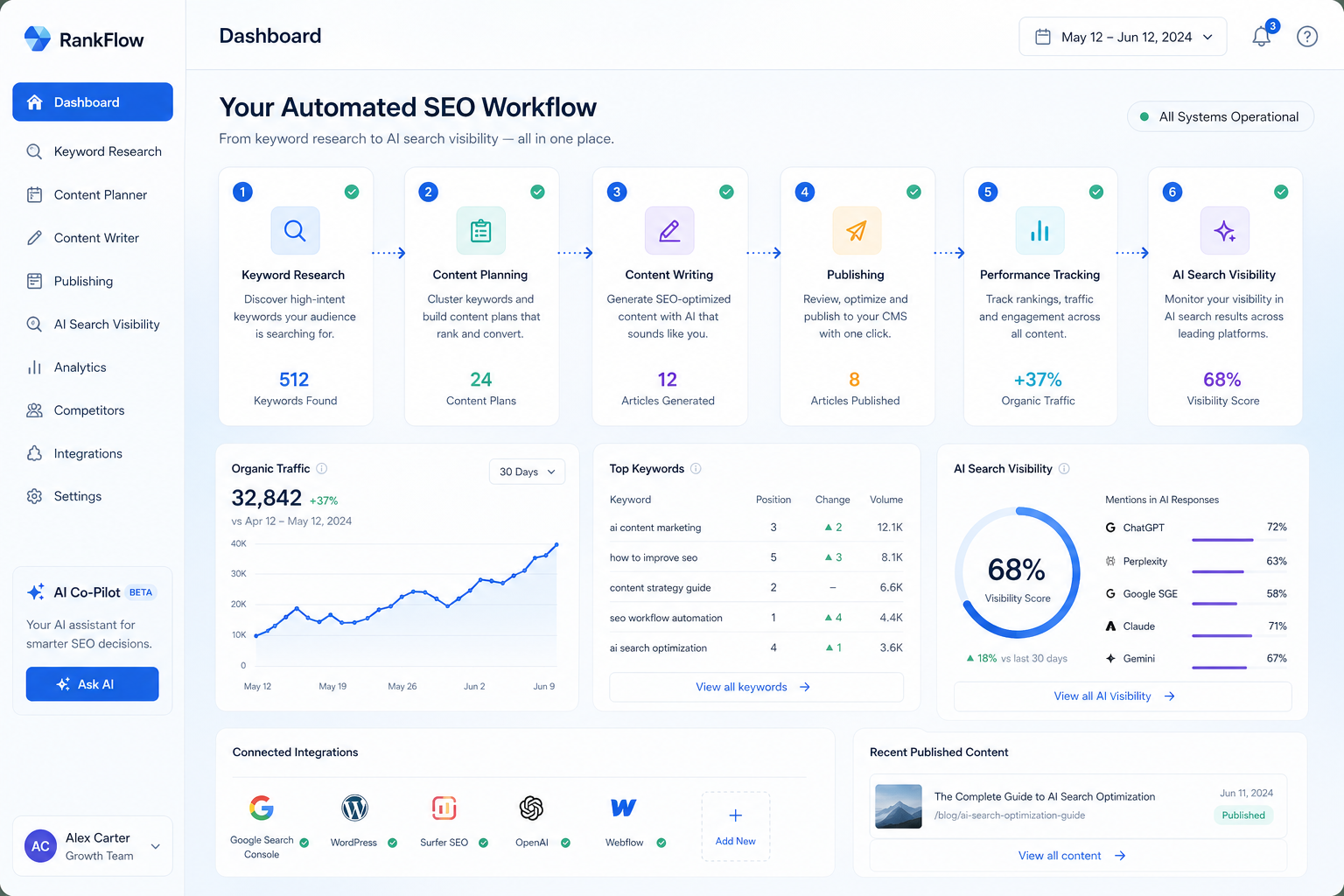
Why founders are searching for auto SEO software now
The old SEO workflow is broken for small teams.
You do keyword research in one tool. Briefs in another. Writing in a doc. Images in Canva. Optimization in another editor. Publishing in your CMS. Internal links manually. Competitor tracking separately. AI visibility nowhere.
That stack costs money. But the bigger cost is speed.
When growth depends on publishing consistently, every extra step kills momentum.
Most competitor roundups focus on feature lists. They gloss over the real buying question:
Which tool actually removes the most work from your workflow?
That is the gap.
The right auto SEO software should do three things:
Reduce manual effort
Increase publishing consistency
Improve odds of ranking in both search engines and AI answers
If it only gives you dashboards, it is not automation. It is homework.
What auto SEO software actually means
Auto SEO software is any platform that automates meaningful parts of search growth.
That can include:
Keyword discovery
Competitor analysis
Content planning
Article generation
On-page optimization
Internal linking suggestions
Technical audits
Rank tracking
CMS publishing
Indexing workflows
GEO optimization for AI assistants like ChatGPT, Claude, and Gemini
Some tools automate one slice of the workflow.
A few automate nearly all of it.
That distinction matters.
The 3 levels of SEO automation
Level | What it automates | Best for |
|---|---|---|
Basic | Rank tracking, audits, reporting | Teams with an existing SEO process |
Mid-level | Research, briefs, optimization, partial writing | Content teams who still publish manually |
Full-stack | Research → plan → write → optimize → publish → monitor | Founders and lean teams who want SEO growth without hiring heavily |
Most businesses comparing auto SEO tools should be looking for level 3.
Because if you still have to manage writers, editors, designers, and CMS uploads, you have not really automated SEO. You have just bought another subscription.
What the best auto SEO tools have in common
After analyzing competitor coverage, the same winning themes keep showing up:
Automation saves time
Centralized workflows beat disconnected tools
AI helps with content research and optimization
Technical monitoring still matters
Reporting is useful for agencies
All true.
But most articles miss the strongest decision criteria for small teams:
1. End-to-end automation beats partial automation
A tool that only optimizes content is useful.
A tool that researches, writes, formats, adds visuals, and publishes is leverage.
2. Publishing consistency matters more than isolated article quality
A single “perfect” blog post rarely changes growth.
A steady stream of strong, targeted content does.
3. GEO matters now, not later
If your content is not structured to get cited in AI-generated answers, you are already behind.
4. Speed to execution matters more than dashboards
A founder does not need more charts. They need content live on the site.
"The global SEO software market was valued at $74.6 billion in 2024 and is projected to reach $154.6 billion by 2030." - Source
How to evaluate auto SEO software without wasting money
Before you compare tools, use this checklist.
Ask these 8 questions
Question | Why it matters |
|---|---|
Does it automate research and keyword prioritization? | Otherwise you still spend hours picking topics |
Does it write full long-form content? | Partial drafting still creates bottlenecks |
Does it optimize for AI answers and GEO? | Search is no longer just blue links |
Does it publish directly to your CMS? | Manual publishing slows everything down |
Can it generate visuals too? | Design delays often block publishing |
Does it support competitor keyword tracking? | Winning faster often means copying what already works |
Can it work across multiple languages? | Important for global or multilingual growth |
Does it reduce your tool stack? | More tools usually means more friction, not more output |
Red flags to watch for
“AI-powered” tools that only generate outlines
Optimization tools that still require a writer and editor
SEO software with strong reporting but weak execution
CMS integrations missing from the workflow
No support for AI search visibility
Pricing that assumes you already have an SEO team
The best auto SEO software and auto SEO tools for faster growth
This is where most buyers get stuck.
They compare very different tools side by side and assume they solve the same problem.
They do not.
Some are content optimizers. Some are monitoring platforms. Some are reporting tools. A few try to automate the whole workflow.
Below is the practical breakdown.
1. RankSpot

Best for: founders and lean teams who want full SEO automation, not just SEO assistance
RankSpot is the strongest fit if your goal is simple:
Grow traffic without building an entire SEO operation.
Instead of giving you isolated tools, RankSpot automates the full pipeline:
Learns your niche from your website
Analyzes competitors
Builds a strategic 30-day content plan
Finds high-intent and opportunity-based keywords
Tracks competitor keywords and surfaces what is already working
Writes long-form SEO articles
Optimizes them for both Google and AI answer engines
Generates unique on-brand images
Formats articles with headings, tables, quotes, and internal link structure
Publishes directly to WordPress, Webflow, Wix, Shopify, Framer, Ghost, and more
Surfaces Reddit and forum conversations to help you find real buyer demand beyond search
That matters because most “auto SEO software” still leaves the hardest part on your plate: shipping content every day.
RankSpot solves that.
Where RankSpot wins
Fully automated end-to-end pipeline
This is the big one.
Most tools stop at recommendations. RankSpot actually executes.
Research → plan → write → publish.
That means founders save 40+ hours per month and stop babysitting the content process.
Daily publishing for compounding growth
Most businesses do not lose at SEO because they lack ideas. They lose because they do not publish consistently.
RankSpot is built for consistent output. Daily if you want it.
That publishing rhythm compounds faster than occasional “big SEO projects.”
Built for Google and AI answer engines
Search behavior is changing.
People still use Google. But they also ask ChatGPT, Claude, Gemini, and Perplexity.
RankSpot optimizes content for both classic SEO and GEO so your articles have a better shot at being cited, summarized, and recommended by AI assistants.
Replaces multiple tools
Instead of paying for separate tools for keyword research, writing, editing, basic design, and publishing workflows, RankSpot consolidates the stack.
That reduces cost. More importantly, it removes handoffs.
Low-friction setup
For founders, setup friction kills adoption.
RankSpot keeps it simple:
first 3 articles free
no credit card required
scalable plans once you see traction
Best fit
RankSpot is ideal for:
SaaS founders
ecommerce brands
indie hackers
startups leaving expensive SEO agencies
small teams that need output, not complexity
Bottom line
If you want the highest leverage option, RankSpot is the best choice in this category because it automates the part most tools avoid: actual content production and publishing at scale.
2. Ahrefs
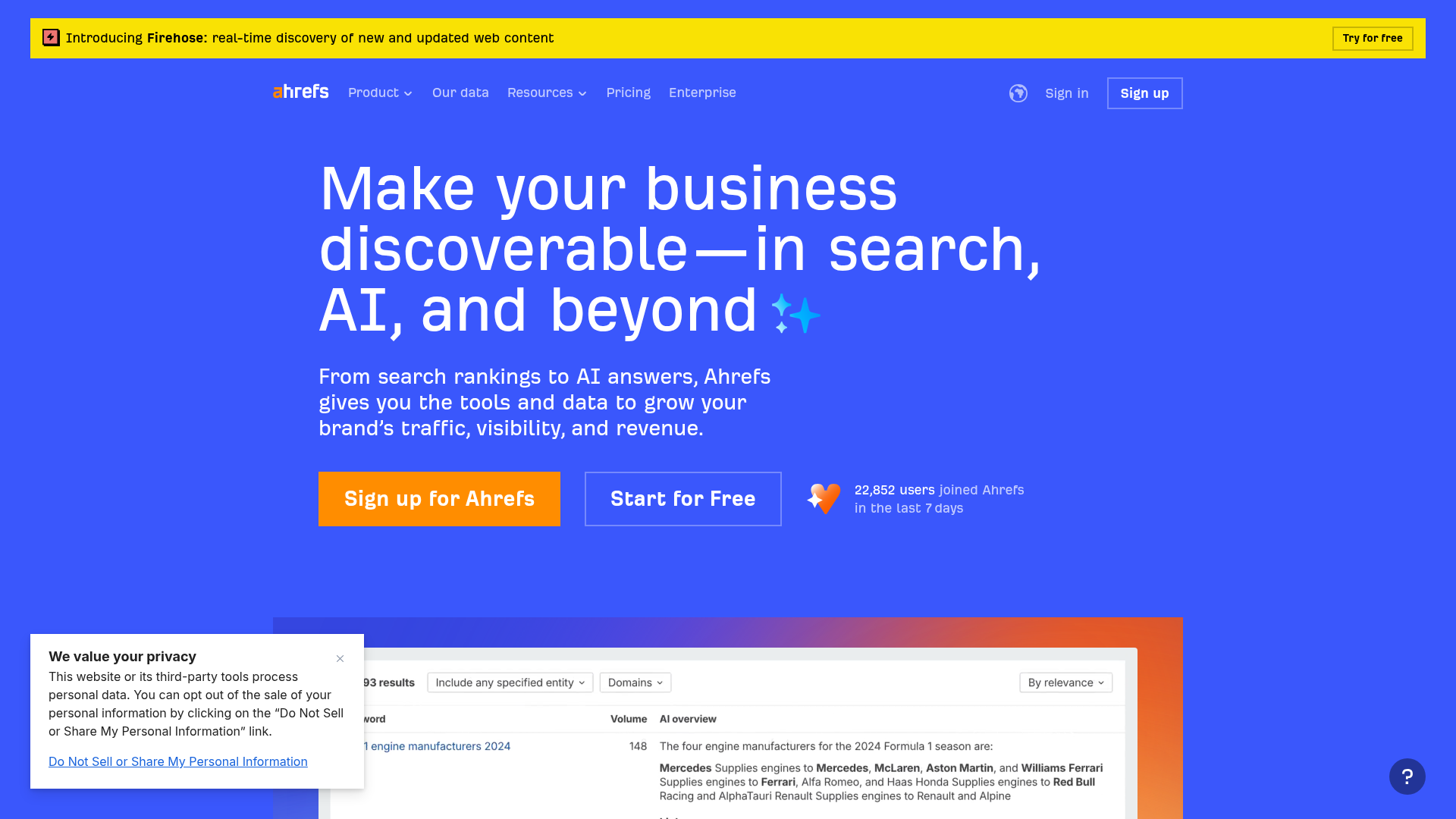
Best for: SEO pros who want deep data, competitive research, and rank tracking
Ahrefs is still one of the best-known SEO platforms for a reason.
It is powerful for:
Keyword research
Backlink analysis
Competitor monitoring
Site audits
Rank tracking
It also has newer AI content features.
But Ahrefs is still primarily a data and research platform, not a fully automated publishing engine.
Strengths
Excellent keyword and backlink data
Strong competitor gap analysis
Useful for identifying ranking opportunities
Helpful for experienced SEO teams
Limitations
You still need to turn insights into execution
Writing and publishing are not the core workflow
Better for operators who already know SEO
Bottom line
Great if you want deep SEO intelligence.
Not ideal if you want SEO to happen without manual effort.
3. Surfer SEO
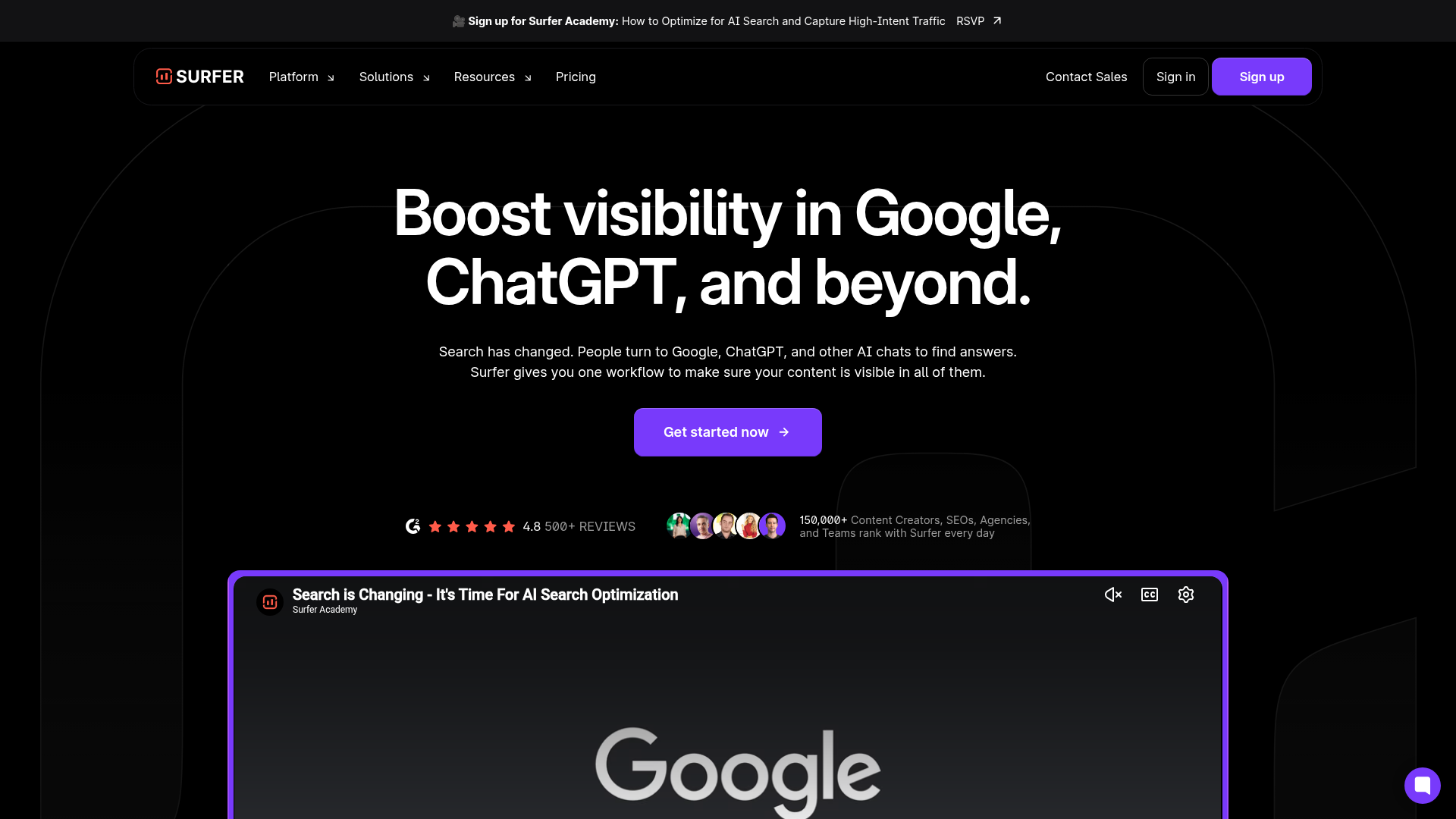
Best for: content teams optimizing articles already in production
Surfer is strong for on-page content optimization.
Its value is straightforward: it helps writers shape content around SERP patterns, term coverage, and structure.
That is useful. Especially if you already have articles being drafted regularly.
Strengths
Real-time content scoring
Optimization guidance based on competitors
Helpful for improving drafts
Useful for teams with writers in place
Limitations
It does not replace your full workflow
You still need research, writing, editing, visuals, and publishing
Can become another step in a slow content process
Bottom line
A good optimization layer.
Not a true end-to-end auto SEO platform.
4. SE Ranking
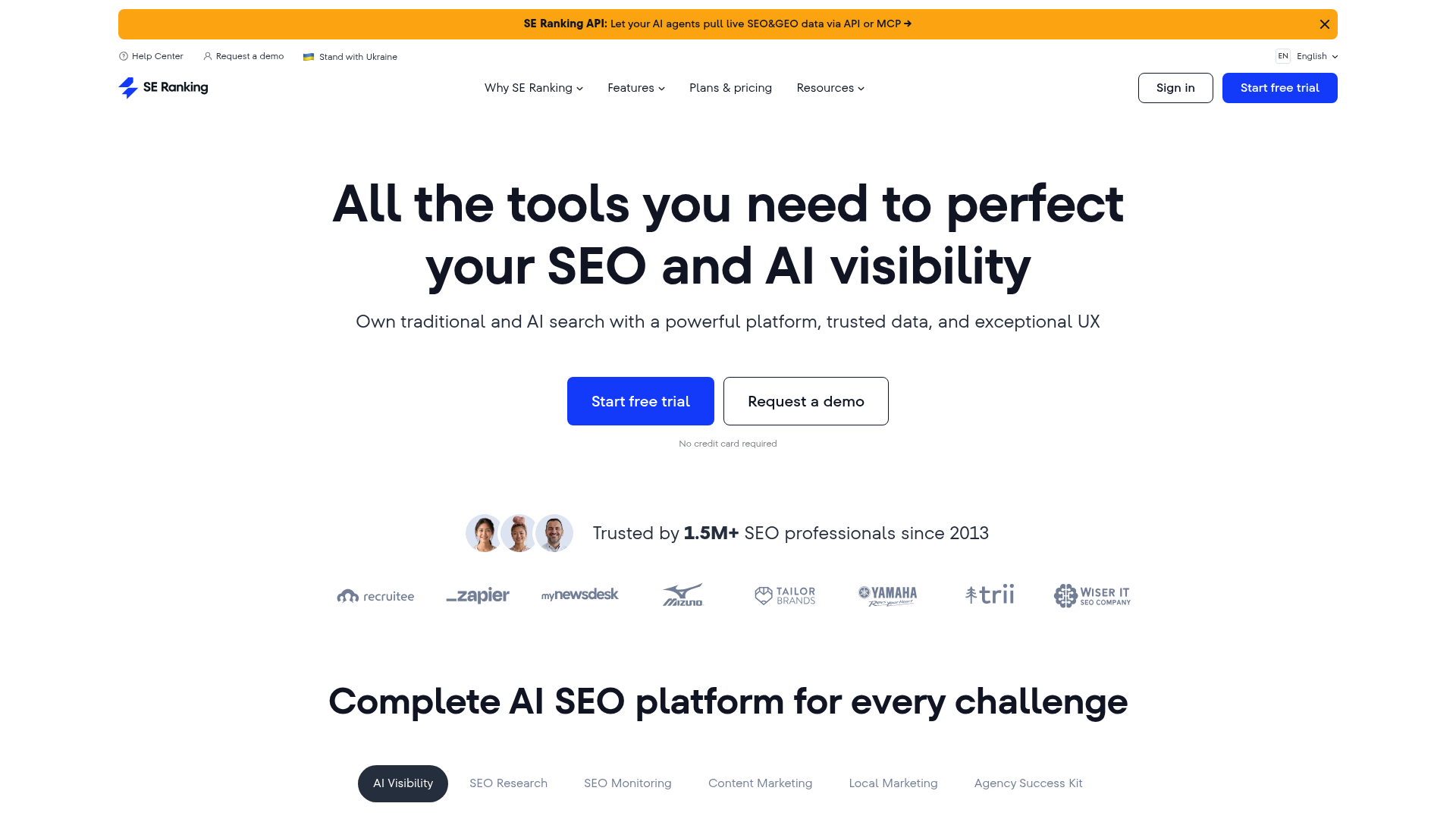
Best for: businesses that want broad SEO platform coverage at a lower price point
SE Ranking covers a lot:
Rank tracking
Site audits
competitor research
SEO monitoring
AI overview tracking
It is broad and more budget-friendly than some enterprise tools.
Strengths
Wide range of SEO features
AI overview tracking is useful
Solid for multi-project monitoring
Good value for many teams
Limitations
Still more platform than autopilot
Better for managing SEO than running SEO automatically
Content creation and publishing are not the main edge
Bottom line
A useful all-around SEO platform.
Better at management than full workflow automation.
5. Whatagraph

Best for: agencies and teams that need reporting, dashboards, and stakeholder-ready SEO summaries
Whatagraph is not really an SEO execution tool.
It is a reporting and marketing intelligence platform.
That can still be useful, especially if your biggest pain is explaining performance to clients, leadership, or investors.
Strengths
Great for cross-channel reporting
Blends multiple data sources into one dashboard
Helpful for agency reporting workflows
AI summaries save time
Limitations
Does not automate research, writing, or publishing
Solves reporting, not execution
More valuable after you already have an SEO engine running
Bottom line
Strong reporting product.
Not a direct answer if your real problem is getting content live.
6. Sight AI
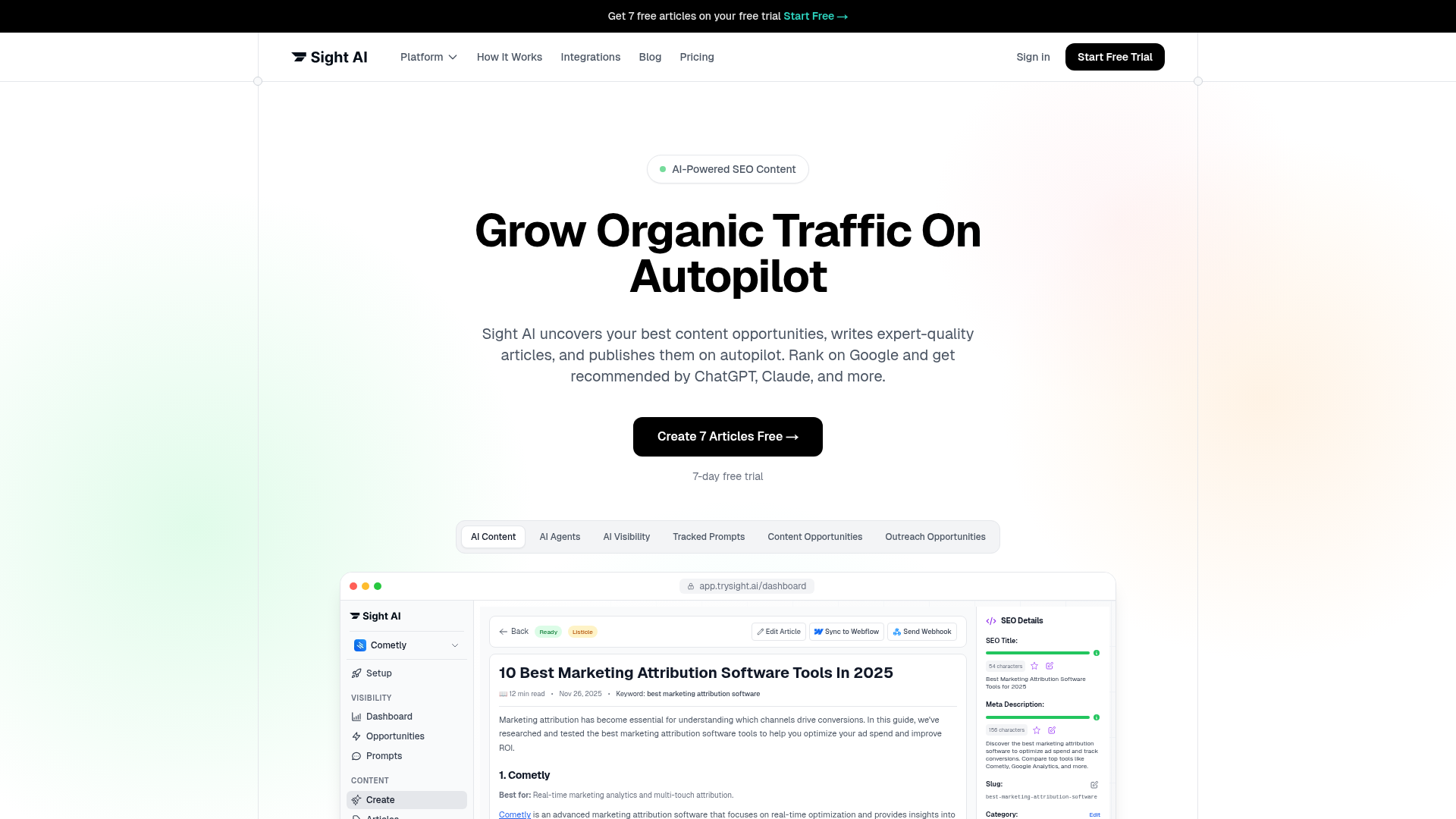
Best for: teams exploring AI visibility and automated AI-first content workflows
Sight AI focuses heavily on AI visibility, automated content, and indexing.
That makes it interesting in the GEO conversation.
Strengths
AI visibility tracking
Content automation
Indexing workflows
Strong positioning around AI search
Limitations
Newer category focus means buyers should validate depth across the full SEO workflow
Less proven as a complete replacement for the broader SEO stack
May fit best for teams prioritizing AI visibility over full organic strategy breadth
Bottom line
Worth watching, especially for AI-search-focused teams.
But if you need the broadest founder-friendly automation workflow, RankSpot remains the more practical choice.
Comparison table: which auto SEO tool fits which job?
Tool | Best for | Biggest strength | Biggest limitation |
|---|---|---|---|
RankSpot | Founders and lean teams | Full automation from research to publishing | Less appealing if you only want raw SEO data dashboards |
Ahrefs | SEO specialists | Deep keyword and backlink intelligence | Requires manual execution |
Surfer | Content teams | On-page optimization | Not full workflow automation |
SE Ranking | Budget-conscious teams | Broad SEO platform coverage | More management than autopilot |
Whatagraph | Agencies and reporting-heavy teams | Dashboarding and summaries | Not an execution tool |
Sight AI | AI-search-focused teams | AI visibility and indexing | Less comprehensive for full-stack founder workflows |
The biggest content gap in most “best SEO automation software” articles
Here is what most competitor posts miss:
They talk about tools as if all automation is equal.
It is not.
Automating analysis is not the same as automating output.
For a founder, the most valuable automation is not a prettier dashboard. It is shipping.
That means the highest-leverage workflow usually looks like this:
Find a real keyword opportunity
Prioritize based on intent and competition
Generate a high-quality article
Format it correctly
Add visuals
Publish it automatically
Repeat daily
Most tools on the market cover only one or two of those steps.
RankSpot covers the full system.
That is the real differentiator.
What auto SEO software should automate first
If you are still doing SEO manually, do not try to automate everything at once.
Start with the bottlenecks that delay growth.
Highest ROI automation areas
1. Keyword discovery and prioritization
This is where weak SEO strategies die.
You do not need more keywords. You need the right ones.
The best tools prioritize:
high-intent terms
realistic ranking opportunities
competitor gaps
topics with commercial value
RankSpot does this automatically and builds a 30-day plan around it.
2. Content production
Writing is the biggest bottleneck for most teams.
If your growth depends on waiting for a freelancer, internal writer, or founder bandwidth, your SEO engine is fragile.
This is where full automation changes everything.
3. Publishing
Manual publishing sounds small. It is not.
Formatting, image placement, metadata, internal links, and CMS upload all create drag.
Direct CMS integrations remove that drag.
4. GEO optimization
A lot of teams are still treating AI search as optional.
It is not optional if your buyers use AI assistants to discover vendors, compare tools, or summarize results.
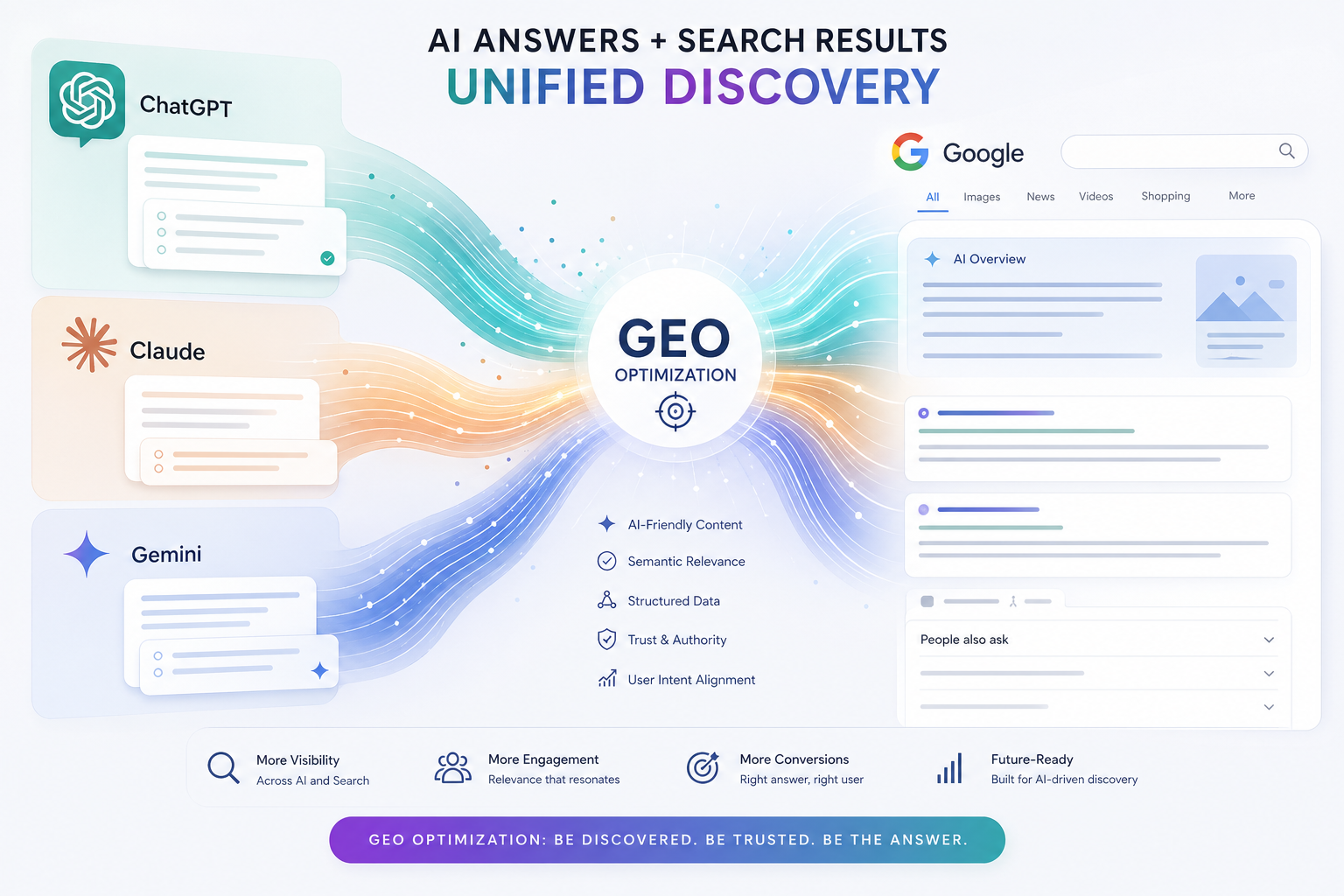
Why GEO should be part of your auto SEO strategy
This is one more area where a lot of “SEO automation” articles are behind the market.
Search is no longer just Google rankings.
Founders now need visibility in:
ChatGPT
Claude
Gemini
Perplexity
Google AI answers
That means content should be built not just to rank, but to be cited.
What GEO-ready content usually includes
Clear structure
Direct answers
Strong entity relevance
Clean formatting
Useful comparisons
Credible statements and supporting evidence
Language that is easy for AI systems to extract and summarize
RankSpot bakes this into the workflow.
That is a meaningful edge because most legacy SEO tools were built for a pre-AI search world.
A practical buying framework for founders
If you are choosing between auto SEO tools, use this simple filter.
Choose RankSpot if:
You want SEO growth without hiring a full team
You need articles published consistently
You want one platform instead of five
You care about both Google rankings and AI citations
You want direct publishing into your CMS
You want fast setup and low friction
Choose Ahrefs if:
You are an SEO-heavy operator
You want deep competitor and backlink data
You are comfortable handling execution elsewhere
Choose Surfer if:
You already have writers
You mainly want optimization help for drafts
Choose SE Ranking if:
You want broad SEO coverage on a reasonable budget
You still plan to run most execution manually
Choose Whatagraph if:
Reporting is your biggest pain point
You need stakeholder-friendly SEO dashboards
What switching from an agency to auto SEO software can look like
A lot of early-stage teams start with agencies.
That makes sense at first.
But eventually the math gets ugly:
slow turnaround
limited publishing volume
generic strategy
expensive retainers
weak control over execution
Auto SEO software changes the economics.
With the right platform, you can move from:
Old model | Better model |
|---|---|
Agency briefs and waiting | Automated content pipeline |
2-4 articles per month | Daily publishing cadence |
Multiple disconnected tools | One workflow |
High retainer fees | Predictable software cost |
SEO only for Google | SEO + GEO for AI discovery |
That is especially powerful for startups trying to compete above their weight.
You do not need a bigger team. You need better leverage.
Final verdict: what is the best auto SEO software for faster growth?
If your main goal is faster growth with less manual work, the answer is not the tool with the most charts.
It is the tool that gets the most high-quality content live with the least friction.
That is why RankSpot stands out.
It does what founders actually need:
finds opportunities
builds a plan
writes content
optimizes for search and AI answers
generates on-brand visuals
publishes directly to your site
helps you discover demand in Reddit and forums
supports 100+ languages for global growth
replaces multiple tools with one system
In other words, it turns SEO from a pile of unfinished tasks into a repeatable growth engine.
If you are tired of juggling auto SEO tools that still leave all the work to you, try the platform built to remove the work.
Try RankSpot. Get your first 3 articles free. No credit card required.